

You receive a text message claiming there’s been an unauthorized Apple Pay transaction on your account. It looks urgent, alarming, and even includes a toll-free number to call Apple Support. But here’s the truth: it’s a scam. And if you’re not careful, you could lose much more than just your time—or even become a victim of identity theft or financial fraud.
This article will break down exactly how this scam works, what to do if you’ve fallen victim, and how to protect yourself going forward. It’s an essential read for anyone who uses Apple Pay, online banking, or mobile devices.

Scam Overview: The Rise of the Fake Apple Pay Alert
Fake Apple Pay alert scams are part of a growing wave of tech support scams that exploit fear, confusion, and urgency to manipulate users into taking dangerous actions. These scams are designed to trick recipients into calling a fake support number. Once you’re on the phone, the scammers pose as Apple technicians, claiming your account or device is compromised and needs immediate attention.
These scams are particularly dangerous for several reasons:
- They impersonate trusted brands like Apple, creating a false sense of authority.
- The messages look legitimate, often mimicking real alerts with familiar wording and formatting.
- The language creates a sense of urgency, making you act without thinking or verifying.
- They lure you into a phone call where the real scam begins, often resulting in the loss of personal data or financial theft.
Anatomy of a Scam Text
Here is what a typical scam message might look like:
“An Apple Pay transaction of $158.54 at the Apple Store was detected. Call Apple support now +1(844) 569-1330, if this is unauthorized.”
It seems convincing at a glance. But there are red flags:
- Generic language: No mention of your name, account number, or Apple ID, which is unusual for genuine alerts.
- Urgency: Creates panic by suggesting unauthorized activity has already taken place.
- Fake phone number: It doesn’t lead to Apple, but to scammers operating in offshore call centers.
- No official Apple contact methods: Apple typically uses email or in-app notifications, not random SMS messages from unknown sources.
Why It Works
Scammers rely heavily on human psychology. The fear of financial loss, fraud, or hacked accounts causes people to act quickly without verifying the information. By making the threat sound immediate and severe, they short-circuit your critical thinking and push you to act.
They also exploit technological confusion. Many people aren’t sure how Apple Pay works or how secure it is. The scam takes advantage of that uncertainty and leverages your trust in the Apple brand.
Who’s at Risk?
Anyone with a smartphone can be targeted, but certain demographics are more vulnerable:
- Older adults unfamiliar with digital tools and cybersecurity basics.
- Younger users who assume all tech communication is legitimate.
- People already worried about identity theft or recent suspicious financial activity.
- Individuals with limited tech literacy or those who have recently used Apple Pay.
How Scammers Access Phone Numbers
Scammers often gain access to phone numbers using the following methods:
- Data breaches: They buy or steal lists of phone numbers from hacked databases.
- Data brokers: Shady companies legally or semi-legally sell user contact information.
- Random number generation: A technique called “smishing,” where scammers send mass messages to random numbers hoping some recipients will fall for the trap.
- Phishing leaks: Numbers gathered from previous scam attempts or online forms.
The ease with which scammers can obtain contact information makes this a persistent threat.
How the Scam Works
Understanding the mechanics of the Apple Pay alert scam can help you avoid becoming a victim. Here’s a detailed look at how the operation unfolds from beginning to end:
Step 1: The Text Message
You receive a message saying an Apple Pay transaction was made—often for an oddly specific amount like $158.54. This precision gives the message an air of legitimacy. It then urges you to call a support number immediately to resolve the issue.
The scam depends on your sense of urgency. Even if you’ve used Apple Pay recently, the message’s vague nature makes you doubt your memory. It’s designed to push you into action.
Step 2: The Call to Fake “Apple Support”
Once you call the number, a seemingly professional individual answers the phone. They may speak in a calm, authoritative tone, use technical jargon, and claim to be an Apple technician. To build trust, they may:
- Refer to your supposed “case ID”
- Use fake employee IDs
- Mention your general geographic location
They’ll claim there’s been suspicious activity on your account and suggest your device or Apple Pay is under attack.
Step 3: Remote Access Request
The scammer will then ask you to download and install a remote desktop application such as AnyDesk, TeamViewer, LogMeIn, or Zoho Assist. They say it’s needed to scan your device for malware or to process a refund for the unauthorized charge.
Once installed, the scammer gains full remote access to your device—meaning they can see everything, control apps, and access sensitive information in real-time.
Step 4: Extracting Sensitive Data
With full access to your device, the scammer begins poking around:
- They might guide you to log into your Apple ID and bank account while watching.
- They may ask you to type passwords “to confirm your identity,” recording everything via screen share.
- They search for financial records, screenshots, or stored documents containing private data.
Some scammers even install malware or keyloggers to monitor your keystrokes and steal more information later.
Step 5: The Gift Card Scam
If they can’t access your money directly or claim to be processing a refund, they’ll switch tactics. They may say you need to buy Apple, Google Play, or Amazon gift cards for “verification” or “security reasons.”
They ask you to purchase several high-value cards, scratch off the backs, and send them photos of the codes. The scammers redeem the codes instantly and vanish.
In many cases, victims believe they are genuinely helping secure their account or completing an Apple verification process.
Step 6: Continued Exploitation
Even after the phone call ends, the scam might not be over. Scammers may:
- Call you again, pretending to follow up or introduce a new threat.
- Sell your information to other scam networks.
- Use your email or phone to send phishing messages to friends and family.
- Maintain access to your device if remote tools or malware weren’t fully removed.
This phase is especially dangerous because the victim often doesn’t realize the full extent of the compromise.
What to Do If You’ve Fallen Victim
If you’ve already called the number or given any information, don’t panic—but take action immediately. Here’s a detailed, step-by-step guide:
1. Disconnect Immediately
End the phone call. If you granted remote access, disconnect your device from the internet (Wi-Fi or mobile data) as quickly as possible.
2. Remove Remote Access Tools
Uninstall any applications the scammer had you download. On iPhones, delete the apps from your home screen and clear any associated permissions.
Also check:
- Screen recording settings
- Accessibility permissions
- Configuration profiles (Settings > General > VPN & Device Management)
3. Change All Passwords
Begin with your Apple ID and primary email account, then move to:
- Banking and financial apps
- Credit card portals
- Shopping accounts like Amazon or eBay
- Cloud storage services (Google Drive, iCloud, Dropbox)
- Social media platforms (Facebook, Instagram, etc.)
Use strong, unique passwords with a mix of characters, and avoid reusing old ones.
4. Enable Two-Factor Authentication (2FA)
Turn on 2FA wherever possible. This adds an extra layer of security, especially for your Apple ID, Gmail, and financial accounts. Prefer authentication apps over SMS codes for better protection.
5. Check Bank and Credit Card Activity
Call your bank or card provider and inform them of the incident. Ask them to:
- Freeze or cancel your card(s)
- Monitor for suspicious activity
- Flag or reverse fraudulent charges
Some financial institutions offer free fraud monitoring or identity theft protection—ask if it’s available.
6. Report the Scam
Help others and contribute to investigations by reporting the scam to the right agencies:
- Apple: Forward suspicious messages to reportphishing@apple.com
- Federal Trade Commission (FTC): Submit a report at ReportFraud.ftc.gov
- FBI Internet Crime Complaint Center (IC3): Visit ic3.gov for serious fraud reports
- Your bank or card issuer: Use the fraud report section in their app or website
- Mobile carrier: Request a block on the scam number and ask about additional protection options
7. Scan Your Device
Install trusted antivirus software to scan your device for malware, spyware, or remote access tools. If you’re unsure, visit an Apple Store or authorized technician.
In some cases, a full factory reset may be warranted. Just make sure to back up your data safely first.
8. Inform Your Contacts
If the scammers accessed your email, text messages, or social media, notify your contacts. Warn them that your accounts may have been compromised and to be cautious of any messages coming from you.
Is Your Device Infected? Run a Free Malware Scan
Slow performance, constant pop-ups, or strange behavior? These are classic signs of a malware infection. The fastest way to find out is to scan your device with Malwarebytes Free — one of the most trusted malware removal tools available.
The free version detects and removes the most common threats, including:
- Adware — the cause of those annoying pop-ups
- Browser hijackers — unwanted redirects and changed homepages
- Trojans and spyware — hidden programs stealing your data
- Potentially unwanted programs (PUPs) — software you never asked for
👉 Select your device below — Windows, Mac, or Android — then follow the simple steps to download Malwarebytes, scan your system, and remove any threats it finds. The scan usually takes 5 to 20 minutes.
Run a Malware Scan with Malwarebytes for Windows
Malwarebytes is one of the most popular and trusted anti-malware tools for Windows — and it’s completely free for removing infections. It catches threats that many antivirus programs miss, including adware, browser hijackers, and trojans. Follow the steps below to scan and clean your PC in just a few minutes.
Download Malwarebytes
Click the button below to download the latest version of Malwarebytes for Windows from the official source. The free version is all you need — it will scan your computer and remove adware, browser hijackers, and other malicious software at no cost.
Download MalwarebytesOfficial installer for Windows 11 and 10. Your download starts right away.Want real-time protection? See Malwarebytes Premium Malwarebytes Free for WindowsScans and removes malware at no cost
-
Install Malwarebytes
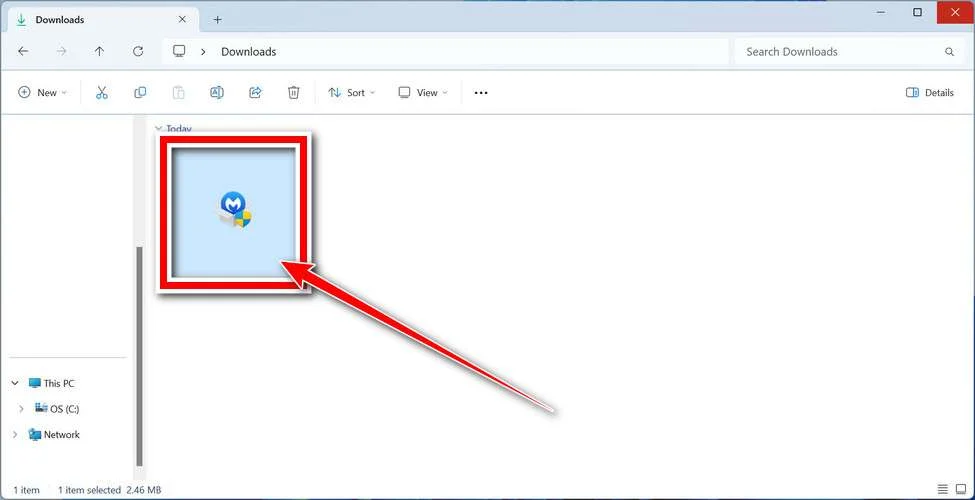
When the download finishes, open your Downloads folder and double-click the MBSetup file. If Windows shows a User Account Control pop-up, click “Yes” to allow the installation.
Follow the On-Screen Prompts to Install Malwarebytes
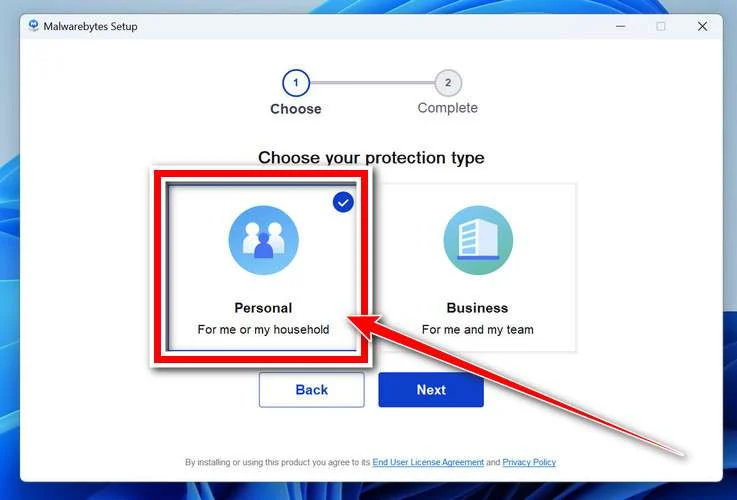
The setup wizard will walk you through a few quick screens:
-
Choose where you’re installing the program — “Personal Computer” or “Work Computer” — then click Next.
-
Malwarebytes will now install on your device. This usually takes under a minute.

-
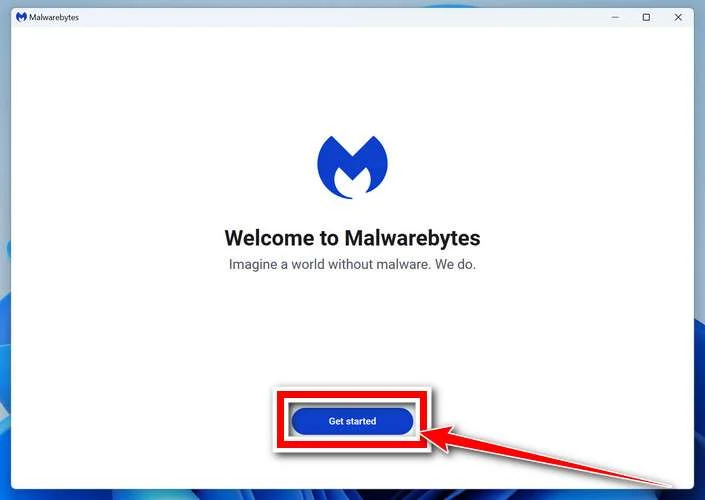
When installation is complete, the “Welcome to Malwarebytes” screen will open automatically.
-
On the final screen, click Open Malwarebytes to launch the program.

-
Enable “Scan for Rootkits”
Before scanning, turn on rootkit detection so Malwarebytes can find even the most hidden threats. Click the Settings gear icon on the left side of the screen.
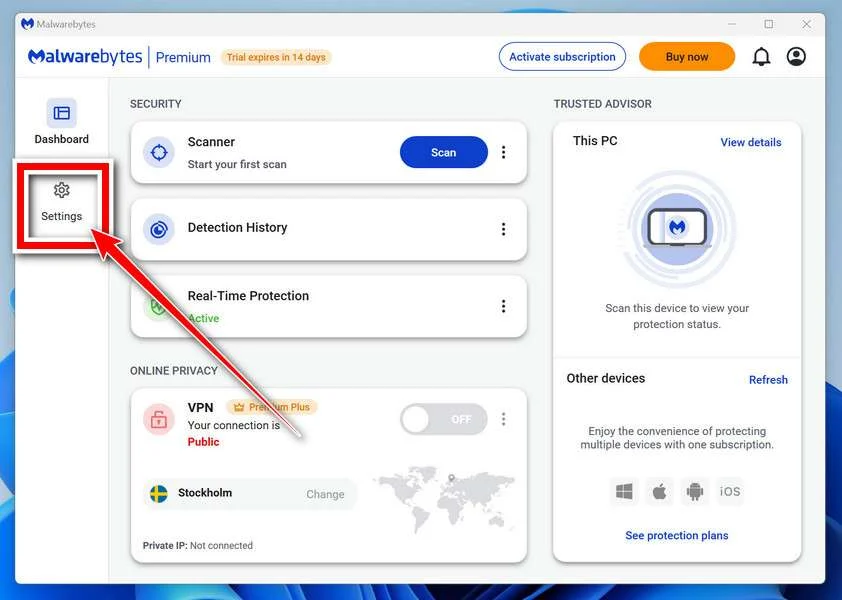
In the settings menu, find “Scan for rootkits” and click the toggle so it turns blue.

Done? Click “Dashboard” in the left pane to return to the main screen.
Start the Scan
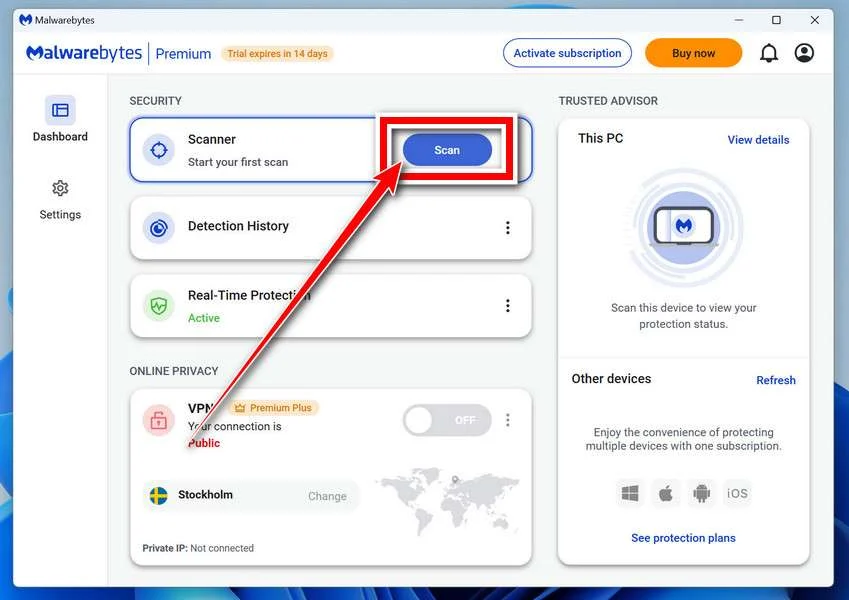
Click the blue Scan button. Malwarebytes will automatically update its virus database and start checking your computer for malware.
-
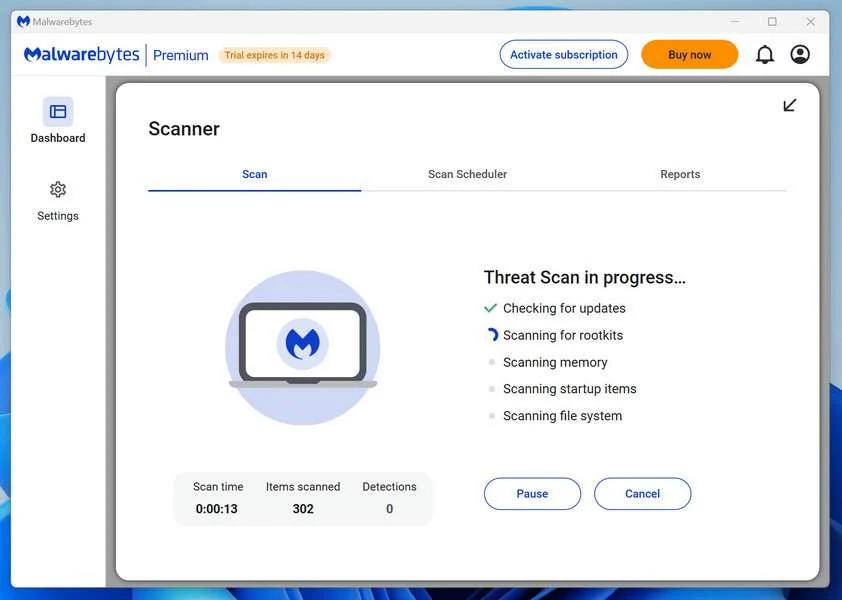
Wait for the Scan to Finish
The scan checks your entire system for browser hijackers and other malicious programs, so it can take 5 to 20 minutes depending on your computer. Feel free to do something else — just check back occasionally to see the progress.
-
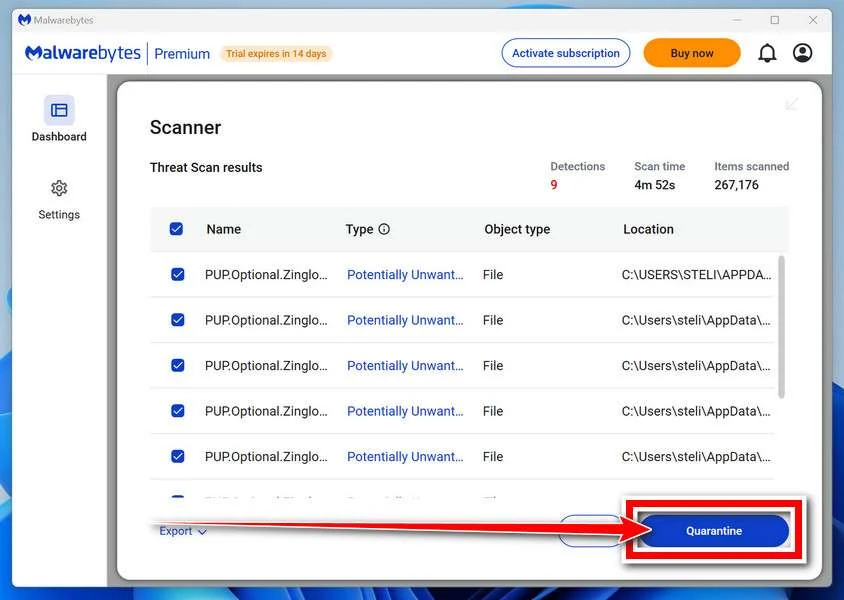
Quarantine the Detected Threats
When the scan is done, you’ll see a list of everything Malwarebytes found — malware, adware, and potentially unwanted programs. Click the “Quarantine” button to remove all of them at once.
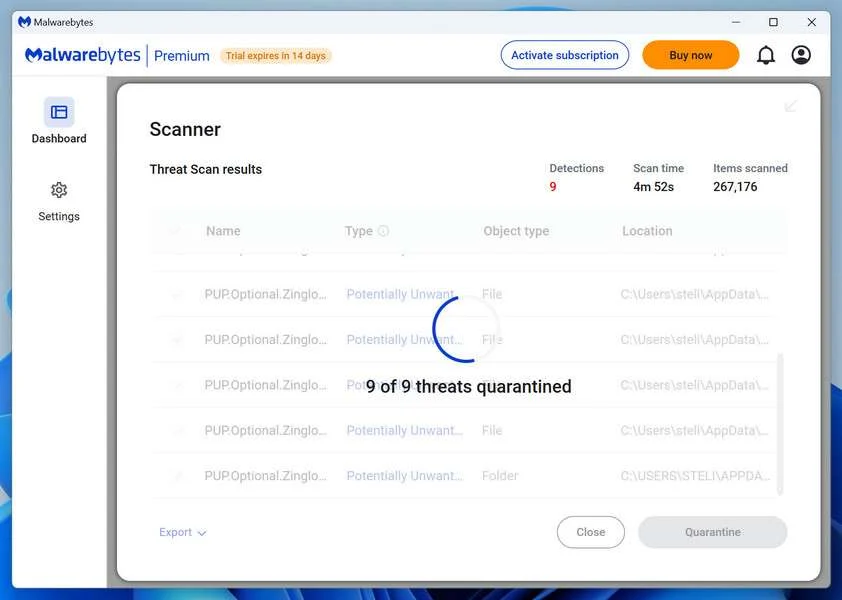
Malwarebytes will now remove the malicious files and registry entries and move them safely into quarantine.
-
Restart Your Computer
Some threats can only be fully removed after a reboot. If Malwarebytes asks you to restart, click Yes. Once you’re logged back in, Malwarebytes has finished removing the threats it found.
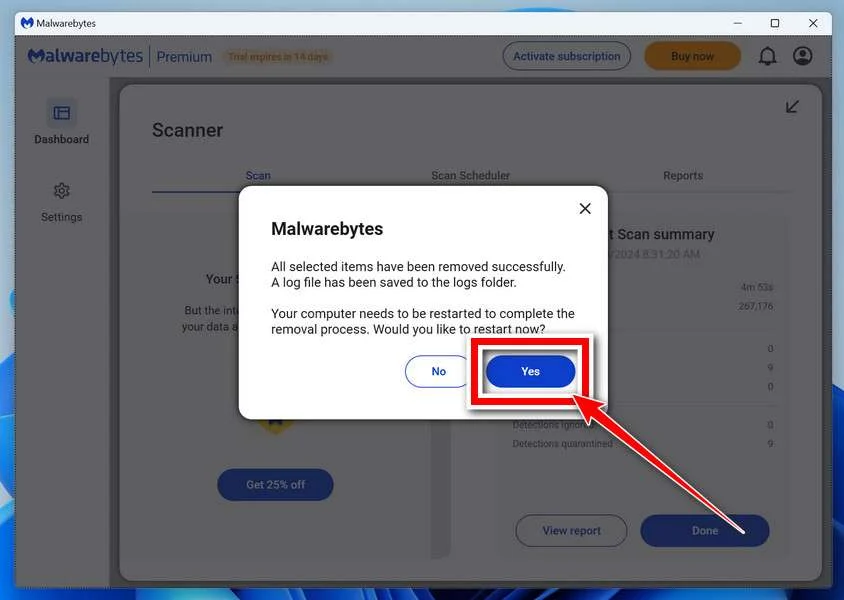
That’s it — your Windows PC is now clean of trojans, adware, and other malware, and should be back to running smoothly.
If you are still having problems with your computer after completing these instructions, then please follow one of the steps:
- Run a computer scan with ESET Online Scanner
- Ask for help in our Windows Malware Removal Help & Support forum.
Run a Malware Scan with Malwarebytes for Mac
Malwarebytes for Mac is a free on-demand scanner that removes the malware other security software tends to miss — adware, browser hijackers, and unwanted programs included. Cleaning an infected Mac with Malwarebytes has always been completely free, and it’s our go-to recommendation. Follow the steps below to scan and clean your Mac in just a few minutes.
-
Download Malwarebytes for Mac
Click the button below to download the latest version of Malwarebytes for Mac.
Download MalwarebytesOfficial installer for macOS. Your download starts right away.Want real-time protection? See Malwarebytes PremiumMalwarebytes Free for MacScans and removes malware at no cost -
Open the Malwarebytes setup file
When the download finishes, open your Downloads folder and double-click the setup file to begin the installation.
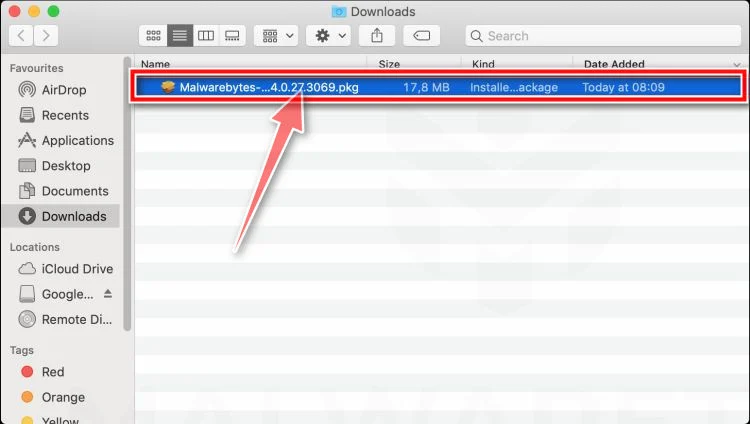
-
Follow the On-Screen Prompts to Install Malwarebytes
The Malwarebytes for Mac Installer will guide you through a few quick screens. Click “Continue” and keep following the prompts until the installation completes.
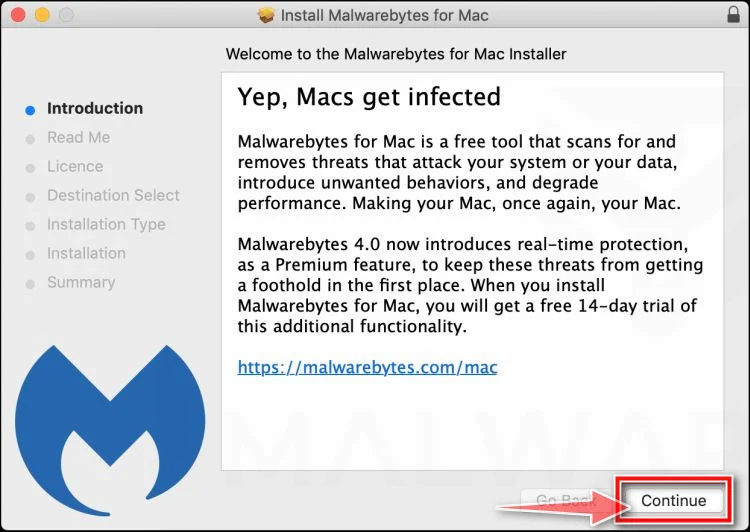
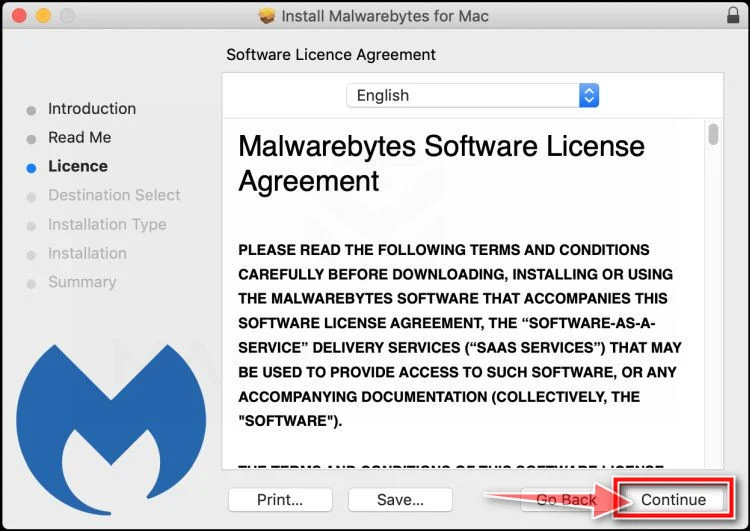
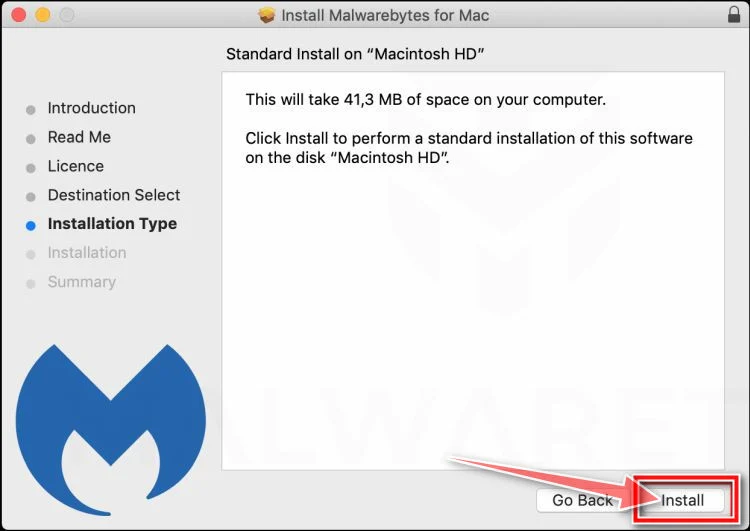
When the installation is complete, Malwarebytes opens to the Welcome to Malwarebytes screen. Click “Get started“.
-
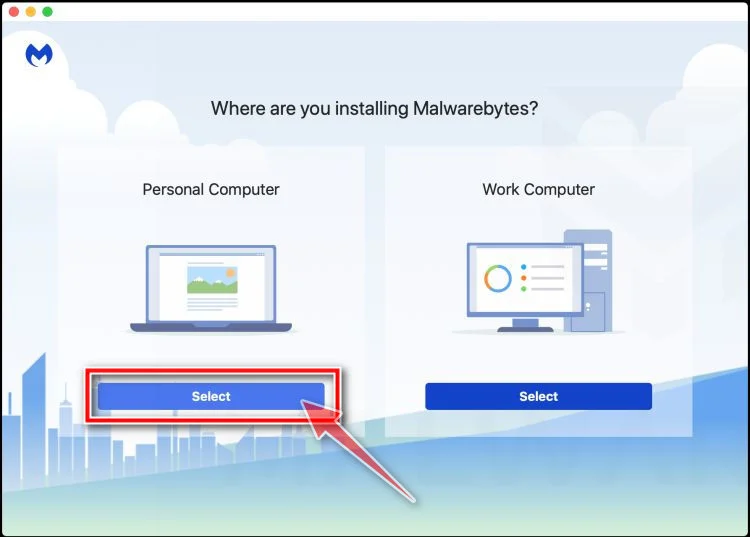
Select “Personal Computer” or “Work Computer”
Malwarebytes will ask what type of computer you’re installing it on. Click either Personal Computer or Work Computer, whichever applies.
-
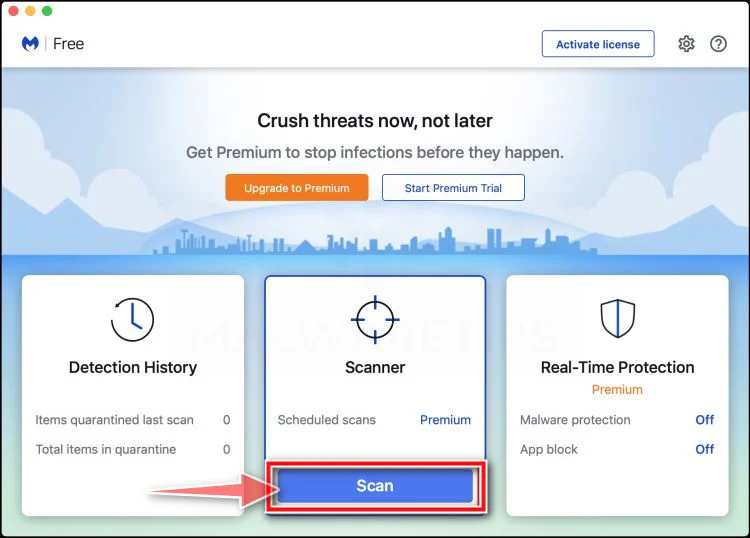
Start the Scan
Click the “Scan” button. Malwarebytes will automatically update its detection database and begin checking your Mac for malware.
-
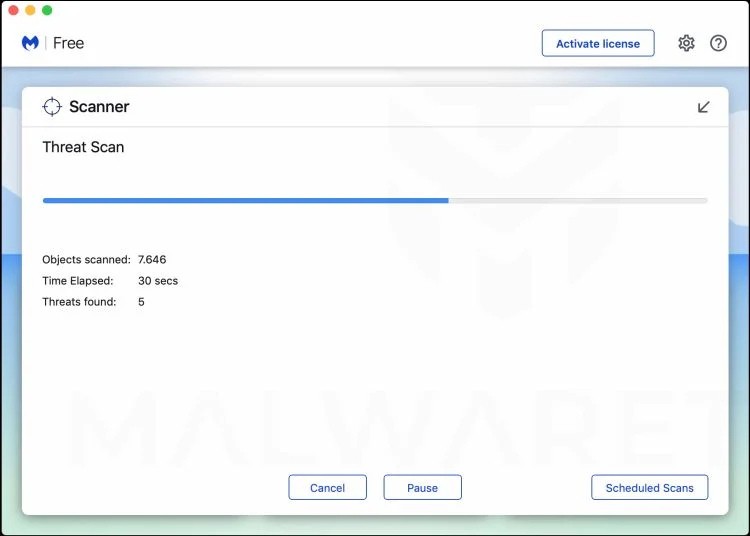
Wait for the Scan to Finish
Malwarebytes will scan your Mac for adware, browser hijackers, and other malicious programs. This can take a few minutes, so feel free to do something else — just check back occasionally to see the progress.
-
Quarantine the Detected Threats
When the scan is done, you’ll see a list of everything Malwarebytes found. Click the “Quarantine” button to remove all the threats at once.
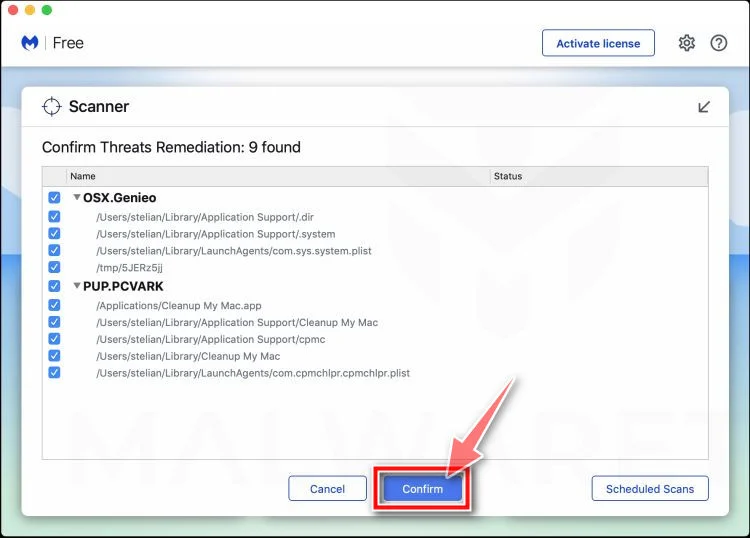
-
Restart Your Mac
Malwarebytes will now remove all the malicious files it found. Some threats can only be fully removed after a reboot — if Malwarebytes asks you to restart, allow it. Once you’re logged back in, your Mac is clean.
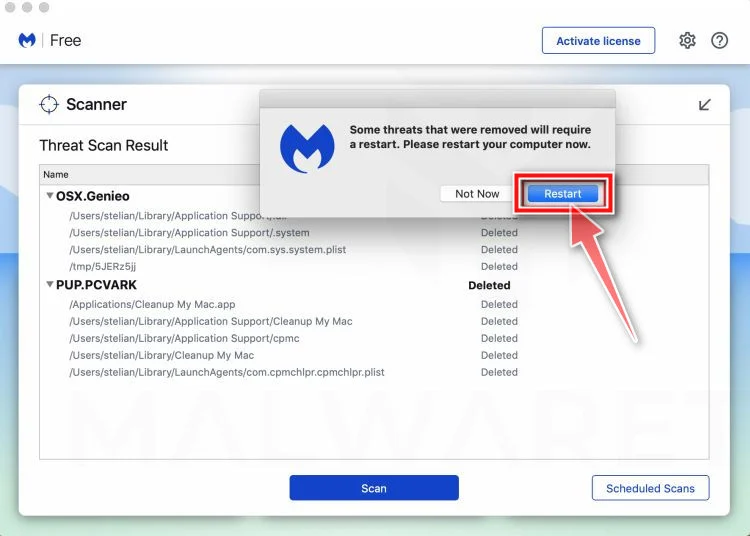
That’s it — your Mac is now free of adware, rogue browser extensions, and other potentially harmful software.
If you are still experiencing problems while trying to remove a malicious program from your computer, please ask for help in our Mac Malware Removal Help & Support forum.
Run a Malware Scan with Malwarebytes for Android
Malwarebytes for Android automatically detects and removes dangerous threats like malware and ransomware so you don’t have to worry about your most-used device being compromised. Aggressive detection of adware and potentially unwanted programs keeps your Android phone or tablet running smooth.
-
Download Malwarebytes for Android.
You can download Malwarebytes for Android by clicking the link below.
Get Malwarebytes for AndroidOpens Google Play in a new tab.Want real-time protection? See Malwarebytes Premium for AndroidMalwarebytes for AndroidScans your phone and removes malware at no cost -
Install Malwarebytes for Android on your phone.
In the Google Play Store, tap “Install” to install Malwarebytes for Android on your device.

When the installation process has finished, tap “Open” to begin using Malwarebytes for Android. You can also open Malwarebytes by tapping on its icon in your phone menu or home screen.

-
Follow the on-screen prompts to complete the setup process
When Malwarebytes will open, you will see the Malwarebytes Setup Wizard which will guide you through a series of permissions and other setup options.
This is the first of two screens that explain the difference between the Premium and Free versions. Swipe this screen to continue.
Tap on “Got it” to proceed to the next step.
Malwarebytes for Android will now ask for a set of permissions that are required to scan your device and protect it from malware. Tap on “Give permission” to continue.
Tap on “Allow” to permit Malwarebytes to access the files on your phone.
-
Update database and run a scan with Malwarebytes for Android
You will now be prompted to update the Malwarebytes database and run a full system scan.

Click on “Update database” to update the Malwarebytes for Android definitions to the latest version, then click on “Run full scan” to perform a system scan.

-
Wait for the Malwarebytes scan to complete.
Malwarebytes will now start scanning your phone for adware and other malicious apps. This process can take a few minutes, so we suggest you do something else and periodically check on the status of the scan to see when it is finished.

-
Click on “Remove Selected”.
When the scan has been completed, you will be presented with a screen showing the malware infections that Malwarebytes for Android has detected. To remove the malicious apps that Malwarebytes has found, tap on the “Remove Selected” button.

-
Restart your phone.
Malwarebytes for Android will now remove all the malicious apps that it has found. To complete the malware removal process, Malwarebytes may ask you to restart your device.
That’s it — your Android phone is now clean — no more malicious apps, adware, or browser redirects.
If you are still having problems with your phone after completing these instructions, then please follow one of the steps:
- Restore your phone to factory settings by going to Settings > General management > Reset > Factory data reset.
- Ask for help in our Mobile Malware Removal Help & Support forum.
Stay Protected: Block Ads and Malicious Sites
Now that your device is clean, keep it that way. Most infections start with a malicious ad or a fake download button — so blocking them at the source is your best defense.
We recommend AdGuard, which blocks malicious ads, phishing pages, and dangerous redirects before they can reach you.
👉 Download AdGuard and browse safely
Frequently Asked Questions About the Apple Pay Alert Scam
Is the Apple Pay transaction alert text real?
No, it is not real. These texts are part of a widespread scam. Apple does not send alerts like this via text with phone numbers to call. Any message urging you to call a number about an unauthorized Apple Pay charge is fake and should be ignored.
What happens if I call the number in the scam text?
If you call the number, you will be connected to a scammer pretending to be Apple support. They will try to convince you that your device or account has been compromised and may ask for remote access to your phone or computer. Once connected, they can steal sensitive information, install malicious software, or demand payment via gift cards.
How can I tell if a message from Apple is legitimate?
Legitimate messages from Apple will typically appear in the Wallet app, via official Apple email, or in the Apple ID settings. They will never include a phone number in a generic SMS. Always verify messages by checking your Apple account directly or by visiting Apple’s official support website.
What should I do if I gave remote access to a scammer?
Disconnect your device from the internet immediately. Uninstall any remote access software they had you install. Then, change all your passwords, run a security scan, and report the incident to Apple and relevant authorities. In some cases, performing a factory reset may be necessary to fully secure your device.
Will Apple ever ask for gift cards?
No. Apple will never request payment or verification via gift cards. If anyone claiming to be from Apple asks for gift card codes, it is a scam.
Can scammers steal money from my Apple Pay account?
Not directly from the message itself, but if you give them access to your device or accounts, they may be able to access stored payment information, bank accounts, or digital wallets. That’s why it’s critical not to grant remote access or share login credentials.
How do I report an Apple-related scam?
You can report phishing attempts and scam messages to Apple by forwarding them to reportphishing@apple.com. Additionally, you can report fraud to the Federal Trade Commission (ReportFraud.ftc.gov) and, for more serious cases, the FBI Internet Crime Complaint Center (IC3.gov).
What tools do scammers use in these scams?
Scammers often use remote desktop software such as AnyDesk, TeamViewer, or Zoho Assist. These tools allow them to take control of your device under the guise of technical support. Once connected, they can access banking apps, personal files, and saved credentials.
Why do scammers ask for gift cards?
Scammers prefer gift cards because they are untraceable, can be quickly redeemed or resold, and do not require access to a bank account. Asking for gift card codes is a red flag of a scam in progress.
How do scammers get my phone number?
They may acquire numbers through data breaches, purchase from shady data brokers, or use random number generators in mass text message campaigns known as “smishing.” Even secure-looking platforms are not immune if your number is linked to public or compromised databases.
The Bottom Line
Apple Pay alert scam texts are dangerous, convincing, and growing in number. They use urgency, psychological manipulation, and technical deception to trick you into giving up control of your devices and sensitive information.
Always verify alerts through official channels. Never call unknown numbers from suspicious texts, and never allow remote access to your device unless you are absolutely sure you’re dealing with a legitimate professional.
If you’ve been targeted or even suspect a scam attempt, take swift action. There are clear, effective steps you can follow to recover and protect yourself.
This article is part of an ongoing cybersecurity series focused on helping individuals recognize and prevent the most dangerous digital scams circulating today. Bookmark it or share it as a vital resource.

Join the discussion
2 commentsShare your experience or ask a question about this article.
Discussion
5/27/26
Hi Thomas:
Provided to me was Great information that can assist me in the future from the bottomless pit of scamdome. Many thx.
Denver
Davie florida 33325.
In reply to Denver
Glad it was useful, and thanks for the kind words – “bottomless pit of scamdome” is a better description than anything in the article.
One suggestion, meant only in your interest: I would leave out your city and ZIP code in public comments. Comment sections get harvested, and the usual follow-up is a call or email from someone offering to help recover money or check on an order, which is a scam in its own right. If you would like me to remove those details from your message, just say and I will.
Since you are in Florida, two local routes worth knowing if you ever do get caught: the Florida Attorney General’s consumer protection line on 1-866-9-NO-SCAM, and the Department of Agriculture and Consumer Services, which handles deceptive trade complaints in the state. Both are free, and both take reports about companies that never answer their own phones.