

The Australian Federal Police (AFP) Ukash Ransom is a computer virus, which will display a bogus notification, that pretends to be from the Australian police and states that your computer has been blocked due to it being involved with the distribution of pornographic material, SPAM and copyrighted content.
The Australian Federal Police virus will lock you out of your computer and applications, so whenever you’ll try to log on into your Windows operating system or Safe Mode with Networking, it will display instead a lock screen asking you to pay a non-existing fine of 100 $ in the form of a Ukash or PaySafeCard code.
Furthermore, to make this alert seem more authentic, this virus also has the ability to access your installed webcam ,so that the bogus Australian Federal Police notification shows what is happening in the room.
If your computer is infected with Australian Federal Police virus, then you are seeing any of the below notifications:
![[Image: AFP virus]](https://malwaretips.com/blogs/wp-content/uploads/2012/11/australian-federal-police-virus.jpg "Remove Australian Federal Police virus (Removal Guide) 1")
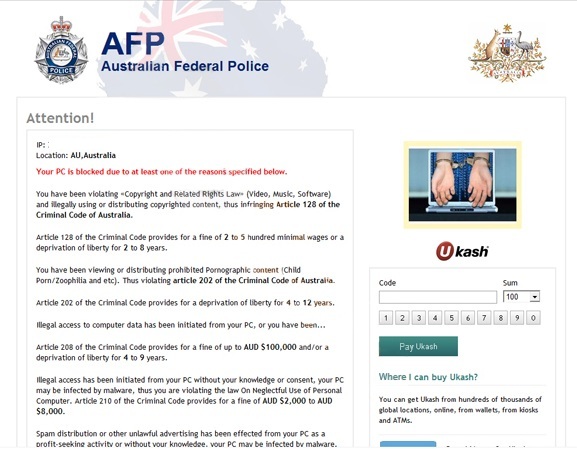
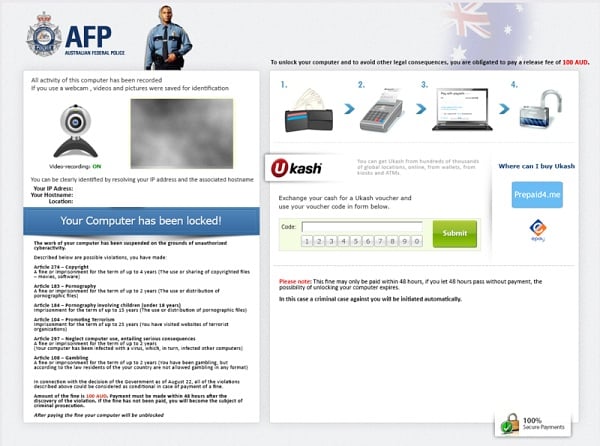
The bogus alert from the Australian Federal Police Ransom will display the following message:
AFP Australian Federal Police
Attention!
Your PC is blocked due to at least one of the reasons specified below. You have been violating “Copyright and Related Rights Law” (Video, Music, Software) and illegally using or distributing copyrighted content, thus infringing Article 128 of the Criminal Code of Australia. Article 128 of the Criminal Code provides for a fine of 2 to 5 hundred minimal wages or a deprivation of liberty for 2 to 8 years.
You have been viewing or distributing prohibited Pornographic content (Child Porn/Zoophillia anr etc.) Thus violating article 202 of the Criminal Code of Australia.
Article 202 of the Criminal Code provides for a deprivation of liberty for 4 to 12 years. Illegal access to computer has been initiated from your PC, or you have been… Article 208 of the Criminal Code provides for a fine of up to AUD $100,000 and/or a deprivation of liberty for 4 to 9 years.
Illegal access has been initiated from your PC without your knowledge or consent, your PC may be infected by malware, thus you are violating the law On Neglectful Use of Personal Computer. Article 210 of the Criminal Code provides for a fine of AUD $2,000 to AUD $8,00.
The Australian Federal Police Ransom is a scam, and you should ignore any alert that this malicious software might generate and remove this trojan ransomware from your computer.
Under no circumstance should you send any money to these cyber criminals, as this could lead to identity theft,and if you have, you should request a refund stating that the program is a scam and a computer virus.
Australian Federal Police (AFP) – Virus Removal Guide
This page is a comprehensive guide, which will remove the Australian Federal Police infection from your your computer. Please perform all the steps in the correct order. If you have any questions or doubt at any point STOP and ask for our assistance.
The Australian Federal Police will start automatically when you login to your computer and display its screenlocker so that you are unable to access your computer, therefore we will need to remove this infection by using any of the below methods:
OPTION 1: Remove Australian Federal Police lock screen virus with System Restore
OPTION 2: Remove Australian Federal Police virus with with HitmanPro Kickstart
OPTION 3: Remove Australian Federal Police virus with Kaspersky Rescue Disk
OPTION 1: Remove Australian Federal Police lock screen virus with System Restore
System Restore helps you restore your computer’s system files to an earlier point in time. It’s a way to undo system changes to your computer without affecting your personal files, such as e‑mail, documents, or photos.
Because the Australian Federal Police virus will not allow you to start the computer in Windows regular mode, we will need to start System Restore from the Safe Mode with Command Prompt mode.
STEP 1: Restore Windows to a previous state using System Restore
- Reboot your computer into Safe Mode with Command Prompt. To do this, turn your computer off and then back on and immediately when you see anything on the screen, start tapping the F8 key on your keyboard.
![[Image: F8 key]](https://malwaretips.com/blogs/wp-content/uploads/mwt-media/7b/7bfe81c611d48e45998c85234b21a111c419d163368a8828a4042c2c1d3cb431/7ca9c0c8c1c47c23e9c1581974ebb6a803ce5e47d7a875a2822fb33bd1da0e34-410.webp "Windows F8 key")
If you are using Windows 8, the trick is to hold the Shift button and gently tap the F8 key repeatedly, this will sometimes boot you into the new advanced “recovery mode”, where you can choose to see advanced repair options. On the next screen, you will need to click on the Troubleshoot option, then select Advanced Options and select Windows Startup Settings. Click on the Restart button, and you should now be able to see the Advanced Boot Options screen. - Using the arrow keys on your keyboard, select Safe Mode with Command Prompt and press Enter on your keyboard.
![[Image: Starting computer in Safe Mode with Command Prompt]](https://malwaretips.com/blogs/wp-content/uploads/mwt-media/ec/ec5f955ce7e8c53c9aa46e3550b558df79761ebdbcb28c68c6f7d2d4bcabd77b/67f5c065727c743c5c242670ebaa59ea51da5330c43f36d1a5be3b8143616853-600.webp "Advanced Boot Options screen")
- At the command prompt, type rstrui.exe, and then press ENTER.
![[Image: Start System Restore to remove lock screen virus]](https://malwaretips.com/blogs/wp-content/uploads/mwt-media/1f/1f8dc26b8d3fae2a9ab62df19881b6dd3edf568c16ec2c5e6e36a834a5570222/d1d8e993cf1f92994121747fedab53e3f57424bc322e4226aa9f94ed919ae5d1-668.webp "rstrui.exe command in Safe Mode with Command Prompt")
Alternatively, if you are using Windows Vista, 7 and 8, you can type: C:\windows\system32\rstrui.exe , and press Enter. And if you are a Windows XP user, type C:\windows\system32\restore\rstrui.exe, then press Enter. - System Restore should start, and you will display also a list of restore points. Try using a restore point created just before the date and time the Australian Federal Police lock screen virus has infected your computer.
![[Image: Restore settings to remove ransomware]](https://malwaretips.com/blogs/wp-content/uploads/mwt-media/1f/1ff0f376f2db5c08243fb4644df5c95d26b6e404c710209af6218c37238708a3/e1c9e35934b9f6ba83c09ab6dcc6135d124f7f01745fb149e31805b708f6d3aa-570.webp "Restore your computer's system files to an earlier point in time")
- When System Restore has completed its task, start your computer in Windows regular mode, and perform a scan with Malwarebytes Anti-Malware and HitmanPro, as seen in the next step.
STEP 2: Remove Australian Federal Police malicious files with Malwarebytes Anti-Malware Free
Even after using System Restore,
- You can download Malwarebytes Anti-Malware Free from the below link, then double-click on the icon named mbam-setup.exe to install this program.
Download MalwarebytesFree official installer. Your download starts right away. - When the installation begins, keep following the prompts in order to continue with the setup process, then at the last screen click on the Finish button.
![[Image: Malwarebytes Anti-Malware final installation screen]](https://malwaretips.com/blogs/wp-content/uploads/mwt-media/47/471448d4dd5aa1d55ea545effccf0ac9c8ccb5a29622da4e38ac677b5d8c37b5/9f473303c15a00262451cc5a56b904de929157b59e19e3cfb2c03ec88f643390-402.webp "Malwarebytes Anti-Malware installation screen")
- On the Scanner tab, select Perform quick scan, and then click on the Scan button to start searching for the Australian Federal Police malicious files.
![[Image: Malwarebytes Anti-Malware Quick Scan]](https://malwaretips.com/blogs/wp-content/uploads/mwt-media/1e/1eb209597ca2f06e596fd060345ac7e3100355f1ec8fc8ea2d9dec7abbb05ea0/3afba9b0b97b56945ffc33817ac48f7433c799241a22e422966180b76473a906-521.webp "Run a Quick Scan with Malwarebytes Anti-Malware")
- Malwarebytes’ Anti-Malware will now start scanning your computer for Australian Federal Police virus as shown below.
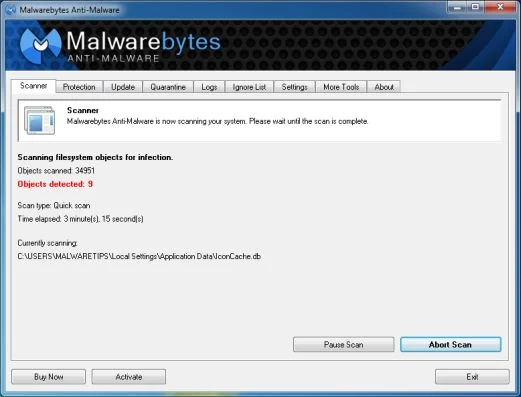
- When the Malwarebytes Anti-Malware scan has finished, click on the Show Results button.
![[Image: Malwarebytes Anti-Malware scan results]](https://malwaretips.com/blogs/wp-content/uploads/mwt-media/84/84c62dd46289424dbc686abc53672cb0810111920c8c0bbd69e973844d0a9ab0/a4c04aa700e641f47afec9965f79ff346740668e5952955ccbe5b4c3658b5897-521.webp "Malwarebytes when the system scan has completed")
- You will now be presented with a screen showing you the computer infections that Malwarebytes Anti-Malware has detected. Make sure that everything is Checked (ticked), then click on the Remove Selected button.
![[Image: Malwarebytes Anti-Malwar removing Australian Federal Police virus]](https://malwaretips.com/blogs/wp-content/uploads/mwt-media/d8/d86b6a8bac0e4ece9fd2d259a83db71487943f6b04b567edb0e9adcc3200f492/4eb94651b0e34cc99689c56dc71cd0a49444498ed05c5803ea55fda1cfee1b1f-521.webp "Malwarebytes Anti-Malwar removing Australian Federal Police virus")
STEP 3: Double-check for the Australian Federal Police virus with HitmanPro
- You can download HitmanPro from the below link:
Download HitmanProOfficial Sophos download. Free scan, free 30-day trial to remove threats. - Double-click on the file named HitmanPro.exe (for 32-bit versions of Windows) or HitmanPro_x64.exe (for 64-bit versions of Windows). When the program starts you will be presented with the start screen as shown below.
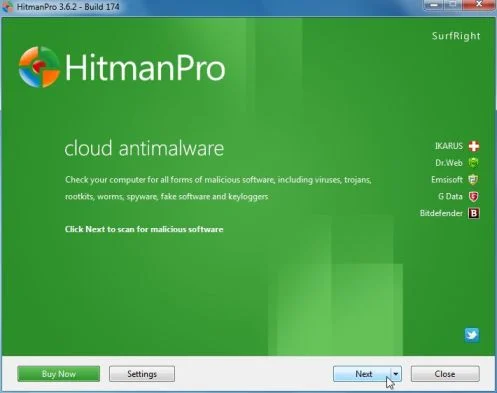
Click on the Next button, to install HitmanPro on your computer.
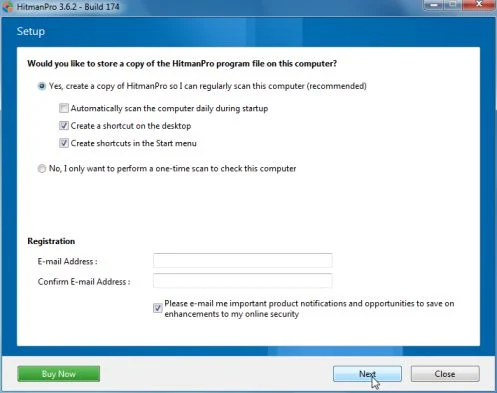
- HitmanPro will now begin to scan your computer for Australian Federal Police malicious files.
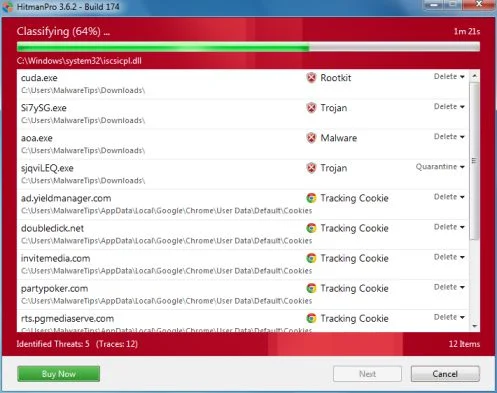
- When it has finished it will display a list of all the malware that the program found as shown in the image below. Click on the Next button, to remove Australian Federal Police virus.
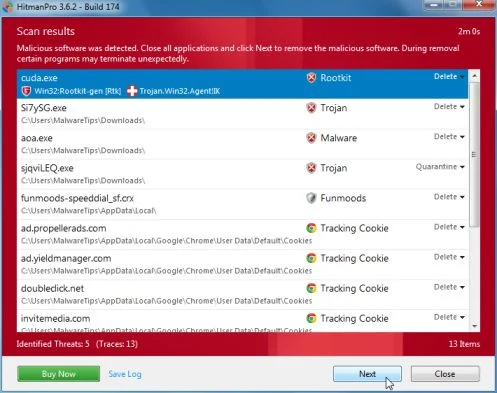
- Click on the Activate free license button to begin the free 30 days trial, and remove all the malicious files from your computer.
![[Image: HitmanPro 30 days activation button]](https://malwaretips.com/blogs/wp-content/uploads/mwt-media/7f/7f063c87fa029d8cd40df3f7faf43765ba1bb9e82c8d5a64c8a49de788018196/2a8400863f3c81fd7d6411e20166dfacdf0bc73e14522edea93a637003240dc1-497.webp "HitmanPro free 30 days trial")
OPTION 2: Remove Australian Federal Police virus with with HitmanPro Kickstart
If you cannot start your computer into Safe Mode with Command Prompt mode, we can use the HitmanPro Kickstart program to bypass Australian Federal Police lock screen.
As the Australian Federal Police ransomware infection locks you out of your computer, you will need to create a bootable USB drive that contains the HitmanPro Kickstart program.
We will then boot your computer using this bootable USB drive and use it to clean the infection so that you are able to access Windows normally again.
You will also need a USB drive, which will have all of its data erased and will then be formatted. Therefore, only use a USB drive that does not contain any important data.
- Using a “clean” (non-infected) computer, please download HitmanPro Kickstart from the below link.
Download HitmanProOfficial Sophos download. Free scan, free 30-day trial to remove threats. - Once HitmanPro has been downloaded, please insert the USB flash drive that you would like to erase and use for the installation of HitmanPro Kickstart. Then double-click on the file named HitmanPro.exe (for 32-bit versions of Windows) or HitmanPro_x64.exe (for 64-bit versions of Windows).
To create a bootable HitmanPro USB drive, please follow the instructions from this video:
- Now, remove the HitmanPro Kickstart USB drive and insert it into the Australian Federal Police infected computer.
- Once you have inserted the HitmanPro Kickstart USB drive, turn off the infected computer and then turn it on. As soon as you power it on, look for text on the screen that tells you how to access the boot menu.
![[Image: Windows Boot Menu screens]](//malwaretips.com/blogs/wp-content/uploads/2013/06/windows-boot-manager.jpg "Windows Boot Menu screens")
The keys that are commonly associated with enabling the boot menu are F10, F11 or F12. - Once you determine the proper key (usually the F11 key) that you need to press to access the Boot Menu, restart your computer again and start immediately tapping that key. Next, please perform a scan with HitmanPro Kickstart as shown in the video below.
- HitmanPro will now reboot your computer and Windows should start normally. Then please Malwarebytes Anti-Malware and HitmanPro, and scan your computer for any left over infections.
![[Image: Windows Boot Menu screens]](http://malwaretips.com/blogs/wp-content/uploads/2013/06/windows-boot-manager.jpg "Windows Boot Menu screens")
OPTION 3: Remove Australian Federal Police virus with Kaspersky Rescue Disk
If any of the above methods did not clean your infected computer, we can use a Kaspersky Rescue Disk Bootable to clean the Windows registry and to perform a system scan to remove the Australian Federal Police virus.
To create a bootable Kaspersky Rescue Disk, we will need the following items:
- A clean (non-infected) computer with Internet access
- A blank DVD or CD
- A computer with a DVD or CD burner
STEP 1: Download and create a bootable Kaspersky Rescue Disk CD
- You can download Kaspersky Rescue Disk utility from link below:
Download Kaspersky Rescue DiskOpens the download page in a new tab. - To create the bootable rescue disk, we will need to use the ImgBurn program. You can download ImgBurn from the below link, then install this program.
Download ImgBurnOpens the download page in a new tab. - Insert your blank DVD or CD in your burner, then start ImgBurn and click on the Write image file to disc button.
- Under Source click on the Browse for file button, then navigate to the location where you previously saved the Kaspersky Rescue Disk utility (kav_rescue_10.iso), then click on the Write button.
![[Image: Bootable Kaspersky Rescue CD]](https://malwaretips.com/blogs/wp-content/uploads/mwt-media/15/15f1f4ac50c7c4b5d5003d9b017245318853d59e27101621c589ba7c177012d4/cbc48ec38f5b713f46172229d07236dea95d7c7ee2dddeca2da1edb2540e9bb3-545.webp "Creating Kaspersky Rescue Disk bootable CD")
That’s it, ImgBurn will now begin writing your bootable Kaspersky Rescue Disk.
STEP 2: Start your computer using the Kaspersky Rescue Disk
- Once you’ve got the Kasperky Rescue Disk in hand, insert it into the infected computer, and turn off and then turn it on again.
- As soon as you power it on, you will see a screen that tells you to press any key to enter the menu, so please tap any key to boot your machine from the Kaspersky Rescue Disk.
![[Image: Starting infected computer from Kaspersky Rescue Disk]](https://malwaretips.com/blogs/wp-content/uploads/mwt-media/b7/b74e4eb1adf86a5eeeaec5192b1eae0362ce12921684602d426dc2a0167ac3dc/d61afe738972b215fef6ddd0fd56bdafb092d9ab1a16d902cb1e0bbada9efe99-650.webp "Starting infected computer from Kaspersky Rescue Disk")
- In the next screen, you will need to chose a language, then you click on Kaspersky Rescue Disk. Graphic Mode and press ENTER, to start the Kaspersky Rescue Disk.
![[Image: Kaspersky Rescue Disk Graphic Mode screen]](https://malwaretips.com/blogs/wp-content/uploads/mwt-media/d2/d2b5ce8e9855ed0ccec481c038ab3c354278ae1d7b4f9bc8e898a54ef08df304/e92c54797352eebde8e13c0354126d655983c2f975e30434381468255df40a98-650.webp "Kaspersky Rescue Disk Graphic Mode screen")
STEP 3: Scan your system with Kaspersky Rescue Disk
- Within a few short seconds you should see the full working environment, with the Kaspersky Rescue Disk screen front and center as shown below.
![[Image: Kaspersky Rescue Disk scanner]](https://malwaretips.com/blogs/wp-content/uploads/mwt-media/ca/ca8ea6050bb72cfb2b88116c3c644be8e3ee43f7c3b589017a544dcc81a8a6e6/087407af0217e26484d69b7d8c5d5859220083f45c7edef44dc36cf48ac80ce0-896.webp "Kaspersky Rescue Disk scanner")
- Switch tabs over to the My Update Center, and then click the Start update button to load the latest anti-virus definitions. Please be patience while this process its completed.
![[Image: Updating Kaspersky Rescue Disk antivirus definitions]](https://malwaretips.com/blogs/wp-content/uploads/mwt-media/82/82b05aa5b81f5d9d25572e3573638090ba12a230e3c0be1d54b92e86c8226635/c74f22b2fd375f37967c4092a1c489197a24c2cdbc4f571ba521736fc2c10e26-824.webp "Updating Kaspersky Rescue Disk antivirus definitions")
- Switch back over to the Objects Scan tab, select the drives you want to scan, and then click the Start Objects Scan button.
![[Image: Kaspersky Rescue Disk scan]](https://malwaretips.com/blogs/wp-content/uploads/mwt-media/d1/d110635f176372a72fbb9ce85d5c891351c001da96152da37a154f3dd2607efc/ea69d5d902b9bcdc3a546a4898a06d57fd8545ba35b5f4f6d3e8a9d8eb5b99d3-748.webp "Kaspersky Rescue Disk scan")
- When Kaspersky Antivirus will detect the Australian Federal Police virus, you’ll be prompted to select an action. When this happens, please select Quarantine or Delete to remove this infection from your computer.
![[Image: Kaspersky Rescue Disk prompt]](//malwaretips.com/blogs/wp-content/uploads/2013/06/Kaspersky-Rescue-Disk-alarm.png "Kaspersky Rescue Disk when detecting malware")
- When the antivirus scan has completed, you can restart back into Windows regular mode, by clicking on the Kaspersky Start button
![[Image: Kaspersky Rescue Disk Restart button]](https://malwaretips.com/blogs/wp-content/uploads/mwt-media/cd/cd717730f5b93c2fa22dddf5e4fea511a91584739d4ca9ed7262b489952e0e44/cab896c6574a4b9ff7d45084a95ab408cd92bb078b3a819bb362ac18d95e389a-34.webp "Kaspersky Rescue Disk Restart button") (lower left corner), and selecting Restart.
(lower left corner), and selecting Restart.
Once your computer will start in Windows regular more, download Malwarebytes Anti-Malware and HitmanPro, and scan your computer for any left over infections.
![[Image: Kaspersky Rescue Disk prompt]](http://malwaretips.com/blogs/wp-content/uploads/2013/06/Kaspersky-Rescue-Disk-alarm.png "Kaspersky Rescue Disk when detecting malware")
Your computer should now be free of the Australian Federal Police infection. If your current anti-virus solution let this infection through, you may want to consider purchasing the PRO version of Malwarebytes Anti-Malware to protect against these types of threats in the future, and perform regular computer scans with HitmanPro.
If you are still experiencing problems while trying to remove Australian Federal Police Ukash virus from your machine, please start a new thread in our Malware Removal Assistance forum.

Join the discussion
152 commentsShare your experience or ask a question about this article.
Your progress
Did these steps help?
Let us know how the guide worked for you.
Describe what you see and the step you reached. Keep passwords and other private information out.
Discussion
My Iphone 6 was hit yesterday with this heart stopping virus. What an accusation!! I was using a video download app when it happened. Also the mobile reception here in the country is very bad.
Quickly, I closed app turn off phone before it took me further down a dark alley. Then Powered up to check safari and deleted app.
Safari works… Phone works…
Could i have got out before it could have infected my device?
Would the afp actually send warning and accusations at all? You think they would get the evidence and come arrest you??
In reply to K
Hello,
You are safe, the police is not looking for you :). This pop-up is a scam. Please reefer to this post for more details: https://malwaretips.com/blogs/remove-fbi-virus-from-iphone-and-ipad/
Please note that in some cases, the router may be infected, in this case, you will just need to reset the router on its default settings (to do this, keep pressed for 30 seconds the RESET button on the back of your router).
You can also ask for FREE malware removal support in the Malware Removal Assistance forum – https://malwaretips.com/forums/malware-removal-assistance.10/ . In this support forum, a trained staff member will help you clean-up your machine by using advanced tools. Never used a forum? Learn how- https://malwaretips.com/help/welcome-guide/
Hello Layaknsk,
Please take a look at this thread.. – https://malwaretips.com/threads/mandiant-virus-on-lg-google-smart-tv.52900/ – it depends on the TV brand, usually you will need to reset it to its default settings. Also make sure to disconnect it from the Internet while trying to perform a cleanup…..
Hello Kate,
Please follow this guide: https://malwaretips.com/blogs/android-police-virus-removal/
I have recently contracted the AFP virus (two days ago) cryptolocker virus.
please advise me if you have a solution to attack this new version.
if you can solve this for me I will definitely donate money to your site to assist you fighting these criminal lowlifes praying on innocent people.
with all their knowledge they should be able to earn a honest living
Hi can you tell me how to remove the afp virus from my ipad air thanks del
Thank you so much
So when i got this virus i just did a malwarebytes scan, no more lock screen. Two additional scans found nothing. Should i consider myself in the clear?
In reply to Nevr
Hello,
If the Malwarebytes and HitmanPro scans said that your PC is clean, then you’ve got nothing to worry about. :)
Thank you man! You’re the best!!
Hey I got this virus and restarted my computer in safe mode with networking. When I did a did a scan using malwarebytes nothing came up? Does that mean I am in the clear?
In reply to Rose
Hello,
I would also perform the HitmanPro scan just to be on the safe side, however you should be safe! :)
Hi, I believe my computer has been affected by this virus. I tried Option 1 – and managed to restart my computer to a previous state. However, when I tried to do steps 2 and 3 (scanning and attempting to remove the virus with both Malwarebytes and HitmanPro), the scans both came up and said that there were no threats found. How can I be sure that there is no virus still on my computer?
In reply to Gladys
Hello,
If Malwarebytes and HitmanPro did not find any threats, then you should be fine.
If you really want to make a third check you can use these tools:
STEP 1: Run a scan with Emsisoft Emergency Kit.
1. Please download the latest official version of Emsisoft Emergency Kit: http://www.emsisoft.com/en/software/eek/
2. After the download process will finish , you’ll need to unpack EmsisoftEmergencyKit.zip and then double click onEmergencyKitScanner.bat
3. A pop-up will prompt you to update Emsisoft Emergency Kit , please click the “Yes” button.After the Update process has completed , put the mouse cursor over the “Menu” tab on the left and click-on “Scan PC”.
4. Select “Smart scan” and click-on the below “SCAN” button.When the scan will be completed , you will be presented with a screen showing you the malware infections that Emsisoft Emergency Kit has detected.Make sure that everything is Checked (ticked) and click on the ‘Quarantine selected objects’ button.
STEP 2: Run a scan with Eset Online Scanner.
1.Download ESET Online Scanner utility.
ESET Online Scanner Download Link (This link will automatically download ESET Online Scanner on your computer.)
2. Double click on the Eset installer program (esetsmartinstaller_enu.exe).
3.Check Yes, I accept the Terms of Use, then click the Start button.
4.Check Scan archives and push the Start button.
5. ESET will then download updates for itself, install itself, and begin scanning your computer. Please be patient as this can take some time.
When the scan completes, push Finish
STEP 3: Run a scan with Kaspersky Virus Removal Tool:
1. You can download from Kaspersky Virus Removal Tool from here : http://www.kaspersky.com/antivirus-removal-tool?form=1
2. Double click the setup file to run it, then follow the onscreen prompts until it is installed
Click the Options button (the ‘Gear’ icon), then make sure only the following are ticked:
System Memory
Hidden startup objects
Disk boot sectors
Local Disk (C:)
Also any other drives (Removable that you may have)
3. Then click on Actions on the left hand side
4. Click Select Action, then make sure both Disinfect and Delete if disinfection fails are ticked
5. Click on Automatic Scan, then click the Start Scanning button, to run the scan
Stay safe!
Is a system restore vital or can it just be cleaned in safe mode with both of your program’s?
In reply to Dereck
Hello Dereck,
You could boot into Safe Mode with Command Prompt, type “explorer.exe” and then use a USB stick to bring Malwarebytes and HitmanPro on the infected computer.
Also, take a look at Option 2, it’s pretty easy to follow …
Stay safe!
Hi there, option one didn’t working. There was a system restore error. Now I have a basic desktop. Please help!
In reply to Darren
Hello,
Can you pleas try to create a bootable HitmanPro USB. Let me know if it worked!
can it infect a mac?
In reply to Hamish
Hello,
Yes, but unlike the Windows infection, it just affects your web browser, follow this guide to clean your MAC OS X: http://malwaretips.com/blogs/your-browser-has-been-locked-fbi-mac-os-x/
Thank you. Option 1 worked a treat. Very much appreciated.
theyshiuldshut ukash down because of this scam
When I try to run my computer in safe mode, it just shuts itself down just before windows starts and reboots. What should I do?
In reply to Paul
Hell Paul,
Have you tried to create a HitmanPro bootable USB stick?
Hi I have this virus and I can’t get the computer to even start in any safe mode. It keeps rebooting my computer. What should I do?
In reply to Paul
Hello,
Did you manage to create a bootable HitmanPro USB stick or Kaspersky Rescue Disk?
thanks mate,you have restored my faith in man.your system worked a treat.
Hi Stelian,
I received the AFP message while watching online porn and I couldn’t leave the page so I used the Power button to shut down my computer. However, after that I was able to log in to my computer and everything seems fine. Does that mean I shouldn’t watch porn from that particular website? I will be reformatting my window, that should do the trick right? Please reply. Thanks
In reply to Raj
Hello,
There are plenty of website with adult content, so I would avoid that particular site.
Now, even if you do not have the AFP lockscreen, you might have some malicious files on your computer. Just to be on the safe side, I would perform a scan with Malwarebytes Anti-Malware and HitmanPro.
Also, please update Java (If installed) to its latest version!
Stay safe!
In reply to Stelian Pilici
Thanks for replying Stelian. I decided to reformat my windows to be on the safe side.
Thanks for your time buddy.
In reply to Raj
Hello,
An time consuming method, but it works! :)
Stay safe Raj!
Hi, I received the same message and it wouldn’t let me leave the page initially, however I used the ‘start task manager’.. ‘end task’, and it clicked off. I have then restarted my computer a couple of times (as I normally would), and I am not receiving any more messages. As far as I can tell my PC seems to be working fine. Have I just got lucky? Do I still need to follow the steps? or is it all fine? everything seems fine. Any advice would be appreciated. Thank you!
In reply to Rob
Hello Rob,
You should really scan your computer with Mawlarebytes Anti-Malware and HitmanPro, to check for any malicious file that might be on your computer.
Stay safe!