

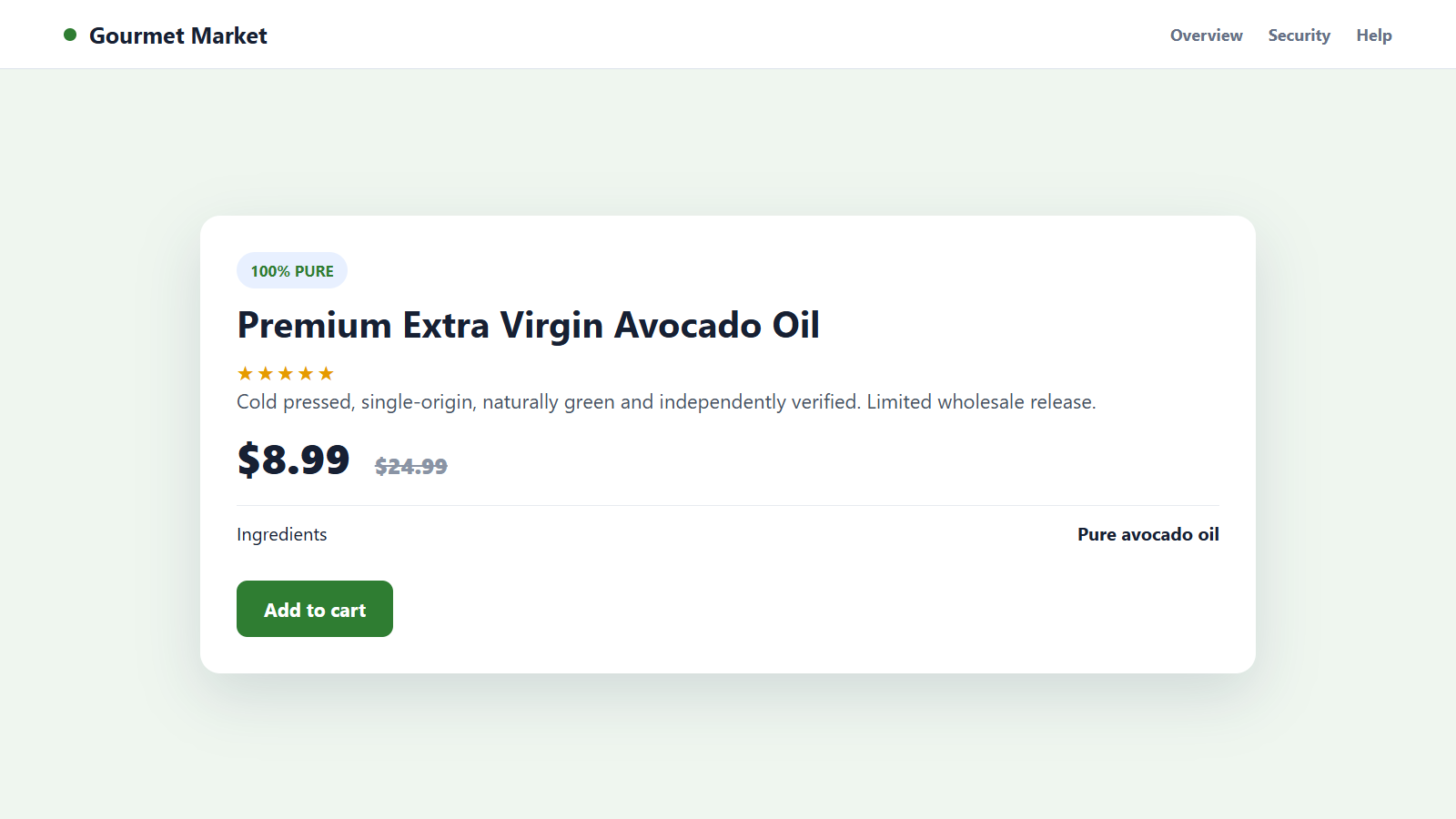
The bottle says pure avocado oil. The price is premium, the label sounds wholesome, and the ingredient list gives no reason to expect anything else.
An avocado oil scam is harder to spot than a fake checkout because the product can be real, sealed, and sitting on a familiar shelf. The deception may be hidden in chemistry rather than spelling mistakes.
Overview
The label can promise more than the product contains
Avocado oil fraud includes products diluted or replaced with cheaper oils, sold after severe oxidation, or marketed with quality terms the contents do not support. The buyer pays for one oil and receives something materially different.
Adulteration is not always visible. Refined oils can share a pale color and mild flavor, while a blend may remain usable in cooking even though the label says 100% avocado oil.
Research shows the problem is not hypothetical
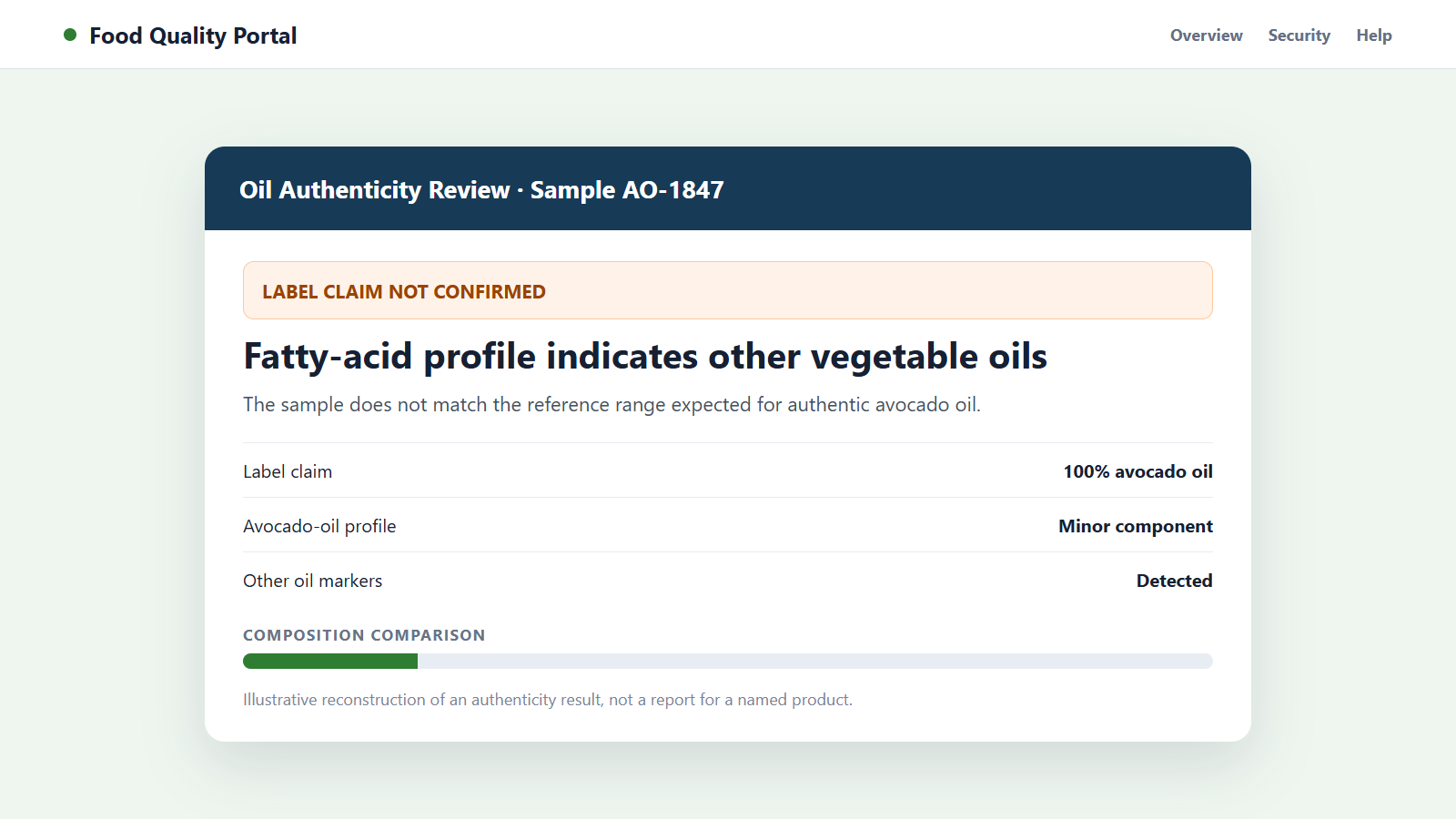
UC Davis researchers reported in 2020 that 82% of 22 commercial avocado-oil samples were stale or mixed with other oils. Three bottles labeled pure or extra virgin were close to 100% soybean oil.
A 2026 UC Davis study tested 54 processed foods whose ingredient lists named avocado oil as the only oil. It found other oils in 48 products, or 89% of the sample.
Consumers cannot confirm purity from appearance alone
Color, aroma, price, packaging, and a familiar retailer can provide clues about quality, but none can authenticate the oil. Reliable identification usually requires laboratory analysis and a traceable supply chain.
Warning signs worth investigating include:
- A very low price paired with strong claims such as rare, single-origin, and extra virgin.
- No harvest, production, bottling, or best-before information.
- A seller that cannot identify the producer or country of origin.
- An ingredient list that conflicts with marketing elsewhere on the package.
- A rancid odor resembling crayons, putty, stale nuts, or old cooking oil.
- Quality seals that do not lead to a real certifying organization.
- A marketplace listing that changes brand names while keeping identical reviews.
- Medical promises that go far beyond ordinary food labeling.
What Avocado Oil Adulteration Actually Means
Adulteration can involve outright substitution, where little or no avocado oil is present. It can also involve dilution, where a smaller quantity is blended with less expensive soybean, canola, sunflower, safflower, or another vegetable oil.
Quality failure is related but different. Genuine avocado oil can become oxidized because of poor fruit, rough processing, heat, light, oxygen, long storage, or unsuitable packaging.
A stale product is not necessarily evidence that a retailer knowingly committed fraud. It may reflect a broken supply chain, weak quality control, an old batch, or inaccurate storage instructions.
That distinction matters when reporting a problem. A laboratory can find that a sample falls outside an expected chemical profile, but identifying who caused the mismatch requires records from suppliers, manufacturers, packers, and sellers.
Grade terms also carry assumptions. Consumers often expect extra virgin oil to be mechanically extracted, minimally processed, and free from sensory defects, while refined oil is processed to remove color, odor, or impurities.
The avocado-oil market is younger than the olive-oil market and has lacked the same depth of enforceable, harmonized standards. UC Davis maintains an avocado-oil research program focused on authentic composition, detection methods, and standards alignment.
Natural avocado oil varies by fruit variety, origin, ripeness, harvest time, and processing. That variation is why responsible testing uses several chemical markers rather than a single simplistic rule.
For shoppers, the practical lesson is modest. A dark bottle, green color, or high smoke-point claim may be useful context, but no single feature proves that the label is accurate.
The same caution applies to processed foods. A chip or dressing can advertise avocado oil prominently even when its overall health profile depends on many ingredients, serving size, and manufacturing choices.
How the Avocado Oil Scam Works
Step 1: A premium ingredient creates a price gap
Authentic avocado oil costs more to produce than many commodity seed oils. That difference creates an incentive to substitute a cheaper ingredient while keeping the premium retail price.
The wider the gap between production cost and shelf price, the more money a dishonest participant can gain from each diluted batch.
Step 2: Oil moves through a complicated supply chain
A brand may buy bulk oil through processors, brokers, importers, distributors, or private-label suppliers. The name on the bottle is not always the company that pressed the fruit.
Each handoff makes documentation and testing important. If a buyer relies only on a supplier certificate, adulterated or mislabeled material can travel surprisingly far.
Step 3: Cheaper oil is substituted or blended
The offending material may be mostly another oil, a blend containing some avocado oil, or authentic oil mixed with an undeclared ingredient. The label continues to present it as pure.
Refining can reduce strong flavors and colors, making sensory detection difficult. A shopper may notice nothing unusual while using the product.
Step 4: Marketing supplies a premium identity
The package uses phrases such as 100% pure, extra virgin, cold pressed, naturally refined, heart healthy, or chef quality. Images and earthy colors support the same story.
Some claims may be vague rather than regulated grades. A polished label can create confidence without showing who tested the oil, when it was produced, or which standard was applied.
Step 5: Retail placement transfers trust
Customers assume that a known supermarket or large marketplace verified every purity statement. Retailers do set requirements, but complex sourcing can still allow a problematic lot onto shelves.
Online listings add another layer because inventory from different sellers may share a product page. Reviews can refer to batches, suppliers, or formulations different from the one delivered today.
Step 6: Shelf time hides a second quality problem
Even authentic oil can degrade before use. Clear packaging, heat during transport, long warehouse storage, or an unreliable best-before date can leave the buyer with rancid oil.
The consumer may blame personal taste because the product is unfamiliar. That uncertainty reduces complaints and lets stale inventory keep moving.
Step 7: The buyer has little evidence at home
Kitchen tests shared online, including refrigerator tests, color checks, and improvised smoke tests, cannot reliably establish purity. They can produce false reassurance or wrongly condemn a genuine oil.
Without a sealed comparison sample and validated laboratory method, the shopper can document a concern but usually cannot identify the exact adulterant.
Step 8: Weak feedback allows the cycle to continue
A disappointed customer may discard the bottle without reporting the lot number. The seller sees only a routine return, while regulators and manufacturers receive no useful pattern.
Clear complaints with photographs, batch codes, receipts, and remaining product give responsible companies and food authorities a much better chance to investigate.
What the UC Davis Findings Do and Do Not Prove
The 2020 study examined 22 avocado-oil samples sold in the United States. It found only two refined samples and one extra-virgin sample that met both purity and quality expectations.
Those results were important, but they were a market sample rather than a test of every bottle, every production lot, or every brand available now. A later purchase can come from a different supplier or harvest.
The 2026 processed-food study tested products purchased during 2025 and 2026 from California stores and online retailers. Other oils appeared in 93% of sampled chips, 71% of sampled mayonnaise, and 100% of sampled dressings.
Researchers used a conservative 10% margin to account for possible minor ingredients and measurement factors. Products exceeded that allowance before being classified as adulterated.
The findings support stronger supplier verification and clearer standards. They do not justify accusing every avocado-oil producer or every avocado-labeled food of fraud.
A responsible article should avoid turning a category-level problem into a claim about a named product that was never tested. Batch-specific evidence matters.
How to Shop More Carefully
- Choose a size you can finish while the oil is fresh.
- Prefer packaging that protects the contents from light and heat.
- Look for a clear producer, origin, lot code, and best-before date.
- Read the ingredient list instead of relying on the front label.
- Be cautious when a very low price conflicts with premium production claims.
- Check whether a certification mark belongs to a real, independent body.
- Store the oil as directed and close it promptly after use.
- Keep the receipt and photograph the lot code before discarding a bad product.
Unrefined avocado oil can have a green hue and a grassy or buttery character. Refined avocado oil is normally lighter and milder, so pale color alone does not prove substitution.
Likewise, a high price is not an authenticity test. It can support a producer’s real costs, but a dishonest seller can charge a premium for adulterated material.
Independent testing programs can add useful evidence when their methods, sampling dates, and results are transparent. A vague badge reading lab tested has little value without the laboratory and standard.
If a brand answers sourcing questions clearly and publishes meaningful quality controls, that is better than anonymous marketplace copy. It still does not turn marketing into laboratory proof.
Company, Address, and Fulfillment Checks
The company should identify its role in production
Find out whether the named business grows fruit, presses oil, imports bulk product, blends batches, or simply applies a private label. The role determines which records it should hold.
A responsible seller can explain the producer, country of origin, processing type, and method used to confirm incoming material.
The address should lead to an accountable operator
Check that the package or listing provides a real business address and consumer-contact route. A hidden seller with only a disposable email is difficult to hold responsible.
For imported foods, the label should identify the appropriate domestic company or importer required by local rules. Report conflicting identities to the retailer.
The batch details must be specific
A lot or batch code lets the manufacturer trace production, supplier records, and distribution. Photograph it together with the best-before date and package before making a complaint.
If support refuses to discuss the code or says every bottle is identical, ask the retailer or food authority how to preserve the sample.
The promised quality controls should be verifiable
Claims about third-party testing should name the program or provide a meaningful certificate tied to the lot. A generic laboratory graphic can be created by anyone.
Look for methods addressing both purity and oxidation. A test that covers only one property cannot support every claim printed on the package.
What to Do if You Have Fallen Victim to This Scam
- Stop using a product that seems unsafe. Seal the container and keep it away from heat. Seek medical advice if anyone has symptoms or a relevant food allergy.
- Preserve the package and remaining oil. Keep the receipt, lot code, best-before date, seller listing, shipping label, photographs, and correspondence. Do not mail the only sample until an authority explains how.
- Contact the retailer and manufacturer. Describe the odor, taste, label conflict, or other concern precisely. Ask for a written response and the procedure for a lot-level quality complaint.
- Request a refund through the original channel. If the product materially differs from its label, use the retailer’s return process or ask the card provider about available dispute rights.
- Report suspected mislabeling. In the United States, use the FDA safety reporting guidance. Other countries have their own food-safety or trading-standards authority.
- Do not diagnose purity with a home trick. Document what you observed, but avoid declaring a specific adulterant without validated testing.
- Check allergy exposure. An undeclared oil can matter to people with allergies or dietary restrictions. Provide the package and ingredient statement to a clinician when asking for advice.
- Secure your account if the seller was fraudulent. Change a reused password and monitor the payment method if you bought from a suspicious standalone site.
- Scan unexpected downloads. If the shop required a coupon app, invoice file, or browser extension, remove it and run Malwarebytes to check the device.
- Reduce malicious shopping redirects. AdGuard can block many known scam pages, harmful ads, and trackers, but it cannot chemically authenticate food.
- Warn others with accurate details. State the exact lot, purchase date, seller, and documented issue. Avoid extending one experience into unsupported claims about every batch.
- Be skeptical of paid testing offers. A stranger who promises a guaranteed legal payout or asks for an advance investigation fee may be exploiting the original complaint.
Frequently Asked Questions
Can I tell pure avocado oil by its color?
No. Unrefined oil is often greener, while refined oil is lighter. Variety and processing affect appearance, and other oils can be blended without an obvious visual change.
Does avocado oil become solid in the refrigerator?
Cold behavior varies and is not a dependable home authenticity test. Refrigeration can provide observations, but it cannot replace validated chemical analysis.
Is refined avocado oil automatically fake?
No. Refining is a legitimate processing method when the product is labeled accurately. Purity and grade are separate questions.
Does a rancid smell prove another oil was added?
No. Rancidity shows oxidation or quality failure, not necessarily substitution. Genuine avocado oil can become stale through age, heat, light, or poor storage.
Are foods made with avocado oil always healthier?
No. The complete ingredient list, nutrition profile, portion, and processing matter. An avocado-oil claim does not erase salt, sugar, calories, or other ingredients.
Should I avoid the entire product category?
That is not necessary. Buy from accountable sellers, check traceability and freshness, store oil properly, and report specific quality concerns with batch evidence.
The Bottom Line
An avocado oil scam can hide behind a professional label because shoppers cannot see dilution or oxidation at checkout. Research shows that purity and quality failures deserve serious attention.
Choose traceable products, treat sensory clues as warnings rather than proof, and preserve the lot information when something seems wrong. Better evidence protects both consumers and honest producers.

Join the discussion
0 commentsShare your experience or ask a question about this article.
Discussion
Start the conversation
Have a question or something useful to share? Add the first comment.