

If you’ve come across ads promising a 15-second “Elephant Root Trick” that can instantly boost testosterone, reverse performance issues, and transform your energy levels overnight—you’re not alone. These viral promotions have taken over YouTube, Facebook, and clickbait websites, all pushing a supposed “ancient African ritual” to restore manhood naturally.
But what’s really behind this so-called trick? Is there any truth to it? Or is it just another shady marketing ploy to sell unproven supplements under false pretenses?
This article dives deep into the Elephant Root Trick for Men scam—how it works, why it’s misleading, and what to do if you’ve already fallen for it.
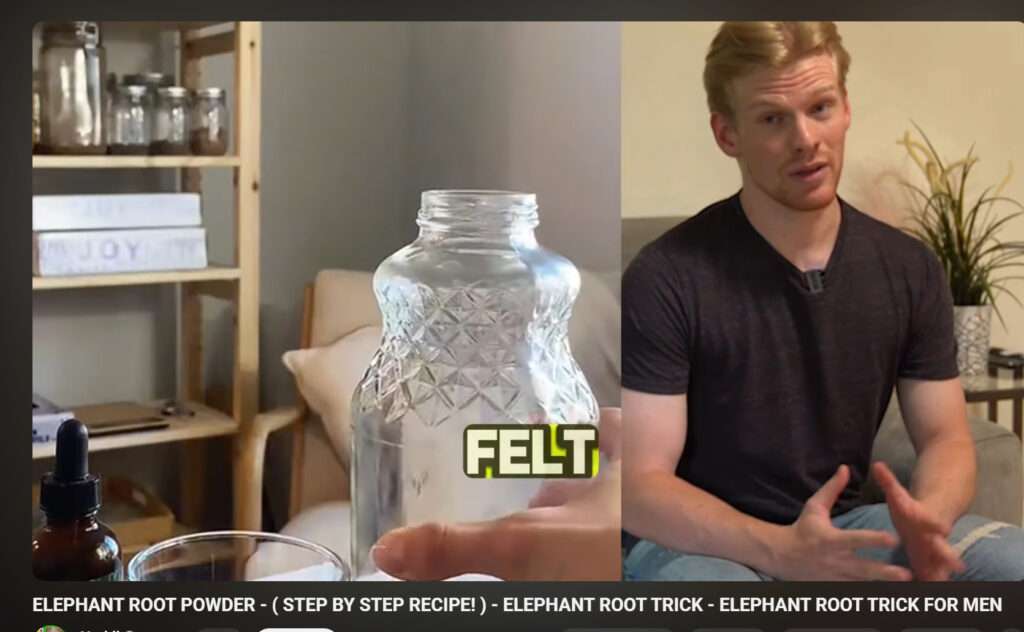
The Myth of the “Elephant Root Trick”
The “Elephant Root Trick” is part of an elaborate online scam that promotes unverified testosterone supplements using emotional storytelling and exotic-sounding marketing language. The product at the center of this campaign is often a capsule called Beast Force or Mitolyn, both sold as natural solutions for boosting male performance.
The premise is simple but powerful: a mysterious African ritual involving a secret “Elephant Root” has been discovered by scientists and can allegedly remove “toxins” from testosterone-producing cells, restoring energy and masculinity in just seconds.
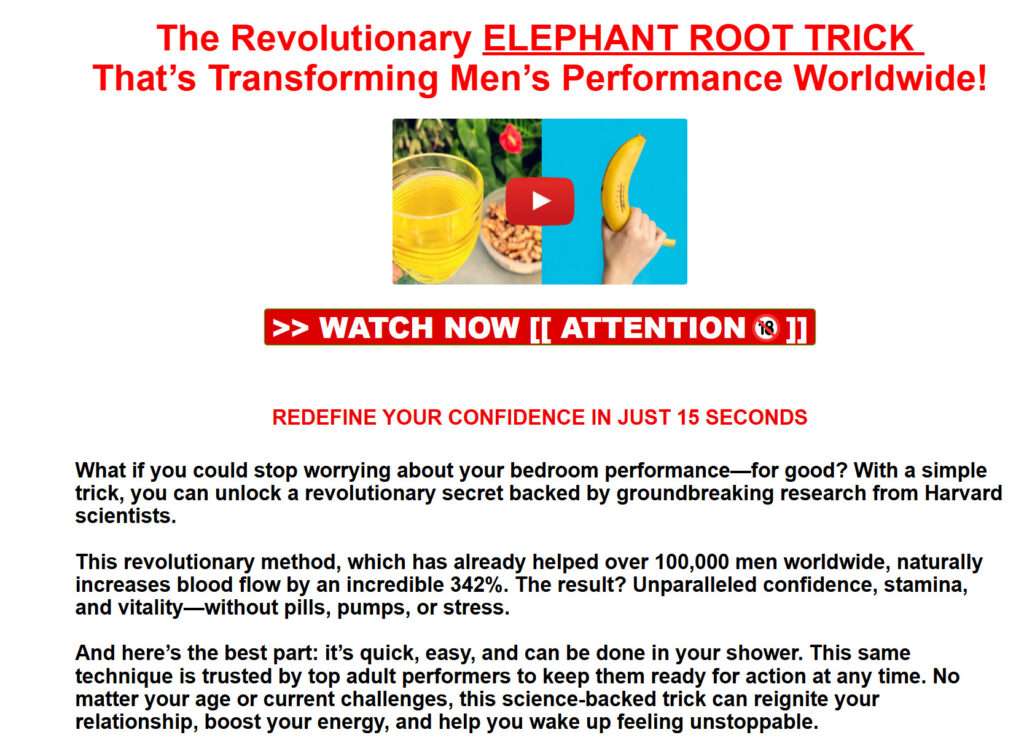
These campaigns claim:
- The trick is backed by scientific studies
- It boosts testosterone naturally without side effects
- You’ll see results in just days
- It’s endorsed by thousands of men around the world
However, a closer examination reveals serious issues.
1. Fake Stories and Characters
Most of these ads are built around fabricated stories. You’ll see names like “Robert” or “James” who went from struggling with self-esteem and performance to becoming irresistible to women after trying the Elephant Root Trick. These characters are fictional and designed solely to hook viewers with emotion.
2. Nonexistent Ingredient
There is no known medicinal plant called “Elephant Root” in any scientific or ethnobotanical database. The name is made up to sound mysterious and masculine, without offering any actual botanical or pharmacological insight.
3. No Scientific Backing
The websites and videos often reference “recent studies” or “research from Harvard” but never link to any peer-reviewed sources. A search through medical journals returns zero evidence supporting the claims made about the trick or the supplements being sold.
4. Misuse of Cultural References
The scam irresponsibly refers to “ancient African rituals” and tribal knowledge to add authenticity, but without offering any proof, cultural context, or respect. This is not only misleading but also exploitative.
5. Deepfake and AI-Generated Testimonials
In many cases, the promotional videos use deepfake visuals and AI voices to simulate real people giving glowing testimonials. These are not authentic reviews but scripted and digitally altered content designed to deceive.
6. The Real Goal: Selling Beast Force
After watching a long video or clicking the ad, users are funneled toward purchasing a supplement—usually Beast Force. The sales pitch includes:
- Time-limited discounts
- “Free bonus bottles” with your order
- Claims of “doctor-formulated” ingredients
There is no proof of the ingredients, no safety testing, and no verified manufacturer behind the product. The checkout pages are often designed to enroll you in recurring billing programs without your clear consent.
How the Elephant Root Trick Scam Works
To fully understand how this scam operates, let’s walk through the entire funnel from ad to checkout.
Step 1: The Hook (Clickbait Ads)
It starts with a video ad or social media post. The headline might say:
- “60-Second Ritual Restores Manhood at Any Age”
- “Secret Root Used by African Tribes Boosts Testosterone”
- “Doctors Want This Taken Off the Internet”
The ads often feature dramatic transformations, a mysterious backstory, and promises of instant results. They’re designed to appeal to common insecurities about aging, energy, and masculinity.
Step 2: The Long-Form Video
Once you click the ad, you’re taken to a page like dailyhealthflow.com or wellnesssupportnow.org. A video starts automatically and lasts between 30 and 60 minutes. The video:
- Delays the “reveal” of the trick until the very end
- Repeats the same marketing phrases to build emotional pressure
- Uses fake urgency (“This video may be deleted soon”)
- Eventually pitches Beast Force as the “solution”
The Elephant Root Trick is never actually explained. The video is just a drawn-out sales pitch.
Step 3: The Fake Authority
During the video, you’ll hear claims like:
- “Backed by doctors”
- “Clinically tested formula”
- “Used by over 80,000 men”
None of this is verifiable. No doctor names are given. No ingredients are shared. No clinical trials are cited.
Step 4: The Checkout Trap
Once convinced, users are taken to a checkout page that includes:
- Bundled discounts for 3 or 6 bottles
- A “risk-free” 60-day guarantee
- Automatic subscription to recurring monthly charges (often hidden in the fine print)
There’s usually no customer support contact listed, or if there is, emails go unanswered.
Step 5: Aftermath
After purchasing, victims often report:
- The product not working at all
- Side effects like stomach issues or headaches
- Difficulty canceling auto-renewals
- Receiving spam calls and emails
- No way to contact customer service
This is a classic bait-and-switch scam, preying on male insecurity with false hope and fake science.
What to Do If You Fell for the Elephant Root Trick Scam
If you’ve already purchased the product or submitted your information, here’s what to do:
1. Cancel and Dispute the Charge
Contact your credit card company or bank immediately:
- Request a chargeback for deceptive advertising
- Block future charges from the merchant
- Cancel any subscription tied to the transaction
2. Report the Scam
Use these official channels:
- FTC: reportfraud.ftc.gov
- BBB Scam Tracker: bbb.org/scamtracker
- Internet Crime Complaint Center (IC3): ic3.gov
Also report any scam ads directly through YouTube, Facebook, or Google if that’s where you found it.
3. Monitor for Identity Theft or Spam
- Use spam blockers and email filters
- Do not respond to follow-up marketing emails or texts
- Consider using a separate email address for online purchases
4. Leave Honest Reviews
- Share your experience on Trustpilot, Reddit, or Quora
- Warn others so they don’t fall into the same trap
5. Speak With a Medical Professional
If you actually used the supplement and experienced any side effects, talk to your doctor. Report adverse reactions to FDA MedWatch.
Frequently Asked Questions (FAQ) About the Elephant Root Trick Scam
What is the Elephant Root Trick?
The Elephant Root Trick is a fabricated online marketing concept promoted as an ancient African ritual for boosting male testosterone, energy, and performance. It’s commonly featured in clickbait ads and long video pitches but has no scientific or cultural basis. The trick itself is never clearly explained and is used only as a hook to sell supplements like Beast Force.
Is Elephant Root a real plant?
There is no verified plant or herb known as “Elephant Root” in any scientific or medical literature. The name appears to be made up to give the product an exotic and mysterious appeal. It is not recognized by herbal medicine experts or verified in ethnobotanical research.
What is Beast Force?
Beast Force is a supplement frequently promoted at the end of the Elephant Root Trick sales funnel. It is marketed as a natural testosterone booster but lacks transparency about its ingredients, manufacturer, and scientific validation. There is no clinical data proving its effectiveness or safety.
Does the Elephant Root Trick really work?
No. There is no scientific evidence supporting the claims made about the Elephant Root Trick. The entire concept is part of a deceptive advertising campaign aimed at selling supplements through emotional storytelling and false promises.
Are the testimonials and video stories real?
Most of the testimonials in these videos are either scripted, AI-generated, or use stock photos and actors. Characters like “Robert” or “James” who claim dramatic life changes are fictional. These are not real customer experiences.
Why do the ads say “this video keeps getting taken down”?
This is a common fear-based marketing tactic used to increase urgency and make viewers feel like they’re seeing something secret or controversial. In reality, the video is part of a mass-produced scam and not being censored by any legitimate organization.
What should I do if I bought Beast Force?
If you’ve already purchased Beast Force:
- Contact your bank or credit card company to dispute the charge
- Cancel any auto-renewal or subscription tied to the product
- Monitor your accounts for unauthorized charges or identity theft
Can I get a refund?
Although the product is often advertised with a “money-back guarantee,” many users report being unable to reach customer support or successfully process a refund. If you’re denied a refund, contact your financial institution and file a complaint with the FTC.
Is this scam illegal?
The deceptive marketing techniques used in the Elephant Root Trick campaign may violate consumer protection laws related to false advertising and unauthorized billing. You can report the scam to the FTC, BBB Scam Tracker, or the Internet Crime Complaint Center (IC3).
How can I protect myself from similar scams?
- Be skeptical of miracle cures, especially those promoted through long, vague videos
- Avoid giving your phone number or email to unverified websites
- Look for ingredient transparency and third-party testing in any supplement
- Consult with a licensed healthcare provider before using any health product
The Bottom Line
The Elephant Root Trick is not a medical breakthrough. It’s a scam.
There is no such thing as an instant testosterone fix, especially one hidden behind mysterious rituals and exaggerated success stories. The trick is not real, the root doesn’t exist, and the product being sold—usually Beast Force—is not backed by science, safety data, or any reputable authority.
The entire campaign is a fabricated marketing funnel designed to exploit male vulnerability, push untested supplements, and enroll you in recurring billing programs without your clear consent.
Final Thought
When something sounds too good to be true, especially in the world of health and performance, it probably is. Don’t trust long videos, fake testimonials, or exotic-sounding rituals without scientific proof.
Your health and wellness deserve better than shady tricks and unverified pills. Always consult a real medical professional and be skeptical of products promoted through emotional manipulation and fake urgency.
If you’re currently researching the Elephant Root Trick, now you know: it’s a scam.

Join the discussion
0 commentsShare your experience or ask a question about this article.
Discussion
Start the conversation
Have a question or something useful to share? Add the first comment.