

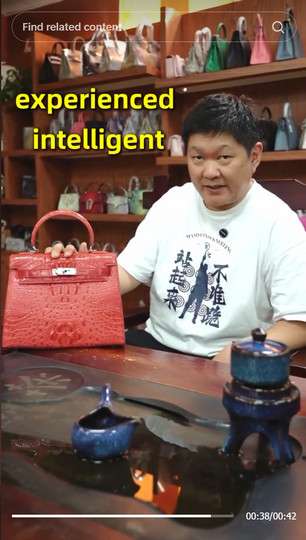
In recent months, a series of viral TikTok videos have spotlighted a man named Wang Sen and his company, SenBags, which claims to offer luxury handbags at factory-direct prices. These videos showcase what appear to be high-quality replicas of designer bags from brands like Hermès, Gucci, and Chanel, all purportedly crafted in Chinese factories. The allure of obtaining such coveted items at a fraction of their retail price has captivated many. However, a deeper investigation into Wang Sen’s background and the operations of SenBags reveals several red flags that potential buyers should be aware of.
Who Is Wang Sen?
Wang Sen emerged on TikTok as the face of SenBags, presenting himself as an Original Equipment Manufacturer (OEM) with over 30 years of experience in crafting luxury handbags. He claims to have manufactured bags for top-tier brands and now offers similar products directly to consumers, eliminating middlemen to provide competitive pricing.
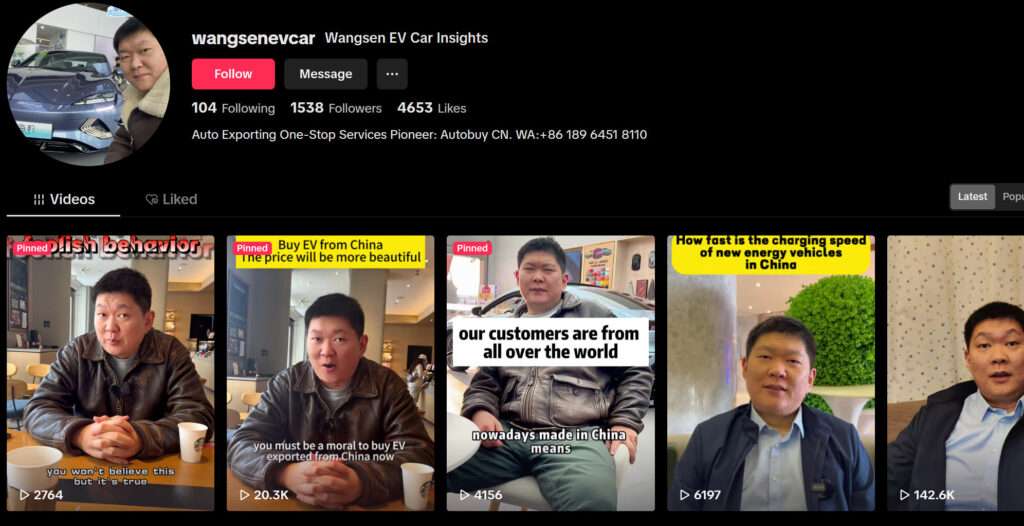
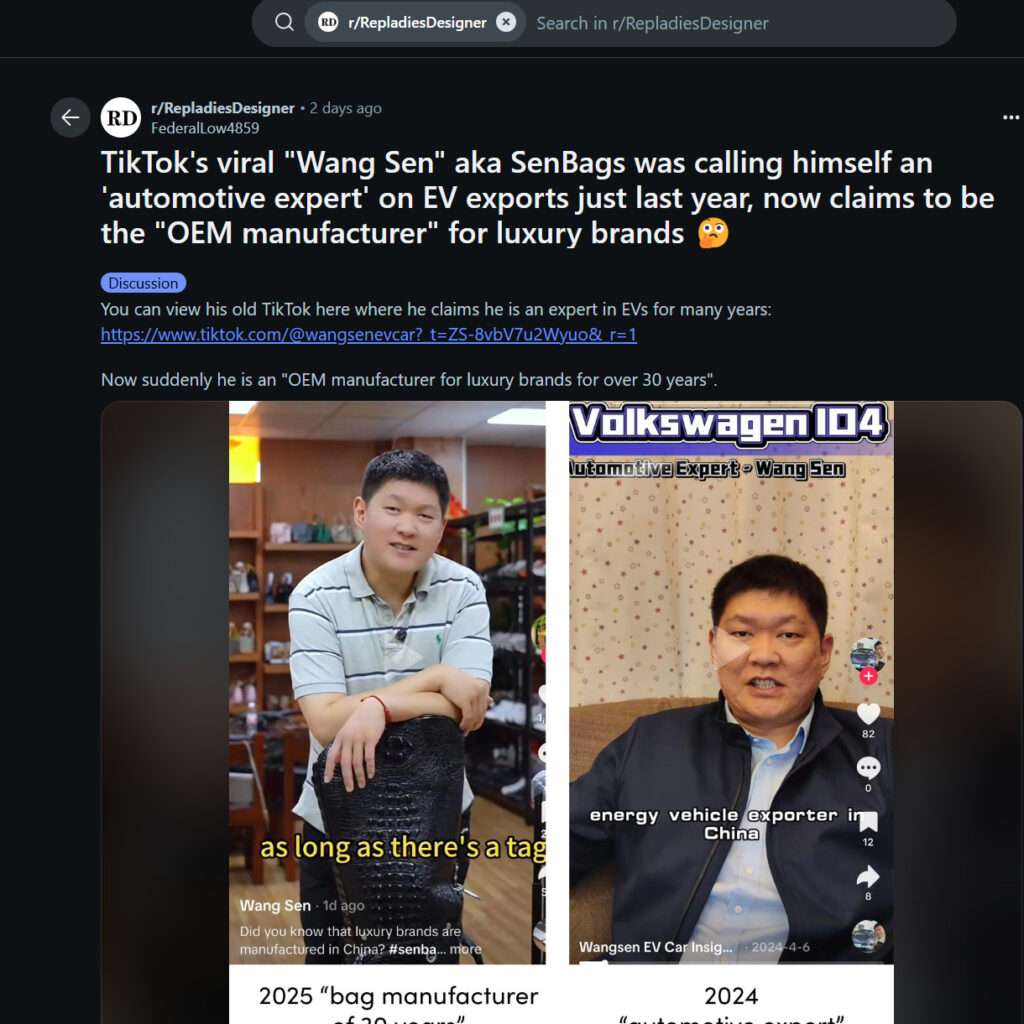
However, scrutiny of his online presence reveals inconsistencies. Just a year prior, Wang Sen was promoting himself as an expert in electric vehicle (EV) exports on TikTok, operating under a different account. This sudden shift from EVs to luxury handbags raises questions about the authenticity of his claims and the legitimacy of his business operations.
The SenBags Operation
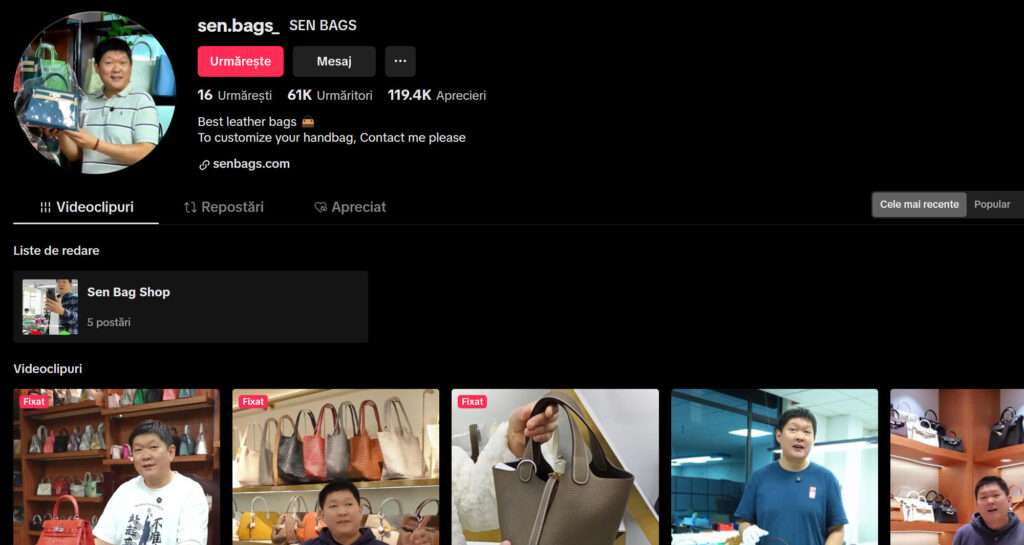
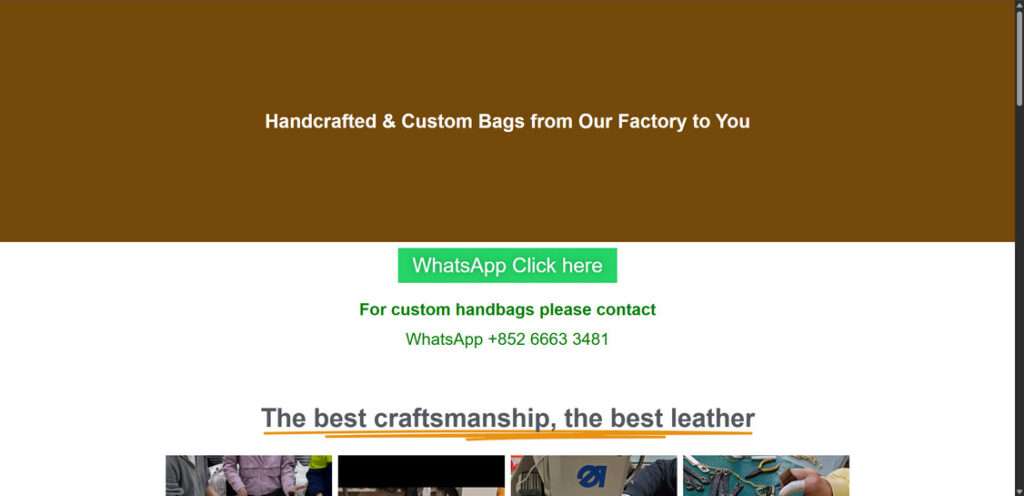
SenBags operates primarily through its website, senbags.com, and various TikTok accounts. The company offers a range of customizable handbags, allowing customers to select styles, sizes, colors, leathers (including cowhide, ostrich, and crocodile), hardware finishes, and zippers. The production cycle for custom orders is stated to be 20-30 days, with shipping via DHL or UPS taking an additional 5-7 days. Shipping fees range from $70 to $150 per package, depending on weight and destination.
Communication with SenBags is conducted through WhatsApp, with no clear return policy or customer service infrastructure in place. This lack of transparency and formal customer support is concerning, especially when dealing with high-value transactions.
Red Flags and Concerns
1. Inconsistent Professional Background
Wang Sen’s abrupt transition from an EV export expert to a luxury handbag manufacturer is unusual and raises doubts about his expertise in either field. Such a drastic career change, especially without verifiable credentials or a documented history in the fashion industry, is a significant red flag.
2. Multiple and Banned TikTok Accounts
The original TikTok account for SenBags has been banned, and numerous duplicate accounts have surfaced, including @wangsen9998 and @sen.bags_. This proliferation of accounts makes it challenging to identify the official source and suggests attempts to evade platform regulations or negative feedback.
3. Dubious Claims of Luxury Brand Associations
SenBags asserts that their products are made from the same materials used by luxury brands like Hermès. However, Hermès is known for its stringent manufacturing processes, with all bags crafted in France under strict non-disclosure agreements. The brand does not outsource production to China, nor does it permit public filming of its manufacturing processes. Therefore, claims of using identical materials and techniques are highly questionable.
4. Lack of Transparency and Consumer Protections
The absence of a clear return policy, reliance on WhatsApp for communication, and high shipping fees without proper tracking mechanisms are indicative of a lack of consumer protection measures. These factors make it difficult for customers to seek recourse in the event of disputes or dissatisfaction with their purchases.
Community Feedback and Discussions
Online communities, such as Reddit’s r/RepladiesDesigner, have expressed skepticism regarding SenBags and Wang Sen. Users have highlighted the inconsistencies in Wang Sen’s professional claims and shared experiences of unfulfilled orders and poor communication. Some have speculated that the operation may be a sophisticated scam leveraging social media virality to exploit consumers seeking luxury goods at discounted prices.
Conclusion
While the prospect of acquiring luxury handbags at reduced prices is enticing, the numerous red flags associated with Wang Sen and SenBags cannot be ignored. From inconsistent professional backgrounds and dubious claims to a lack of transparency and consumer protections, the operation exhibits several characteristics commonly associated with fraudulent schemes.
Consumers are advised to exercise caution, conduct thorough research, and consider the risks before engaging with SenBags or similar entities. Purchasing from reputable retailers and verified sources remains the safest approach to acquiring luxury goods.

Join the discussion
0 commentsShare your experience or ask a question about this article.
Discussion
Start the conversation
Have a question or something useful to share? Add the first comment.