

At first sight, Mane Root Activator Shampoo grabs attention with bold claims to fill in thinning hair, stop hair loss, and deliver “unstoppable” fuller locks. But savvy consumers know dramatic marketing is often more sizzle than substance.
In this in-depth investigation, we’ll scrutinize the ingredients, marketing language, user reviews, company reputation, and scientific evidence behind Mane Shampoo. Are the lofty promises backed by reality? Or is this product moreflash than facts?
By taking an impartial, evidence-based approach, we’ll uncover if Mane Root Activator Shampoo can truly restart hair growth or is best viewed with healthy skepticism. Let’s analyze the facts.
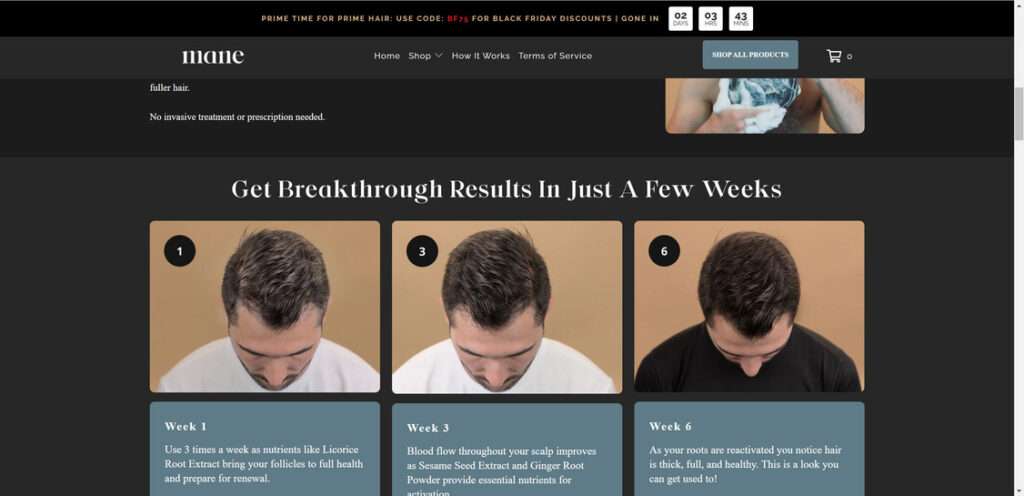
Overview of Mane Root Activator Shampoo
Mane Shampoo is exclusively sold online and marketed as a breakthrough natural formula to revive dormant roots, fill in thinning spots, and regrow stronger, thicker hair.
The company claims their shampoo removes toxins blocking follicles, then nourishes the scalp with nutrients to “activate” hair renewal. Dramatic before and after photos depict impressive transformations.
Keywords like “unstoppable volume” and “anti-hair loss weapon” set high expectations. The site states first signs of renewed growth can appear in just 1-2 weeks. But can a shampoo really produce such rapid, radical results? Let’s investigate further.
Questionable Marketing Tactics
A close analysis reveals several immediate red flags in Mane’s marketing language:
Dubious Claims of Blocked Follicles
Mane states thinning hair is caused by scalp “toxins”, but no evidence supports this. Hair loss is due to genetic and hormonal factors, not external dirt. This misleading claim exploits customer insecurities.
Lack of Clinical Trial Evidence
Despite claiming the shampoo was “designed by hair loss experts”, no clinical trials or research backs up these assertions. There is no proof of safety or efficacy.
Timeline Sets Unrealistic Expectations
Promising first signs of renewed growth in just 1-2 weeks is highly improbable if not physically impossible. This timeline misleads consumers about reasonable regrowth timeframes.
Analyzing the Ingredient List
Now let’s examine the ingredients in Mane Shampoo to see if they support the marketing promises:
Licorice Root Extract
Some early research shows potential to boost hair density, but evidence is still limited. The data is insufficient to warrant claims of “unstoppable” regrowth.
Sesame Seed Extract
Sesame seeds may provide general nourishment but there is no proof this extract meaningfully revives dormant follicles or stimulates significant new growth.
Ginger Root Powder
Ginger may improve scalp circulation, but this transient effect has no lasting impact on regrowing hair. The marketing language exaggerates any capabilities.
Lack of FDA Oversight
Unlike legitimate treatments like finasteride and minoxidil, no governing body evaluates the safety or efficacy of these ingredients. There is no accountability.
Not CGMP Compliant Production
The site provides no verification the shampoo is produced in an FDA-registered facility following Current Good Manufacturing Practice regulations. This raises quality concerns.
Scrutinizing Customer Reviews and Results
Next, we’ll examine customer reviews from impartial sources to gauge real-world results:
Predominantly Negative Reviews
On trustworthy sites like Trustpilot, most reviews rate Mane shampoo poorly, stating it did not regrow hair as advertised. Many report mediocre results despite consistent use.
Reviews Skew Toward Suspect Sites
Most positive reviews come from affiliate partner websites, suggesting they are financially incentivized instead of organic praise. This indicates bias.
Before and After Photos Appear Altered
Multiple before and after photos contain irregularities like distorted hairlines and identical skin imperfections. This artificial enhancement suggests deceptive marketing.
No Substantiation of Dramatic Claims
Nowhere do impartial users validate the marketing’s dramatic claims of “unstoppable volume” or total reversal of hair loss. Actual experiences are underwhelming.
Alarming Company Background
The Mane website contains no information about their business registration, executive team, years in operation, physical address, or other signs of a legitimate company. Their origins are entirely obscured.
The Reality: Minimal Evidence with Maximum Hype
Stepping back objectively, Mane Root Activator Shampoo is long on dramatic marketing claims but woefully short on clinical proof, impartial customer validation, ethical business practices, ingredient efficacy, and realistic timelines.
While some components like licorice root extract may provide temporary thickness, the notion this shampoo can rapidly transform thinning hair or permanently reverse genetic hair loss is unsupported. The company seems to prey on hopes and insecurities rather than deliver science-backed solutions.
Perhaps most revealing is the total lack of a verifiable real company behind the website and product. Mane appears to be a faceless label used to peddle shampoo while hiding any accountability.
In summary, Mane follows a business model prioritizing affiliate profits over honesty. Consumers are wise to ignore the sensational claims and consider proven hair regrowth options backed by medical research. No shampoo offers a shortcut. Improving thinning hair requires discipline with realistic treatments, not overnight miracles.
Frequently Asked Questions
Still unsure about Mane Root Activator Shampoo and its capabilities? Here are answers to some common consumer questions:
Q: Does Mane shampoo regrow significant amounts of hair?
For most users, Mane does not dramatically regenerate lost hair. Minimal improvements may occur for some but results are unlikely to be major. Expectations should remain measured.
Q: How soon before I see results from Mane shampoo?
The marketing claim of seeing results in 1-2 weeks is false. Regrowing hair takes months of consistent use. Be wary of products promising overnight transformations.
Q: Is Mane Root Activator Shampoo scientifically proven?
No, there are no legitimate clinical trials validating the shampoo’s safety or efficacy. Claims are unproven and exaggerated. Talk to your dermatologist before trying.
Q: Can I get a refund if unsatisfied with Mane shampoo?
The company does offer refunds but many customers complain these are difficult to obtain. Savings are better spent on treatments backed by medical research.
Q: Is Mane shampoo safe for all hair types?
Unknown. With unproven ingredients and no oversight, safety cannot be guaranteed. Discontinue use if any irritation occurs and consult a doctor regarding sudden hair thinning.
If a shampoo sounds too good to be true, consumer wisdom says it likely is. Make choices guided by science, not dramatic marketing. With realistic expectations and responsible treatments, healthier hair can become a reality.

Join the discussion
0 commentsShare your experience or ask a question about this article.
Discussion
Start the conversation
Have a question or something useful to share? Add the first comment.