

If you’ve recently seen a Facebook ad claiming to sell a Bayer 11-in-1 Non-Invasive Glucometer that measures blood sugar, oxygen levels, heart rate, and even offers online treatment—all without needles—you need to be cautious. These ads promise revolutionary technology at an unbelievably low price, often under $50. However, the truth is this device is a cheap, generic Chinese pulse oximeter falsely marketed as a high-end medical tool. This article reveals the truth behind the scam, how it works, and what you should do if you’ve already fallen victim.
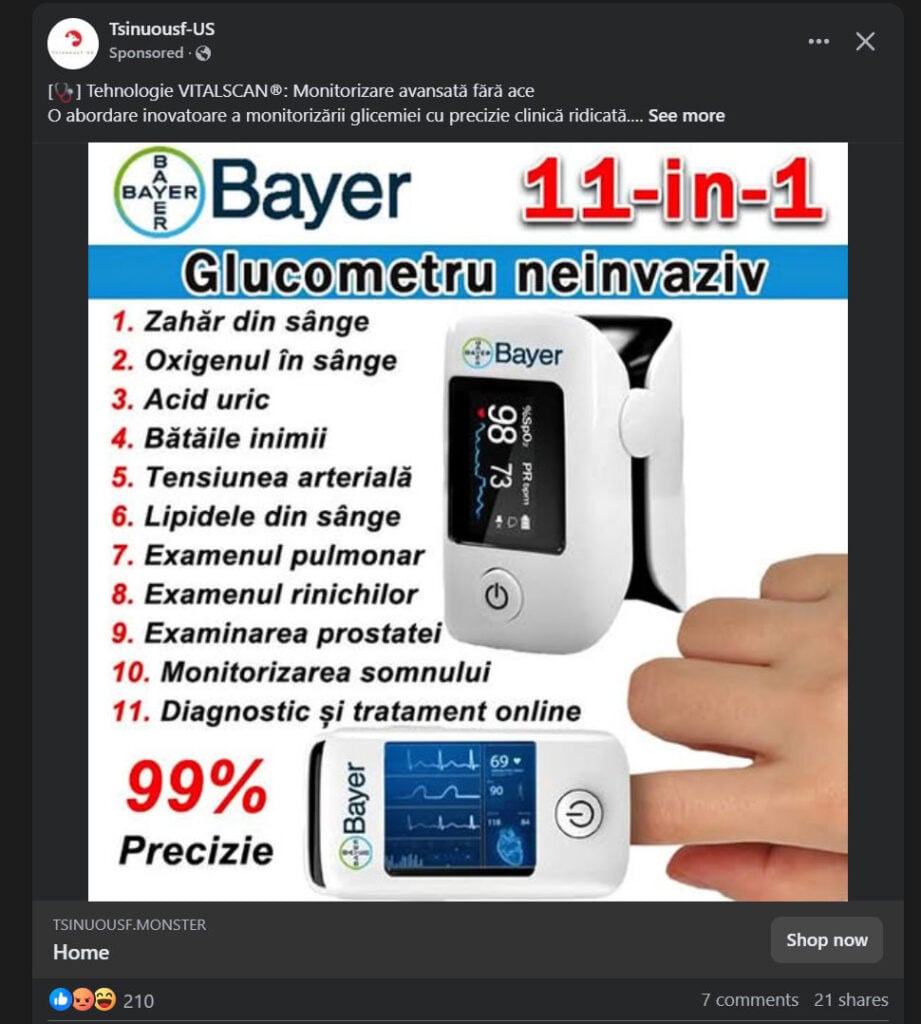
Scam Overview
The Bayer 11-in-1 Non-Invasive Glucometer scam is a deceptive marketing tactic that uses Facebook ads to target vulnerable consumers, particularly those with health conditions like diabetes. These ads claim to sell a medical-grade glucometer capable of measuring 11 health metrics, including:
- Blood sugar (glucose)
- Blood oxygen
- Heart rate
- Blood pressure
- Lipid levels
- Kidney and prostate exams
- Sleep monitoring
- And more
Why This is a Scam
- False Medical Claims
The advertised device is essentially a cheap pulse oximeter sold on marketplaces like AliExpress for less than $10. It cannot measure blood glucose, cholesterol, or any advanced medical parameter. Promising these features is both fraudulent and dangerous. - Misuse of Bayer Branding
The scammers use the Bayer logo to create a sense of trust. Bayer is a well-known pharmaceutical company, but it does not manufacture or sell such a device. - Unbelievable Accuracy Claims
The ads often claim 99% accuracy and “clinical-grade precision.” In reality, even the most advanced non-invasive glucose monitoring devices are still under research. No legitimate medical device with these features exists at the price advertised. - Fake Urgency Tactics
Phrases like “Limited Time Offer,” “Order Today,” and “Free Shipping” are used to pressure consumers into making an impulsive purchase. - Suspicious Website Domains
The websites linked to these ads have unusual domain names like tsinuousf.monster, which have nothing to do with Bayer. Most of these domains are recently registered and lack basic security features. - No Authentic Contact Information
These scam sites provide only an email or a fake address. There’s no phone number or verifiable customer service.
How the Scam Works
Step 1: Fake Ads on Facebook
Scammers run paid Facebook ads featuring images of the device with the Bayer logo. Captions often promise:
- “Revolutionary non-invasive glucose monitoring!”
- “Monitor 11 health metrics without needles!”
- “99% accuracy – Order now!”
Step 2: Redirect to a Fake Store
When you click on the ad, you’re taken to a professional-looking website that:
- Displays the Bayer logo prominently.
- Lists impossible features like kidney exams, cholesterol checks, and online treatment.
- Claims the original price is over $200 but slashes it to $39 or $49.
Step 3: Collecting Your Payment Details
To order, you must enter:
- Full name
- Shipping address
- Email and phone number
- Credit or debit card details
Step 4: Delivery of a Cheap Device or Nothing
After paying, two things may happen:
- You receive a low-quality pulse oximeter worth $5 that only measures oxygen and heart rate.
- You receive nothing at all.
Step 5: Financial and Privacy Risks
- Your card details may be stored or sold, leading to unauthorized transactions.
- Your personal information may be used for identity theft or further scams.
What to Do If You Fell Victim to This Scam
If you ordered this fake device, take these steps immediately:
1. Contact Your Bank
- Report the transaction as fraudulent.
- Request a chargeback if possible.
- Block your card and get a replacement.
2. Monitor Your Bank Account
- Watch for unauthorized charges.
- Enable transaction alerts.
3. Report the Scam
- Report the ad to Facebook.
- Notify Bayer about brand misuse.
- Submit the website to Google Safe Browsing.
- Report to your local consumer protection agency.
4. Warn Others
- Share your experience on forums, social media, and scam alert websites.
The Bottom Line
The Bayer 11-in-1 Non-Invasive Glucometer sold through Facebook ads is a health scam that puts vulnerable people at risk. It uses fake medical claims, Bayer branding, and psychological pressure to steal money and personal information. Remember, no affordable non-invasive device can accurately measure blood glucose or 11 health metrics. If a deal looks too good to be true, it probably is.
Stay alert, verify medical products through official sources, and never buy health devices from unverified ads. Your health and financial security depend on it.
Stay informed. Stay safe.
Frequently Asked Questions About the Bayer 11-in-1 Non-Invasive Glucometer Facebook Scam
What is the Bayer 11-in-1 Non-Invasive Glucometer Facebook scam?
The Bayer 11-in-1 Non-Invasive Glucometer scam is a fraudulent marketing scheme that uses Facebook ads to sell a fake medical device claiming to measure multiple health metrics, including blood sugar, blood pressure, kidney function, and more, without needles. The ads misuse the Bayer logo to appear credible and promise impossible features. In reality, the product is a cheap pulse oximeter that only measures oxygen levels and heart rate or nothing is delivered at all.
Does Bayer manufacture an 11-in-1 non-invasive glucometer?
No. Bayer does not produce or sell any 11-in-1 glucometer that works without needles. The company has no association with these scam ads or the fraudulent websites promoting them. All claims linking Bayer to this product are false.
Can this device really measure blood glucose without needles?
No. Accurate non-invasive glucose monitoring devices are still under research and are not available at the low prices advertised in these scams. The device promoted in these ads cannot measure glucose, cholesterol, kidney function, or other metrics as claimed. It is misleading and dangerous for people who rely on proper medical monitoring.
How much do scammers charge for this fake device?
The scam websites typically advertise the device for $39 to $59, claiming it’s discounted from $200 or more. This false discount creates urgency and convinces buyers they are getting an incredible deal. In reality, the product is worth less than $10 on wholesale marketplaces.
What happens if I buy this device?
Two scenarios are common:
- You receive nothing at all, and your payment is lost.
- You receive a low-quality pulse oximeter that only measures oxygen saturation and heart rate, not the 11 metrics advertised.
In both cases, the website offers no customer support or refund options.
Is my personal information at risk?
Yes. If you provided payment details and personal data, scammers may use it for:
- Unauthorized credit card charges
- Identity theft
- Selling your information to other fraud networks
Always block your card and report the scam immediately if you submitted your details.
How can I report this scam?
You should:
- Report the ad on Facebook.
- File a complaint with your local consumer protection authority.
- Report the fake site to Google Safe Browsing.
- Notify Bayer about the misuse of their brand.
What are the red flags that indicate this is a scam?
- Unrealistic claims such as 11-in-1 health tracking with 99% accuracy.
- Unbelievably low price compared to real medical devices.
- Misuse of Bayer’s logo and brand name.
- New, suspicious website domains like .monster or .xyz.
- No verifiable contact information other than an email.
- Pressure tactics like “limited stock” or “order now.”
What should I do if I already purchased this device?
Take these steps immediately:
- Contact your bank or credit card provider and request a chargeback.
- Block your current card and get a replacement.
- Monitor your bank account for unauthorized transactions.
- Change any passwords used on the scam site.
- Report the scam to authorities and share your experience to warn others.
Where can I buy a real glucometer safely?
Purchase only from:
- Official pharmacies
- Reputable medical device suppliers
- Authorized online retailers like Amazon or major drugstore chains
Avoid buying health devices from unverified Facebook ads or unknown websites.








