

The voicemail sounds calm, almost routine.
It says there was a charge at GameStop on your Bank of America card, and it needs your attention. A text message follows from the same number, 18009010403, repeating the warning like a helpful reminder you should not ignore.
For a split second, your brain does what it always does in moments like this. It pictures the damage first, then it searches for the fastest way to stop it.
That is exactly what this scam is built to trigger.
Because in many cases, the “charge” is not the real story. The real story is what happens next, when a fake fraud alert pulls you into a phone call, a reply, or a verification step that quietly hands scammers the keys to your money.

Scam Overview
Bank of America and GameStop charge scam texts are impersonation messages designed to look like real fraud alerts. They usually arrive as one or more SMS messages, sometimes paired with a voicemail, claiming your Bank of America card was used at GameStop, often for a specific dollar amount. The scam is meant to create urgency, get you to engage, and then push you toward actions that benefit the scammers.
A user report describes receiving a voicemail and text messages from 18009010403 about a charge at GameStop on a Bank of America card. That pattern is consistent with bank impersonation campaigns where scammers use familiar merchant names and “fraud department” language to lure victims into a live conversation.
Why these “Bank of America charge at GameStop” alerts feel so believable
Scammers have learned what makes people react.
They do not send messages that sound like obvious nonsense. They send messages that feel like something a bank would actually say when it detects unusual activity. That includes:
- A recognizable bank brand, such as Bank of America
- A recognizable merchant, such as GameStop
- A simple fraud scenario that anyone can understand
- A sense of time pressure, often implied rather than shouted
- A clear next step, usually “call this number” or “reply YES/NO”
The merchant matters more than people realize.
GameStop is widely known, easy to picture, and easy to believe as a fraud target. It creates a simple mental image: someone used a card in a store, or online, and the bank caught it. That story is clean, familiar, and plausible enough to pull you in.
The phone number is the real payload
In many versions of this scam, the scammer’s phone number is the most important piece of the message.
It is not always about getting you to click a link. It is about getting you to call.
Once you call, you are no longer evaluating a text message. You are dealing with a confident human voice that can:
- Interrupt your thinking
- Add urgency at the right moments
- Reassure you when you hesitate
- Adapt the story based on your answers
- Walk you step-by-step into a trap
Bank of America warns about exactly this kind of social engineering, including scammers who pretend to “help stop fraud” by asking you to share a one-time code or send money through Zelle.
What scammers want from you
The most common goals of Bank of America fraud alert scams fall into a few categories.
They want your one-time passcodes.
This is one of the most dangerous outcomes because it can give them instant account access. Bank of America specifically warns that scammers may ask you to share a one-time code to “resolve fraud.”
They want your online banking access.
Some victims are pushed to “confirm” credentials or are tricked into logging in on a fake page. Others are talked into revealing details over the phone.
They want to move your money.
A common twist is a fake “secure transfer” where the scammer convinces you to send money to yourself or to a “safe account” through Zelle or other instant transfer methods. Bank of America notes they will never contact you to ask you to send money using Zelle, including sending money to yourself, as a fraud solution.
They want your identity details.
Even if you do not bank with Bank of America, scammers can harvest your name, phone number, email, and address, then use it for more targeted fraud later.
“But I don’t even bank with Bank of America”
This is one of the most confusing parts of the scam, and it is also one of the reasons it works.
Scammers send these alerts in bulk. They do not need to know who banks where. They only need a small percentage of recipients to respond.
If you do bank with Bank of America, the alert feels personal. If you do not, many people still call just to “clear it up,” because it feels safer than ignoring it.
That reaction is completely normal. It is also exactly what scammers are counting on.
Why you might get a voicemail plus a text
A voicemail makes it feel more official.
Text messages are common, but voicemails create a different kind of pressure. A voicemail feels like a direct outreach, like a fraud agent tried to reach you and will keep trying until you respond.
In reality, it is simply another channel to push you to engage.
The scam flow often looks like this:
- You miss a call, or receive a voicemail
- The voicemail claims a suspicious charge and instructs you to act
- A text arrives from the same number to reinforce the urgency
- If you respond, the scammer now knows your number is active
How scammers make the messages look “bank-like”
Scammers borrow the tone and structure of real alerts:
- Short sentences
- Clear merchant names
- Minimal details
- A simple yes/no decision
- A number that appears “support-like”
Some scams even attempt to insert themselves into existing message threads, making it look like the alert is part of your bank’s usual SMS history. This is one reason the safest habit is to verify using official channels you initiate, not the number provided in the message.
What Bank of America says to do with suspicious texts
If a suspicious text uses Bank of America’s name, Bank of America instructs people to forward suspicious messages to their abuse reporting email address and to forward suspicious texts to 7726 (SPAM) to report to your mobile carrier.
That guidance is valuable because it gives you a safe action that does not involve engaging with the scammer.
The most common “GameStop charge” scam text themes
Even if the wording varies, most versions follow the same emotional script:
- “Did you authorize this?”
- “We detected unusual activity.”
- “Reply YES to confirm, NO to deny.”
- “Call immediately to stop the charge.”
- “Your card will be locked if you do not respond.”
Sometimes the message includes a dollar amount. Sometimes it does not. The goal is always the same: push you to engage before you verify.
Red flags that separate a real alert from a scam attempt
A real bank might text you about unusual activity. But the danger is not the concept of a fraud alert, it is the way scammers twist it.
Be cautious when:
- The message pressures you to call a number provided in the text
- The message asks for one-time codes, PINs, or login details
- The person on the phone insists you must act right now
- The “solution” involves sending money, even to yourself
- You feel rushed, confused, or kept on the line while you do things
Bank of America explicitly warns that scammers may ask you to share a code or send money, including through Zelle, as part of a fake fraud resolution process.
Why this scam can be expensive, fast
If you engage and the scam moves into one-time code capture, things can happen quickly.
A scammer does not always need your password. In many account takeover patterns, the scammer triggers a reset or enrollment flow and then uses the one-time code you read back to them. That is why one-time codes are so valuable, and why banks repeatedly warn not to share them.
Once access is gained, the money movement can be immediate through instant transfer systems, and reversals can be difficult.
A quick reality check about phone numbers like 18009010403
Seeing an “800” style number can lower your guard. It feels official.
But phone numbers can be spoofed. Caller ID can be faked. Text sender numbers can be manipulated in ways that make them look legitimate.
So the safest policy is simple: never trust the number that contacted you. Trust only the number you look up yourself from an official source, or the number printed on the back of your card or bank statement.
Bank of America’s guidance for people who responded to suspicious messages is to call the number on the back of your card or statement.
How the Scam Works
Below is the most common step-by-step pattern for Bank of America and GameStop charge scam texts, including versions that begin with a voicemail from a number like 18009010403. The steps are written in a realistic sequence, but scammers may mix or skip steps depending on how you respond.
1) The alert arrives with a familiar merchant and a clear threat
You receive a voicemail, a text, or both.
It claims a charge at GameStop on your Bank of America card. The details may be minimal, but the message usually implies urgency. It is framed as a fraud prevention alert, not a sales pitch.
This is the hook. It activates fear, and it creates a problem that feels time-sensitive.
2) You are given a simple action, call back or reply
The message typically offers a fast way to fix it:
- Call a number to “verify” or “stop the charge”
- Reply YES/NO to confirm the transaction
This is the fork in the road the scammers care about.
If you reply, they learn your number is active and responsive.
If you call, you enter the high-risk stage where a scammer can guide you in real time.
3) The “bank representative” answers, and builds trust quickly
On the phone, the scammer sounds like a fraud department agent.
They may:
- Confirm the merchant name and amount
- Claim the transaction is pending and can still be stopped
- Use banking language to sound credible
Then they begin “verification.”
The first questions often feel harmless: your name, phone number, maybe the last four digits of a card. This is compliance-building. Each small answer makes the next request easier.
4) They escalate the story from one charge to a broader compromise
Once you are engaged, many scammers expand the narrative:
- “We also see attempted transfers.”
- “We see an added payee.”
- “We see a Zelle enrollment.”
- “We see sign-ins from another state.”
This creates a bigger emergency, which makes drastic actions feel reasonable.
Bank of America specifically warns about scams where a caller claims fraud and then asks you to share a code or send money through Zelle as the fix.
5) They attempt to capture a one-time code
This is one of the most common turning points.
The scammer says something like:
- “I’m sending a code to verify you.”
- “Read the code to confirm we can block the fraud.”
- “This code allows me to secure your account.”
In reality, that code may be:
- A login verification code
- A password reset code
- A code to enroll the scammer’s device
- A code to authorize a transfer setup
Bank of America warns about scammers asking you to share a one-time code over the phone.
6) They introduce the “secure transfer” trick
If they cannot get a code, or after they get it, many scammers pivot to money movement.
They may claim:
- Your account is “unsafe” and needs funds moved temporarily
- The charge cannot be stopped unless the account is “verified”
- A “safe account” will protect your money during the investigation
Then they instruct you to send money through Zelle or another instant method, sometimes framed as sending money to yourself.
Bank of America warns that they will never contact you and ask you to send money using Zelle, including sending money to yourself, as a fraud solution.
7) They use pressure to keep you from verifying independently
Throughout the call, scammers try to prevent you from pausing.
Common pressure lines include:
- “Do not hang up, or the charge will post.”
- “If you call the bank back, it will delay the case.”
- “You have a short window before funds are released.”
This is manipulation, not process.
A legitimate bank will not punish you for hanging up and calling back through the official number on your card.
8) If you comply, they move fast, then disappear
If the scammer succeeds, the final stage happens quickly:
- Money is moved out
- Access is gained
- New payees are added
- Your credentials are changed
- You are told to wait, or to expect a call back
Then the contact fades. Or worse, it continues in a new form, with follow-up calls from “escalation” or “recovery” teams.
If gift cards ever enter the conversation, that is a strong scam signal. The FTC’s guidance on gift card scams emphasizes reporting quickly to the gift card company and to the FTC, because speed can affect recovery.
What To Do If You Have Fallen Victim to This Scam
If you replied, called back, shared any information, read a code, clicked a link, or sent money, the goal now is containment. The steps below are practical, and you can do them calmly, one by one.
- Stop engaging with the number and preserve evidence
Do not reply again. Do not call back. Block the number. Take screenshots of the texts and save the voicemail if possible. Write down the time, the phone number, and what was said. - Contact your bank using a trusted number you choose
If you bank with Bank of America, call the number on the back of your card or your statement. If you do not, call the bank you actually use and explain you may have interacted with a bank impersonation scam.
If you gave any information, tell them exactly what you shared and ask for the fraud department.
Bank of America’s guidance for people who responded to suspicious texts or calls is to call the number on the back of your card or bank statement.
- If you shared a one-time code, assume account takeover risk
One-time codes are not harmless.
Immediately change your online banking password and your email password, because email is often the path to resets. Turn on two-factor authentication where possible.
If your bank supports it, ask them to add additional verification to your profile.
- Review your account for changes, not just charges
Look for:
- New payees
- New linked accounts
- New phone numbers or emails on your profile
- New transfer recipients
- Any new Zelle enrollment activity
Scammers often set up future access, even if they do not move money right away.
- If you sent money, act immediately, and ask about recall options
If you sent funds through an instant transfer, call your bank right away. Ask whether the transfer can be canceled or recalled, and file a fraud report.
If you were pushed into gift card purchases, report it to the gift card company immediately and file a report with the FTC. The FTC recommends reporting gift card scams quickly, and notes some companies may help with recovery.
- Scan your devices if you clicked links or installed anything
If the scam included any link, or if you were asked to install apps or profiles, scan your devices.
Use reputable tools:
- Malwarebytes to check for malware and unwanted programs
- AdGuard to reduce exposure to malicious ads and scam pages that often lead to phishing and fake alerts
- Report the scam text properly
Forward suspicious texts that use Bank of America’s name to their abuse reporting email address. Bank of America also recommends forwarding scam texts to 7726 (SPAM) to report to your mobile carrier.
Reporting helps carriers and banks map campaigns and block infrastructure faster.
- Watch for follow-up attempts and “recovery” scams
After you engage once, scammers may try again using new stories. They may pretend to be:
- A bank supervisor
- A “Zelle support team”
- A fraud investigator
- A service that can recover your money
Be especially wary of anyone who contacts you first and asks for payment to recover losses.
- If you shared personal identity details, consider protective steps
If you provided sensitive personal data, consider placing fraud alerts or credit freezes with relevant credit bureaus in your country, depending on what applies to your situation. - Give yourself a rule for the future, and stick to it
When a message triggers panic, slow the moment down.
Use a simple habit: do not use the contact details provided in the message. Use a number you already trust, like the number on your card, or one you look up yourself.
Is Your Device Infected? Run a Free Malware Scan
Slow performance, constant pop-ups, or strange behavior? These are classic signs of a malware infection. The fastest way to find out is to scan your device with Malwarebytes Free — one of the most trusted malware removal tools available.
The free version detects and removes the most common threats, including:
- Adware — the cause of those annoying pop-ups
- Browser hijackers — unwanted redirects and changed homepages
- Trojans and spyware — hidden programs stealing your data
- Potentially unwanted programs (PUPs) — software you never asked for
👉 Select your device below — Windows, Mac, or Android — then follow the simple steps to download Malwarebytes, scan your system, and remove any threats it finds. The scan usually takes 5 to 20 minutes.
Run a Malware Scan with Malwarebytes for Windows
Malwarebytes is one of the most popular and trusted anti-malware tools for Windows — and it’s completely free for removing infections. It catches threats that many antivirus programs miss, including adware, browser hijackers, and trojans. Follow the steps below to scan and clean your PC in just a few minutes.
Download Malwarebytes
Click the button below to download the latest version of Malwarebytes for Windows from the official source. The free version is all you need — it will scan your computer and remove adware, browser hijackers, and other malicious software at no cost.
Download MalwarebytesOfficial installer for Windows 11 and 10. Your download starts right away.Want real-time protection? See Malwarebytes Premium Malwarebytes Free for WindowsScans and removes malware at no cost
-
Install Malwarebytes
When the download finishes, open your Downloads folder and double-click the MBSetup file. If Windows shows a User Account Control pop-up, click “Yes” to allow the installation.
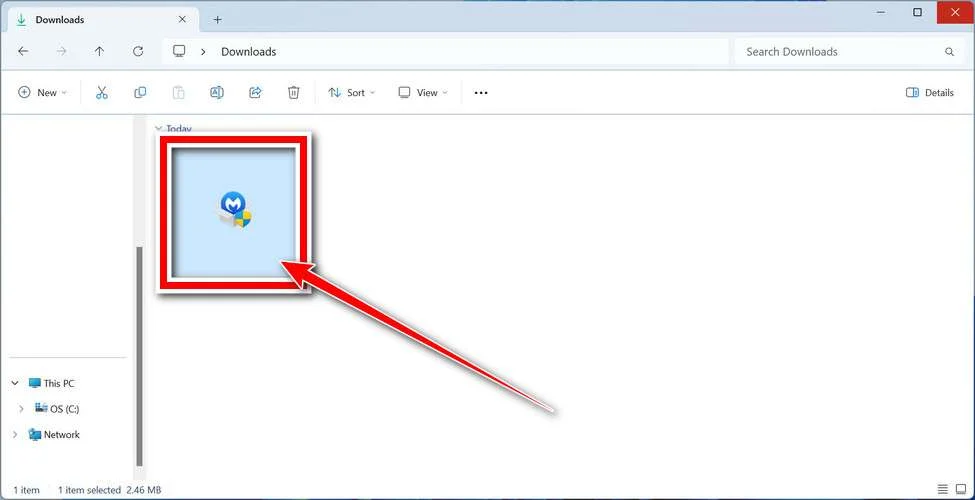
Follow the On-Screen Prompts to Install Malwarebytes
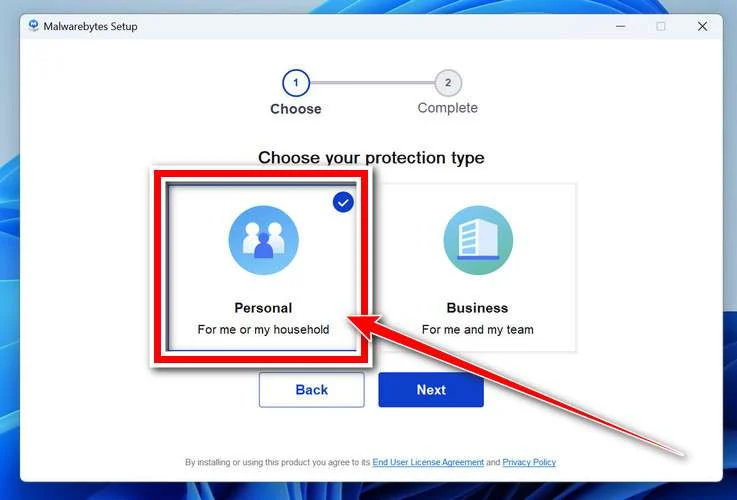
The setup wizard will walk you through a few quick screens:
-
Choose where you’re installing the program — “Personal Computer” or “Work Computer” — then click Next.
-
Malwarebytes will now install on your device. This usually takes under a minute.

-
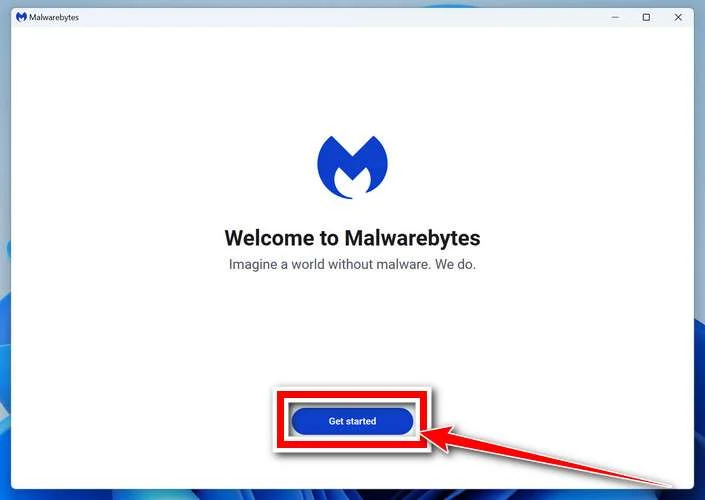
When installation is complete, the “Welcome to Malwarebytes” screen will open automatically.
-
On the final screen, click Open Malwarebytes to launch the program.

-
Enable “Scan for Rootkits”
Before scanning, turn on rootkit detection so Malwarebytes can find even the most hidden threats. Click the Settings gear icon on the left side of the screen.
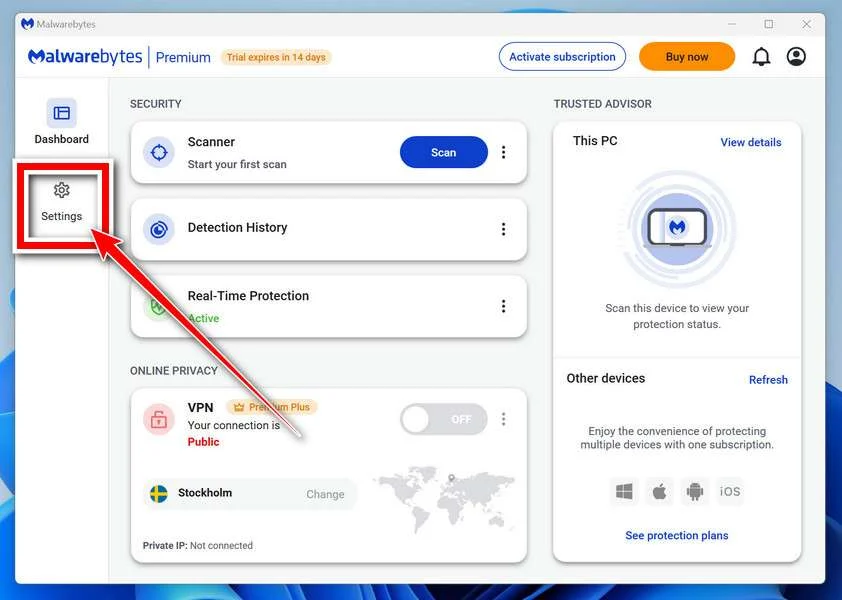
In the settings menu, find “Scan for rootkits” and click the toggle so it turns blue.

Done? Click “Dashboard” in the left pane to return to the main screen.
Start the Scan
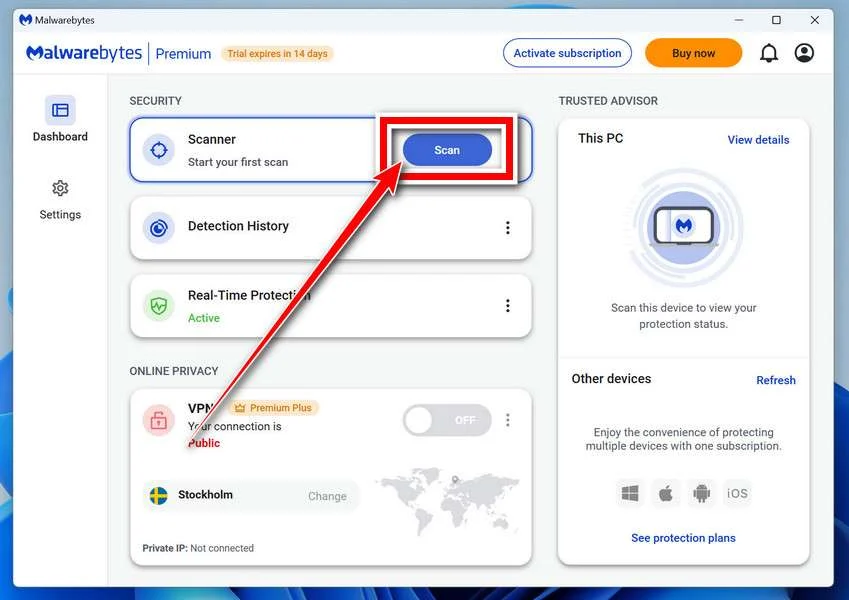
Click the blue Scan button. Malwarebytes will automatically update its virus database and start checking your computer for malware.
-
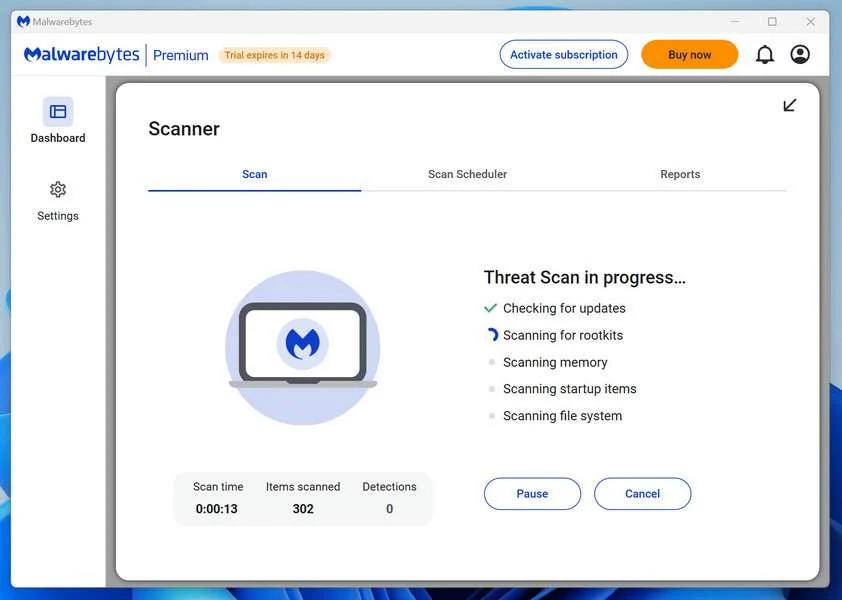
Wait for the Scan to Finish
The scan checks your entire system for browser hijackers and other malicious programs, so it can take 5 to 20 minutes depending on your computer. Feel free to do something else — just check back occasionally to see the progress.
-
Quarantine the Detected Threats
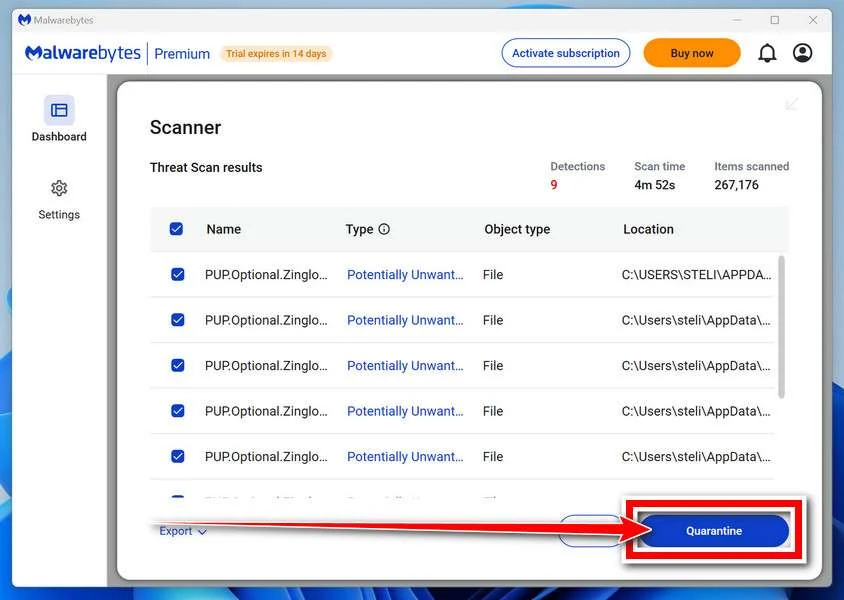
When the scan is done, you’ll see a list of everything Malwarebytes found — malware, adware, and potentially unwanted programs. Click the “Quarantine” button to remove all of them at once.
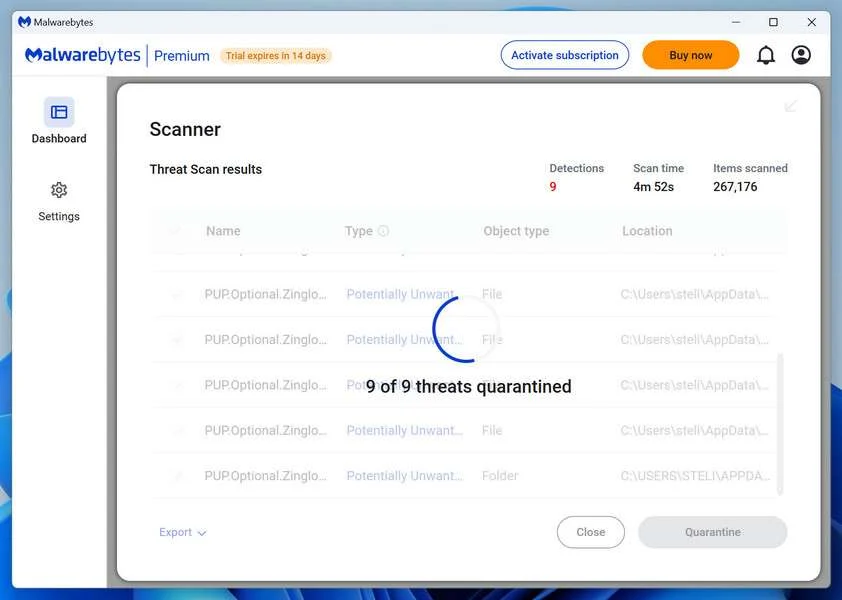
Malwarebytes will now remove the malicious files and registry entries and move them safely into quarantine.
-
Restart Your Computer
Some threats can only be fully removed after a reboot. If Malwarebytes asks you to restart, click Yes. Once you’re logged back in, Malwarebytes has finished removing the threats it found.
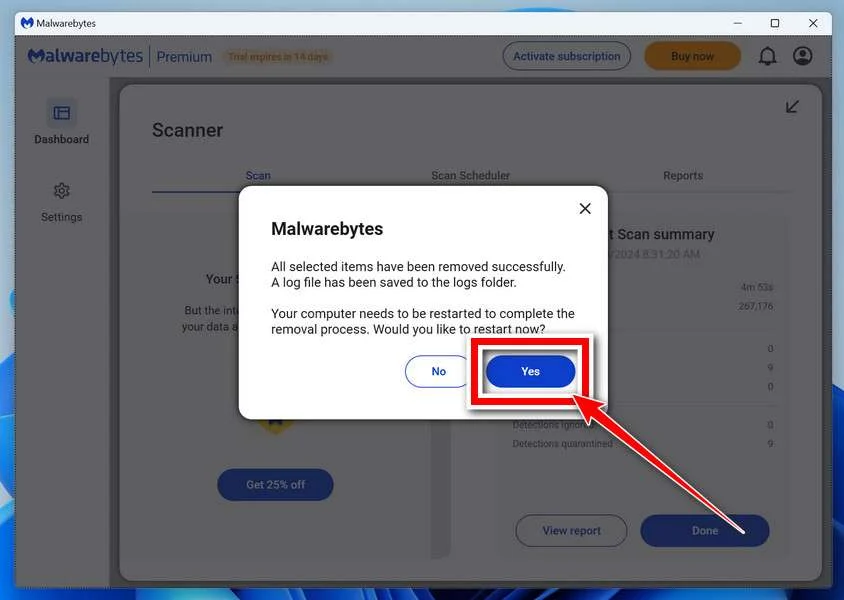
That’s it — your Windows PC is now clean of trojans, adware, and other malware, and should be back to running smoothly.
If you are still having problems with your computer after completing these instructions, then please follow one of the steps:
- Run a computer scan with ESET Online Scanner
- Ask for help in our Windows Malware Removal Help & Support forum.
Run a Malware Scan with Malwarebytes for Mac
Malwarebytes for Mac is a free on-demand scanner that removes the malware other security software tends to miss — adware, browser hijackers, and unwanted programs included. Cleaning an infected Mac with Malwarebytes has always been completely free, and it’s our go-to recommendation. Follow the steps below to scan and clean your Mac in just a few minutes.
-
Download Malwarebytes for Mac
Click the button below to download the latest version of Malwarebytes for Mac.
Download MalwarebytesOfficial installer for macOS. Your download starts right away.Want real-time protection? See Malwarebytes PremiumMalwarebytes Free for MacScans and removes malware at no cost -
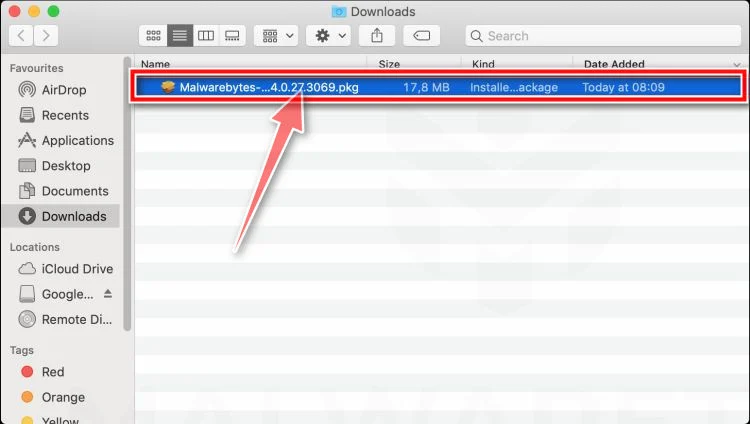
Open the Malwarebytes setup file
When the download finishes, open your Downloads folder and double-click the setup file to begin the installation.
-
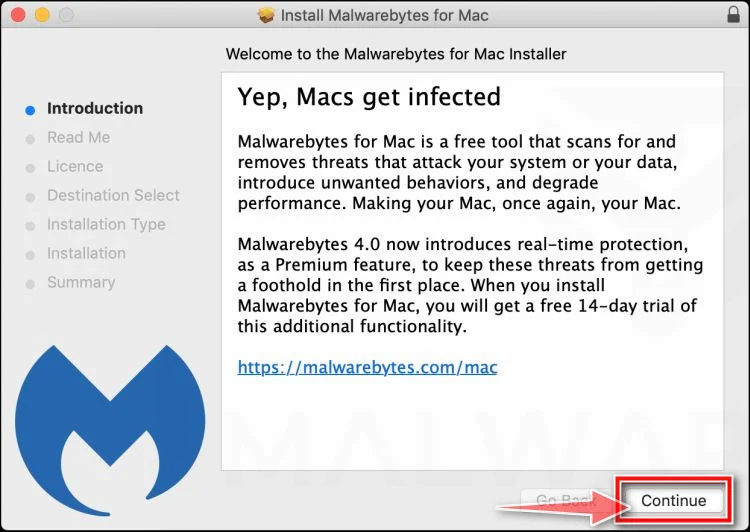
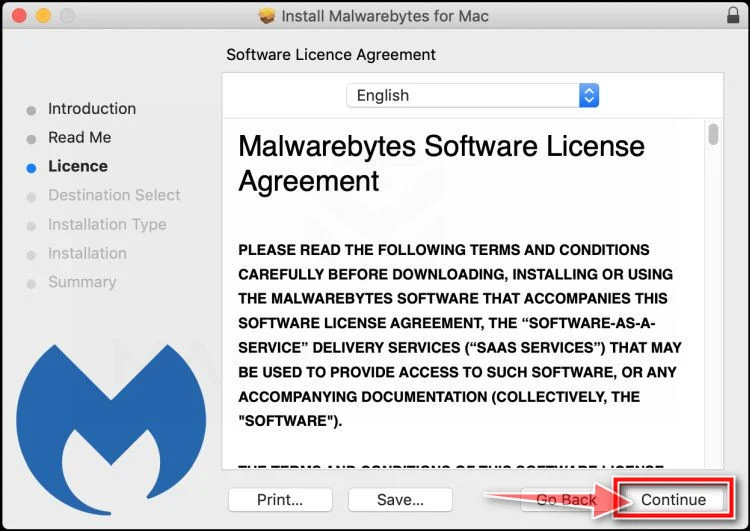
Follow the On-Screen Prompts to Install Malwarebytes
The Malwarebytes for Mac Installer will guide you through a few quick screens. Click “Continue” and keep following the prompts until the installation completes.
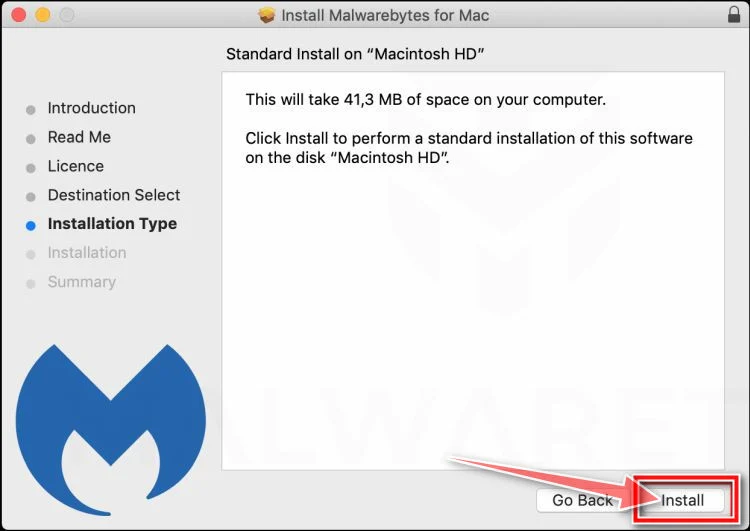
When the installation is complete, Malwarebytes opens to the Welcome to Malwarebytes screen. Click “Get started“.
-
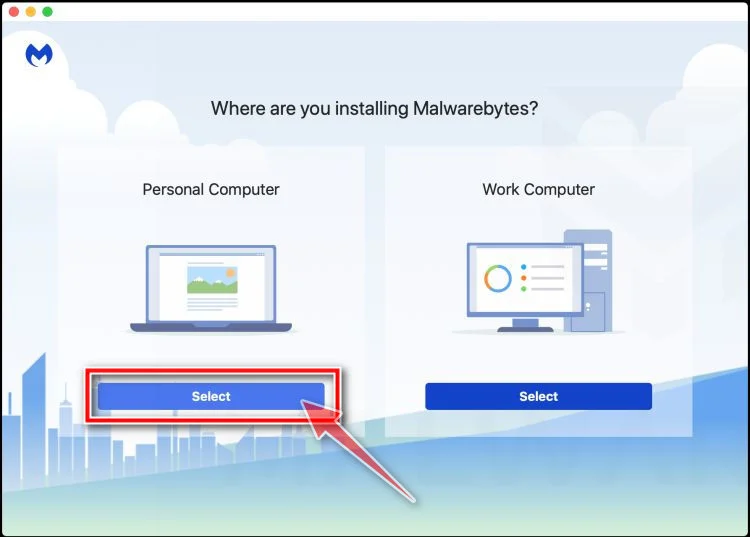
Select “Personal Computer” or “Work Computer”
Malwarebytes will ask what type of computer you’re installing it on. Click either Personal Computer or Work Computer, whichever applies.
-
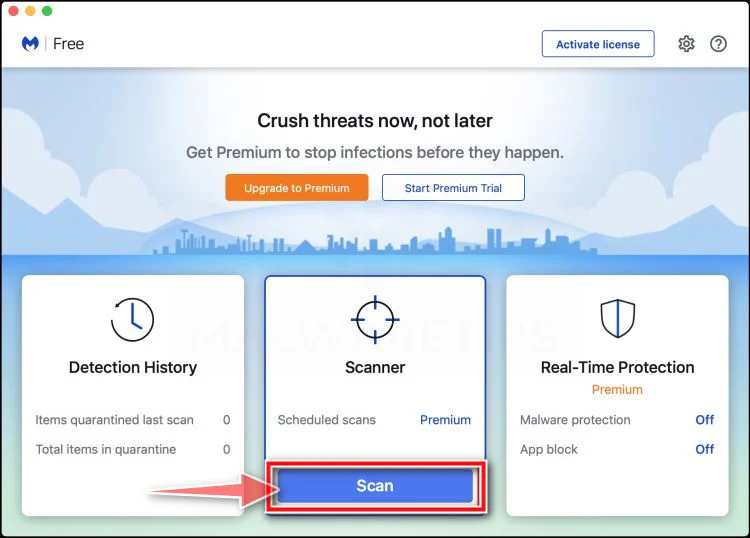
Start the Scan
Click the “Scan” button. Malwarebytes will automatically update its detection database and begin checking your Mac for malware.
-
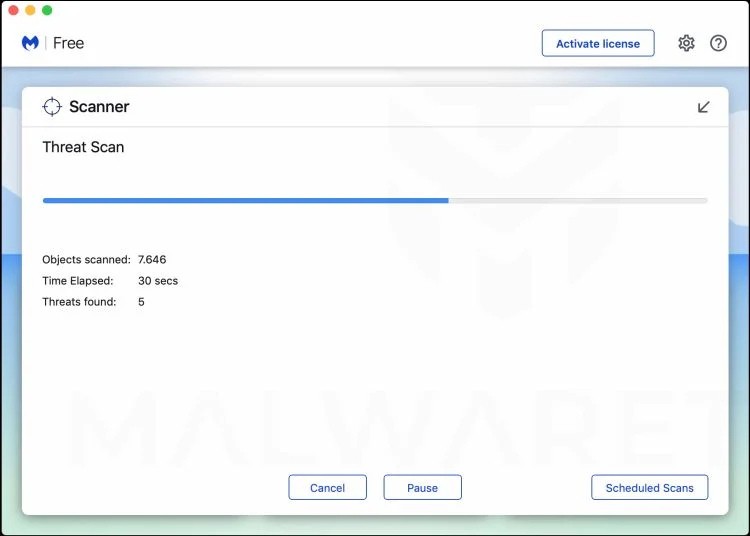
Wait for the Scan to Finish
Malwarebytes will scan your Mac for adware, browser hijackers, and other malicious programs. This can take a few minutes, so feel free to do something else — just check back occasionally to see the progress.
-
Quarantine the Detected Threats
When the scan is done, you’ll see a list of everything Malwarebytes found. Click the “Quarantine” button to remove all the threats at once.
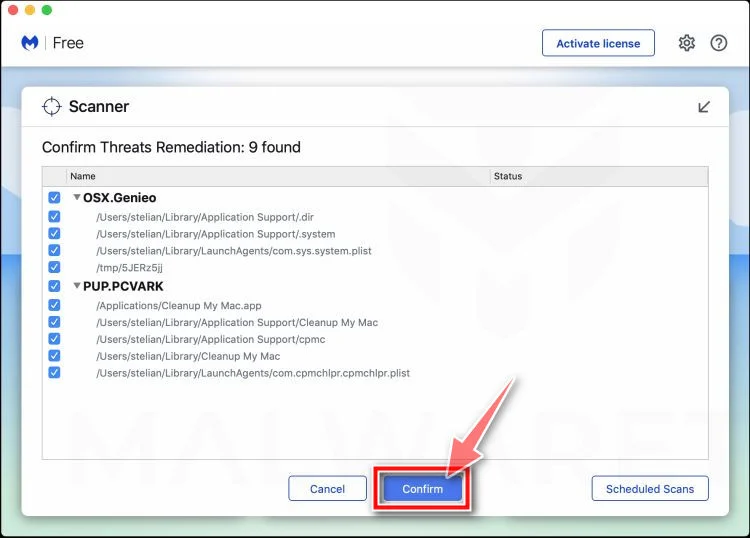
-
Restart Your Mac
Malwarebytes will now remove all the malicious files it found. Some threats can only be fully removed after a reboot — if Malwarebytes asks you to restart, allow it. Once you’re logged back in, your Mac is clean.
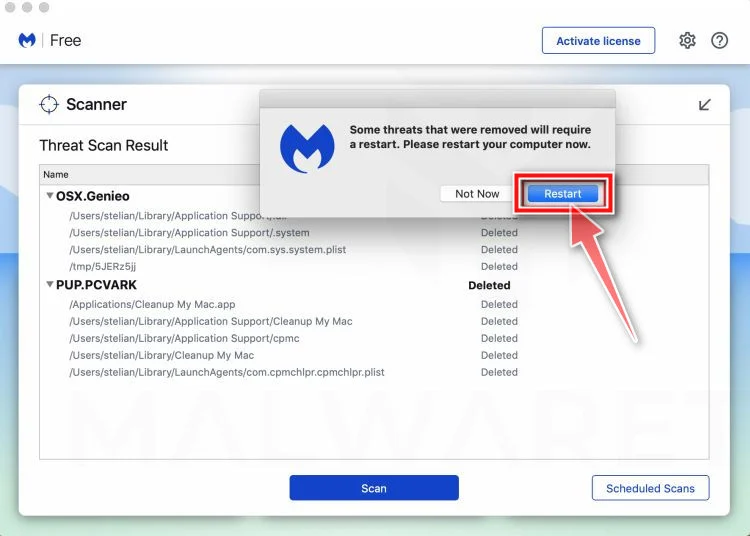
That’s it — your Mac is now free of adware, rogue browser extensions, and other potentially harmful software.
If you are still experiencing problems while trying to remove a malicious program from your computer, please ask for help in our Mac Malware Removal Help & Support forum.
Run a Malware Scan with Malwarebytes for Android
Malwarebytes for Android automatically detects and removes dangerous threats like malware and ransomware so you don’t have to worry about your most-used device being compromised. Aggressive detection of adware and potentially unwanted programs keeps your Android phone or tablet running smooth.
-
Download Malwarebytes for Android.
You can download Malwarebytes for Android by clicking the link below.
Get Malwarebytes for AndroidOpens Google Play in a new tab.Want real-time protection? See Malwarebytes Premium for AndroidMalwarebytes for AndroidScans your phone and removes malware at no cost -
Install Malwarebytes for Android on your phone.
In the Google Play Store, tap “Install” to install Malwarebytes for Android on your device.

When the installation process has finished, tap “Open” to begin using Malwarebytes for Android. You can also open Malwarebytes by tapping on its icon in your phone menu or home screen.

-
Follow the on-screen prompts to complete the setup process
When Malwarebytes will open, you will see the Malwarebytes Setup Wizard which will guide you through a series of permissions and other setup options.
This is the first of two screens that explain the difference between the Premium and Free versions. Swipe this screen to continue.
Tap on “Got it” to proceed to the next step.
Malwarebytes for Android will now ask for a set of permissions that are required to scan your device and protect it from malware. Tap on “Give permission” to continue.
Tap on “Allow” to permit Malwarebytes to access the files on your phone.
-
Update database and run a scan with Malwarebytes for Android
You will now be prompted to update the Malwarebytes database and run a full system scan.

Click on “Update database” to update the Malwarebytes for Android definitions to the latest version, then click on “Run full scan” to perform a system scan.

-
Wait for the Malwarebytes scan to complete.
Malwarebytes will now start scanning your phone for adware and other malicious apps. This process can take a few minutes, so we suggest you do something else and periodically check on the status of the scan to see when it is finished.

-
Click on “Remove Selected”.
When the scan has been completed, you will be presented with a screen showing the malware infections that Malwarebytes for Android has detected. To remove the malicious apps that Malwarebytes has found, tap on the “Remove Selected” button.

-
Restart your phone.
Malwarebytes for Android will now remove all the malicious apps that it has found. To complete the malware removal process, Malwarebytes may ask you to restart your device.
That’s it — your Android phone is now clean — no more malicious apps, adware, or browser redirects.
If you are still having problems with your phone after completing these instructions, then please follow one of the steps:
- Restore your phone to factory settings by going to Settings > General management > Reset > Factory data reset.
- Ask for help in our Mobile Malware Removal Help & Support forum.
Stay Protected: Block Ads and Malicious Sites
Now that your device is clean, keep it that way. Most infections start with a malicious ad or a fake download button — so blocking them at the source is your best defense.
We recommend AdGuard, which blocks malicious ads, phishing pages, and dangerous redirects before they can reach you.
👉 Download AdGuard and browse safely
The Bottom Line
The Bank of America and GameStop charge scam text is a modern version of a classic con: a believable fraud alert that pushes you into a fast reaction. In the user report, the scam included a voicemail and texts from 18009010403 about a GameStop charge on a Bank of America card, a pattern that fits bank impersonation and fraud alert social engineering.
The safest response is to avoid calling numbers provided in unexpected texts or voicemails. Instead, verify using official channels you initiate, like the number on the back of your card or bank statement. If you already engaged, focus on containment: contact your real bank, change passwords, review for account changes, and report the scam through official reporting paths, including Bank of America’s abuse reporting and your carrier’s 7726 spam reporting.
FAQ
What are “Bank of America & GameStop charge” scam texts?
They are fake fraud alerts designed to look like Bank of America security messages. They claim your card was used at GameStop and try to push you into calling a phone number or replying to the text. The real goal is to steal one-time codes, online banking access, or money.
Is 18009010403 a real Bank of America number?
Do not assume any number in a text or voicemail is legitimate. Scammers can spoof caller ID and can send texts that appear to come from convincing numbers. The safe move is to call Bank of America using the number on the back of your card, or a number you find on the official Bank of America website, not the number that contacted you.
Why do scammers use GameStop in these alerts?
GameStop is recognizable and feels plausible as a fraud merchant. Scammers pick well-known store names because they trigger a quick emotional reaction and make the story easy to believe without needing extra details.
What happens if I reply YES or NO to the text?
Replying confirms your phone number is active and responsive. That can lead to more scam attempts. In some versions, replying also triggers a follow-up call from a fake “fraud department” agent.
What happens if I call the number in the message?
You may reach a fake bank representative who sounds professional and urgent. They will try to “verify” you, then pressure you to share sensitive information, especially one-time passcodes. Some will push you to send money through instant transfer methods as a supposed fraud fix.
Will a real bank ever ask me to read back a one-time code?
No. A one-time code is meant to confirm it is really you. If you read it to someone else, you can be handing them the keys to your account. Treat any request for a code as a major red flag.
Why do scammers ask people to send money using Zelle or similar services?
Because those transfers can be fast and difficult to reverse. Scammers may claim you must move money to a “safe account,” or even “send money to yourself,” but the instructions are designed to route funds to the scammer or a mule account.
I do not bank with Bank of America. Why did I get this message?
Scammers send these alerts in bulk. They do not need accurate bank data. They only need a small percentage of people to respond out of caution, confusion, or urgency.
What should I do if I received the alert but did not respond?
Do not call the number and do not reply. If you want peace of mind, check your real bank account and card statements directly, or call your bank using the number on the back of your card.
What if I replied or called, but I did not give them anything?
Your risk is lower, but expect more scam attempts. Block the number, watch for follow-up messages, and be cautious of calls claiming to be “escalated support” or “fraud recovery.”
What if I shared my bank login, card details, or a one-time code?
Treat it as urgent:
- Contact your bank immediately using a trusted number
- Change your online banking password
- Change your email password (email is often used for resets)
- Ask the bank to review recent activity and add extra security controls
What if I sent money or bought gift cards?
Call your bank immediately and ask if the transfer can be stopped or recalled. If gift cards were involved, contact the gift card issuer right away and keep receipts and card details. Report the incident quickly, speed matters.
Should I scan my device after interacting with this scam?
If you clicked links, installed anything, or were guided through steps on a computer, yes.
- Use Malwarebytes to scan for malware and unwanted programs
- Use AdGuard to help block malicious ads and scam pages that often lead to phishing
How do I report these scam texts?
- Report the text as spam in your messaging app
- Forward the message to 7726 (SPAM) to report it to your mobile carrier, if supported in your region

Join the discussion
0 commentsShare your experience or ask a question about this article.
Discussion
Start the conversation
Have a question or something useful to share? Add the first comment.