


Someone claiming to protect your bank account has sent you to a Bitcoin machine. You may be standing beside it now, trying to work out what the receipt means.
Before you do anything else, stop following the caller’s instructions. A bank withdrawal, cash accepted by the kiosk, and cryptocurrency sent to another wallet are different events.
Overview
The machine isn’t a safe account
A Bitcoin ATM can be a real business’s machine even when the person who sent you there is lying. Seeing a familiar store around you doesn’t authenticate the transaction.
The FTC describes impostors directing people to Bitcoin ATMs to supposedly protect savings or fix an account. A real bank doesn’t send you to one for that purpose.
Locate the last action you actually took
You don’t need to resolve what the caller claimed in order to stop the payment. First determine whether your cash is still with you or the machine accepted it.
- If you still have the cash, leave without completing the transaction.
- If the machine accepted cash, contact the verified operator and ask for the recorded status.
- If the operator confirms a transfer went out, get the transaction details for a fraud report.
Start with institutions that have a record
The kiosk operator can inspect its own transaction. Your bank can check the real account that supplied the cash or protect it if you shared access.
Both matter when they were involved, but neither can guarantee recovery. A report to one generally does not create a case with the other.
What to Do at the Kiosk or Right After You Leave
- End the call before taking another action. Don’t insert more money or follow a new QR code, even if the caller says this will cancel the first transaction.
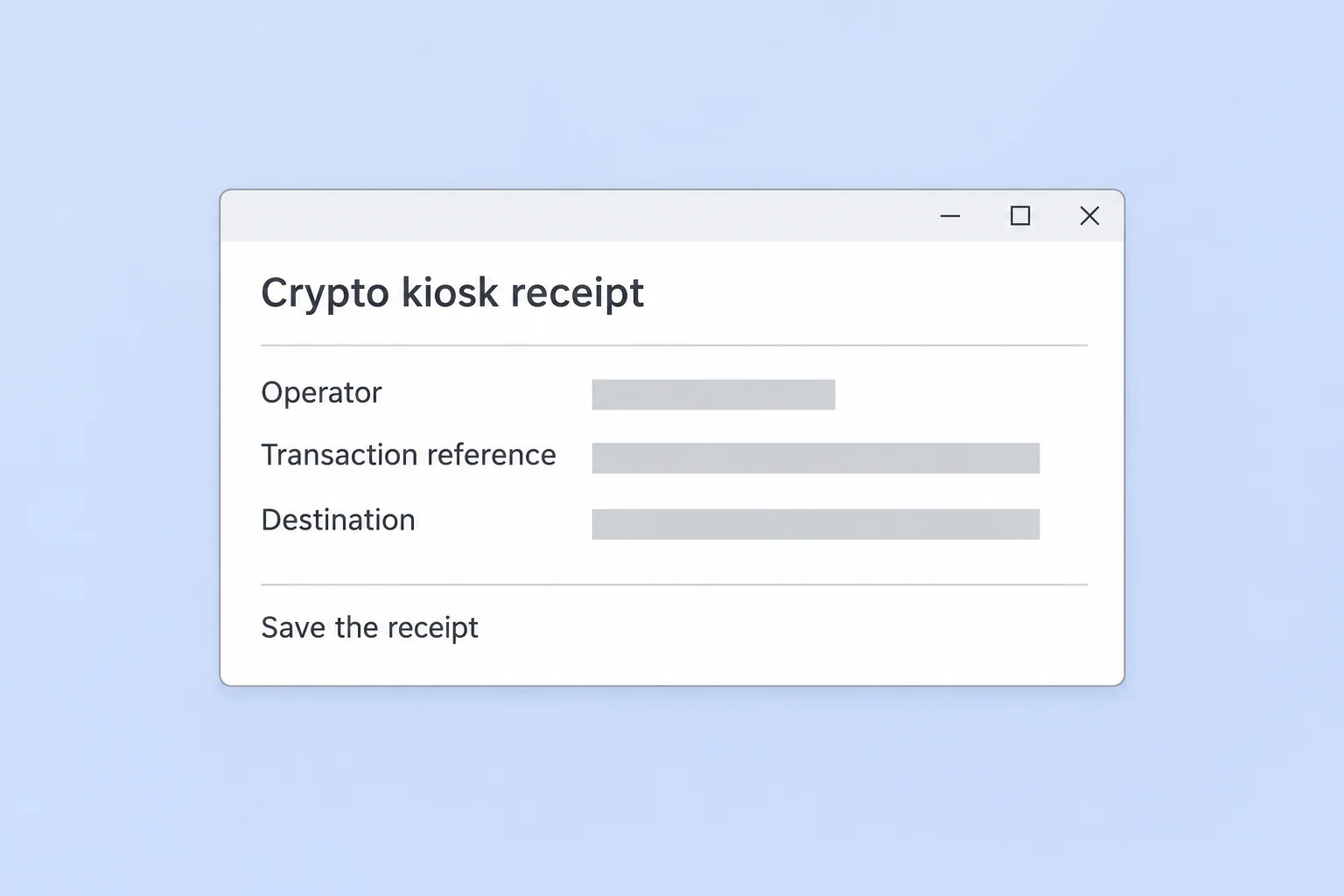
- If cash went into the machine, save the receipt and note the exact location and time. Keep any receipt sent by text or email, without opening links from the caller.
- Find the operator’s support details using its independently verified site and the machine’s name or location. Ask it to identify your transaction and explain its status.
- Use your bank’s real fraud contact if you withdrew money or gave out banking information. Describe the cash withdrawal and the kiosk transaction separately.
- Report the incident through FBI Internet Crime Complaint Center and FTC ReportFraud in the US. Put sensitive transaction details only in secure reports.
Tell the operator if you are still at the machine.
It can advise what to do with that specific terminal; don’t attempt to open it or make another deposit to test it.
If you can’t safely stay there, leave and make the calls somewhere safe. Memory of the store address and a bank withdrawal time can still help identify the transaction.
If Cash Never Went Into the Machine
When you still have all the cash, stop there. Do not try a small payment to see whether the supposed safe account shows that it works.
If you withdrew cash in response to the call, contact your actual bank through its app or the number on your card. Ask how to secure or redeposit it.
Report any information you gave the caller, such as credentials or an approval code. Possessing the cash doesn’t undo exposure of your account, but the two problems need different remedies.
If the story involved an unpaid tax, warrant, or utility bill, look up that institution yourself after ending the call.
Keep the money out of the conversation while checking the claim.
A second voice who took over the call doesn’t supply independent verification. Neither person gets to choose the number you dial when you check the story.
If you started the screen but did not confirm anything
Don’t assume that a scan alone sent money. Tell the verified operator what happened at the kiosk if you aren’t sure whether it retained cash or processed anything.
Do not go back to the caller’s code to investigate its destination. If it is part of your evidence, preserve the original message privately without following the code.
Ask the operator how to close an unfinished session if the machine still shows it.
If the screen is blank or frozen, share the kiosk location with support rather than guessing.
If a Bitcoin ATM Scam Already Cost You Cash
A printed receipt is valuable because it links a time and location to a particular operator record. It isn’t necessarily proof of what happened to the cryptocurrency afterward.
Read the operator’s name and the transaction reference. If the receipt lists the cash amount and a separate cryptocurrency amount or fee, preserve all of those figures.
Report whether the display said the transaction was pending, finished, or failed. Ask the operator to reconcile what the machine took with what its system actually transmitted.
If the receipt never printed, check for the genuine confirmation in your own messages and give support the time, amount, and address of the machine.
Keep the retailer’s location distinct from the name of the business operating the terminal. A store employee may help identify the unit, but typically cannot inspect or reverse the transfer.
Find out whether support put the case on hold, opened a fraud investigation, or simply confirmed receipt of your report. Ask what the operator will actually do next.
Ask for the identifiers investigators can use
The FBI’s reporting guidance for cryptocurrency scams asks for transaction identifiers, addresses, times, and amounts when available. Request the relevant details from the verified operator, not the caller.
A kiosk order number identifies the operator’s record. A blockchain transaction ID identifies a transfer on that network. Have the operator tell you which reference you have.
Record the date and local time together. If you know the time zone, include it so the operator can find the correct transaction when searching its logs.
Write down the coin or network the operator confirms rather than assuming every machine transaction used Bitcoin.
Report an unknown field as unknown instead of substituting a number from the caller.
If support cannot give you the destination directly, ask whether it can share details with investigating authorities after a report. Keep the support ticket in your own notes.
A refund request is not a chargeback
Ask the operator if the transfer can be stopped and what fraud or refund procedure applies. The outcome depends on its records, transaction state, and any rules that apply.
A completed cryptocurrency transfer usually cannot be reversed like a card payment. Don’t let a caller sell you a supposed reversal by asking you to make a second payment.
Tell your bank whether you actually withdrew the cash. A withdrawal you made under deception isn’t the same event as an unauthorized debit or a direct transfer from your bank.
If an unauthorized debit also appears, report it separately to the bank.
Give the bank enough information to check whether somebody else gained access, rather than asking it to reverse the kiosk’s transaction.
How the Story Redirects a Real Transaction
The FBI documents calls that use wallet QR codes at cryptocurrency ATMs. The code can identify the recipient; it doesn’t establish that an authority owns it.
The fraud is the request to send value to someone else under a false story. The kiosk can work exactly as designed and still deliver the loss the caller wanted.
One caller might describe the payment as protecting balances. Another says it is a fine or a temporary deposit that will disappear from the record.
Those descriptions are not entries in your bank or government account. Verify claims about your account with the institution that holds it, using contact information you already trust.
A security notice on the screen doesn’t validate the caller’s story either. If you see a fraud warning or receive an operator warning, stop and check with legitimate support.
Our Bitcoin Depot impersonation guide explains how these scams use a recognizable operator’s machines. You should verify your own machine without assuming it belongs to that company.
Protect the Account the Caller Mentioned
A kiosk payment doesn’t by itself mean someone logged into your bank. Look for actual access indicators, such as an approval you gave or changes you didn’t make.
If you shared banking credentials, call the bank and say which credentials or codes you disclosed. Ask it to review account access, saved recipients, and transactions you did not authorize.
Depending on what was shared, the bank may ask you to change the password or take other steps inside its official app. Don’t follow links in an unsolicited confirmation message.
If the call started with remote access to a computer, end anyone’s access and use a separate trusted device for banking. Contact employer IT for a work-owned computer.
Once you have secured immediate access, keep the operator, bank, and law enforcement references together. Note which office needs a receipt copy and submit it through its own channel.
Help someone who is still at the machine
Ask them to hold on to the cash and end the call, without arguing about whether they should have believed it.
The important decision is the one they can still stop.
If the person says the kiosk has already taken the money, help them collect the receipt and identify the operator.
Let the operator check its records instead of testing a second transaction.
A relative who paid may feel they must deal with it privately. Offer to sit with them while they call the real operator or bank, without posting their receipt publicly.
If you made more than one deposit
Make one line per visit or transaction. List the machine location, approximate time, cash amount, and receipt or support reference where you have one.
A caller may have kept you on the line across different machines. Identify each operator independently rather than asking one operator to search transactions it never handled.
Keep any total you estimate separate from confirmed amounts. A bank withdrawal could include cash you still have, and a printed receipt might show fees or a conversion amount.
If support asks you to send evidence, include only the receipts it needs. Use the other operator’s record in its own case and keep all references for your report.
Make the report understandable without the original call
Start with how contact began, what the person claimed, and whether you were told to keep the transaction secret. Then give the verified details from each machine.
If you have a message showing the destination, keep it as source evidence. Distinguish what was sent to you from the operator’s record of where the funds actually went.
If you cannot find a printed receipt, include the location and time as accurately as you can. Tell investigators which details the operator supplied and which ones are still missing.
The FTC’s guide for people who already paid recommends promptly contacting the exchange or ATM operator. Do this while you collect evidence, not afterward.
If a new caller says they can retrieve the payment
Don’t give a recovery caller access to your bank, phone, or email. A convincing story about the original payment isn’t evidence that they have retrieved anything.
If the real operator says there is a refund procedure, verify it in the same support case. Ask what information it needs and don’t make another payment to qualify.
Keep the caller’s message if it refers to your case. Add it to the report as a separate contact rather than combining its promises with the original transaction.
Frequently Asked Questions
Is cash in a Bitcoin ATM still in my bank account?
No, because the machine is not a deposit terminal for your bank account.
Ask the kiosk operator whether it accepted the cash and sent cryptocurrency, and check the bank withdrawal separately.
What if the kiosk says my transaction is pending?
Contact the verified operator now and ask what pending means for your transaction. Do not assume a hold exists or that a reversal is still possible.
Can a grocery store refund a kiosk payment?
The store may host the machine without operating it. Verify the terminal operator and start with its fraud support, even if the store helped you identify it.
What if I don’t have a wallet address?
Report the details you do have, including the receipt, payment time, and machine location. Ask the operator which destination and transaction identifiers its records can supply.
Can my bank retrieve crypto sent after a cash withdrawal?
The bank can investigate activity on your bank account. It usually isn’t the institution that sent the cryptocurrency, which is why you should contact the operator too.
Is a recovery agent needed to file an FBI report?
No private agent is required to submit an IC3 report. Avoid anyone who demands payment to unlock or return the funds, especially someone who approaches you after the loss.
The Bottom Line
Don’t use a Bitcoin ATM because a caller says it will secure your savings or settle a case. If you still have the cash, walk away without sending it.
If the machine accepted money, keep the receipt and contact the verified operator immediately. Report the transaction and tell your bank about any separate withdrawal, credential disclosure, or unauthorized activity.

Join the discussion
0 commentsShare your experience or ask a question about this article.
Community experiences
Did this happen to you?
Your experience could help someone recognize the same scam. Submit a private report for our team to review.
I experienced this tooReports are reviewed before publication. Sharing publicly is always your choice.
Discussion
Start the conversation
Have a question or something useful to share? Add the first comment.