


You bought an Apple Gift Card because someone told you it would settle an urgent problem. Now they’re asking for a photo, or you’ve already sent one.
You don’t have to wait until the caller disappears to get help. What matters first is whether anyone outside your control could see the redemption code.
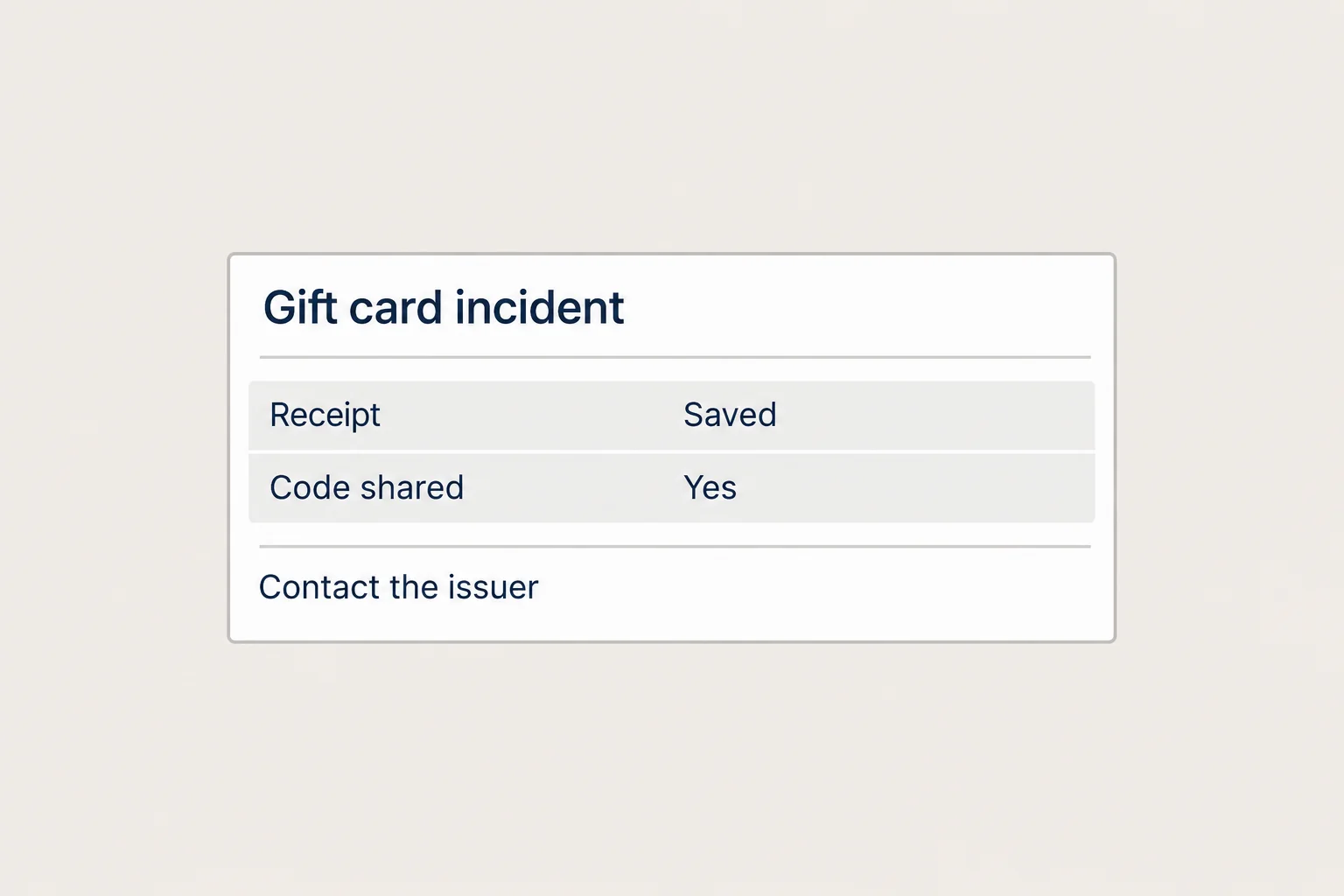
Overview
A card purchase and a payment are different events
Buying a card puts value on it. Giving a stranger the redemption code can let them use that value without ever touching the physical card.
A genuine store receipt confirms you made a purchase. It doesn’t establish that the person asking for the code works for Apple, your bank, or whoever they claim to represent.
The right response depends on what was shared
Someone who still has the card and never exposed the code has different options from someone who texted a clear photo of the back.
- If nothing was shared, stop the conversation and keep the card and receipt.
- If the code was visible to someone else, contact Apple Support immediately.
- If you did not make the underlying purchase, report the separate unauthorized transaction to your card issuer.
The issuer needs a better description than “I got scammed”
Apple needs to know what kind of card was involved and when the code was exposed. The retailer may help with a receipt or activation question.
The bank that funded the purchase can address what happened on your credit or debit account. It doesn’t control how an Apple Gift Card is redeemed.
What to Do After an Apple Gift Card Scam
- End the call or chat and don’t send any more images, codes, or money. Keep every card and all original receipts in one place.
- Open Apple’s gift card scam support page yourself. Use its contact option and say whether you bought an Apple gift card and exposed its code.
- Give Apple the card details it requests through that verified channel. Ask whether it can check the card status or help protect any unused value.
- Contact the store if you need a receipt or have an activation issue. If your bank card was used without permission, report that charge directly to its issuer.
- In the US, report the scam through the FTC’s fraud reporting site. Keep your report and support reference numbers together for follow-up.
Apple lists 800-275-2273 for US customers and says to ask for gift card help.
Outside the US, use the support contact shown for your country rather than that number.
Tell the representative if multiple cards are involved.
One card could have a different status from another, so don’t assume that checking the first one answers what happened to the rest.
The FTC’s gift card guidance advises keeping both the card and purchase receipt and notifying the issuer promptly. Ask about available options without expecting a guaranteed refund.
If You Bought the Card but Never Sent the Code
Check the messages you actually sent, not just what you remember saying. An earlier photo may include the back of the card even if a later request went unanswered.
If you kept the card private, don’t open the scratch panel just because the caller says you must confirm its value. Store it safely and keep the receipt.
If you want your purchase refunded, ask the retailer whether returns are possible for that transaction. Check the specific terms rather than assuming an unused card can always be refunded.
Do not offer to return it through a shipping label supplied by the person who asked you to buy it.
That person already has a reason to obtain the physical card.
If the caller claimed you owed a bill, start a new conversation with the business using contact details on a prior bill or inside your existing account.
Compare what that business says you owe with your last statement. A real overdue balance would still not make Apple gift cards an acceptable way to pay the business.
A receipt can contain more than the price
Some purchase emails display gift information or offer a way to retrieve it. If you forwarded an electronic receipt, check whether the message included anything that could reveal the code.
In that situation, don’t start a second conversation to ask whether the recipient used it. Tell Apple exactly what the email or attachment contained and when you sent it.
A photo of the front alone is different from a readable image of the back.
If you’re unsure what was visible, tell support what you shared instead of assuming it was safe.
If the Code Was Spoken, Typed, or Photographed
Treat a readable code as exposed even if you deleted the message. The other person may already have copied the text or saved the image.
Contact Apple before spending time putting together a long account of the call. Your purchase records and timing matter more for immediate triage than a complete transcript.
Make a short list: card type, retailer, purchase date, amount, and approximate time the code was shared. Keep each card paired with its own receipt or order confirmation.
If you bought an electronic card, save the original purchase email and order record somewhere private. If you bought several, do not rely on a single subtotal to identify them.
Don’t post the card or receipt online to show how the scam worked. Keep the complete details for a private conversation with the verified issuer or investigating authority.
Ask support how to proceed if it says the card was already redeemed. Record what it can confirm and avoid assuming it can disclose another customer’s account details.
Do not confuse Apple’s cards with other brands
Look at the name on the physical card or purchase email. Scammers often push for a different brand if the first store limits the purchase.
Use the verified issuer for each card, even if one caller requested the whole group.
Apple cannot handle an unrelated brand simply because the fraud began with a supposed Apple problem.
If support asks whether the card was used on your own account, check your history through Apple’s real services. Don’t visit a code checker sent in the original conversation.
If the retailer says the card wasn’t activated
Ask the retailer for the purchase and activation record. Whether the card was activated at checkout is a different question from whether someone later spent it.
Retain the packaging and receipt, especially if you noticed suspicious damage before you shared anything. Report both the store-level concern and the earlier request without assuming they were connected.
If an electronic order never arrived, check your actual order history and delivery destination. The caller’s claim that it was intercepted is not proof that the retailer sent it.
How the Demand Changes During the Call
A caller may begin by asking you to buy a card, then describe the photo as a receipt check.
The harmless-sounding label doesn’t change what a visible redemption code enables.
Another version involves a supposed refund: the caller insists that a mistake left you owing money and that only a gift card can balance the accounts.
Check any claimed account credit by opening your bank app independently. A screen the caller controls or an emailed picture of a balance isn’t a reliable banking record.
If you’re told to buy a replacement card because the first one failed, don’t send another code. Treat the first card as a separate exposure and tell its issuer.
When someone claims to be a relative in trouble, call that person on a number already in your contacts. If they’re unavailable, call another family member with an established number.
A boss may legitimately buy gifts for employees. An unexpected request to buy cards privately and text back codes deserves confirmation through an existing workplace channel before you act.
The MalwareTips guide to gift card impersonation messages covers the different lures. The decision here is what to do once a card has actually been bought.
If the Call Also Exposed an Account
Sharing a gift card code isn’t the same as sharing the password to your Apple Account. Take additional steps based on what else was given away.
If you entered an Apple password or approved a sign-in, use Apple’s account security guidance from a trusted device. Change the password and review the devices on your account.
On a trusted iPhone, open Settings, tap your name, then open Sign-In & Security. Select Change Password and complete the verification on your device.
Return to the screen with your name and scroll to the device list. Open unfamiliar entries to examine them; remove only devices you can confirm aren’t yours.
If the same person got a bank code or was allowed to see your screen while you were banking, tell your bank what they saw.
Use the fraud channel listed in your bank app.
A gift card purchase alone doesn’t mean your device was compromised. If a stranger still has remote control, end the session and use another device for help.
Keep the two financial records separate
If you willingly paid the retailer but were deceived into sharing the code, tell the bank exactly that. Don’t describe the actual store purchase as unauthorized if you made it.
If a charge appeared that you never approved, handle it as a separate bank fraud report. An Apple support case doesn’t automatically create a dispute with your card issuer.
Write the two case numbers next to the relevant transaction. That makes it easier to answer a follow-up without forwarding the full set of gift card codes.
Give the next caller nothing to work with
A follow-up caller who already knows the amount or the store can still be an impersonator. Don’t accept their number as the official route for a refund.
If someone claims to have recovered the funds but asks for another card or payment, stop. Check the original case with the organization that opened it.
You may be helping someone else report the loss. Ask them to keep the receipts and describe exactly what was shared, without making them justify why the call sounded real.
Separate card purchase, activation, and redemption
A charge on your credit card tells you the retailer was paid. Activation is the retailer’s record that the gift card was loaded. Redemption concerns what happened after that.
If your payment statement lists several identical store purchases, use the timestamp and receipt to match them to individual gift cards. Do not publish those details to look for help.
If Apple can see an unused balance, ask whether it can freeze it and how to request a refund. Keep any deadline that support gives you.
If support requests proof of purchase, send it through the case channel it identifies. A callback claiming the case is open should not get the code without independent verification.
If someone asks you to check the balance on their site
A site the caller chose cannot verify their identity. Entering a code there counts as another exposure, even if the page displays an error instead of a balance.
Close the page and tell Apple which information you entered. Keep the address and timestamp privately if support needs them, but don’t return to capture more evidence.
A purchase made days ago can still be worth reporting. The FTC recommends contacting the card issuer even when the scam is not recent.
Frequently Asked Questions
Can Apple stop a gift card after I sent the code?
Ask Apple Support immediately whether anything can be done with the remaining value. A prompt report can help, but it is not a promise that Apple can stop a redemption.
Can I return a card if I didn’t send its code?
Contact the original retailer with the receipt and ask about that purchase. Return options depend on the terms and the transaction, even if the card was not redeemed.
Is sending the store receipt the same as sending the code?
A receipt without redemption information isn’t the same thing.
Check whether an electronic receipt or attachment contained the code or a way to access it, and explain the difference to support.
What if the person says I must buy a second card to cancel?
Stop before buying any more gift cards.
The person who asked for the first code cannot be trusted to cancel it, and the issuer doesn’t require another gift card to take a report.
Should I contact Apple or my bank first?
If the Apple code was exposed, contact Apple right away. If your bank card or account was also used without permission, report that separately to the institution that issued it.
Can I still report the scam without the original card?
Gather what you still have, such as the receipt, order emails, and messages. Ask the issuer which details it can use and tell it the original card is missing.
The Bottom Line
Don’t send a gift card code to settle a bill or fix an account warning. If you bought the card but kept the code private, keep it and the receipt.
If the code may have reached the other person, open a case with Apple now. Contact your bank as well if there was an unauthorized purchase or separate account exposure.

Join the discussion
0 commentsShare your experience or ask a question about this article.
Community experiences
Did this happen to you?
Your experience could help someone recognize the same scam. Submit a private report for our team to review.
I experienced this tooReports are reviewed before publication. Sharing publicly is always your choice.
Discussion
Start the conversation
Have a question or something useful to share? Add the first comment.