


Flowing boho dresses, floral jumpsuits and swimsuits for around $25 to $50. Capivity.com looked like a calm, ordinary fashion shop rather than a flashy clearance site.
If you ordered from Capivity and are still waiting, or you are checking the name before buying, here is what its pages and its customers reveal.

Overview
A clothing shop that looked ordinary
Capivity sold women’s clothing, including printed shirts, dresses, jumpsuits and swimwear. Its August 2025 catalog showed new arrivals priced from $24.39 to $48.69.
The About page offered affordable wardrobe essentials and familiar brands. That presentation gave shoppers a straightforward expectation: choose a garment, pay, and receive what was pictured.
A reasonable-looking price can be reassuring. It cannot establish that a seller holds the stock, dispatches it, or will resolve a missing order.
The website is no longer a working shop
Capivity.com currently returns an error instead of its clothing storefront. The surviving pages discussed here are archived copies, not an invitation to order through an active checkout.
An inaccessible account makes an old purchase harder to reconstruct. Your receipt, payment record and saved correspondence matter more than a login you can no longer open.
The answer for anyone considering an order
Do not order through the Capivity offer. The missing-order accounts below and the absence of a working storefront leave buyers without a dependable reason to trust it.
- Use your actual order date and payment method to identify the remaining remedy.
- Check a delivery claim with the named carrier, not just the shop’s status page.
- Obtain an authorized return destination before mailing a parcel.
- Do not mistake a familiar template or a US address for proof of reliable fulfillment.
Capivity Reviews: The Missing-Order Pattern
The Capivity Trustpilot profile displays 11 reviews, a 2.2 score and eight one-star ratings. It says the business has not answered negative reviews.
Seven visible complaints, posted from November 2025 through May 2026, describe non-delivery. One reports a delivered status paired with an invalid tracking number.
Another says support promised the parcel was coming, followed by three months without delivery. Those are customer accounts, not independently checked shipment records.
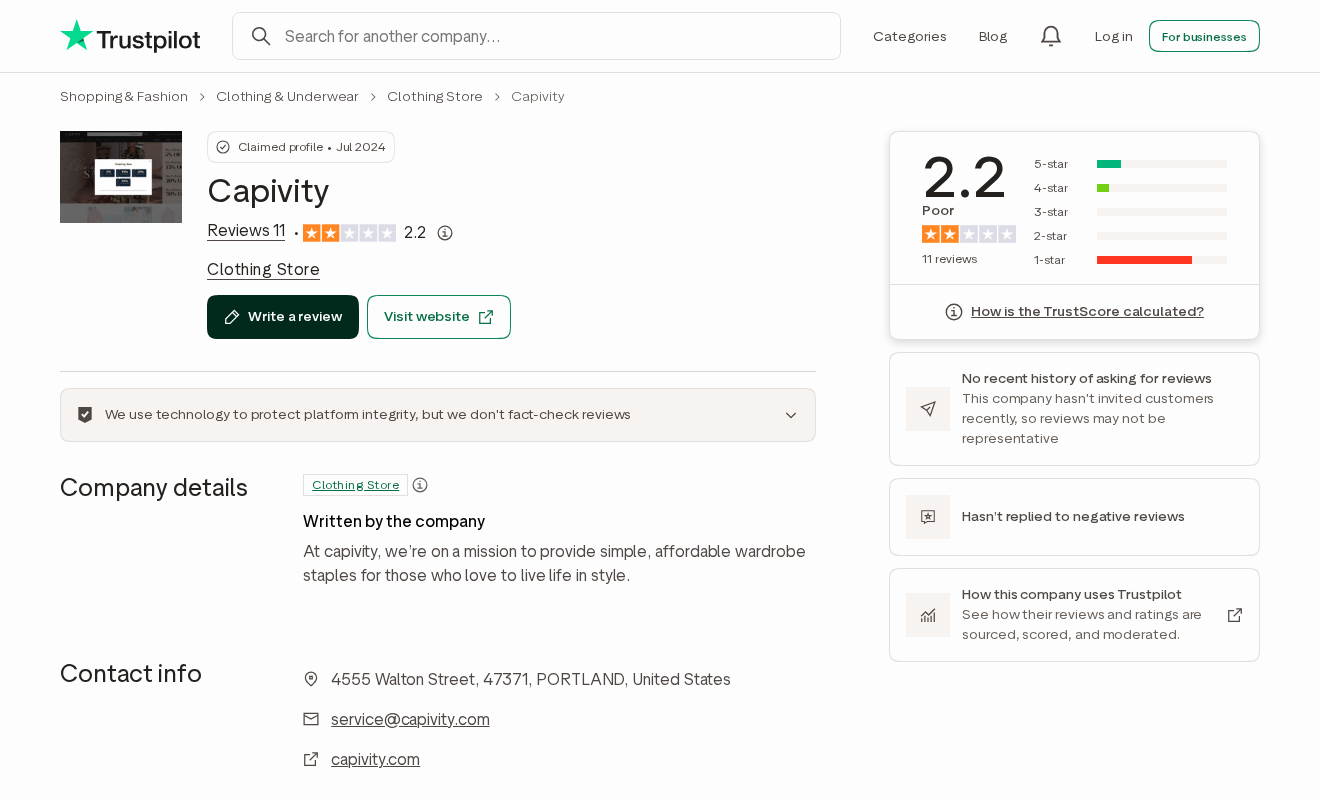
Three positive reviews also appear: two describe dresses and one a sweater. They should not be erased or declared fabricated merely because later accounts are unfavorable.
For your own complaint, use this pattern as context. The strongest evidence will still be the payment, the promised item and what happened to your parcel.
How the Capivity Sales Funnel Works
Step 1: An ordinary catalog earns the first measure of trust
The clothes were presented as everyday fashion, not an implausible luxury giveaway. That distinction matters because a dubious store does not need spectacular prices to attract customers.
A shopper may compare two dresses, check a size chart and feel they have investigated the purchase. Those checks assess the garment, not the seller’s ability to deliver.
Archived 2024 coupons offered 5% off three pieces and 30% off twenty.
Buying extra pieces to unlock a discount also complicates a later claim. You need to identify each missing item rather than treating the whole order as one photograph.
A product grid can make many garments feel equally available. Before paying an unfamiliar shop, distinguish an attractive listing from a specific dispatch commitment.
Step 2: Local-looking prices lead to a USD checkout notice
The archived cart said orders were processed in USD, even when the displayed currency differed. It also contained the unexplained CYN currency label.
That notice is a reason to check the final summary, not proof that a particular buyer was overcharged. Your receipt and statement establish the actual transaction.
With a non-USD account, conversion or foreign-transaction fees may affect the cost, depending on your card’s terms. They are not automatic for every customer outside the US.
Keep the advertised amount separate from the settled payment. If you raise a dispute, supply the real charge and explain any conversion rather than guessing a USD equivalent.
Also check the merchant descriptor. A name you do not recognize may be a processor or billing entity; ask the issuer to identify it before describing the payment.
Step 3: Confirmation is mistaken for evidence of shipment
The shipping page estimated one to three business days for processing, followed by five to 15 business days in transit. It described tracking details sent after dispatch.
Those are separate stages. An order confirmation records a purchase; a shipping label may record preparation. Neither, by itself, establishes that the carrier received the clothes.
Look for an acceptance or collection event from the named carrier. Then check whether later scans describe a real journey toward the destination on your order.
If a tracking page does not name a carrier, ask for that information. Do not enter banking details or pay a surprise redelivery charge to reveal it.
A screenshot should show the tracking number, carrier and date together. That makes the evidence intelligible when someone reviewing the payment has never seen the seller’s website.
Step 4: A delivery dispute becomes a test of the records
A delivered label does not tell the entire story. Identify which parcel it concerns, which items were inside, and whether the destination matches your order.
For a missing delivery, ask the carrier what confirmation it can provide to you. A retailer’s screenshot is not a substitute for investigating the actual shipment.
If several garments were ordered, keep a simple item-by-item list. Receiving one package should not cause an outstanding item to disappear from your complaint.
Describe the problem precisely when contacting the payment provider. Missing goods, an incorrect garment and an unfamiliar additional charge require different explanations and supporting records.
Do not let another vague request for patience replace a dated answer. Ask what will happen next and when, while separately checking your provider’s deadline.
Step 5: The storefront becomes unavailable before the dispute is resolved
The current HTTP response says error code 1001; HTTPS does not establish a working storefront. The domain remains registered through March 28, 2027.
The error leaves you without a usable order page. Try the address on your receipt, but keep your payment-provider deadline moving.
More importantly, an error page is not a cancellation confirmation or a refund. Check your payment account rather than assuming the order has been unwound.
Save any remaining correspondence outside the store. An emailed receipt can be useful even when the account page, product listing or order lookup has become inaccessible.
If the same offer returns, do not treat a fresh homepage as proof that old problems were resolved. Require a clear explanation before trusting it with another payment.
Who Runs Capivity? Seller Identity and Returns
The terms name KIM DEAL INC in Colorado
The archived terms identify KIM DEAL INC at 2010 14th St, Boulder, Colorado. They explicitly say that address is not for returns.
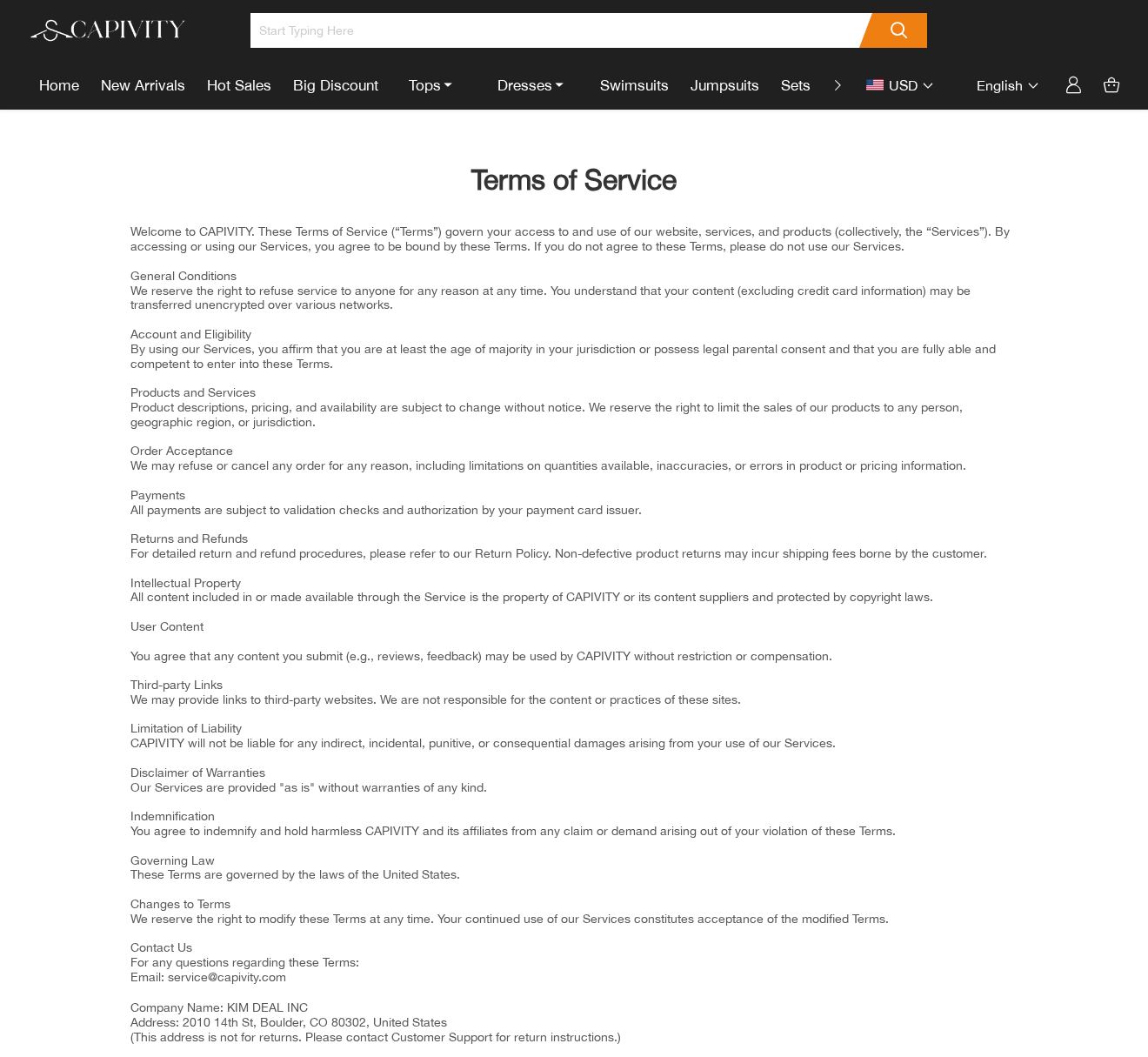
The company name is a starting point for identifying your payment. It doesn’t tell you which warehouse handled the garment or who can authorize a return.
Keep the company name with your transaction records. If the invoice or statement names another entity, ask how it relates to the order rather than assuming either name is fictitious.
The second address needs an explanation, not a guessed role
The Trustpilot business listing instead gives 4555 Walton Street, Portland, ZIP 47371. The profile was claimed in July 2024.
A business can legitimately use multiple locations. What shoppers need is a clear explanation of which entity accepted payment and which address handles their particular problem.
Neither published location should be treated as an authorized return destination. A contact address is not a shipping instruction, and sending clothes there could add another unresolved expense.
The return promise depends on obtaining instructions
The archived policy offered 30 calendar days after receipt for unused goods with packaging and tags. Customers paid return postage; no restocking fee was stated.
It required customers to contact service@capivity.com for the correct destination and warned against sending items to another listed address without confirmation.
That creates a practical problem when a request goes unanswered. Keep the dated request and ask the payment provider how to proceed, rather than buying an unapproved shipping label.
For a parcel that never arrived, explain non-delivery. A condition requiring unused clothing cannot supply you with an item to return.
A shared shopping platform does not identify a shared owner
Archived Capivity and Abyzines pages used static.eumastore.com and fonts.zshoppy.com, plus the same USD/CYN cart notice. PackageApparelCo currently uses those platform asset hosts too.
These are observable software connections. They do not establish that the merchants share an owner, warehouse, customer-service team or responsibility for one another’s orders.
A familiar layout should therefore prompt a transaction-specific check, not an assumption that a renamed shop will honor an earlier store’s refund.
Capivity and cabi: Check the Brand and Exact Seller
cabi’s own website presents a separate clothing business with personal stylists and country options for the United States, Canada and United Kingdom.
Use the exact domain on your receipt to identify the seller. A similar name in a search result does not move a Capivity complaint to cabi.
What to Do If You Ordered From Capivity
Make a short transaction timeline. Record the payment date, items, total, promised arrival and each contact attempt. Separate confirmed events from estimates.
Save emails as well as screenshots. An original shipping message may preserve the seller address and tracking link even after the website disappears.
Ask for a specific resolution in writing. State the order number and whether you want delivery information, cancellation or repayment for missing goods.
Use the contact on your actual receipt. Preserve an unanswered request or bounce, but do not wait indefinitely before checking the payment deadline.
Choose the dispute that matches the facts. For clothing that never arrived, describe an authorized purchase followed by non-delivery, not a payment you never approved.
If something arrived but differed substantially, photograph the garment, labels and packaging beside the listing. Explain the mismatch rather than relying on the word scam.
Use PayPal’s actual process if eligible. In a US account, open the Resolution Center, select Report a Problem, choose the payment and identify the purchase issue.
US Purchase Protection gives item-not-received disputes 180 days from payment. Eligibility still matters; opening a case does not guarantee reimbursement.
An unresolved dispute must be escalated within 20 days after opening. Check the case’s required actions instead of assuming the first submission finishes the claim.
Check the shorter description deadline. US PayPal claims about materially different goods also face a 30-day delivery deadline, or 180 days from payment, whichever comes first.
For a card-funded PayPal purchase, choose the appropriate dispute route. Do not run PayPal and card claims for the same transaction simultaneously or seek double recovery.
Contact the card issuer promptly. Ask which process covers your payment method and whether a written notice is needed. Debit and credit arrangements can differ.
The CFPB explains a US credit-card billing-error notice should be sent within 60 calendar days after the charge appears on the statement.
That is not a universal deadline for every card, country or dispute. Explain the delayed-delivery circumstances and ask about any remaining option, especially for an older order.
Keep the claim moving. Note its reference number, next deadline and requested evidence. Respond through the provider’s own account or verified contact channel.
If repayment is partial, record the outstanding amount. Before accepting a settlement or closing a case, ask what that agreement means for the remaining complaint.
Related Buying-Risk Investigations
Our Brune Couture investigation explains how customer experiences and return conditions can undermine an appealing boutique presentation.
The Aimierbuy report examines conflicting return messages. A prominent promise and the conditions used to approve a refund are not always the same thing.
The Vvcloth investigation also includes delivered orders and refunds. Its commercial risks should not be retold as proof that every customer was defrauded.
These are separate merchants and case studies, not an ownership map. Compare the buying problem without transferring one shop’s allegations to another.
How to Spot Fake Clothing Stores
Start with the order you might actually place: the item, seller identity, delivery commitment and cost of resolving a problem. Polished photographs cannot answer those questions.
Fraudulent shopping websites often share common patterns that make them easier to detect once you know what to look for. Before entering personal information or making a payment, take a few minutes to check for these warning signs:
- Unrealistic prices and discounts
If a website offers products at prices far below trusted retailers, it’s often a red flag. Many of these sites advertise luxury or high-demand products at massive discounts to create a sense of urgency. A $300 product listed for $49.99 should immediately raise suspicion. - Recently registered or suspicious domain names
Many fraudulent websites operate on newly created domains that disappear after a few weeks. Look for signs like random characters in the URL, misspellings of well-known brands, or hyphenated domains.
You can check a site’s age with a WHOIS lookup, or run it through our free Scam URL Scanner. - Missing or vague company details
Legitimate businesses clearly display their company name, tax information, phone numbers, physical address, and return policies. Fraudulent sites often provide incomplete, fake, or no company details at all. A lack of verifiable contact information is a major warning sign. - No reliable customer service
Real businesses provide clear ways to contact support—email, phone, live chat, or physical return addresses. Fake stores often list nonfunctional contact forms, invalid phone numbers, or reply with generic automated messages. - Poor website quality and structure
Many fake stores are set up quickly with low-effort templates. Look for poor grammar, spelling errors, low-resolution product images, broken links, or missing legal pages (Terms of Service, Privacy Policy, Return Policy). A sloppy website often signals something isn’t right. - Copied product descriptions and images
Fraudulent sites often lift product listings directly from real retailers or marketplaces. If you reverse image search a product photo and find it on multiple unrelated websites, the listing is likely not original. - Lack of credible reviews or suspicious review patterns
A real store will usually have a mix of customer reviews across different platforms. Warning signs include no reviews at all, obviously fake five-star reviews, or multiple identical reviews posted on the same day. Searching “[website name] reviews” or “[website name] scam” on Google often reveals warnings from other consumers. - Unclear or unfair return and refund policies
Fake stores often use vague language around returns and refunds—or avoid the topic entirely. If you can’t easily find clear instructions for how to return an item or get a refund, proceed with caution. - Aggressive urgency and pressure tactics
Fraudulent websites commonly use fake scarcity (e.g., “Only 2 left in stock!”) or countdown timers (“Sale ends in 10 minutes!”) to push you to buy before you think it through. Legitimate stores don’t rely on fabricated urgency to make sales.
Quick Steps to Verify a Website’s Legitimacy
Before entering payment or personal details on a new shopping website, take a few simple precautions:
- Search for the store’s name along with words like “reviews” or “complaints” on Google and Trustpilot.
- Check the website’s domain registration using Whois.com.
- Use trusted tools to scan for malicious or fraudulent links:
- Malwarebytes ScamGuard – detect scams and unsafe links before they reach you on Android and iOS phone.
- Malwarebytes Browser Guard – block dangerous or fake websites on Windows and macOS browsers.
- Verify the business address on Google Maps to ensure it’s a legitimate location.
- Review the store’s accepted payment methods – credit cards and PayPal are traceable and safer than cryptocurrency or bank transfers.
- Trust your instincts; if something feels off, it’s better not to proceed.
How to Spot Similar Scams on Social Media
Many fraudulent shopping websites rely heavily on sponsored social media ads to draw in large numbers of potential buyers. These ads often promise extraordinary discounts—sometimes up to 90% off—and use emotionally charged language to push users into buying immediately.
They frequently appear on Facebook, Instagram, and TikTok, blending in with legitimate content. However, these ads follow predictable patterns that make them easier to identify once you know what to look for.
Spotting Fraudulent Facebook Ads
Facebook’s advertising platform is a favorite tool for fake online stores because of its massive reach. These ads often feature “unbelievable” offers designed to create urgency and bypass critical thinking. Warning signs include:
- Extreme, unrealistic discounts such as “90% OFF,” “Store Closing Sale,” or “Final Liquidation.” Real retailers rarely discount new products this aggressively.
- Poor grammar, awkward phrasing, or inconsistent language throughout the ad or website, indicating low-effort, mass-produced content.
- Generic stock photos or images with watermarks, suggesting the images were taken from legitimate brands or stolen from other sources.
- Recently created Facebook Pages, which is common for temporary fraudulent campaigns. Check the “Page Transparency” section to see when the page was created.
- Limited or no engagement from real customers. Authentic brands usually have reviews, comments, and visible user interaction.
If an ad raises doubts, search for reviews of the website or reverse image search the product photos to see if they’re copied from elsewhere. Never provide payment information until the site is verified.
Spotting Fraudulent Instagram Ads
Instagram is another major platform used to promote fake shopping sites through eye-catching visuals and short-lived “flash sale” captions. Warning signs to look for:
- New or disposable accounts with few posts and followers, often created just weeks or days before launching ads.
- Lack of tagged users in product posts. Legitimate stores often feature real customers, influencers, or product usage.
- Unsecured checkout pages. If the website linked in the bio does not use HTTPS, do not enter payment information.
- Fake or missing customer reviews. Fraudulent stores rarely have authentic purchase feedback.
- Unclear or restrictive return policies, often hidden or written vaguely to make refunds difficult.
When in doubt, search for independent reviews before buying, and only enter payment details on verified, secure websites.
Catching Fake TikTok Ads
TikTok is increasingly used to promote questionable shopping deals through short, persuasive videos. While many ads look polished, the same red flags apply:
- Links to unknown stores that don’t appear in search results or have no external reputation. Many of these sites are temporary and disappear after a short time.
- No verification badge on the TikTok account. While not every legitimate store is verified, the lack of a badge is one more indicator to check further.
- Aggressive countdown timers or “one-day only” promotions designed to rush decision-making.
- Lack of genuine customer reviews or real user content demonstrating the product in actual use.
- Comment sections filled with complaints or warnings from other users. This is often the first place victims speak up.
TikTok scams often rely on impulse buying. Take a moment to verify the website, read independent reviews, and use trusted browser protection before visiting external links.
Protect Your Accounts Without Adding Another Problem
If a separate transaction appears that you did not authorize, contact the issuer through your banking app or the number on your card.
Ask whether that specific exposure calls for a block or replacement. A card replacement is not a refund and cannot promise that every future charge is prevented.
If you gave an untrusted checkout a password used elsewhere, replace that reused password on the affected accounts. Enable available two-factor authentication.
Simply using the same email address does not show that another account was accessed. Focus on exposed credentials, unfamiliar sign-ins or actual account changes.
Ignore incoming refund helpers demanding a fee, banking code or remote access. Verify any repayment inside your payment account, not through a stranger’s link.
US consumers can submit suspected deceptive selling to FTC ReportFraud. Elsewhere, use the relevant local consumer authority. A report is separate from a payment claim.
Frequently Asked Questions
Is Capivity legit?
Do not order through this offer. An attractive catalog is not enough to overcome the unresolved buying risks described above or restore an inaccessible storefront.
Is Capivity connected to cabi?
The two sites present different clothing businesses. Check your receipt’s exact domain; a similar brand name does not identify the seller responsible for your order.
Where is Capivity based?
Capivity listed more than one US location without explaining their roles. The place printed on a webpage is not necessarily the warehouse handling your parcel.
Can I still get a refund for an old Capivity order?
Ask the payment provider about eligibility and remaining deadlines. Older payments may be outside the usual window, and a request does not guarantee recovery.
Should I send a return to the company address?
No. Obtain order-specific authorization and a complete destination first. Keep any unanswered request as evidence instead of paying to send a parcel somewhere unapproved.
Does the website error mean my order was canceled?
No. Check for a written cancellation and an actual credit in your payment account. An unavailable website cannot confirm either outcome.
The Bottom Line
Do not place another order through the Capivity offer. Its catalog’s ordinary appearance is no substitute for dependable fulfillment, a usable return process and an accountable seller.
If you already paid, organize the transaction records and seek the appropriate payment remedy now. Protect the deadline rather than waiting for the storefront to reappear.
This article is for informational purposes only and should not be relied upon for financial or business decisions. We identify potential scams using research, user experiences, and expert analysis. However, all claims should be independently verified. Mistakes may occur, and legitimate products could be flagged. We strive for accuracy but make no warranties regarding the completeness or reliability of the information.

If you are the owner of the website or product in question and wish to offer clarifications regarding your business or website, please reach out to us via our Contact form.

Reviews & discussion
0 commentsShare a firsthand experience, or ask a question.
Community reviews
capivity.com
Moderated reader experiences, not an editorial verdict.
Start the conversation
Have a question or something useful to share? Add the first comment.