


A comfortable-looking outfit catches your eye, the discount looks reasonable, and suddenly you’re picturing exactly where you’ll wear it. Vvcloth makes that decision look straightforward.
Then you start reading about delivery, sizing and returns. Those details deserve attention before a promising photograph becomes an order you need to sort out.
Overview
Vvcloth is a clothing retailer with a real customer history
Vvcloth sells women’s clothing through www.vvcloth.com. Its current catalog emphasizes cotton and linen-style everyday pieces, including shirts, blouses, dresses and relaxed trousers.
The domain dates to December 8, 2021, according to the Verisign registry. A longstanding domain alone says little about how an individual order will turn out.
Customer accounts describe deliveries and refunds as well as problems. Calling every order nonexistent would be misleading.
The return promise needs a closer look
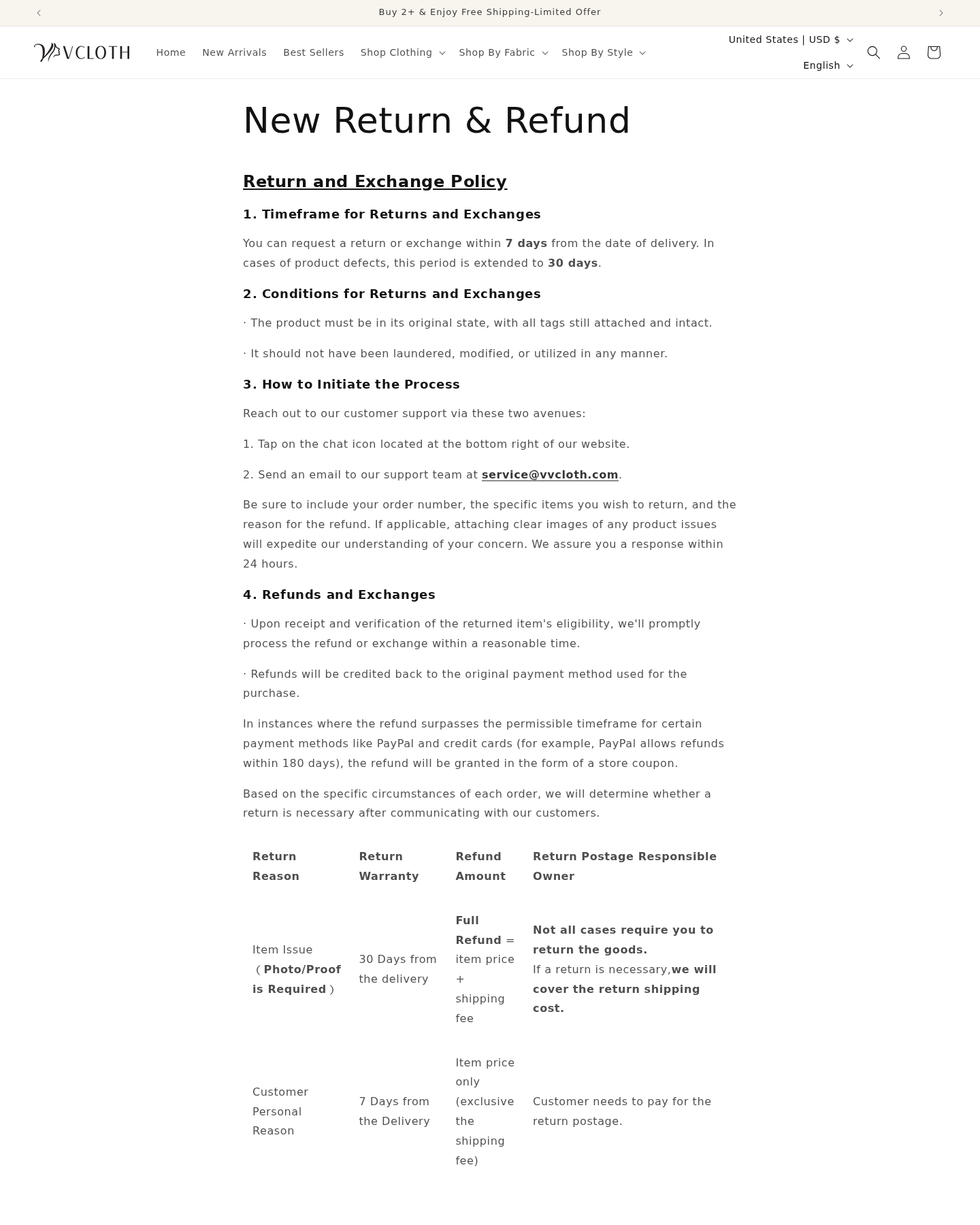
The site’s rotating announcement includes “45 DAYS EASY RETURN.” Its linked detailed policy gives seven days for personal reasons and 30 days for defects.
That difference matters if a dress arrives too large or the fabric feels wrong. A reassuring banner doesn’t tell you which deadline support will apply.
- Ordinary personal returns require the original condition and intact tags.
- Ask who pays postage for the specific problem you report.
- Separate a fit preference from damage or an incorrect item.
- Get the authorized return address before paying for a label.
Is Vvcloth legit, or should you avoid ordering?
The evidence supports an operating retailer with commercial risks, not a confirmed fake-store operation. That distinction doesn’t make the purchase automatically advisable.
Don’t place a deadline-sensitive order or a large first purchase while the return window and destination remain unclear. Choose a retailer with unambiguous terms instead.
If you’ve already ordered, the useful next step is to identify your specific problem and the policy attached to your transaction, not assume recovery is impossible.
What Vvcloth Reviews Actually Say
The overall rating is not a substitute for reading complaints
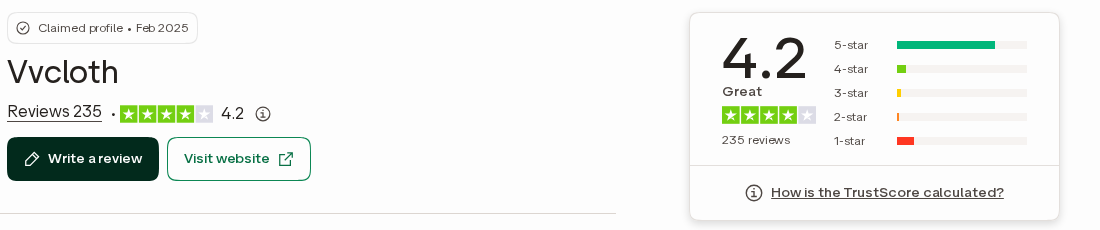
The exact www.vvcloth.com Trustpilot profile displays 235 reviews and a 4.2 score. About 75% are five-star and 13% one-star.
That balance matters. A review profile should not be retold as if its happiest customers never existed.
Stars also compress very different experiences. Someone can like a garment while disliking its delivery time, or receive helpful support after an expensive return.
A missed event is a practical risk, even when clothing arrives
Ronda Wang’s May 2026 review describes eight items ordered for an event arriving late, with one still missing.
The retailer apologized and said it was investigating the missing item and refund request.
This was an individual account, not a delivery rate for the whole business. It nevertheless illustrates why an occasion purchase needs more than a general estimate.
A refund can happen without making the return painless
Linda Jones’s July 2026 account describes an oversized dress, a Canada-to-U.S. return, duties and a prompt refund.
The seller acknowledged the return-location problem and offered to reimburse the duties.
Some replies use the MSglamor management name. That identifies a branding overlap, not the legal owner of every related-looking shop.
If correspondence uses a different brand, keep that message with your receipt. Ask which merchant is handling the remedy instead of sending the parcel elsewhere.
Where Vvcloth’s Return Information Falls Short
Seven days and 45 days are not interchangeable
Imagine a parcel arriving before a busy weekend. You leave it unopened for a few days, assuming the prominent announcement gives you more than a month.
Under the shorter policy, much of your personal-return window has already passed. The contradiction changes the practical value of the purchase.
Save the banner and the detailed conditions together. Ask support which promise governs the order, and request an answer before relying on the longer period.
The retailer should resolve that conflict clearly. Customers shouldn’t have to reconstruct the applicable return deadline from different parts of the same website.
A fitting issue and a product defect can cost different amounts
Personal returns cover the item price, not original shipping. The buyer pays return postage.
For qualifying item issues, it refunds the item and original shipping, and pays postage for a required return.
How the problem is described therefore matters. A change of preference, a garment outside its published measurements and a torn seam are not identical complaints.
Photographs and the original size chart can help establish which happened. You should not have to label a genuine defect as mere buyer’s remorse.
A store coupon is not the same as getting your money back
A late refund may become a coupon under the policy. Confirm whether the proposed remedy returns money or requires another purchase.
Don’t let a prolonged conversation quietly turn a request for repayment into store credit. Ask what is being offered and whether accepting it settles the claim.
The seller’s description of a refund deadline is not the full rulebook for a card issuer or payment provider.
How the Vvcloth Purchase and Return Process Works
Step 1: The clothing presentation creates the expectation
Soft fabrics, relaxed styling and marked-down prices make the catalog appealing. A washed cotton denim shirt, for example, is displayed at $49.99 against $89.99.
That is an advertised comparison, not a verified record of what shoppers previously paid. Judge the current price against the garment’s actual specifications.
Check fabric composition, measurements and care instructions for the exact item. A collection name containing cotton or linen is not a complete fiber label.
Step 2: Promotions make adding another item tempting
A rotating announcement offers free shipping for buying two or more items. The separate shipping page instead describes free shipping above US$100.
Those conditions may reflect different offers, but the final order needs to make the applicable rule clear. Don’t assume adding a second item always removes postage.
Check quantity, shipping, tax and currency in the final summary. Buying an unnecessary blouse to save postage is still additional spending.
If you are unsure about fit, multiplying an untested purchase also multiplies the number of items you may need to return.
Step 3: Processing and transport determine when the order is useful
The shipping page describes dispatch for most packages within five days, followed by an arrival estimate of eight to 14 calendar days for most destinations.
Those are different stages. An order confirmation is not proof of dispatch, and a tracking number should be checked for actual carrier movement.
For an event outfit, ask for an arrival commitment covering the exact items and location. A general worldwide estimate is not a promise for your wedding date.
If several garments arrive separately, keep a list of what is still missing. One delivered parcel cannot explain away another item that never arrived.
Step 4: The reason for returning decides the next conversation
Once the parcel arrives, the important details are its condition, measurements and whether it matches the listing. Inspect it before washing, altering or removing tags.
Contact service@vvcloth.com with the order number and the specific issue. Ask for authorization, an actual destination and a written breakdown of the proposed refund.
A prompt reply is helpful, but it is not the same as an approved return. Look for instructions that resolve the problem rather than another request to wait.
Company, Support, and Fulfillment Checks
Who is responsible for your order?
The terms apply Hong Kong law; Trustpilot lists Singapore. Neither entry identifies your transaction’s complete seller and fulfillment chain.
Keep your receipt and payment descriptor. A brand, a service team and a payment processor may appear under different names in the same transaction.
Support exists, but ask for a resolution you can act on
The contact page publishes service@vvcloth.com and aims to answer within one business day. The return policy also refers customers to the website chat.
The better question is whether support confirms the deadline, missing item, return label or payment outcome. Politeness alone doesn’t complete an outstanding order.
A return warehouse can be outside your country
Ask where your particular parcel must go. The country you live in, or the currency used at checkout, cannot supply that answer.
Request the full address before deciding a purchase is easy to reverse. International postage can consume a significant share of the refund on one inexpensive garment.
If duties or a label fee arise, ask who bears them before sending anything. Don’t infer the answer from the currency shown on the homepage.
The supply chain needs more than lifestyle language
Vvcloth’s About page emphasizes comfort and natural fabrics. That presentation doesn’t give you the factory, fiber percentages or construction quality of each item.
Use the actual garment label and item description to assess those details. A disappointing fabric or poor seam should be documented specifically, not generalized to every product.
A blouse advertised as cotton can still require delicate care. Compare its cleaning instructions with what you expect to wear and wash regularly.
For other buying-risk comparisons, see our Cowgirl Elf, Charmfay clothing and Joan bags reports. Each concerns a separate seller, not a demonstrated Vvcloth network.
The Seller’s Policy Is Not Your Only Protection
The FTC’s shopping guidance recommends retaining delivery promises and return conditions, including the party responsible for postage. Those details make a complaint concrete.
Where UK consumer law applies, GOV.UK explains a usual 14-day period to notify cancellation for online purchases, followed by another 14 days to return.
Exceptions exist, and cross-border enforcement can be difficult. A retailer’s shorter voluntary policy does not automatically define every consumer’s statutory rights.
For U.S. PayPal accounts, Purchase Protection distinguishes missing goods from materially misdescribed goods. Simple dissatisfaction may not qualify.
The current U.S. rules give missing-item disputes a 180-day limit from payment. Description disputes have both a 30-day delivery clock and a 180-day payment clock.
The sooner of those two deadlines controls a description claim. An unresolved dispute must also be escalated within 20 days after it is opened.
Check the terms applying to your own account and follow provider instructions. A store credit offer is not a reason to overlook an independent dispute deadline.
What to Do If You Ordered From Vvcloth
Put every item on one timeline. List the purchase date, promised dispatch, actual deliveries and anything missing. Treat separate parcels separately.
Ask support for a specific update on each outstanding item rather than accepting a general statement that the order has shipped.
Inspect the fit without changing the garment. Keep tags attached and compare the item with its size chart before washing or arranging alterations.
For defects, take clear photographs of the problem, the whole garment and its label. Include measurements where they explain the disagreement.
Raise the conflicting deadline immediately. Preserve the competing promises. State your return request promptly and ask support to confirm the applicable deadline in writing.
Don’t delay while waiting for that explanation. State your intention to return promptly so the support conversation doesn’t consume the shortest window.
Obtain the real return cost. Request the destination, authorization, label arrangements and refundable amount. Ask specifically about an item that arrived faulty or materially different.
Compare any keep-the-item offer with the cost of an authorized return. Make sure you understand whether accepting it ends further claims.
Close the loop on an agreed resolution. If a refund is promised, ask for its amount, method and processing date. Retain the written approval.
For an exchange, confirm the replacement item and whether another delivery or return fee applies. An exchange should solve a fit problem, not create unexplained spending.
How to Spot Fake Clothing Stores
Fraudulent shopping websites often share common patterns that make them easier to detect once you know what to look for. Before entering personal information or making a payment, take a few minutes to check for these warning signs:
- Unrealistic prices and discounts
If a website offers products at prices far below trusted retailers, it’s often a red flag. Many of these sites advertise luxury or high-demand products at massive discounts to create a sense of urgency. A $300 product listed for $49.99 should immediately raise suspicion. - Recently registered or suspicious domain names
Many fraudulent websites operate on newly created domains that disappear after a few weeks. Look for signs like random characters in the URL, misspellings of well-known brands, or hyphenated domains.
You can check a site’s age with a WHOIS lookup, or run it through our free Scam URL Scanner. - Missing or vague company details
Legitimate businesses clearly display their company name, tax information, phone numbers, physical address, and return policies. Fraudulent sites often provide incomplete, fake, or no company details at all. A lack of verifiable contact information is a major warning sign. - No reliable customer service
Real businesses provide clear ways to contact support—email, phone, live chat, or physical return addresses. Fake stores often list nonfunctional contact forms, invalid phone numbers, or reply with generic automated messages. - Poor website quality and structure
Many fake stores are set up quickly with low-effort templates. Look for poor grammar, spelling errors, low-resolution product images, broken links, or missing legal pages (Terms of Service, Privacy Policy, Return Policy). A sloppy website often signals something isn’t right. - Copied product descriptions and images
Fraudulent sites often lift product listings directly from real retailers or marketplaces. If you reverse image search a product photo and find it on multiple unrelated websites, the listing is likely not original. - Lack of credible reviews or suspicious review patterns
A real store will usually have a mix of customer reviews across different platforms. Warning signs include no reviews at all, obviously fake five-star reviews, or multiple identical reviews posted on the same day. Searching “[website name] reviews” or “[website name] scam” on Google often reveals warnings from other consumers. - Unclear or unfair return and refund policies
Fake stores often use vague language around returns and refunds—or avoid the topic entirely. If you can’t easily find clear instructions for how to return an item or get a refund, proceed with caution. - Aggressive urgency and pressure tactics
Fraudulent websites commonly use fake scarcity (e.g., “Only 2 left in stock!”) or countdown timers (“Sale ends in 10 minutes!”) to push you to buy before you think it through. Legitimate stores don’t rely on fabricated urgency to make sales.
Quick Steps to Verify a Website’s Legitimacy
Before entering payment or personal details on a new shopping website, take a few simple precautions:
- Search for the store’s name along with words like “reviews” or “complaints” on Google and Trustpilot.
- Check the website’s domain registration using Whois.com.
- Use trusted tools to scan for malicious or fraudulent links:
- Malwarebytes ScamGuard – detect scams and unsafe links before they reach you on Android and iOS phone.
- Malwarebytes Browser Guard – block dangerous or fake websites on Windows and macOS browsers.
- Verify the business address on Google Maps to ensure it’s a legitimate location.
- Review the store’s accepted payment methods – credit cards and PayPal are traceable and safer than cryptocurrency or bank transfers.
- Trust your instincts; if something feels off, it’s better not to proceed.
How to Spot Similar Scams on Social Media
Many fraudulent shopping websites rely heavily on sponsored social media ads to draw in large numbers of potential buyers. These ads often promise extraordinary discounts—sometimes up to 90% off—and use emotionally charged language to push users into buying immediately.
They frequently appear on Facebook, Instagram, and TikTok, blending in with legitimate content. However, these ads follow predictable patterns that make them easier to identify once you know what to look for.
Spotting Fraudulent Facebook Ads
Facebook’s advertising platform is a favorite tool for fake online stores because of its massive reach. These ads often feature “unbelievable” offers designed to create urgency and bypass critical thinking. Warning signs include:
- Extreme, unrealistic discounts such as “90% OFF,” “Store Closing Sale,” or “Final Liquidation.” Real retailers rarely discount new products this aggressively.
- Poor grammar, awkward phrasing, or inconsistent language throughout the ad or website, indicating low-effort, mass-produced content.
- Generic stock photos or images with watermarks, suggesting the images were taken from legitimate brands or stolen from other sources.
- Recently created Facebook Pages, which is common for temporary fraudulent campaigns. Check the “Page Transparency” section to see when the page was created.
- Limited or no engagement from real customers. Authentic brands usually have reviews, comments, and visible user interaction.
If an ad raises doubts, search for reviews of the website or reverse image search the product photos to see if they’re copied from elsewhere. Never provide payment information until the site is verified.
Spotting Fraudulent Instagram Ads
Instagram is another major platform used to promote fake shopping sites through eye-catching visuals and short-lived “flash sale” captions. Warning signs to look for:
- New or disposable accounts with few posts and followers, often created just weeks or days before launching ads.
- Lack of tagged users in product posts. Legitimate stores often feature real customers, influencers, or product usage.
- Unsecured checkout pages. If the website linked in the bio does not use HTTPS, do not enter payment information.
- Fake or missing customer reviews. Fraudulent stores rarely have authentic purchase feedback.
- Unclear or restrictive return policies, often hidden or written vaguely to make refunds difficult.
When in doubt, search for independent reviews before buying, and only enter payment details on verified, secure websites.
Catching Fake TikTok Ads
TikTok is increasingly used to promote questionable shopping deals through short, persuasive videos. While many ads look polished, the same red flags apply:
- Links to unknown stores that don’t appear in search results or have no external reputation. Many of these sites are temporary and disappear after a short time.
- No verification badge on the TikTok account. While not every legitimate store is verified, the lack of a badge is one more indicator to check further.
- Aggressive countdown timers or “one-day only” promotions designed to rush decision-making.
- Lack of genuine customer reviews or real user content demonstrating the product in actual use.
- Comment sections filled with complaints or warnings from other users. This is often the first place victims speak up.
TikTok scams often rely on impulse buying. Take a moment to verify the website, read independent reviews, and use trusted browser protection before visiting external links.
Escalating an Unresolved Vvcloth Order
If the agreed refund does not arrive, send your payment provider the seller’s promise, amount and processing date. Explain what remains unresolved.
For an incomplete order, identify the missing garment and its price. A delivery scan for another parcel does not settle every item in the purchase.
Describe an authorized clothing purchase accurately. Non-delivery, a substantial mismatch and a credit that never posted are different disputes; use the category your provider recommends.
Open the case before the applicable deadline and check its next required action. Waiting for another seller reply should not leave a dispute unsubmitted or closed.
Keep any partial settlement in writing. Ask the provider how accepting it affects the open case before agreeing to withdraw a dispute.
If an unfamiliar charge appears, contact the issuer through your account or the number on your card. Let it assess whether payment details need replacing.
Ignore unsolicited refund helpers requesting a fee, banking code or remote access. Verify a refund through the original seller correspondence and your own payment account.
Frequently Asked Questions
Is Vvcloth a legitimate company?
The shop operates, but that is only the starting point. Resolve the terms governing your particular items and deadline before committing to the purchase.
Why are Vvcloth reviews so different?
Compare the issue, timing and eventual remedy. A review about slow delivery answers a different question from one about fabric or return postage.
Does Vvcloth accept returns?
Yes. Request authorization promptly and ask which deadline covers your reason for returning. Keep the answer with your purchase record.
Where would I return a Vvcloth order?
Obtain a complete, order-specific address and authorization. Get a postage quote before agreeing to return, not after the parcel is sent.
Is V-Cloth in reviews the same as a one-V website?
Use www.vvcloth.com as the transaction identifier. A hyphen or missing letter in a name should not transfer your complaint to another business.
Should I order a Vvcloth outfit for a special event?
Not without a dependable arrival commitment and a clear fallback. The documented late-order complaint makes relying on a general shipping estimate an unnecessary gamble.
The Bottom Line
Vvcloth should not be labeled a confirmed fake store from these facts. However, don’t make a large or time-critical purchase while its return promises disagree.
If you already ordered, inspect each delivery, document the precise issue and request a concrete resolution immediately. Helpful correspondence only counts when it produces the agreed result.
This article is for informational purposes only and should not be relied upon for financial or business decisions. We identify potential scams using research, user experiences, and expert analysis. However, all claims should be independently verified. Mistakes may occur, and legitimate products could be flagged. We strive for accuracy but make no warranties regarding the completeness or reliability of the information.

If you are the owner of the website or product in question and wish to offer clarifications regarding your business or website, please reach out to us via our Contact form.

Join the discussion
0 commentsShare your experience or ask a question about this article.
Discussion
Start the conversation
Have a question or something useful to share? Add the first comment.