


A clever-looking gadget can make an unfamiliar shop worth a second glance. Aimierbuy presents the kind of household upgrades that are easy to imagine using.
Before the product photo does all the convincing, look at the purchase from the other direction. What happens if the item arriving at your door disappoints?
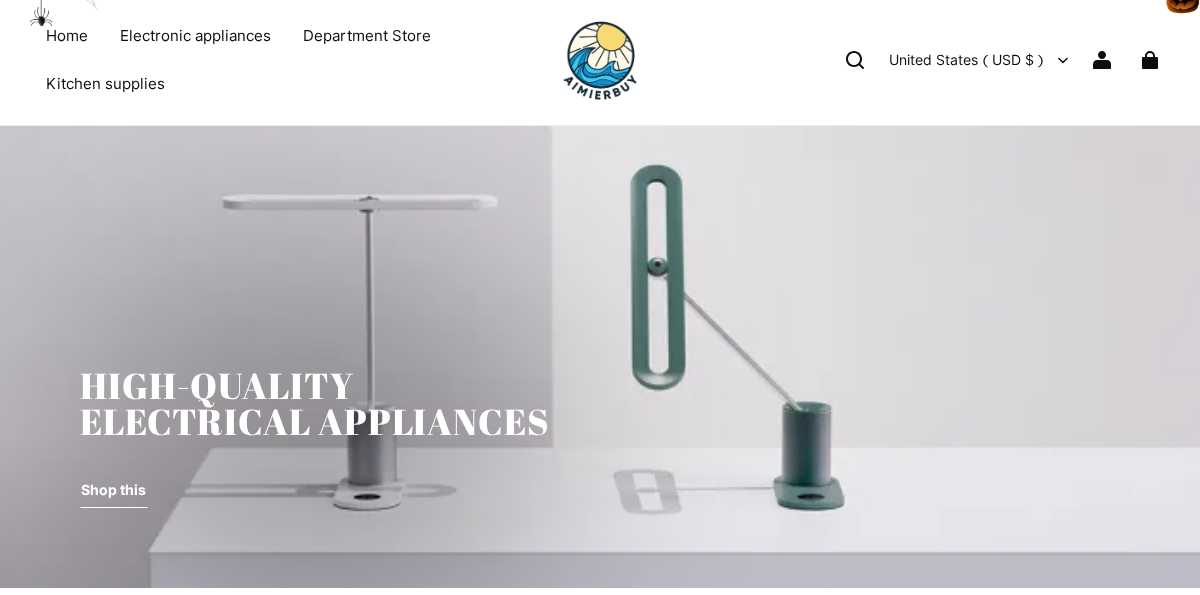
Overview
Aimierbuy.com is an operating storefront with more than one product category
Aimierbuy sells household gadgets, personal-care devices, and other consumer goods. Its current website contains product collections, shipping information, company details, and a customer-service email.
This is not a case where the only finding is a vanished page. The important questions concern what buyers receive and how the advertised return promise works.
A functioning catalog, however, is only the first part of a purchase. It tells you little about product performance, support, or the cost of returning something unsuitable.
The return promise has conditions
The banner promises “14-day postage paid returns,” but the policy makes buyers pay.
A refund promise is useful only if you can afford to use it. Return costs should be clear before the parcel ever leaves the seller.
Those distinctions matter before payment, especially if the advertised feature is something you can assess only after opening the product.
- A headline return period is not necessarily a promise of free return postage.
- Requesting cancellation does not automatically establish that your order was stopped.
- A full order price and the amount eventually refunded may be quite different.
- A wrong or defective item should be documented differently from a simple change of mind.
Aimierbuy reviews describe repeated product and refund disputes
The exact aimierbuy.com Trustpilot profile shows 68 reviews, a 1.4 score, and 94% one-star ratings.
That record should stop a prospective buyer from rushing into an order. A low headline price matters little if resolving a problem becomes another expense.
The clear buying recommendation is to avoid this offer. Conflicting return messages and a poor customer record are enough reason to spend your money elsewhere.
What Aimierbuy.com Reviews Actually Describe
September 2026 reviewer Mr Barker reports receiving the wrong monocular, followed by an alternative support address that rejected messages.
A June 2026 Australian reviewer reports paying A$54 for disappointing glasses, then receiving an offer of a 15% refund or exchange.
An August 2026 reviewer disputes the delivered model, saying the seller dismissed photographs showing the difference.
These are customer accounts, not independently tested orders. Keep your own complaint specific.
One five-star entry questions an image rather than reporting a purchase. Read the text behind each rating.
Star totals are a starting point, not a replacement for reading. Pay particular attention to whether a reviewer describes ordering, delivery, correspondence, and the eventual outcome.

How an Aimierbuy Order Can Become a Dispute
Step 1: An appealing feature becomes the reason to buy
A product page may sell the convenience of an unusual tool, better vision, or an upgraded household device. The feature that persuades you should be stated precisely.
Save the model, materials, included accessories, and performance claims. A photograph alone may leave room for the seller to argue that a different-looking item is equivalent.
Check whether the written specifications support the demonstration. A video showing an accessory in use does not necessarily mean that accessory is included in the package.
For glasses, distinguish a general tint or adjustable design from a claim about correcting your particular eyesight. A stylish frame cannot establish that medical suitability.
Our NoBlu Vision Glasses report separates advertised vision benefits from appropriate evidence. A product demonstration is not a substitute for an eye examination.
Step 2: Currency and quantities need checking before payment
Aimierbuy offers country and currency selectors. A price displayed in A$ is not the same amount as a price in US $, even when the number looks similar.
Compare the product, quantity, currency, shipping, and final total together. Do not treat an empty-cart balance as the price of the item you were considering.
If an additional accessory or quantity appears during checkout, resolve it before paying. A screenshot of the final order is more useful than remembering the first headline price.
The newsletter signup is also different from a paid subscription. Seeing an email signup alone does not establish an automatic refill or recurring-billing arrangement.
Step 3: Check cancellation costs
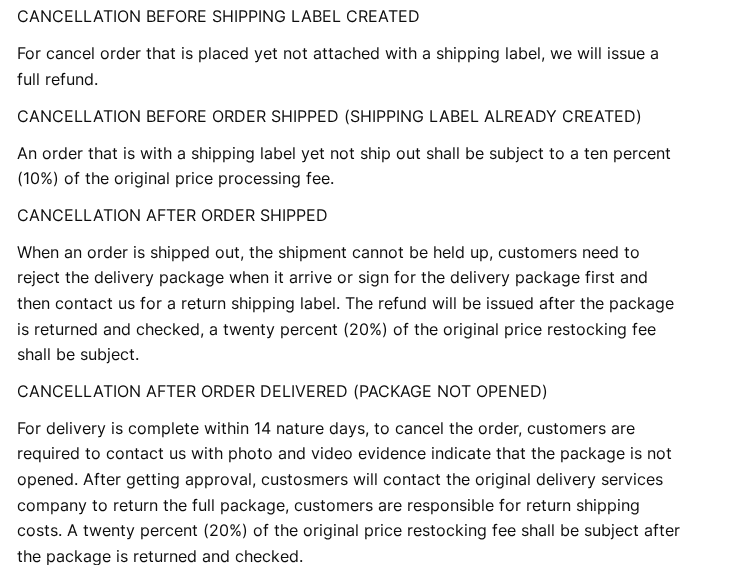
The shipping page allows order changes within 12 hours. Send any cancellation request immediately and save its timestamp.
US cancellation: full refund before labeling; 10% once labeled but unshipped.
Creating a label is not the same as the carrier receiving a parcel. Ask which event occurred and request the relevant tracking information when cancellation is refused.
The shipping page estimates dispatch in one to two business days and arrival in five to seven. Treat those as the seller’s estimates, not a delivery guarantee.
The shipping policy also says parcels do not require a signature by default. Buyers wanting signature delivery are told to request it after ordering.
A delivered scan is therefore not a photograph of what was inside. Keep the outer label with the product, especially when the dispute concerns a substitution.
Step 4: Price the return
Deductions: 20% after shipment or for qualifying unopened 14-day returns; 25% for qualifying used-product, non-quality 30-day returns.
Visibly used or sale items need special return approval.
An overseas order brings another practical question: where must a return travel, and what would posting it cost? Obtain that answer for your own purchase.
A damaged item, a missing accessory, and a product you simply dislike are different complaints. Describe the actual problem instead of accepting the wrong return category.
Opening a box to discover the wrong model is not the same experience as using the correct product and changing your mind. Make that distinction explicit.
Step 5: Settle the return instructions
Written approval is required. Unauthorized returns may be rejected at the buyer’s expense.
The shipped-order clause allows refusing delivery or accepting it and arranging a return. The FedEx/UPS note instead says to sign first.
Get written, carrier-specific instructions before acting. Keep that answer with your tracking information rather than relying on contradictory paragraphs.
The flaws section requests inspection within seven days, then offers compensation for contact within 14. Report problems immediately and keep dated photographs.
Ask for an authorized address and an itemized proposed refund. A small settlement may look convenient until you compare it with the total purchase and postage already paid.
For a US $100 purchase, a 20% deduction leaves $80 before return postage. The return expense then reduces that amount further.
A local-looking storefront does not tell you how far a return must travel. Ask for the actual destination before getting a postage quote.
The Companies, Addresses, and Support Behind Aimierbuy
The website names Chinese, Hong Kong, and UK entities
Aimierbuy’s About Us page names Leling Antu Xing E-Commerce Co., Ltd., with an address in Shandong, China. It also identifies Hong Kong Jisheng Electronic Technology Co., Limited.
The site says the Hong Kong entity processes its PayPal transactions. A separate UK entry names Shenlong Digital Technology Ltd., company number 15891368.
These declarations are more specific than an anonymous brand. They still need to match the company on your receipt and the party handling your particular order.
If your payment record names the Hong Kong entity while support cites the UK company, ask which party is issuing the credit. Keep the answer with the transaction.
The UK registration exists, but the displayed address differs
Companies House lists Shenlong Digital Technology Ltd. as active, incorporated on August 12, 2024. Its registered office is at Regus Atterbury Lakes in Milton Keynes.
Aimierbuy instead displays a Luminous House, South Row address. That mismatch needs clarification; the current registry does not show the same address as the store.
A registered company does not authenticate a product’s performance. Nor is an office listed on a company page automatically the destination authorized to receive a return.
An overseas entity can use a UK company for a particular business role. The useful question is who owes the specific remedy, not which address looks most reassuring.
An email address exists, but a usable remedy matters more
The published support address is service@mail.aimierbuy.com. The contact page advertises service hours of 9:00 to 24:00 and a response within 24 hours.
A useful reply should address your actual request. An acknowledgment without an answer about the item, return, or payment does not resolve the dispute.
Write the address carefully, retain any bounce message, and connect the request to your order number. A second address supplied later should be checked against the original correspondence.
Corporate locations do not identify every product’s factory
The Chinese address establishes what the store declares about one business entity. It does not identify the factory, quality controls, or return destination for every item.
A useful product check needs the actual model, supplier details, instructions, and any relevant safety documentation. Do not substitute an office address for those answers.
The same distinction matters in our Cybx.store investigation: a seller, product brand, and return channel can raise different questions. Similar complaints alone do not establish shared ownership.
For another gadget example, our MagVolt Pro investigation distinguishes charging claims, selected quantities, extras, and return costs. Assess those separately, whatever logo appears on the box.
What to Do if You Ordered From Aimierbuy
- Identify the mismatch before discussing a settlement.
Compare the advertised model and accessories with the contents of the parcel. Photograph the item from useful angles, including packaging, identifiers, and the instructions supplied.
For a missing feature, explain what the listing promised and what the delivered item does instead. Avoid relying only on descriptions such as cheap or disappointing.
- Ask which cancellation stage applies.
State when you ordered and when you requested cancellation. Ask whether a label merely exists or whether a carrier has actually accepted the package.
Request the specific deduction and the basis for it. An unexplained status message should not be treated as a complete answer about a cancellation fee.
- Obtain consistent written return instructions.
Ask service@mail.aimierbuy.com for approval, the exact destination, required packaging, deadline, and responsibility for postage. Explain whether the complaint concerns incorrect or faulty goods.
Keep the advertisement beside the seller’s answer. If they differ, ask which promise applies before spending money on return postage.
- Calculate the net result of a partial refund.
Compare the offered amount with the purchase total and any return expense. Ask whether accepting the proposal closes the case or prevents a later return.
A coupon requiring another purchase is not the same remedy as money returned to your original payment method. Decide based on the actual proposal, not its headline percentage.
- Keep the parcel traceable if a return is agreed.
Confirm the destination exactly, photograph the packed item, and retain proof of mailing and delivery. Send the tracking reference through the established correspondence.
A carrier’s delivered status documents the parcel’s journey. Separately check whether the seller acknowledges receiving the return and actually processes the promised amount.
How to Spot Fake Shopping Stores
Fraudulent shopping websites often share common patterns that make them easier to detect once you know what to look for. Before entering personal information or making a payment, take a few minutes to check for these warning signs:
- Unrealistic prices and discounts
If a website offers products at prices far below trusted retailers, it’s often a red flag. Many of these sites advertise luxury or high-demand products at massive discounts to create a sense of urgency. A $300 product listed for $49.99 should immediately raise suspicion. - Recently registered or suspicious domain names
Many fraudulent websites operate on newly created domains that disappear after a few weeks. Look for signs like random characters in the URL, misspellings of well-known brands, or hyphenated domains.
You can check a site’s age with a WHOIS lookup, or run it through our free Scam URL Scanner. - Missing or vague company details
Legitimate businesses clearly display their company name, tax information, phone numbers, physical address, and return policies. Fraudulent sites often provide incomplete, fake, or no company details at all. A lack of verifiable contact information is a major warning sign. - No reliable customer service
Real businesses provide clear ways to contact support—email, phone, live chat, or physical return addresses. Fake stores often list nonfunctional contact forms, invalid phone numbers, or reply with generic automated messages. - Poor website quality and structure
Many fake stores are set up quickly with low-effort templates. Look for poor grammar, spelling errors, low-resolution product images, broken links, or missing legal pages (Terms of Service, Privacy Policy, Return Policy). A sloppy website often signals something isn’t right. - Copied product descriptions and images
Fraudulent sites often lift product listings directly from real retailers or marketplaces. If you reverse image search a product photo and find it on multiple unrelated websites, the listing is likely not original. - Lack of credible reviews or suspicious review patterns
A real store will usually have a mix of customer reviews across different platforms. Warning signs include no reviews at all, obviously fake five-star reviews, or multiple identical reviews posted on the same day. Searching “[website name] reviews” or “[website name] scam” on Google often reveals warnings from other consumers. - Unclear or unfair return and refund policies
Fake stores often use vague language around returns and refunds—or avoid the topic entirely. If you can’t easily find clear instructions for how to return an item or get a refund, proceed with caution. - Aggressive urgency and pressure tactics
Fraudulent websites commonly use fake scarcity (e.g., “Only 2 left in stock!”) or countdown timers (“Sale ends in 10 minutes!”) to push you to buy before you think it through. Legitimate stores don’t rely on fabricated urgency to make sales.
Quick Steps to Verify a Website’s Legitimacy
Before entering payment or personal details on a new shopping website, take a few simple precautions:
- Search for the store’s name along with words like “reviews” or “complaints” on Google and Trustpilot.
- Check the website’s domain registration using Whois.com.
- Use trusted tools to scan for malicious or fraudulent links:
- Malwarebytes ScamGuard – detect scams and unsafe links before they reach you on Android and iOS phone.
- Malwarebytes Browser Guard – block dangerous or fake websites on Windows and macOS browsers.
- Verify the business address on Google Maps to ensure it’s a legitimate location.
- Review the store’s accepted payment methods – credit cards and PayPal are traceable and safer than cryptocurrency or bank transfers.
- Trust your instincts; if something feels off, it’s better not to proceed.
How to Spot Similar Scams on Social Media
Many fraudulent shopping websites rely heavily on sponsored social media ads to draw in large numbers of potential buyers. These ads often promise extraordinary discounts—sometimes up to 90% off—and use emotionally charged language to push users into buying immediately.
They frequently appear on Facebook, Instagram, and TikTok, blending in with legitimate content. However, these ads follow predictable patterns that make them easier to identify once you know what to look for.
Spotting Fraudulent Facebook Ads
Facebook’s advertising platform is a favorite tool for fake online stores because of its massive reach. These ads often feature “unbelievable” offers designed to create urgency and bypass critical thinking. Warning signs include:
- Extreme, unrealistic discounts such as “90% OFF,” “Store Closing Sale,” or “Final Liquidation.” Real retailers rarely discount new products this aggressively.
- Poor grammar, awkward phrasing, or inconsistent language throughout the ad or website, indicating low-effort, mass-produced content.
- Generic stock photos or images with watermarks, suggesting the images were taken from legitimate brands or stolen from other sources.
- Recently created Facebook Pages, which is common for temporary fraudulent campaigns. Check the “Page Transparency” section to see when the page was created.
- Limited or no engagement from real customers. Authentic brands usually have reviews, comments, and visible user interaction.
If an ad raises doubts, search for reviews of the website or reverse image search the product photos to see if they’re copied from elsewhere. Never provide payment information until the site is verified.
Spotting Fraudulent Instagram Ads
Instagram is another major platform used to promote fake shopping sites through eye-catching visuals and short-lived “flash sale” captions. Warning signs to look for:
- New or disposable accounts with few posts and followers, often created just weeks or days before launching ads.
- Lack of tagged users in product posts. Legitimate stores often feature real customers, influencers, or product usage.
- Unsecured checkout pages. If the website linked in the bio does not use HTTPS, do not enter payment information.
- Fake or missing customer reviews. Fraudulent stores rarely have authentic purchase feedback.
- Unclear or restrictive return policies, often hidden or written vaguely to make refunds difficult.
When in doubt, search for independent reviews before buying, and only enter payment details on verified, secure websites.
Catching Fake TikTok Ads
TikTok is increasingly used to promote questionable shopping deals through short, persuasive videos. While many ads look polished, the same red flags apply:
- Links to unknown stores that don’t appear in search results or have no external reputation. Many of these sites are temporary and disappear after a short time.
- No verification badge on the TikTok account. While not every legitimate store is verified, the lack of a badge is one more indicator to check further.
- Aggressive countdown timers or “one-day only” promotions designed to rush decision-making.
- Lack of genuine customer reviews or real user content demonstrating the product in actual use.
- Comment sections filled with complaints or warnings from other users. This is often the first place victims speak up.
TikTok scams often rely on impulse buying. Take a moment to verify the website, read independent reviews, and use trusted browser protection before visiting external links.
Escalating an Unresolved Aimierbuy Order
If the agreed remedy stalls, contact the payment provider through its own app or published support channel. Ask which dispute process fits the actual purchase.
A wrong item, a missing delivery, and an approved refund that never arrived need different evidence. Describe the problem accurately rather than reporting every disappointing purchase as unauthorized.
Provide the order confirmation, listing, product photographs, and correspondence together. Include any return authorization, delivery record, and promised refund date that supports your request.
Ask about deadlines while correspondence continues. A seller’s request to wait does not automatically extend your provider’s time limit, and a dispute does not guarantee recovery.
If later charges appear without your permission, report those separately and ask the issuer about blocking further billing. Merely ordering does not require everyone to replace a card.
Secure an account if its password was exposed or reused on an untrusted login. Using the same email address alone is not evidence that the account was compromised.
Frequently Asked Questions
Is Aimierbuy legit?
Aimierbuy has an operating store and names business entities, including a registered UK company. Those facts do not resolve its conflicting return messages or poor customer record.
Do not treat registration alone as a reason to trust this offer. The buying recommendation remains to avoid it.
Are Aimierbuy returns free?
Do not assume so. Despite the banner, qualifying US unopened/used returns involve buyer-paid postage and deductions. Get your order’s terms confirmed in writing.
What do recent Aimierbuy reviews complain about?
Wrong goods and disputed refunds dominate the examples above. Look for an order history and outcome, not just a star rating.
Is everything Aimierbuy sells made in China?
The store declares a Chinese business entity, but that does not establish each product’s manufacturing origin. Check the actual label and supplier documentation rather than guessing from an address.
What if my Aimierbuy support email bounces?
Check the address against your receipt and the published service@mail.aimierbuy.com contact. Keep the bounce notification, request a working channel, and do not let correspondence consume your dispute deadline.
Does a blocked Aimierbuy page mean the store has closed?
No. Automated requests can be blocked while a normal browser still loads the store. An access error alone establishes neither closure nor malware on your device.
The Bottom Line
Do not order from Aimierbuy on the strength of its polished catalog or easy-return message. The policy contradictions and repeated customer complaints make this a poor buying risk.
If you already paid, document the exact product problem, seek clear written return terms, and take an unresolved payment dispute to your provider before its deadline.
This article is for informational purposes only and should not be relied upon for financial or business decisions. We identify potential scams using research, user experiences, and expert analysis. However, all claims should be independently verified. Mistakes may occur, and legitimate products could be flagged. We strive for accuracy but make no warranties regarding the completeness or reliability of the information.

If you are the owner of the website or product in question and wish to offer clarifications regarding your business or website, please reach out to us via our Contact form.

Reviews & discussion
0 commentsShare a firsthand experience, or ask a question.
Community reviews
aimierbuy.com
Moderated reader experiences, not an editorial verdict.
Start the conversation
Have a question or something useful to share? Add the first comment.