

A caller says your past donation has brought some unexpected good news. A charity you recognize is mentioned, and apparently there is a prize waiting.
It sounds like a pleasant follow-up to something generous you did. Before discussing delivery or confirming your details, listen carefully to what the caller wants next.
Overview
The FTC has warned about this particular pitch
On October 26, 2026, the FTC warned about scammers impersonating familiar charities and sweepstakes in calls and social media ads.
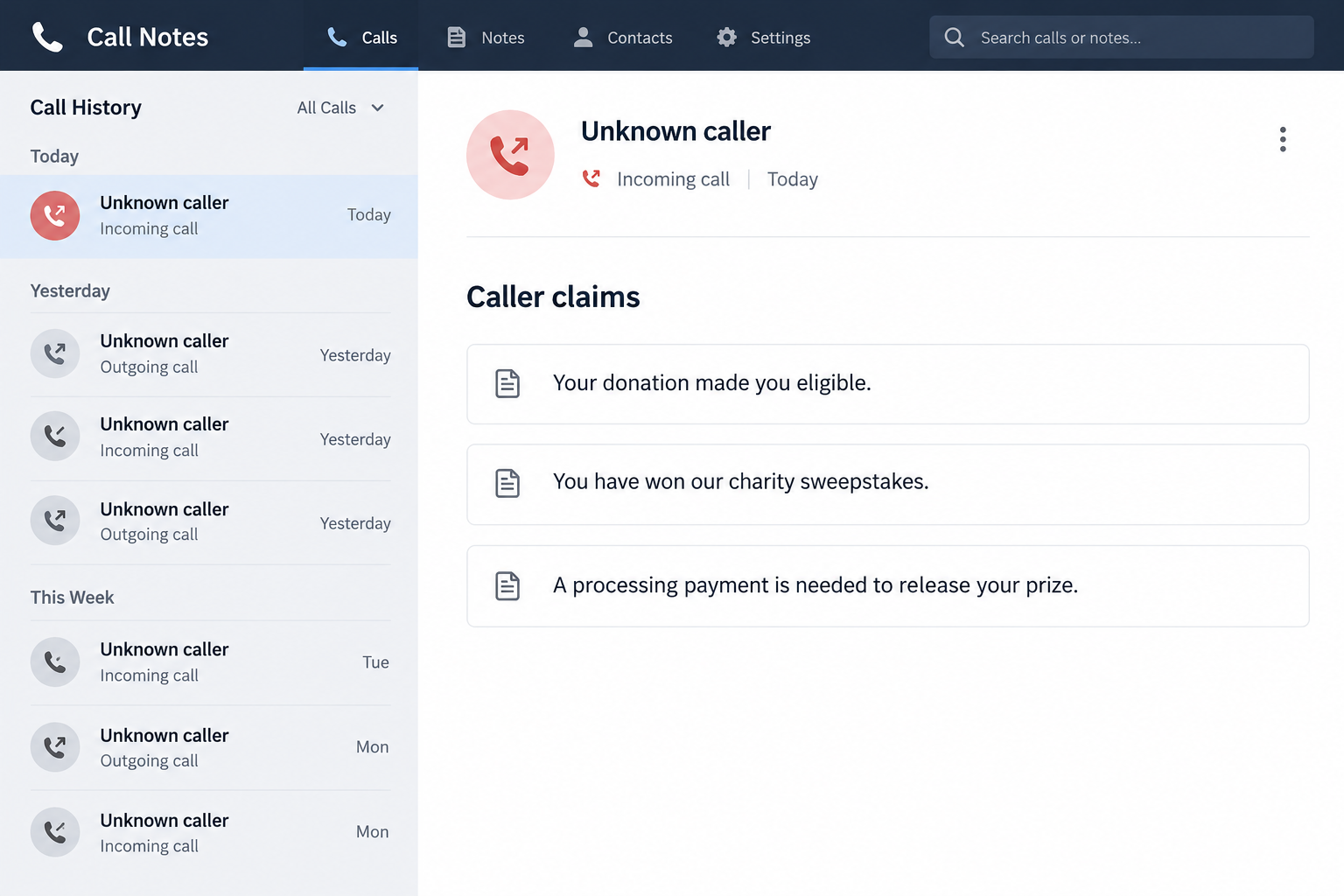
The pitch can claim you won because you donated. The caller then asks for payment or sensitive information, such as your Social Security number, to receive the prize.
The warning also describes spoofed caller ID and misleading paid search results. Looking up a name while staying on the call may not verify what you think.
A charity’s real name does not make the caller its representative
Scammers borrow a charity’s identity to support a fake prize demand. That does not make the real charity, its fundraisers, or its genuine promotions fraudulent.
That distinction matters if you have donated before. Recognizing the cause can make the story feel personal without giving the caller any genuine authority.
The call-notes image is an illustration of the pitch, not a recording or recovered message. No particular charity, caller, payment amount, or victim is depicted.
The demands that turn congratulations into a problem
- A prize allegedly requires an advance processing, delivery, clearance, or release payment.
- The caller wants your Social Security number or financial details to validate the award.
- You are steered to a particular search result or contact that merely repeats the caller’s story.
- Your past generosity is used as a reason to trust an unfamiliar person with money or identity information.
You do not need to prove who the caller really is before refusing the demand. End the conversation and verify any genuine organization separately.
How the Charity Sweepstakes Call Scam Works
Step 1: A familiar cause makes the introduction feel safe
A charity name gives the caller an explanation for approaching you. If you recognize it, you may supply the missing connection yourself.
For example, you might remember a donation or an event and assume this call belongs to that history. The caller has not actually established that link.
Do not help an unverified person fill in your donation dates, address, payment method, or family connections. Those details can make the conversation feel increasingly convincing.
The fact that a charity exists only answers whether the organization is real. It does not answer whether this caller works for it.
Step 2: The donation becomes a reason you supposedly won
The story turns a kind act into eligibility for a reward. That makes the prize seem less random than an ordinary out-of-the-blue winnings call.
It can also make skepticism uncomfortable. You may feel you are questioning an organization you support rather than checking an unknown caller.
Set that feeling aside and ask what independent evidence exists. A caller repeating your name and a charity’s name has not verified an award.
You can continue supporting a genuine cause while refusing this call. There is no need to resolve your opinion of the charity to protect your money.
Step 3: Congratulations give way to an advance payment
The important turn is when receiving the prize supposedly depends on sending money first. The explanation may sound administrative, but the direction of payment has changed.
You are being asked to fund a promise you cannot independently verify. Paying does not transform that promise into a real award.
The FTC’s rule for sweepstakes is straightforward: you do not pay to receive a prize, and buying something does not improve your chances.
Do not let a caller relabel the demand until it sounds acceptable. Ask whether they want you to transfer money to release the alleged winnings.
Step 4: A verification request collects sensitive information
A request for your Social Security number can be presented as paperwork rather than theft. That framing does not change the sensitivity of what you are disclosing.
Consider what has been established before answering: an unexpected person has made a claim. They have not earned access to your identity or financial accounts.
Do not provide bank login details, card information, identity-document images, or authentication codes to keep the conversation moving. Refusing a request is enough.
If the caller already knows some information, do not treat that as permission to reveal more. Public or previously exposed details can support a convincing introduction.
Step 5: Apparent confirmation keeps you inside the same story
Caller ID can be spoofed. A familiar name on the screen therefore cannot establish where the call originated.
A search result can mislead too, especially when a paid placement directs you to an impostor contact or rehearsed confirmation page.
End the call before checking. Use a trusted prior donation receipt or independently established charity website, rather than contact details dictated by the caller.
Ask the real organization whether it operates the claimed promotion and made this contact. Keep the payment demand and requested information in your description.
Step 6: Further requests can follow the first disclosure
Once you have paid or shared details, a new demand can seem like the last obstacle between you and the promised reward.
Do not use the first payment as a reason to send another. The wish to avoid losing what you already sent can make an unsupported promise harder to leave.
Evaluate every follow-up as a new unverified request. A person claiming to recover the money can also be an impostor, particularly if they demand another upfront fee.
Tell a trusted person what happened before answering another call. A second set of eyes can help you stop following the caller’s sequence.
How to Verify the Charity and the Supposed Prize
Begin with information you had before the call. An earlier genuine receipt, bookmarked account, or established contact can provide a safer starting point than the caller’s instructions.
Do not assume the first advertised search listing belongs to the charity. Read the complete destination and use the organization’s established contact page.
When you reach the charity, ask a concrete question: did your organization contact me about this sweepstakes and request this payment or information?
A general answer that the charity sometimes runs promotions is not enough. Verify the specific contact and claim without disclosing sensitive details to an unknown intermediary.
Do not send the supposed prize agent a picture of your donation receipt as proof. It can contain information that helps them impersonate you or the charity later.
If the real charity cannot confirm the contact, stop. You do not need to investigate the caller’s company, negotiate the fee, or test a smaller payment.
The FTC’s broader impostor scam guidance reinforces independent verification. The safest callback is one whose destination the suspicious caller did not choose.
What to Do if You Paid or Shared Information
- Cut off the prize conversation. Stop sending money or documents. Save the details you already have without keeping the caller engaged for more evidence.
- Contact the payment provider promptly. Use its official app, card number, or established website. Explain the deception and ask what recall, dispute, or fraud options remain.
- Preserve payment records. Keep transaction references, receipts, recipient details, call times, and screenshots. Give these privately to the provider or appropriate authorities.
- Report exposed card or bank details. Ask your provider whether replacement credentials, account restrictions, or monitoring are needed. Do not follow protective instructions supplied by the caller.
- Address identity exposure separately. If you disclosed a Social Security number or identity documents, use IdentityTheft.gov for a U.S. recovery plan.
- Secure accounts if credentials were shared. From a trusted device, change affected passwords, review sessions, and keep multifactor authentication enabled. Replace reused passwords on other accounts.
- Notify the genuine charity. Provide the impersonation details through its established contact route. Avoid publicly posting your donation records or financial information.
- File a factual report. In the U.S., report the attempt to ReportFraud.ftc.gov. Elsewhere, use your local fraud-reporting service and the relevant financial provider.
A refund is not guaranteed, and time can matter. Contact the provider even if the caller claimed the payment was irreversible or warned against involving the bank.
The FTC’s payment-specific recovery guidance explains why the response depends on how you paid. Keep that method clear when asking for help.
If you handed over gift-card codes, retain the cards and receipts and contact the issuer. If you sent a transfer, give the provider its reference details.
For identity information, go directly to IdentityTheft.gov. Follow the plan appropriate to the information disclosed rather than waiting for a fraudulent account to appear.
Use ReportFraud.ftc.gov to submit the facts. A report helps document the incident; it is not a promise that the government will recover the payment.
If a Parent or Relative Is Still Talking to the Caller
Start with the payment request, not an argument about whether the charity is respectable. The real organization and the person on the phone are separate questions.
Offer to contact the charity together using an established number. That gives your relative a practical way to check the claim without defending the conversation.
Ask whether money, card details, identity information, or codes have already been shared. Those answers determine which providers need to be contacted first.
Avoid embarrassment or blame. Someone who feels judged may keep the next call secret, making it harder to stop another payment.
Agree that no further prize-related payment will be made while you check. Do not confront the caller or let them supervise the conversation with the bank.
Knowing Your Donation History Is Not Proof
The confirmed issue is a documented impersonation pitch, not a finding that a specific charity misused its donor list. Do not spread that unsupported conclusion.
Likewise, knowing that you donated does not prove a data breach. The information may have been guessed, volunteered, publicly visible, or obtained elsewhere.
You also do not need to know the caller’s exact source of information to act. An advance-payment prize demand can be refused immediately.
A routine charity fundraising call is a different question. Check its identity independently, but do not describe every unwanted fundraising contact as this confirmed prize scam.
Keeping those distinctions clear protects readers and the genuine organizations being impersonated. It also makes your report more useful to the people investigating the fraud.
If You Ended the Call Before Paying
You have already taken the most useful immediate step: refusing the demand. There is no need to call back and persuade the person to admit the story was false.
Keep a brief note of the date, displayed number, charity name used, and what was requested. Treat the displayed number as a lead, not a verified caller identity.
If you want to notify the charity, use its established contact route. A warning can help it recognize impersonation reports without exposing your private donation history publicly.
Block further unwanted contact using your phone’s normal controls. Be cautious if a different number calls about the same prize or says the first representative made a mistake.
Tell anyone who shares your household finances what happened. That can prevent another family member from paying after being told you already agreed to the award.
If no money, credentials, or sensitive identity information changed hands, do not assume you need to close every account. Match your response to what was actually disclosed.
You can still support causes you care about. Make future donations through the organization’s established channels, at a time you choose, without an unexpected caller supervising the payment.
A generous person does not have to be an available target. You can politely end a call without explaining your finances or proving that you are a donor.
Frequently Asked Questions
Did I win because I previously donated?
The caller’s claim does not establish that. Verify the specific promotion with the real organization independently, and do not send money to release supposed winnings.
Can a scam call show a real charity on caller ID?
Yes. Caller ID can be spoofed. The display is not an identity check, even if you recognize the name or have donated to that organization.
Is every charity sweepstakes fraudulent?
No. This warning concerns impostors and deceptive prize demands. A real charity’s existence or a genuine promotion does not authenticate an unexpected caller.
Should I give my Social Security number for prize paperwork?
Do not provide it to an unverified caller. The FTC specifically warns about sensitive-information requests in this pitch. Verify independently before disclosing personal information.
Will paying a small fee confirm whether the prize is real?
No. A payment tests whether money can reach the recipient, not whether an award exists. It can also lead to pressure for further payments.
Can a malware scan recover the money?
No. Payment recovery belongs with your provider, and identity exposure needs its own response. A scanner does not reverse a transfer or validate a caller.
The Bottom Line
Do not pay an unexpected caller to release a charity sweepstakes prize. Hang up and verify the specific claim through the real charity’s established contact details.
If you already paid or disclosed sensitive information, contact the relevant financial provider and start the appropriate recovery steps. Do that before answering another prize-related request.

Join the discussion
0 commentsShare your experience or ask a question about this article.
Discussion
Start the conversation
Have a question or something useful to share? Add the first comment.