

In today’s digital age, email scams are becoming more and more common. One such scam that has been circulating recently is the “C&K STEEL COMPANY” email scam. This fraudulent email is designed to look like a legitimate business inquiry but contains malicious attachments that can infect your device if opened.
This article will provide an in-depth overview of how the C&K STEEL COMPANY scam works, how to identify it, the malicious attachments it contains, the risks of infection, and most importantly, what you should do if you receive this email or have fallen victim to this scam. With online threats continually evolving, awareness and education are key to protecting yourself.
Scam Overview
The C&K STEEL COMPANY scam email is presented as an inquiry about purchasing metals or steel products from the recipient’s company. The message will contain some variation of the following:
Dear Sir,
I am Phil Lambert, Sales Manager from C&K STEEL COMPANY.
Our customer is in urgent need of your products as seen on your website.
Please find attached our inquiry on METALS for your reference.
Kindly quote your best prices with date of delivery.
Thanks and Best Regards,
Phil Lambert
C&K STEEL COMPANY
This email is designed to look like a legitimate prospective customer reaching out for a quote. However, C&K STEEL COMPANY does not actually exist. The email address will use a domain that is designed to imitate a real steel company. The message is short and vague, with an attachment that supposedly contains more order details.
If the recipient opens the attached document, their computer will become infected with malware. The malware payload can include spyware, adware, ransomware, cryptojacking software, or other threats. The attackers then gain access to the victim’s system for monetary gain or to steal sensitive data.
Some signs that this is a scam:
- Generic greeting like “Dear Sir” instead of using your name or company
- Poor grammar and spelling errors
- Attachment with a generic name like “Inquiry.zip”
- Sender email does not match legitimate domain
- Requests urgent action but provides few details
This scam takes advantage of people’s willingness to open attachments from what appears to be a prospective customer. But the attachment contains nothing useful and will only lead to the victim’s device becoming infected.
Anatomy of the Scam Email
Let’s break down the components of what makes this a scam:
The Sender
The email purports to be from someone named Phil Lambert, a Sales Manager at C&K STEEL COMPANY. However, research indicates no legitimate steel company exists by this name. The sender email will use a domain name meant to imitate a real steel or manufacturing company.
The Content
The body of the email is vague, containing no specific details about what steel products are needed or in what quantities. This is meant to get the recipient to open the attachment for more information. There is an urgency implied about fulfilling a customer order, to compel quick action.
The Attachment
The referenced attachment is usually named something generic like “Inquiry.zip.” Its sole purpose is to deliver malware to infect the victim’s system. The zip file likely contains an executable file that installs the malware when opened. The malware can then compromise the system and give the attackers remote access.
The Motive
The end goal is to infect as many computer systems as possible and gain access either to steal sensitive data or install malware that generates revenue for the attackers. The malware may steal login credentials, financial information, or encrypt files for ransom (ransomware). Or it may turn the computer into a cryptomining bot or force it to display unwanted ads (adware).
How the Scam Works
Now let’s look at the detailed stages of how the C&K STEEL COMPANY scam unfolds:
1. You Receive the Email
The scam email arrives in your inbox just like any other business inquiry. The subject “STEEL INQUIRY” is vague enough that most recipients would open the email to see what it’s regarding.
When you open it, the message appears to be an inquiry about purchasing steel products from your company. The sender identifies themselves as Phil Lambert, Sales Manager for C&K STEEL COMPANY.
There are no other specifics provided in the brief email message. You are directed to open the attached document for more details about the supposed order.
2. You Open the Malicious Attachment
Wanting more information, you proceed to open the attached ZIP file, named something like “Inquiry.zip.”
Inside is usually an executable file, but could also be a PDF, Word doc, or other file format. Opening this attachment triggers the infection chain.
Some signs that the attachment is malicious:
- Generic name like “Inquiry.zip” rather than a descriptive name
- Contains an executable (.exe) or unexpected file type inside
- Originates from an email with vague details
3. Infection Chain Initiated
By opening the attachment, you have activated the malware payload. This begins a series of events designed to infect your computer and grant the attackers remote access.
The infection chain may involve:
- Executable file running and installing malware/viruses
- Exploit kits unleashing zero-day attacks
- Downloading additional payloads from external sites
- Modifying system settings to disable security
- Connecting to command and control servers
You may not notice anything immediately. The malware runs silently in the background, taking over crucial system processes and settings.
4. Payload Effects Take Hold
Once the malware is firmly entrenched in the system, the damaging effects of the payload become apparent. Possible consequences include:
- Loss of sensitive data like credit cards, passwords, etc.
- Ransomware encrypting files and demanding payment
- System resources consumed for cryptojacking
- PC rendered unstable, crashes frequently
- Personal information theft leading to identity fraud
- Adware bombarding you with pop-ups
- Computer added to botnet for future attacks
The attackers now have remote access to spy on activity, steal data, or leverage the infected computer’s resources for their own financial gain.
5. Attackers Achieve Their Goals
The malware payload continues communicating with command servers to send stolen data or await further instructions.
With information and access harvested from thousands of infected computers, the attackers may:
- Sell stolen personal and financial data on the dark web
- Use banking credentials to commit fraud or launder money
- Hold files for ransom from ransomware victims
- Use botnets to mine cryptocurrency or conduct denial-of-service attacks
- Continually develop viruses to attack more targets
For you, the victim, the costs can include lost data, stolen identities, unauthorized bank transactions, and an unstable or unusable computer.
How to Identify This Scam
Here are some tips for identifying and avoiding this scam:
- Scrutinize sender email addresses for legitimacy
- Watch for generic greetings and poor grammar
- Verify company names aren’t associated with other scams
- Check message headers and domain registrars
- Hovers over hyperlinks to inspect destinations
- Open attachments only from trusted sources
- Scan attachments with antivirus software first
- Enable macros cautiously or not at all
- Keep software patched and updated
- Use email filters to block dangerous extensions
With vigilance and awareness, you can hopefully prevent infection and avoid becoming a victim.
What to Do if You Have Fallen Victim
If you have unfortunately been tricked by the C&K STEEL COMPANY scam, here are some important steps to take right away:
1. Disconnect from Networks
Immediately disconnect the infected computer from any network it’s on. Unplug from wired connections and disable Wi-Fi. This stops the malware from spreading or communicating further.
2. Run Anti-Malware Scans
Run full virus scans using updated security software from vendors like Malwarebytes and ESET. Quarantine or delete anything suspicious found. This may eliminate some of the infection.
3. Change Passwords
Assume your credentials have been compromised. Change passwords on email, banking, social media, and other sensitive accounts. Make them long and complex. Enable two-factor authentication wherever possible.
4. Contact Banks and Credit Bureaus
If banking information or accounts may have been accessed, contact your bank to report unauthorized activity and have fraudulent charges reversed. Also reach out to credit bureaus to monitor for identity theft.
5. Wipe Hard Drive and Reinstall OS
The most thorough way to disinfect is wiping the hard drive completely and reinstalling the operating system. Backup important data externally first. This essentially resets the computer to a clean state.
6. Inform Contacts
Alert business contacts that they may have received malware from your compromised email account. Warn friends about potential phishing attempts using your info.
7. Monitor Accounts Closely
Carefully scrutinize financial statements, credit reports, and account activity for any suspicious transactions for the next several months. Report anything abnormal to authorities. Signs of identity theft can take time to manifest.
8. Bring in Expert Help
For major infections, bring the computer to IT security professionals for analysis and data recovery. If identity theft occurs, engage lawyers to ensure rights and protections. Law enforcement may need to get involved.
9. Learn from the Experience
In the aftermath, learn how to strengthen security and be more alert to warning signs of phishing scams. Educate yourself on malware risks and prevention best practices. Be especially cautious when opening email attachments going forward.
With prompt action, malware infections can hopefully be contained and not lead to lasting damage. But it’s still crucial to have a plan in case you accidentally open a malicious attachment in a convincing scam email.
Is Your Device Infected? Run a Free Malware Scan
Slow performance, constant pop-ups, or strange behavior? These are classic signs of a malware infection. The fastest way to find out is to scan your device with Malwarebytes Free — one of the most trusted malware removal tools available.
The free version detects and removes the most common threats, including:
- Adware — the cause of those annoying pop-ups
- Browser hijackers — unwanted redirects and changed homepages
- Trojans and spyware — hidden programs stealing your data
- Potentially unwanted programs (PUPs) — software you never asked for
👉 Select your device below — Windows, Mac, or Android — then follow the simple steps to download Malwarebytes, scan your system, and remove any threats it finds. The scan usually takes 5 to 20 minutes.
Run a Malware Scan with Malwarebytes for Windows
Malwarebytes is one of the most popular and trusted anti-malware tools for Windows — and it’s completely free for removing infections. It catches threats that many antivirus programs miss, including adware, browser hijackers, and trojans. Follow the steps below to scan and clean your PC in just a few minutes.
Download Malwarebytes
Click the button below to download the latest version of Malwarebytes for Windows from the official source. The free version is all you need — it will scan your computer and remove adware, browser hijackers, and other malicious software at no cost.
Download MalwarebytesOfficial installer for Windows 11 and 10. Your download starts right away.Want real-time protection? See Malwarebytes Premium Malwarebytes Free for WindowsScans and removes malware at no cost
-
Install Malwarebytes
When the download finishes, open your Downloads folder and double-click the MBSetup file. If Windows shows a User Account Control pop-up, click “Yes” to allow the installation.
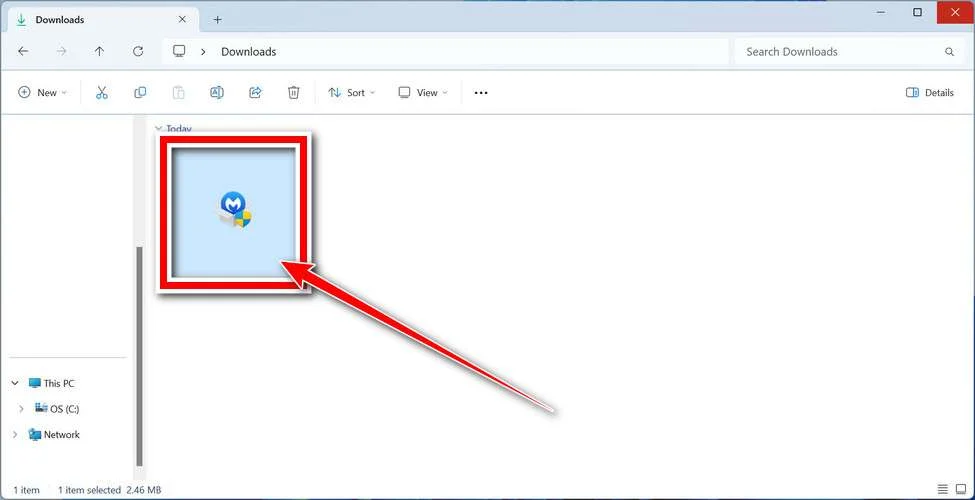
Follow the On-Screen Prompts to Install Malwarebytes
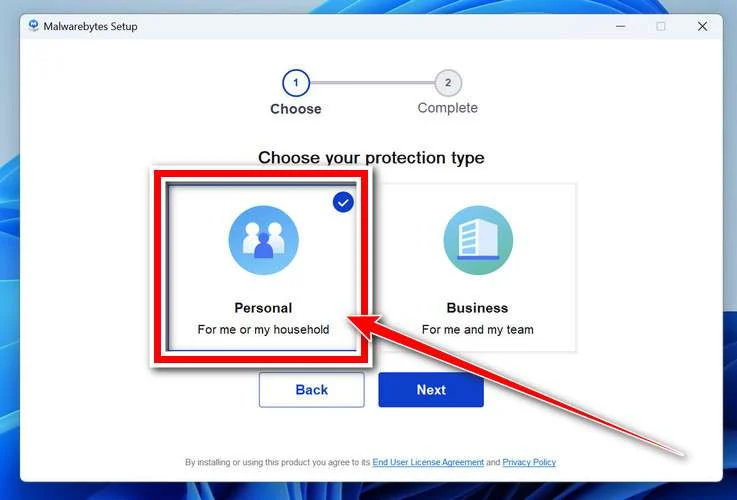
The setup wizard will walk you through a few quick screens:
-
Choose where you’re installing the program — “Personal Computer” or “Work Computer” — then click Next.
-
Malwarebytes will now install on your device. This usually takes under a minute.

-
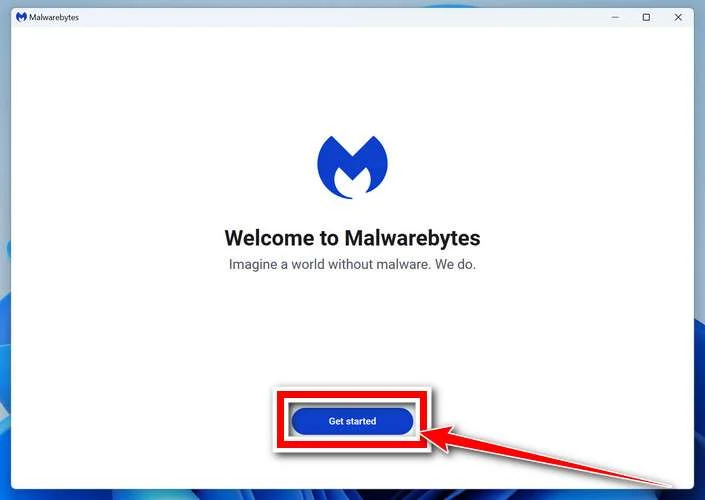
When installation is complete, the “Welcome to Malwarebytes” screen will open automatically.
-
On the final screen, click Open Malwarebytes to launch the program.

-
Enable “Scan for Rootkits”
Before scanning, turn on rootkit detection so Malwarebytes can find even the most hidden threats. Click the Settings gear icon on the left side of the screen.
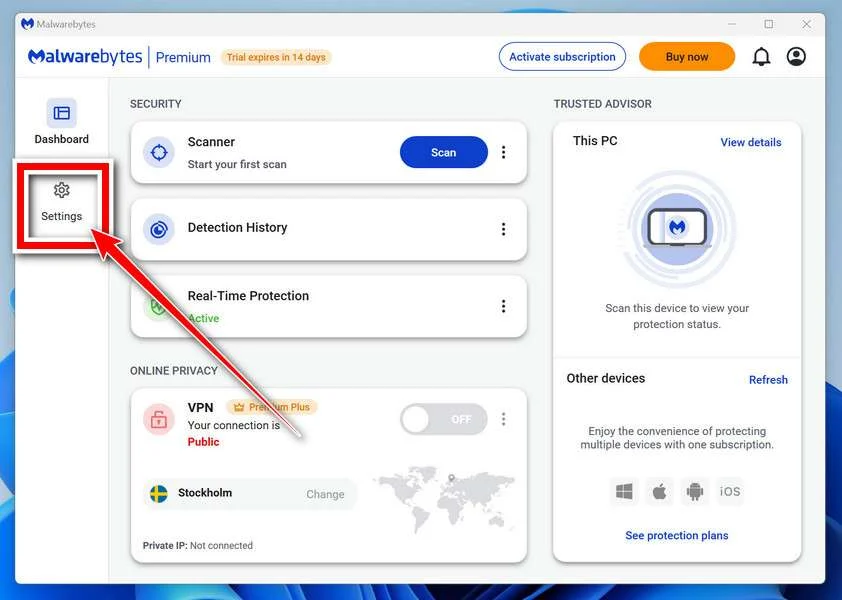
In the settings menu, find “Scan for rootkits” and click the toggle so it turns blue.

Done? Click “Dashboard” in the left pane to return to the main screen.
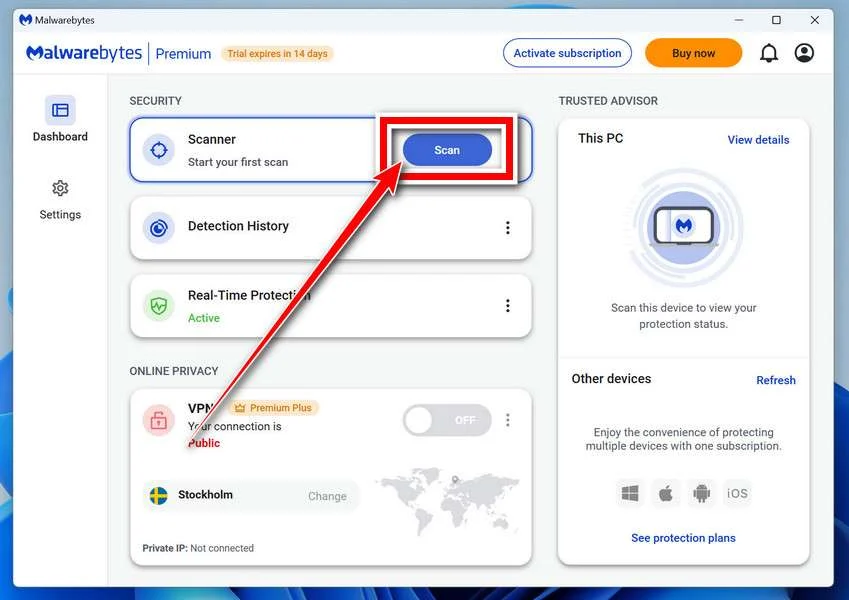
Start the Scan
Click the blue Scan button. Malwarebytes will automatically update its virus database and start checking your computer for malware.
-
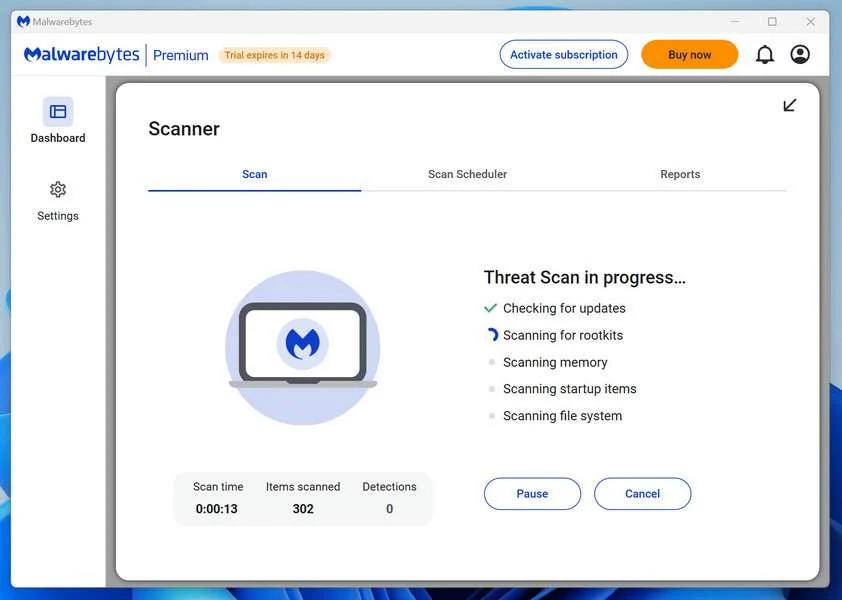
Wait for the Scan to Finish
The scan checks your entire system for browser hijackers and other malicious programs, so it can take 5 to 20 minutes depending on your computer. Feel free to do something else — just check back occasionally to see the progress.
-
Quarantine the Detected Threats
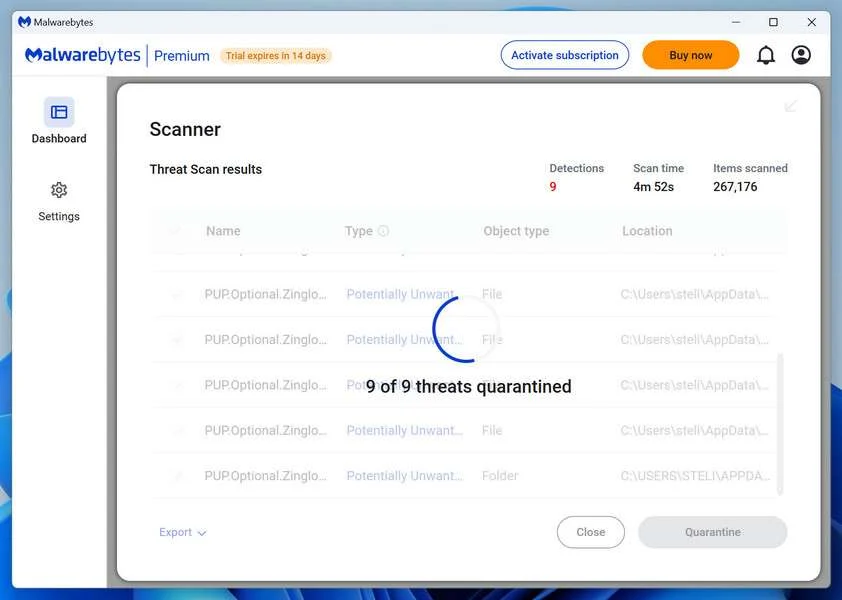
When the scan is done, you’ll see a list of everything Malwarebytes found — malware, adware, and potentially unwanted programs. Click the “Quarantine” button to remove all of them at once.
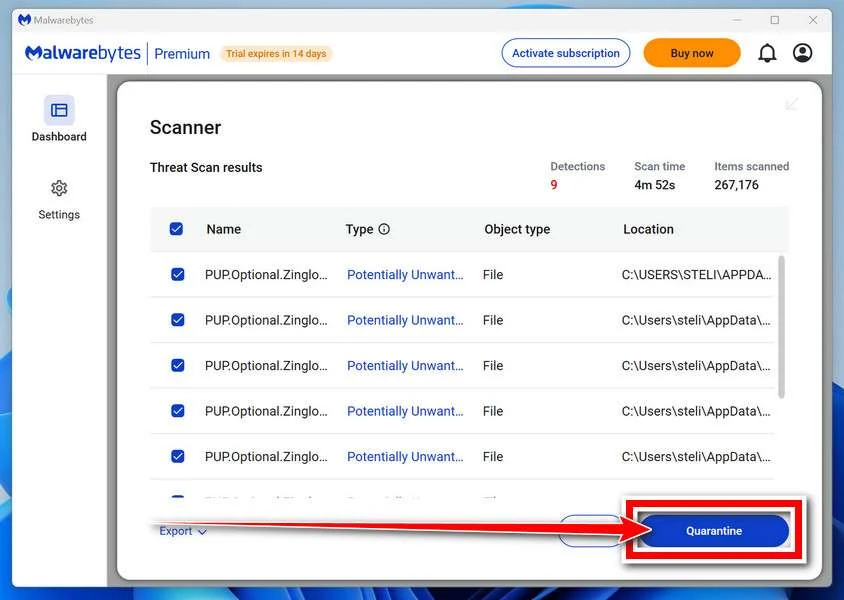
Malwarebytes will now remove the malicious files and registry entries and move them safely into quarantine.
-
Restart Your Computer
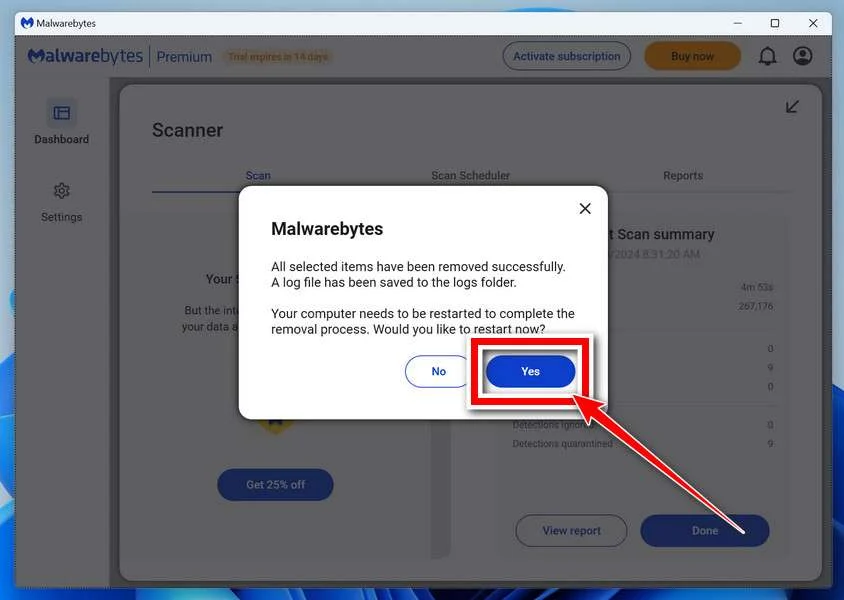
Some threats can only be fully removed after a reboot. If Malwarebytes asks you to restart, click Yes. Once you’re logged back in, Malwarebytes has finished removing the threats it found.
That’s it — your Windows PC is now clean of trojans, adware, and other malware, and should be back to running smoothly.
If you are still having problems with your computer after completing these instructions, then please follow one of the steps:
- Run a computer scan with ESET Online Scanner
- Ask for help in our Windows Malware Removal Help & Support forum.
Run a Malware Scan with Malwarebytes for Mac
Malwarebytes for Mac is a free on-demand scanner that removes the malware other security software tends to miss — adware, browser hijackers, and unwanted programs included. Cleaning an infected Mac with Malwarebytes has always been completely free, and it’s our go-to recommendation. Follow the steps below to scan and clean your Mac in just a few minutes.
-
Download Malwarebytes for Mac
Click the button below to download the latest version of Malwarebytes for Mac.
Download MalwarebytesOfficial installer for macOS. Your download starts right away.Want real-time protection? See Malwarebytes PremiumMalwarebytes Free for MacScans and removes malware at no cost -
Open the Malwarebytes setup file
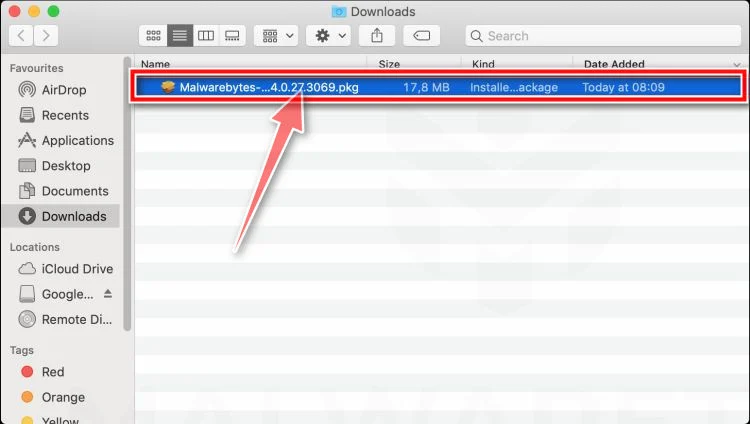
When the download finishes, open your Downloads folder and double-click the setup file to begin the installation.
-
Follow the On-Screen Prompts to Install Malwarebytes
The Malwarebytes for Mac Installer will guide you through a few quick screens. Click “Continue” and keep following the prompts until the installation completes.
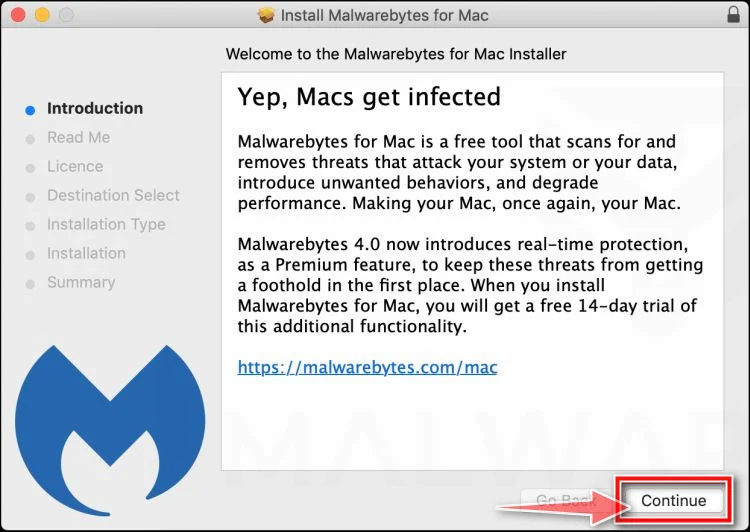
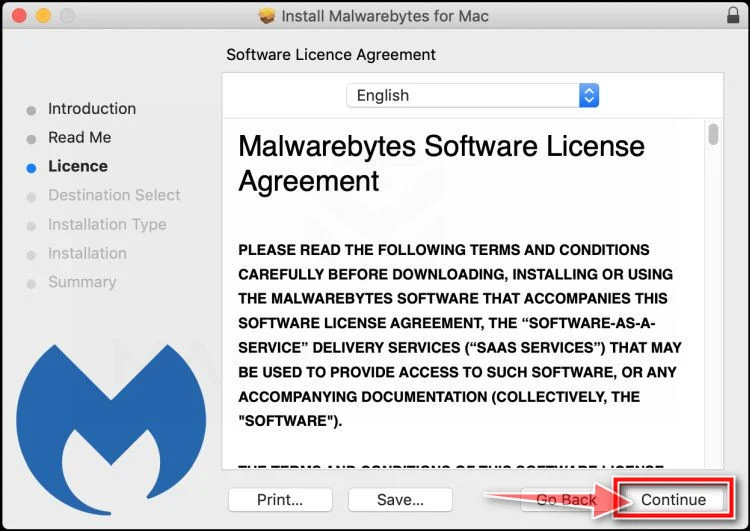
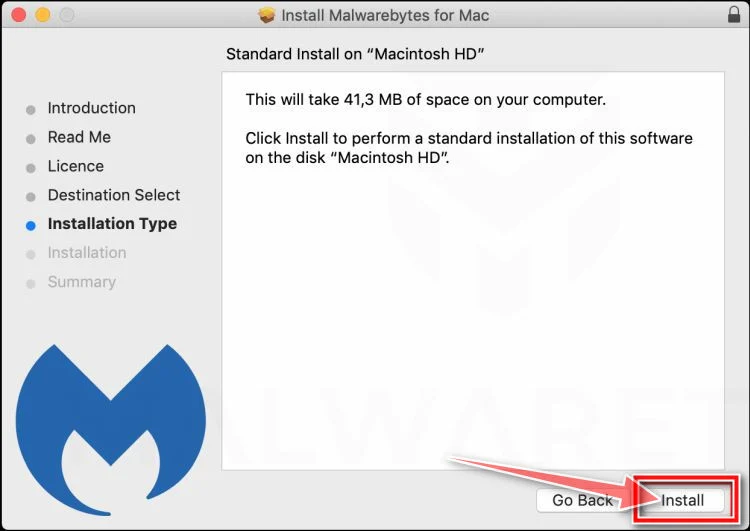
When the installation is complete, Malwarebytes opens to the Welcome to Malwarebytes screen. Click “Get started“.
-
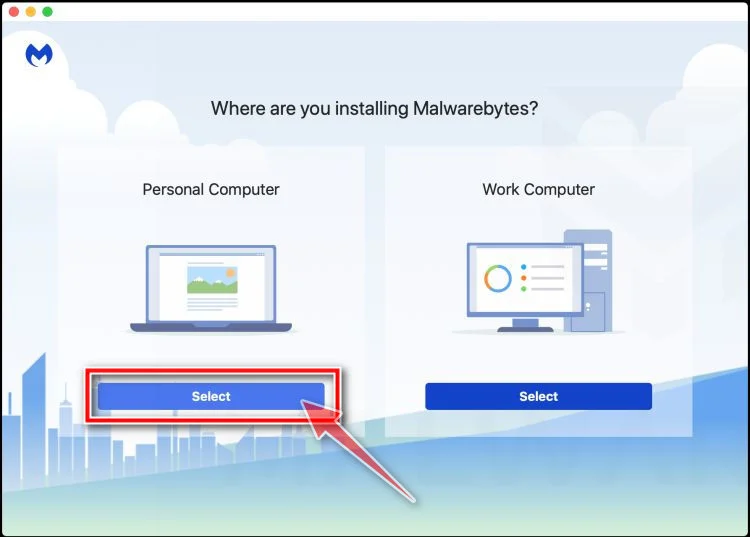
Select “Personal Computer” or “Work Computer”
Malwarebytes will ask what type of computer you’re installing it on. Click either Personal Computer or Work Computer, whichever applies.
-
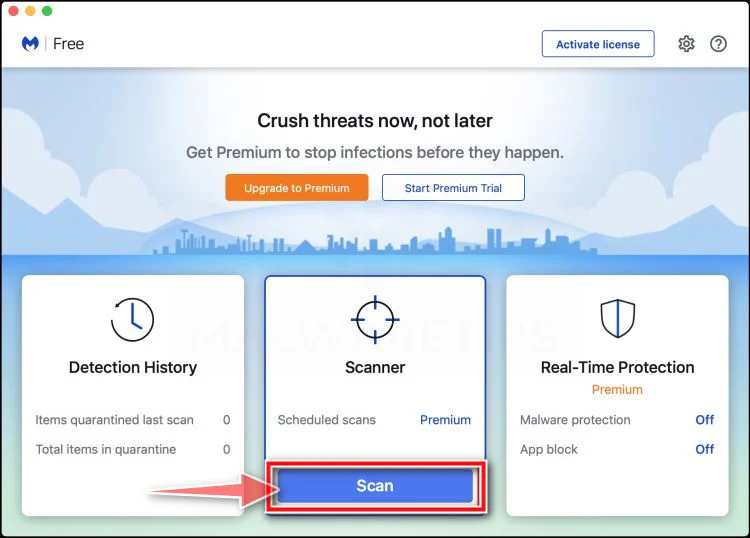
Start the Scan
Click the “Scan” button. Malwarebytes will automatically update its detection database and begin checking your Mac for malware.
-
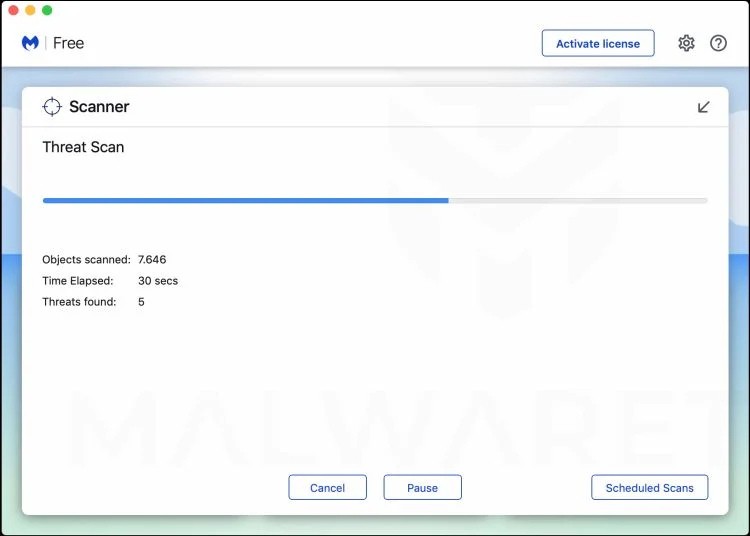
Wait for the Scan to Finish
Malwarebytes will scan your Mac for adware, browser hijackers, and other malicious programs. This can take a few minutes, so feel free to do something else — just check back occasionally to see the progress.
-
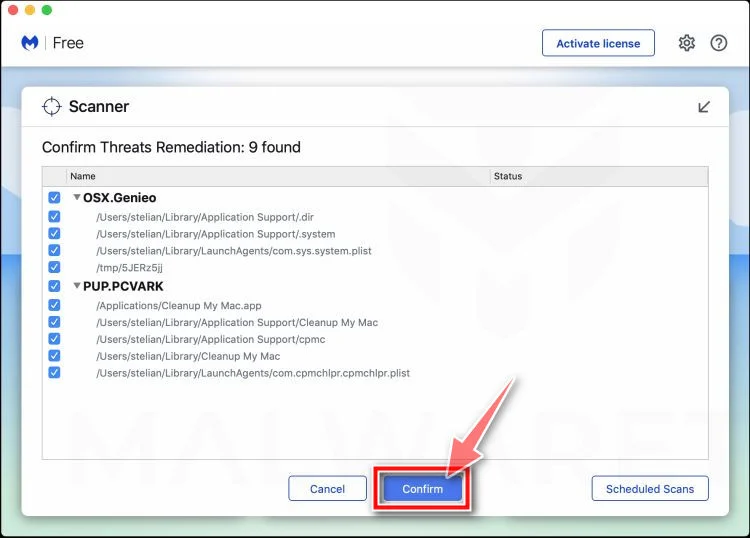
Quarantine the Detected Threats
When the scan is done, you’ll see a list of everything Malwarebytes found. Click the “Quarantine” button to remove all the threats at once.
-
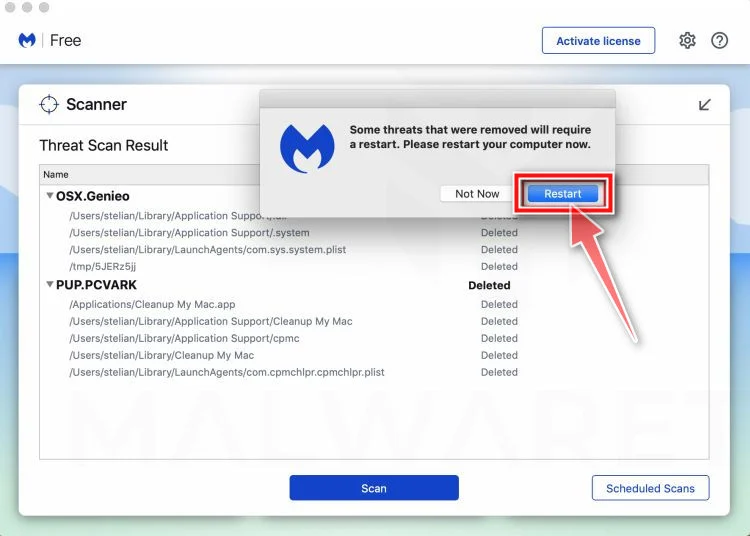
Restart Your Mac
Malwarebytes will now remove all the malicious files it found. Some threats can only be fully removed after a reboot — if Malwarebytes asks you to restart, allow it. Once you’re logged back in, your Mac is clean.
That’s it — your Mac is now free of adware, rogue browser extensions, and other potentially harmful software.
If you are still experiencing problems while trying to remove a malicious program from your computer, please ask for help in our Mac Malware Removal Help & Support forum.
Run a Malware Scan with Malwarebytes for Android
Malwarebytes for Android automatically detects and removes dangerous threats like malware and ransomware so you don’t have to worry about your most-used device being compromised. Aggressive detection of adware and potentially unwanted programs keeps your Android phone or tablet running smooth.
-
Download Malwarebytes for Android.
You can download Malwarebytes for Android by clicking the link below.
Get Malwarebytes for AndroidOpens Google Play in a new tab.Want real-time protection? See Malwarebytes Premium for AndroidMalwarebytes for AndroidScans your phone and removes malware at no cost -
Install Malwarebytes for Android on your phone.
In the Google Play Store, tap “Install” to install Malwarebytes for Android on your device.

When the installation process has finished, tap “Open” to begin using Malwarebytes for Android. You can also open Malwarebytes by tapping on its icon in your phone menu or home screen.

-
Follow the on-screen prompts to complete the setup process
When Malwarebytes will open, you will see the Malwarebytes Setup Wizard which will guide you through a series of permissions and other setup options.
This is the first of two screens that explain the difference between the Premium and Free versions. Swipe this screen to continue.
Tap on “Got it” to proceed to the next step.
Malwarebytes for Android will now ask for a set of permissions that are required to scan your device and protect it from malware. Tap on “Give permission” to continue.
Tap on “Allow” to permit Malwarebytes to access the files on your phone.
-
Update database and run a scan with Malwarebytes for Android
You will now be prompted to update the Malwarebytes database and run a full system scan.

Click on “Update database” to update the Malwarebytes for Android definitions to the latest version, then click on “Run full scan” to perform a system scan.

-
Wait for the Malwarebytes scan to complete.
Malwarebytes will now start scanning your phone for adware and other malicious apps. This process can take a few minutes, so we suggest you do something else and periodically check on the status of the scan to see when it is finished.

-
Click on “Remove Selected”.
When the scan has been completed, you will be presented with a screen showing the malware infections that Malwarebytes for Android has detected. To remove the malicious apps that Malwarebytes has found, tap on the “Remove Selected” button.

-
Restart your phone.
Malwarebytes for Android will now remove all the malicious apps that it has found. To complete the malware removal process, Malwarebytes may ask you to restart your device.
That’s it — your Android phone is now clean — no more malicious apps, adware, or browser redirects.
If you are still having problems with your phone after completing these instructions, then please follow one of the steps:
- Restore your phone to factory settings by going to Settings > General management > Reset > Factory data reset.
- Ask for help in our Mobile Malware Removal Help & Support forum.
Stay Protected: Block Ads and Malicious Sites
Now that your device is clean, keep it that way. Most infections start with a malicious ad or a fake download button — so blocking them at the source is your best defense.
We recommend AdGuard, which blocks malicious ads, phishing pages, and dangerous redirects before they can reach you.
👉 Download AdGuard and browse safely
Frequently Asked Questions
What is the C&K STEEL COMPANY email scam?
This is a phishing scam where victims receive an email pretending to be an inquiry from C&K STEEL COMPANY. The email contains a malicious attachment that infects the recipient’s computer with malware if opened.
How does the scam email work?
The email is made to look like a business customer is requesting a quote for a steel order. It asks the recipient to open the attached document for more details. The attachment is malware disguised as a Word doc, PDF, executable file, etc.
What happens if I open the attachment?
Opening the attachment enables malware to silently install on your computer. This gives attackers remote access to steal data, install more malware, or otherwise compromise the infected system.
What types of malware might it install?
Possible malware payloads include spyware, ransomware, trojans, viruses, cryptojacking scripts, adware, and more. The malware can also make your computer part of a botnet.
What are the risks if my computer is infected?
Risks include identity theft, bank fraud, stolen passwords, encrypted files held ransom, hardware damage, and unauthorized use of your computer resources.
How can I identify this scam email?
Look for vague messages from unknown senders, spoofed email addresses, suspicious attachments like “Inquiry.zip”, typos, and urgency to open attachments right away.
What should I do if I open the attachment?
Immediately disconnect your computer from networks, run anti-malware scans, change account passwords, check for fraudulent activity, and consider wiping your hard drive to reinstall the OS.
Should I report this scam or attachment? Who to?
Yes, report the phishing scam to your email provider and relevant cybersecurity authorities. You can also report the attachment to your antivirus vendor.
How can I protect myself from this scam in the future?
Be wary of all unsolicited attachments, verify sender addresses, hover over hyperlinks to inspect destinations, use antivirus software, keep software updated, and avoid enabling macros.
What should businesses do to avoid this scam?
Educate employees on phishing techniques, implement email security filters, require two-factor authentication, use endpoint detection tools, develop incident response plans, and keep backups current.
Conclusion
The C&K STEEL COMPANY scam email highlights the ongoing threat that social engineering and malware attacks pose in today’s interconnected world. While this scam takes the form of posing as a customer inquiry, phishing emails use many guises to fool victims into infecting their own devices.
Being aware of the tactics and techniques used in these scams is key to recognizing and avoiding them. Indicators like poor grammar, urgent requests for action, and dubious attachments from unknown senders should all raise red flags. Never open attachments unless you can verify the source as legitimate first.
If you unfortunately do fall victim and a device becomes infected, have a response plan ready to limit damage. Quickly disconnect from networks, run anti-malware scans, change account credentials, monitor for identity theft, and contact authorities for assistance as needed.
With vigilance and education, individuals and businesses can stay several steps ahead of constantly adapting cybercriminal schemes. Always err on the side of caution when assessing emails, especially those containing attachments. A bit of added scrutiny and skepticism can go a long way in protecting yourself and your data.

Join the discussion
0 commentsShare your experience or ask a question about this article.
Discussion
Start the conversation
Have a question or something useful to share? Add the first comment.