

DiamaCutePuppies.com promises teacup puppies for sale, but instead scams victims out of hundreds of dollars. This elaborate fraud uses fake testimonials and stolen photos to trick unsuspecting customers.
This article will uncover how the DiamaCutePuppies.com fraud works, help victims, and teach readers to avoid such scams.
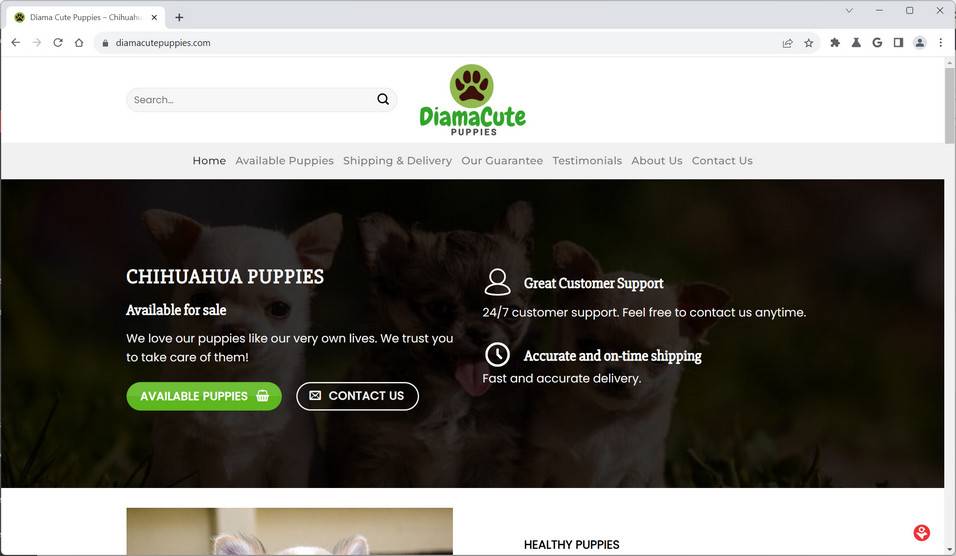
Overview of the DiamaCutePuppies.com Scam
DiamaCutePuppies posts professional-looking ads on social media promoting teacup puppies for sale. The polished website features cute puppy photos and glowing customer reviews. However, this company is a front for an international scam ring stealing money from victims.
The site accepts orders and payments but never delivers the puppies. Customers receive vague excuses and empty promises about future delivery dates. Eventually, the scammers ghost all contact and disappear with the payments.
Losses per victim range from a few hundred to over a thousand dollars. The company provides no legitimate contact information, preventing customers from pursuing refunds. DiamaCutePuppies carries out its scam across Facebook, Instagram and TikTok, reaching a broad scam victim pool.
How the Scam Works
The DiamaCutePuppies scam unfolds in three main steps:
Step 1: Lure Victims Through Social Media Ads
The scammers run puppy ads on Facebook, Instagram, and TikTok to reach large audiences of pet lovers. These ads showcase adorable puppy photos and low prices ranging from $500 – $1000.
The polished ads link to the DiamaCutePuppies.com website. This site uses more cute puppy pictures and fake customer reviews to build trust and credibility.
Step 2: Collect Payments for Fake Orders
Interested customers contact DiamaCutePuppies through the site chatbox, email, or listed phone numbers. The scammers pose as sales reps and collect orders.
After submitting payments through Zelle, CashApp, wire transfer or gift cards, victims receive a confirmation email promising delivery in a few days. Some initially receive photos of their “reserved puppy”.
However, DiamaCutePuppies is based in China and never actually ships puppies. The initial engagement is simply a ploy to secure payments.
Step 3: Disappear with the Money
In the days following payment, DiamaCutePuppies gives vague excuses about permit issues and weather delays. As customers become suspicious, the scammers stop responding and block contact.
The sophisticated fraud operation quickly disables associated email addresses and phone numbers used in the scam. Victims find zero recourse to recover lost payments.
This process repeats itself as the scammers continuously set up new domains, social media accounts and fake customer reviews to attract the next batch of victims.
Who is Behind the DiamaCutePuppies.com Scam?
Research indicates this scam website originates from an interconnected criminal network based in China. This network manages countless fake pet sales sites used solely for defrauding innocent victims.
Specific individuals behind the DiamaCutePuppies.com scam are unknown. Scammers use fake names and identities when communicating with potential victims. They hide behind the anonymity of the internet to avoid exposure.
Authorities have struggled to locate or prosecute these sophisticated scam rings operating abroad. For now, the fraud continues and puppy buyers must stay vigilant to avoid getting ensnared.
Top Red Flags of the DiamaCutePuppies.com Scam
While DiamaCutePuppies.com goes to great lengths to appear legitimate, several telltale signs expose it as a scam:
- No physical address – The website lists no company address or location of the puppies. This lack of verifiable location is highly suspicious.
- Stock photos – Many puppy photos are stolen from other sites and photoshopped with the company logo. Reverse image searches reveal the original sources.
- No customer reviews – Despite claims of thousands of happy customers, no legitimate reviews exist anywhere outside their own website.
- Vague payment methods – Scammers prefer untraceable payment through Zelle, gift cards, Bitcoin or wire transfers. Avoid sites not accepting credit cards.
- Lack of registrar info – The site ownership is anonymous using domain privacy services. Scammers hide their identities.
- Too good to be true – Very cheap purebred puppies and teacup dogs are highly unlikely. Scammers use unrealistic prices to attract victims.
Ignoring these red flags can lead to losing hundreds of dollars with zero recourse. Always exercise caution when shopping online for pets.
What To Do If You Are A Victim of DiamaCutePuppies.com
If you made a purchase or entered personal information this website, acting quickly can help you minimize financial loss, secure your accounts, and prevent further misuse of your data. Follow these steps carefully:
- Contact your bank or payment provider immediately
If you paid with a credit or debit card, call your bank’s customer service line and explain that you placed an order on a website that may be fraudulent. Request to dispute the transaction or initiate a chargeback.
If you used PayPal or another payment processor, file a dispute through their resolution center and provide order confirmations, emails, or screenshots as supporting evidence.
Fast action gives you the best chance of recovering your money and preventing additional unauthorized charges. - Freeze or replace your payment method
If your card or account details were entered on this website, it’s safest to have your bank or provider issue a replacement card. This prevents future unauthorized transactions and protects your financial accounts.
Some banks may also offer temporary holds or fraud alerts, ensuring no additional transactions can be made without your consent. - Run a personal data removal scan
Fraudulent websites often collect personal information such as names, phone numbers, addresses, and emails. This data may be shared with third parties or added to marketing and phishing lists.
A trusted service such as Malwarebytes Personal Data Remover can identify where your information is listed across data broker networks and help you request its removal. - Check your digital footprint
Even if you didn’t lose money, your personal data could already be circulating online. Running a digital footprint scan can help reveal whether your email address, phone number, or other personal information is present in leaks or broker databases.
This allows you to take proactive measures such as changing credentials, monitoring accounts, or setting up alerts before your data is misused. - Change your passwords and enable 2FA
If the same email or password used during checkout is also used on other websites or services, update those credentials immediately.
Choose strong, unique passwords and enable two-factor authentication (2FA) on all important accounts, especially your primary email, banking apps, and social media. This extra security layer makes unauthorized access significantly harder. - Scan your device for potential threats
Many fraudulent sites contain hidden tracking scripts, phishing pop-ups, or files designed to compromise your security.
Run a full system scan using a trusted security solution such as Malwarebytes Free or ESET Online Scanner to make sure your device hasn’t been exposed to malware or spyware during the visit.
If any suspicious files are found, remove them and restart your device. - Check your accounts and statements regularly
Monitor your bank and credit card statements closely for any unauthorized activity. Look for unfamiliar charges, subscription renewals, or repeated small test transactions.
Also review your email inbox and online accounts for password reset notices or sign-in alerts you didn’t initiate. Report anything unusual to your bank or account provider immediately. - Report the incident to the appropriate authorities
Reporting helps law enforcement track fraudulent websites and can support your claim if needed.- In the U.S., file a report with FTC ReportFraud.ftc.gov.
- In the EU, contact Europol or your national cybercrime unit.
- Globally, you can also submit the site to ScamAdviser to help warn other consumers.
Providing the website URL, order details, and communications increases the impact of your report.
- Save all evidence and communication
Keep copies of order confirmations, emails, payment records, chat logs, and screenshots of the website. This documentation can be crucial for supporting your chargeback request, reporting the case, or pursuing legal remedies if needed.
Store everything in one secure folder so you can easily provide it to your bank or relevant agencies. - Be cautious of follow-up contact
After incidents like this, affected individuals may receive fake refund messages, phishing emails, or phone calls pretending to offer “assistance.”
Do not click on unsolicited links, download attachments, or provide additional personal information. If you receive any message related to this website, verify its authenticity directly through your bank or official payment provider channels.
Frequently Asked Questions About the DiamaCutePuppies.com Scam
These common questions provide deeper insight into how the DiamaCutePuppies.com fraud unfolds:
How did the scammers get such cute puppy photos?
The photos were stolen from legitimate breeders and photoshopped with the DiamaCutePuppies logo. Many puppies shown don’t even match the listed breeds. Scammers freely use other sites’ photos to perpetuate their fraud.
What payment methods does DiamaCutePuppies accept?
They prefer Zelle, CashApp, Bitcoin, gift cards and wire transfers. These untraceable methods let scammers quickly take money without accountability. Responsible pet sites accept credit cards with buyer protections.
Why are the prices so low for purebred puppies?
The prices ranging from $500 – $1000 are designed to attract maximum interest from victims. In reality, responsibly bred purebred puppies cost much more from legitimate breeders. Discounts seem appealing, but always indicate a scam.
Where are these puppies supposed to be located?
The scammers claim the puppies are located at a farm in California. However, the scheme actually operates out of China using VoIP numbers to communicate with US victims. No puppies exist to ship in the first place.
Should I trust the customer reviews on their website?
No – the 5-star reviews on their site are completely fabricated. There are no legit reviews anywhere else online. It’s standard practice for scammers to fake reviews to build credibility.
Is there any way to get back the money I lost?
Unfortunately, recovering payments is very rare once scammers receive untraceable funds like gift cards or Bitcoin. This is why it’s critical to recognize red flags before sending money. Prevention is the best protection.
How to Avoid Puppy Scams Like DiamaCutePuppies.com
While DiamaCutePuppies carries out this scam on a broad scale, many other similar frauds prey on pet lovers. Follow these tips to detect and avoid puppy scams:
- Reverse image search – Search for any photos used on the site to uncover original sources and stolen images.
- Research reviews – Verify reviews on independent sites like Yelp and the Better Business Bureau. Be wary of only positive reviews.
- Ask for video calls – Legitimate sellers will gladly do a video call to showcase the puppy interacting at their home.
- Beware retail pet sales – Responsible breeders do not sell puppies in stores, by direct shipment, or to brokers.
- Consider adoption – Shelters and rescues offer adoption while avoiding the risks of online retail purchases.
- Never send instant payments – Don’t pay by Zelle, CashApp, gift cards or Bitcoin. Insist on credit cards with fraud protections.
- Understand pricing – Extremely low prices signal a scam. Responsibly bred puppies cost much more from reputable breeders.
Staying vigilant to red flags protects your money and avoids financing criminal operations. Take time to thoroughly vet sellers before sending any payments.
Conclusion
DiamaCutePuppies.com defrauds victims by collecting payments for puppies they never ship. This criminal operation uses social media ads, fake reviews and stolen photos to perpetuate their scam across the internet.
Recognizing common puppy scam tactics helps consumers avoid becoming victims themselves. Always exercise extreme caution when sending money to unknown online sellers advertising pets or other high-value items. Responsible buyers should prioritize adoption over retail pet purchases.
With vigilance and safe payment practices, we can reduce the reach of harmful scams like DiamaCutePuppies.com. Be an informed advocate, warn others, and report such fraud whenever it appears. By protecting ourselves, we undermine these criminal networks preying on innocent pet lovers.

Reviews & discussion
0 commentsShare a firsthand experience, or ask a question.
Community reviews
damacutepuppies.com
Moderated reader experiences, not an editorial verdict.
Start the conversation
Have a question or something useful to share? Add the first comment.