

A letter says your missing cryptocurrency is ready to be released. The language sounds like regulation, the layout looks formal, and the timing feels almost miraculous.
When a message makes that promise in the name of Dubai’s financial regulator, one question matters more than its letterhead: who is asking you to pay?
Overview
The promise inside the message
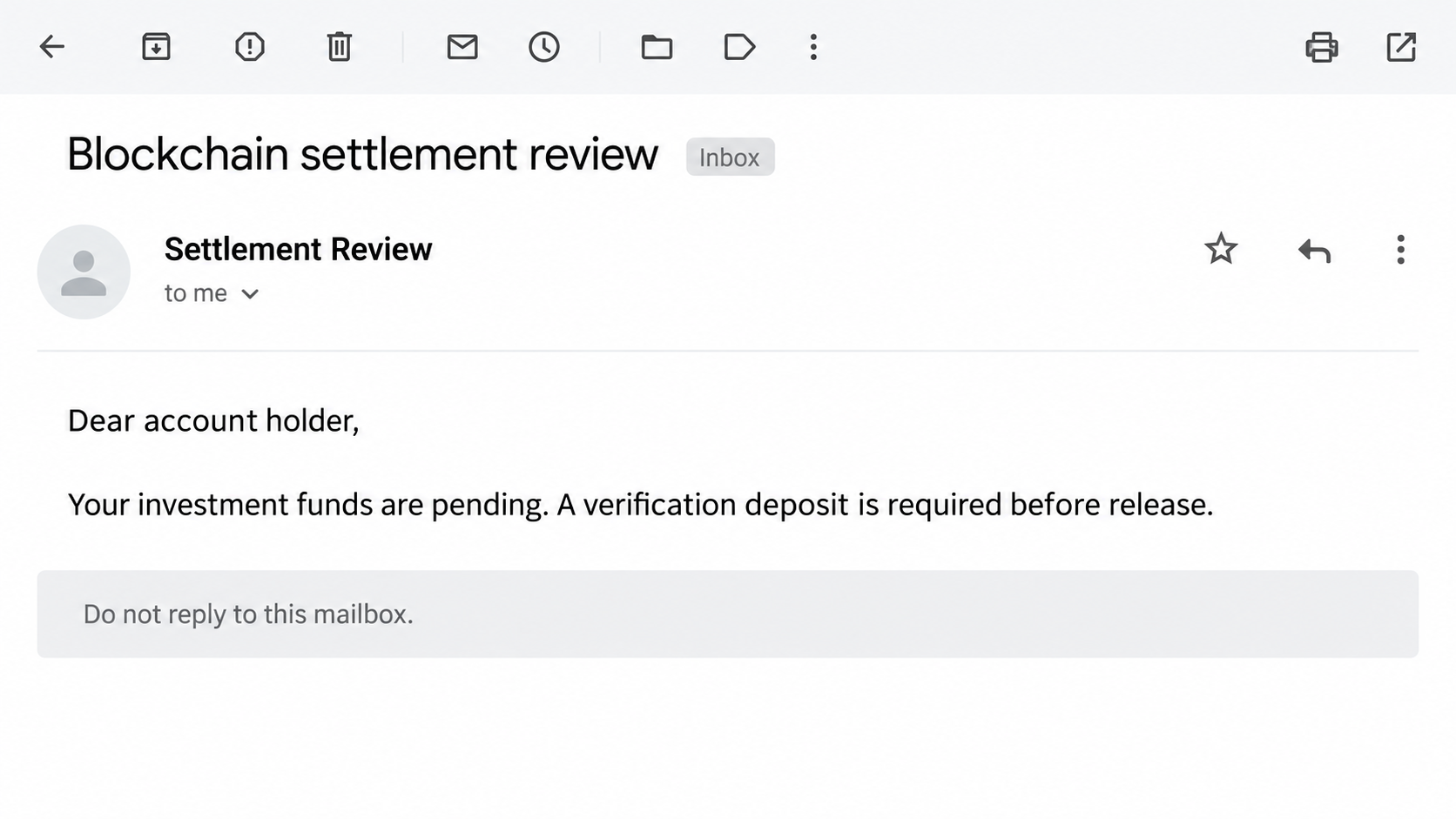
Fraudulent letters and emails claim that cryptocurrency or investment funds are waiting in a blockchain settlement process. They say a recipient must complete another payment first.
The documents borrow the name and logo of the Dubai Financial Services Authority, or DFSA. That apparent regulator involvement makes an implausible payout feel official.
Some versions use technical phrases such as “settlement blocks,” “segregated wallets,” and “compliance protocols.” These phrases add ceremony without proving a real fund exists.
What the DFSA actually says
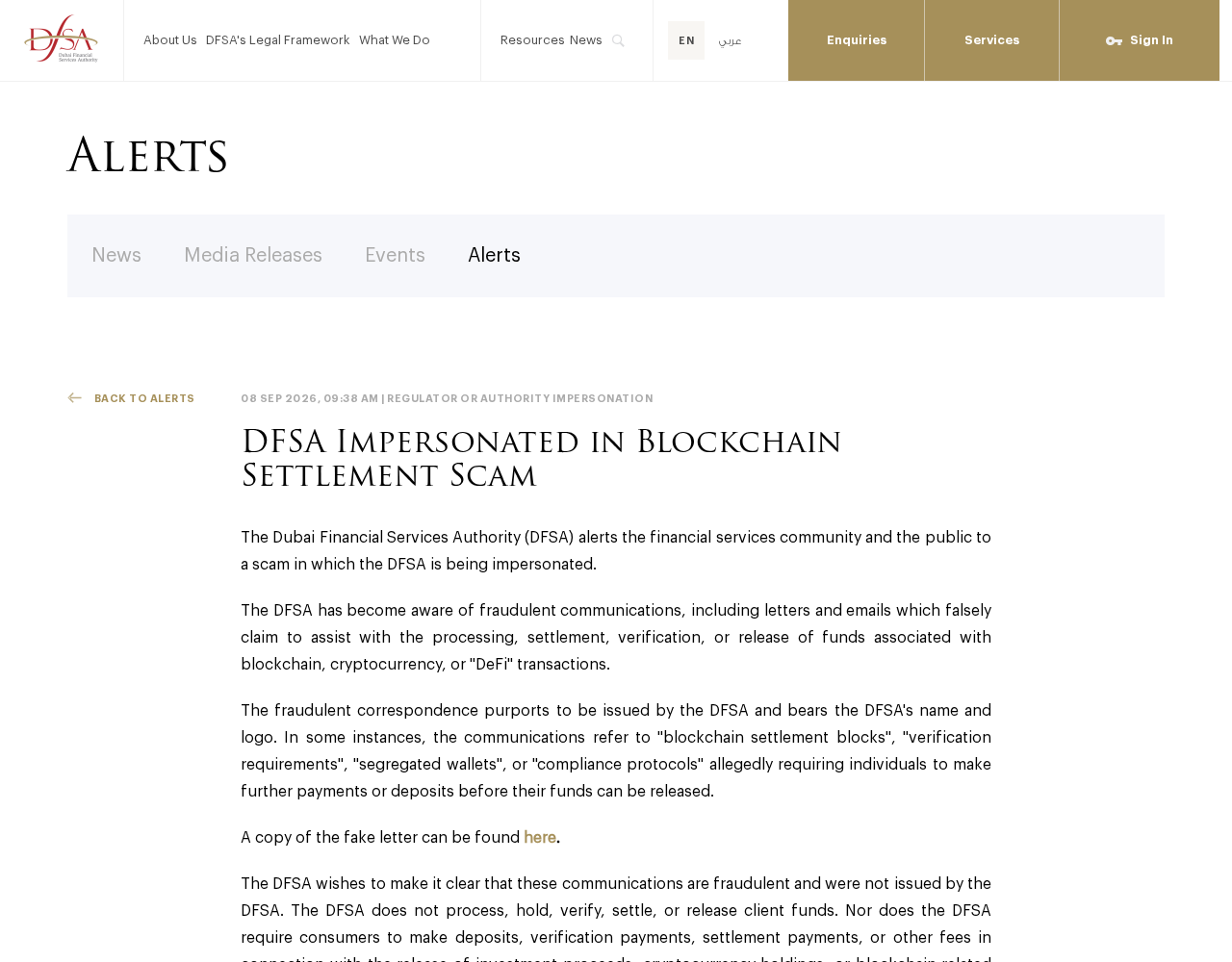
In a September 2026 warning, the DFSA identified these communications as fraudulent and said they were not issued by the authority.
The regulator does not process, hold, verify, settle, or release customer funds. It does not operate customer wallets or blockchain settlement blocks.
It also does not demand a deposit or fee to release investment proceeds. That makes the requested payment the center of the deception, not a routine administrative step.
What readers should check first
The important test is not whether the letter looks official. It is whether the requested action fits what the named regulator actually does.
- A DFSA logo on a document is not proof that DFSA sent it.
- A blockchain transaction cannot be unlocked by paying an invented regulator fee.
- A “verification deposit” is still money leaving your control.
- Go to the regulator’s own alert page before answering the sender.
The authority did not publish a universal payment amount or a list of every sender. Fraudsters can change those details while keeping the same story.
Why This Story Finds People at a Vulnerable Moment
People who lost money through a crypto exchange, fraudulent trading platform, or wallet theft may spend months searching for a way to recover it.
During that search, words such as “settlement” and “compliance” sound promising. They suggest a process with rules rather than another stranger making an offer.
The scam benefits from a misunderstanding about financial regulators. A regulator may license firms, investigate misconduct, and warn the public.
That does not mean it stores customers’ cryptocurrency or personally releases each investor’s balance. The DFSA explicitly rejects those roles in this case.
The scheme also borrows the logic of a legitimate withdrawal check. Real platforms may verify identity or investigate suspicious activity before allowing access.
But a surprise letter demanding more money to retrieve funds you supposedly own is a different proposition. Verification should not require sending a fresh deposit to an unknown destination.
Some recipients may have already lost money in an earlier investment fraud. Others may simply recognize a past platform name in the message.
Either way, the letter tries to transform uncertainty into hope. It says the missing amount is recoverable if the recipient completes one final step.
That “final” step is often where advance-fee fraud begins. The person pays before receiving the promised asset, and the supposed payout remains out of reach.
It is important not to invent a universal sequence. The DFSA describes letters and emails, but it does not say every target encountered the same website or wallet.
What is verified is the impersonation and the fee demand. The recipient’s safest response follows directly from those facts.
How the DFSA Blockchain Settlement Scam Works
Step 1: A letter or email announces a pending release
The message says funds from blockchain, cryptocurrency, or DeFi transactions are being processed. It may imply that a previous loss has already been found.
That is a powerful opening because it avoids a cold sales pitch. The sender speaks as if an existing process has nearly finished.
Ask whether you applied to a real court, insolvency administrator, or compensation scheme. If not, an unsolicited payout notice needs exceptional skepticism.
Step 2: The sender borrows regulator authority
The DFSA says the fraudulent correspondence uses its name and logo. Letterhead can be copied from public material in minutes.
Some recipients may search the authority’s name and discover a real regulator. That search confirms the institution exists, not that it sent this particular notice.
Look for an independent case reference through an official channel you locate yourself. Do not rely on a reply address or link supplied by the same message.
Step 3: Technical language makes the demand sound necessary
The letter may invoke “blockchain settlement blocks” or “segregated wallets.” Those words are meant to turn a payment request into a procedural requirement.
They do not establish that any funds are held on your behalf. The DFSA says it has no customer custody or settlement operation of this kind.
If the explanation becomes more complex whenever you ask for proof, pause. Complexity can hide the simple fact that the sender wants a new transfer.
Step 4: A verification payment becomes the gate
The recipient is told to pay a deposit, settlement charge, or compliance fee before funds can be released. The name of the fee may change.
The money would be sent before any genuine payout is verified. That reverses the normal burden: the claimant pays to test a promise made by someone else.
The DFSA explicitly says it does not impose such charges to release cryptocurrency or investment proceeds. This is the clearest way to test the story.
Step 5: Another hurdle may follow a first payment
The DFSA describes this as an advance-fee and asset-recovery scam. In that model, one paid “requirement” can lead to a second invented requirement.
The alert does not document a specific follow-up amount. Treat any new request for tax, authentication, wallet activation, or insurance as an additional warning.
Do not send more simply because the first payment has already been made. That understandable impulse can extend the loss.
The Difference Between a Real Regulator and a Fake Release Office
A financial regulator can publish warnings and maintain a list of firms it supervises. The DFSA provides a public register for that purpose.
That register is useful when a company claims DFSA authorization. It is not a ledger of personal crypto balances awaiting release.
A real court order, insolvency process, or police investigation may create documentation. Those processes have identifiable officials, case numbers, and independent channels.
Even then, you should verify a demand through the institution’s official website. Search results and forwarded documents can both be manipulated.
The DFSA says it does not issue letters about processing customer funds through blockchain settlement systems. This is a direct contradiction of the fake document’s premise.
The regulator also says it does not run customer wallets, segregated wallets, or crypto custody arrangements. A claimed “DFSA wallet” therefore needs no further debate.
Be careful with a message that mixes real terminology and false roles. DeFi, custody, and settlement are genuine financial concepts.
Using real words does not create a real transaction. The issue is whether the organization named in the letter has the authority and the function it claims.
The sender may offer a telephone call with someone presented as a compliance officer. A call can add confidence without providing independent proof.
Caller ID and email display names are easy to imitate. Verify through the DFSA’s official complaints or enquiry channel, not through the number in the notice.
If the document refers to a specific investment firm, check that firm separately. A real firm’s name can be inserted into a fraudulent letter.
Do not share a wallet seed phrase, private key, identity scan, or bank login during that check. None is required to ask whether the regulator sent a notice.
What a Careful Verification Looks Like
First, preserve the message without clicking its links. Record the sender address, attachment filename, date received, and any wallet or bank details requested.
Next, open the regulator’s website by typing its address yourself or using a trusted bookmark. Find the alert section and compare the story.
Read beyond the page title. The DFSA warning directly addresses the claimed fund release, the invented settlement vocabulary, and the request for another payment.
If you still think there may be a legitimate investment dispute, contact the relevant exchange, bank, insolvency administrator, or lawyer through its own verified channel.
A genuine claim can survive an independent check. A fraudulent “release desk” usually tries to keep you inside its own email thread and payment instructions.
Do not trust screenshots of account balances supplied by the sender. A displayed number is not proof that money is available for withdrawal.
For a crypto transfer, ask for the actual transaction history from your own wallet or exchange. Even that history proves only that a transfer occurred.
It does not establish that a regulator controls the destination or will reverse the transfer for a fee. Keep those questions separate.
Why the Requested Fee Is Not a Normal Compliance Step
A recipient may wonder whether the charge is simply a tax, anti-money-laundering check, or identity verification requirement. The letter encourages exactly that interpretation.
Those processes can exist in legitimate finance. The fraud lies in assigning them to an authority that says it does not perform this customer-fund function.
The DFSA’s warning is unusually specific. It rejects deposits, verification payments, settlement payments, and other fees connected to releasing investment or crypto proceeds.
Changing the label from “fee” to “security deposit” does not change who receives the money. Demand written proof of the recipient’s authority before paying anyone.
If a sender says the deposit is refundable, ask how that refund would be enforced. A promise inside the same unverified message is not a safeguard.
The same caution applies to a supposed tax bill. Tax authorities have their own websites, notices, and payment procedures; a crypto recovery email is not one.
Watch for an account balance that grows only after you pay. A number on a dashboard can be edited by its operator without any asset backing it.
Likewise, a transaction hash may show that you sent funds to a wallet. It does not prove the wallet belongs to the regulator or that a release is pending.
The distinction protects you from two mistakes. You avoid paying a false administrative charge, and you avoid treating a genuine technical term as evidence of custody.
Some victims feel embarrassed when they learn this. The scam is designed around plausible procedure, so hesitation and confusion are normal reactions.
The useful response is practical, not self-blame: stop the next transfer, preserve the records, and involve the real payment provider while action may still be possible.
If another person helped you invest, tell them about the letter without asking the sender for permission. Independent discussion can reveal inconsistencies quickly.
A legitimate professional will not object to you checking a payment demand with the named regulator. Secrecy mainly serves the person controlling the request.
What to Do if You Have Fallen Victim to This Scam
- Stop paying and stop replying. Save every letter, email, payment instruction, wallet address, and receipt before blocking further contact.
- Tell the payment provider immediately. Ask your bank, card issuer, exchange, or wallet provider whether a pending transfer can be stopped or traced.
- Secure accounts you exposed. Change passwords through real websites, revoke unknown sessions, and move assets if a seed phrase or private key was shared.
- Report the regulator impersonation. Send the correspondence to the DFSA through its official complaints channel and report the loss to local police.
- Watch for a second recovery pitch. Anyone promising to retrieve this payment for another up-front charge may be extending the same fraud.
- Get support from someone you trust. A calm second person can help organize evidence and review new messages while you handle urgent financial calls.
If you opened an unexpected attachment or installed a file, scan the device with Malwarebytes. AdGuard can help reduce malicious ads, but it cannot recall a transfer.
If you only read the message, a malware scan is not the first priority. Focus on the payment channel and any credentials you entered.
Frequently Asked Questions
Does the DFSA release lost cryptocurrency?
No. The authority says it does not hold, settle, verify, or release customer funds and does not operate wallets for customers.
Could the letter be genuine because it shows the DFSA logo?
No. The regulator specifically warns that fraudulent letters and emails misuse its name and logo. Verify through its own website.
What is a blockchain settlement block?
In this campaign, that phrase appears in fraudulent correspondence. The DFSA says it has no customer settlement blocks of the type described.
Should I pay a small verification deposit?
No. A small amount is still an advance fee. The DFSA says it does not require such payments to release investment proceeds.
What if I already sent cryptocurrency?
Contact the exchange or wallet provider promptly, preserve the transaction ID, report the incident, and do not send another payment to “unlock” the first.
Could a real investment firm still owe me money?
Possibly, but that question must be checked through the firm’s verified channels or a qualified adviser. The fake DFSA letter does not establish a claim.
The Bottom Line
The DFSA blockchain settlement letter offers an appealing answer to a painful loss. The authority says the letter is fraudulent and that it does not release customer funds.
Keep your money and credentials out of the sender’s reach. Verify any recovery claim through a source you choose, not a payment route supplied by the message.

Join the discussion
0 commentsShare your experience or ask a question about this article.
Discussion
Start the conversation
Have a question or something useful to share? Add the first comment.