

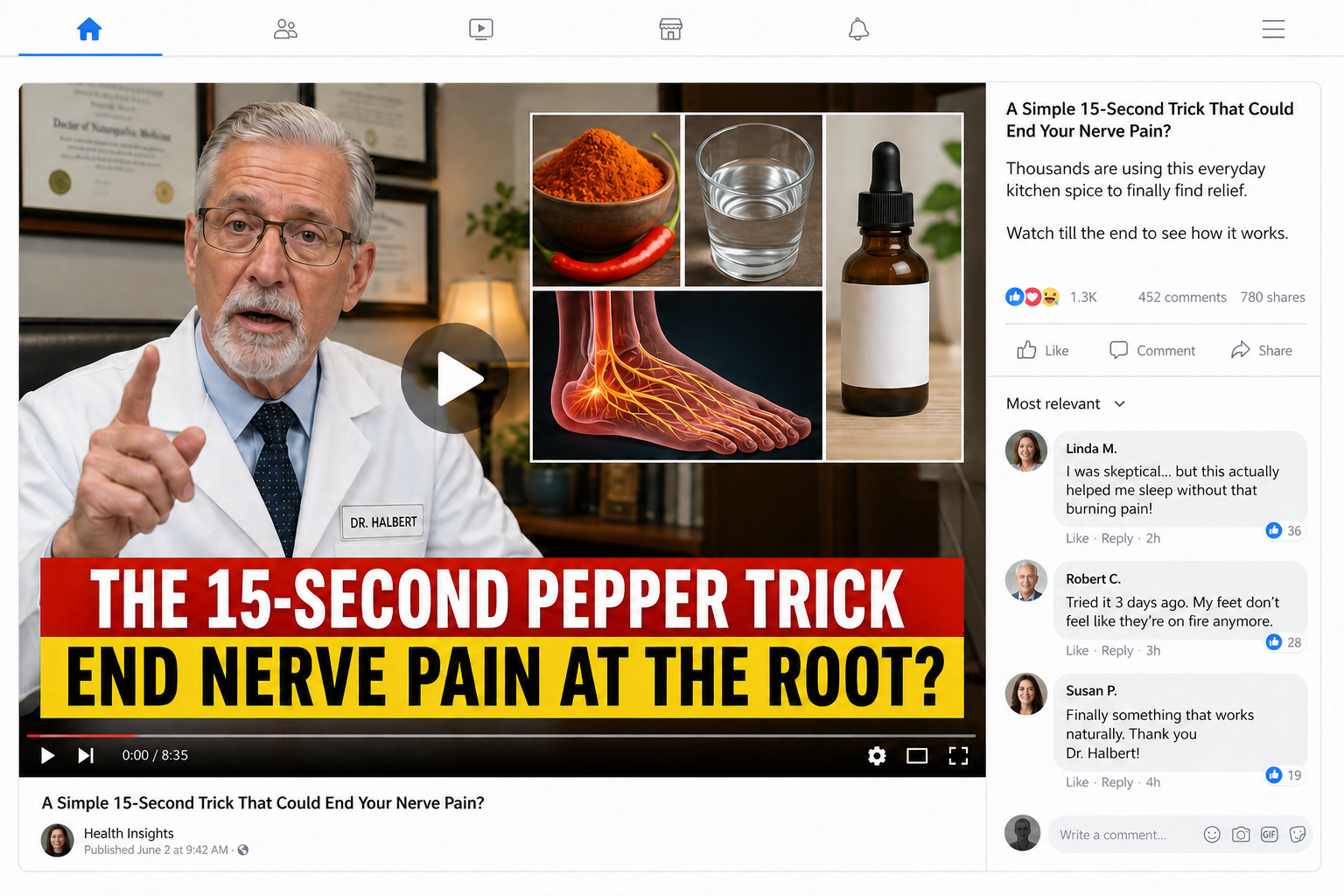
A doctor in a white coat promises that a 15-second pepper trick can reverse years of burning, tingling, and numbness. The video says ordinary treatment only masks the problem, while his recipe repairs damaged nerves at the root.
For someone awake at night with nerve pain, that promise can feel impossible to ignore. The Dr. Mark Halbert pepper trick scam exploits that moment, using a questionable expert identity and medical theater to sell Nerve Freedom.
Overview
The Miracle Story in the Advertisement
The presentation introduces Dr. Mark Halbert as a best-selling author, research director, or leading natural-health authority. He supposedly discovered that pepper can activate nerve repair in seconds.
Testimonials claim people threw away canes, stopped pain medication, slept normally, and reversed years of nerve damage. A conspiracy story says drug companies profit by treating symptoms and do not want the recipe exposed.
What Fails Basic Verification
The expert’s name appears in inconsistent forms, including Mark Halbert and variants such as Halpert or Helbert. The campaign does not provide a verifiable medical license, research profile, legitimate best-selling book, or credible publication supporting the claims.
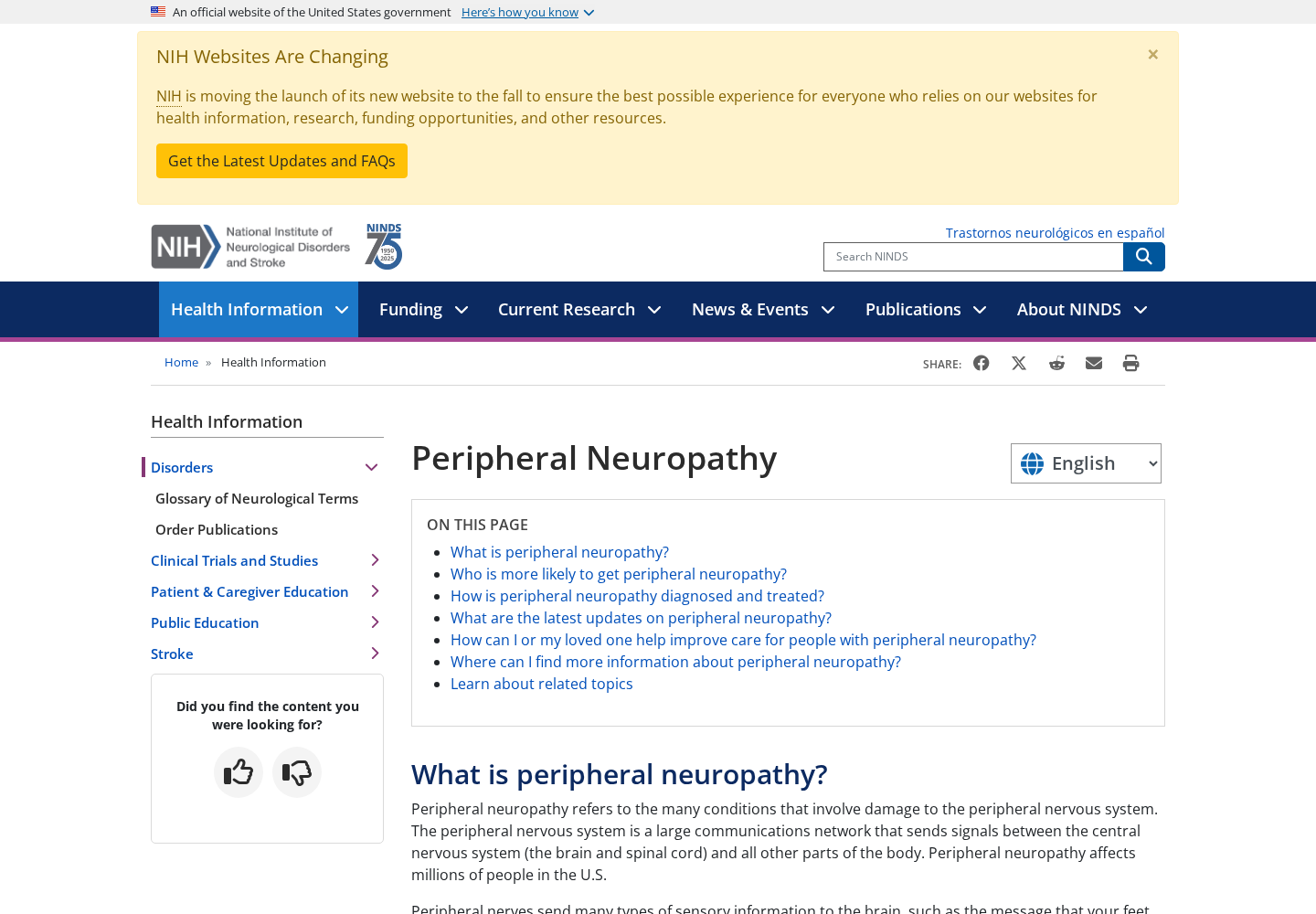
The National Institute of Neurological Disorders and Stroke explains that peripheral neuropathy has more than 100 types and many possible causes. One pepper recipe cannot responsibly diagnose and reverse all of them.
- The doctor’s identity and credentials cannot be independently confirmed.
- The name changes across ads and landing pages.
- Deepfake celebrity clips may be used to attract attention.
- The promised 15-second home recipe becomes a supplement.
- Testimonials make dramatic claims without verifiable medical records.
- Checkout terms may include a large bundle, upsells, or recurring shipments.
Nerve Freedom Is the Product Reveal
The pepper story eventually leads to Nerve Freedom capsules. Pepper imagery gives the offer a simple visual identity, but the buyer is not merely handed a kitchen recipe. The goal is a commercial order.
MalwareTips has separately examined the Nerve Freedom product and its marketing red flags. The same invented doctor can be connected to a new nerve supplement when the existing label collects complaints.
Product names are replaceable. The emotional script, fake authority, and checkout structure are the reusable assets.
Who Is “Dr. Mark Halbert”?
The sales video may call him a research director, best-selling author, or influential health expert. A white coat, studio set, and confident biography make those labels feel official.
Credentials should not depend on presentation. A licensed physician can normally be located through a medical board, practice, hospital, university, or recognized professional profile.
A research director announcing a breakthrough should be connected to an identifiable institution and published work. A best-selling author should have a traceable book, publisher, and catalog record.
Instead, searches for this expert lead mainly back to the product campaign and pages repeating its claims. Name variations make the identity harder to pin down and easier for the advertiser to evade exact-match searches.
One version reportedly links the character to an organization called “Be Nature” and invokes major media recognition. Those claims require direct confirmation from the named organization or publisher, not another affiliate page.
When a supposed doctor’s authority disappears outside the sales funnel, do not treat the person as a medical source.
The Pepper Trick Is Classic Bait-and-Switch Marketing
Pepper is familiar, cheap, and visually powerful. A red pepper beside an inflamed nerve makes the story instantly understandable, even before the viewer hears the explanation.
The phrase “15-second trick” promises almost no effort. It also creates curiosity. A viewer may watch a 30-minute presentation to learn something that supposedly takes seconds.
The video repeatedly delays the recipe. Personal suffering, patient testimonials, medical animations, and conspiracy claims fill the time while the narrator promises that the practical step is coming.
Near the end, ordinary pepper becomes inadequate. The active compound is supposedly too weak, incorrectly prepared, or unavailable in food. Nerve Freedom is introduced as the exact concentrated solution.
This switch matters. The viewer clicked for information about a household ingredient but is asked to buy a proprietary formula whose claims, ingredients, seller, and billing terms require separate scrutiny.
Neuropathy Is Not One Disease With One Cure
Peripheral neuropathy refers to damage involving nerves outside the brain and spinal cord. Symptoms can include numbness, tingling, burning, weakness, balance problems, sensitivity, or organ-related changes.
NINDS explains that there are more than 100 types. Diabetes is a common cause, but infections, autoimmune conditions, inherited disorders, physical injury, toxins, nutritional problems, medications, and other factors can also be involved.
Treatment depends on the cause and symptoms. Managing blood glucose may matter for diabetic neuropathy, while a vitamin deficiency, compressed nerve, autoimmune process, or medication effect requires a different approach.
A sales video cannot know which nerves are affected or why. Promising to reverse every viewer’s damage with one bottle ignores the basic need for diagnosis.
Some nerve damage may improve when the underlying cause is treated, while other damage can be difficult to reverse. A guaranteed rapid cure is not a responsible way to describe that reality.
Fake Celebrity Clips and “Big Pharma” Claims Reinforce the Pitch
Some versions use an AI-manipulated celebrity clip before the Mark Halbert presentation. A famous business leader or television personality appears to warn that a vast industry lie is attacking people’s nerves.
The celebrity creates attention. Halbert supplies the supposed medical explanation. Testimonials provide emotional proof, and the bottle completes the sale.
The script portrays drug companies as villains because that makes missing evidence easier to excuse. If no hospital or journal confirms the discovery, the advertiser says suppression is the reason.
That logic cannot be tested. Any contradiction becomes part of the conspiracy. Meanwhile, the seller asks viewers to trust a product page that has not supplied transparent evidence.
People are right to ask questions about cost, side effects, and medical care. The same skepticism should be applied even more strongly to an anonymous campaign making a cure claim for profit.
How the Dr. Mark Halbert Pepper Trick Scam Works
Step 1: A Pain-Focused Social Video Finds the Viewer
The campaign begins on Facebook, Instagram, YouTube, TikTok, or a display-ad network. It calls out burning feet, pins and needles, numb hands, nighttime pain, or difficulty walking.
A celebrity deepfake or authoritative voice may warn that standard care is making the problem worse. The ad promises an easy answer and invites the viewer to watch before removal.
Step 2: The Click Opens a Fake Interview or News Page
The destination resembles a medical program, cable-news report, or consumer-health article. A headline, presenter, logo, and comments make the promotion appear independently produced.
The domain is unrelated to the displayed publisher. Links funnel the visitor toward one long video rather than supporting outside verification.
Step 3: “Dr. Halbert” Receives Invented Authority
The video introduces Mark Halbert as a respected researcher, author, or director. Awards and media recognition may be named, but the claims do not link to reliable institutional records.
The lab coat and title do the work that a license, study, and genuine professional history should do.
Step 4: One Hidden Cause Explains Every Symptom
The narrator claims a toxin, inflammatory process, or missing nutrient blocks nerve repair. Different causes and types of neuropathy are compressed into one story.
Medical animations show a damaged nerve returning to normal. The animation demonstrates the script, not the effect of the product in real patients.
Step 5: The Pepper Recipe Becomes Nerve Freedom
Viewers wait for the promised home trick. Instead, the presentation says ordinary pepper cannot provide the correct concentration or supporting ingredients.
Nerve Freedom is revealed as the complete formula. Testimonials replace independently verifiable clinical results.
Step 6: The Checkout Pressures a Multi-Bottle Purchase
The order page may claim nerve repair requires several months, making a three-bottle or six-bottle bundle seem necessary. A low price per bottle can distract from the total.
Low-stock alerts, countdown timers, and bonus offers pressure the buyer to proceed before checking the company or terms.
Step 7: Refills and Returns Become the Next Problem
Some supplement checkouts offer or enroll buyers in automatic shipments. Others rely on a large first order and aggressive upsells. The live terms must be read carefully.
Support may use scripts, delay responses, or require unopened bottles returned at the customer’s cost. The product domain can disappear while the card descriptor remains unfamiliar.
Red Flags in the Nerve Freedom Funnel
- The doctor’s name appears with different spellings.
- No licensing board, hospital, university, or journal confirms the claimed authority.
- A 15-second recipe promises to reverse years of nerve damage.
- Every type of neuropathy is treated as the same condition.
- Celebrity footage appears without a verifiable original endorsement.
- The video attacks medication while offering an untested commercial alternative.
- The home remedy is never delivered as promised.
- The checkout hides the seller, total charge, or refill terms.
Nerve pain can make anyone impatient for relief. That urgency is exactly why verification should happen before payment or treatment changes.
Company, Address, and Fulfillment Checks
The Company May Be Missing Behind the Brand
Nerve Freedom is not enough to identify who takes the money. Compare the legal entity in the terms, privacy policy, checkout, receipt, bottle, and statement.
Different or absent names mean responsibility is being blurred. Do not buy from a health seller that will not clearly identify itself.
The Address May Belong to Someone Else
Search the address. It may be a virtual mailbox, residence, unrelated business, or fulfillment center rather than a research company or manufacturer.
A warehouse can receive returns and ship generic bottles for many brands. It does not validate the doctor, study, formula, or cure claim.
Phone and Email Support May Be a Dead End
Call before ordering. Ask whether the agent supports Nerve Freedom, whether refills are automatic, what one order costs in total, and where returns are processed.
Unanswered email, disconnected lines, and agents unable to explain the product are signs that cancellation may become a fight.
The Bottle May Lack Real Traceability
Look for ingredient amounts, warnings, lot details, and an identifiable manufacturer or distributor. “Doctor formulated” and “natural nerve support” are marketing phrases, not proof.
Some private-label supplements are mass produced overseas, including in China, then relabeled for many sellers. Country of origin alone is not proof of danger, but an opaque chain makes contents, contamination controls, and adverse-event accountability impossible to verify.
What to Do if You Have Fallen Victim to This Scam
- Cancel in writing. Cancel the order and any automatic shipment. Ask for the cancellation date, refund amount, return authorization, and confirmation that future charges are not permitted.
- Call the payment provider. Explain a misleading total, undisclosed refill plan, or unauthorized charge. Ask about dispute deadlines and blocking future merchant attempts.
- Preserve the campaign. Save the ad, fake interview, domain, checkout, terms, receipt, support messages, shipping label, bottle, and statement descriptor.
- Do not stop prescribed treatment. Speak with the clinician treating the neuropathy or underlying condition. Bring the supplement label and explain any doses already taken.
- Seek urgent help when necessary. Sudden weakness, loss of bladder or bowel control, breathing problems, rapidly spreading numbness, or severe new symptoms can require immediate care.
- Scan the device. If the site downloaded a file or asked for an extension, run a full scan with Malwarebytes.
- Reduce malicious ads. AdGuard can block many known scam pages and trackers. Keep verifying medical offers independently.
- Report the seller and ad. Report the sponsored post to the platform and file details at ReportFraud.ftc.gov. Report suspected adverse events through FDA MedWatch.
- Monitor the card. Check for unfamiliar descriptors, small test charges, or new refills. Continue monitoring after cancellation because merchant names can change.
- Avoid refund-recovery strangers. Do not pay an upfront fee to anyone who claims they can trace the seller or guarantee your money back. Contact the bank, regulator, or a lawyer through details you verify independently.
Frequently Asked Questions
Is Dr. Mark Halbert a Real Neuropathy Specialist?
The campaign does not provide verifiable licensing, institutional, publishing, or research records supporting the claimed identity. Inconsistent spellings create an additional warning sign.
Does the 15-Second Pepper Trick Repair Nerves?
No reliable evidence shows that the advertised pepper trick reverses years of nerve damage. It functions as a curiosity hook leading to a supplement.
Can Nerve Freedom Cure Peripheral Neuropathy?
The campaign does not provide credible product-specific evidence for a cure. Neuropathy has many types and causes, and treatment must address the individual condition.
Did a Famous Celebrity Endorse Nerve Freedom?
Do not trust celebrity clips found only in sponsored ads. The campaign has used manipulated-style endorsements, and no such clip should be accepted without confirmation from a genuine channel.
Why Does the Doctor’s Name Change?
Variations such as Halbert, Halpert, or Helbert may result from careless production or deliberate identity blurring. Either way, a legitimate medical expert should have one traceable professional identity.
How Do I Stop Nerve Freedom Charges?
Cancel with the seller in writing, keep proof, and contact the card issuer promptly if billing continues or was not clearly authorized. Ask about blocking future attempts.
The Bottom Line
The Dr. Mark Halbert pepper trick scam uses an unverifiable doctor, a fake home remedy, and medical fear to sell Nerve Freedom. The product may change, but the bait-and-switch structure can remain.
Do not let pain rush you past verification. Check the expert and seller, read every billing term, and seek diagnosis and treatment from a qualified medical professional.

Join the discussion
0 commentsShare your experience or ask a question about this article.
Discussion
Start the conversation
Have a question or something useful to share? Add the first comment.