

Aurivita presents its Capsaicin Power softgels as a powerful cardiovascular and circulation support formula. The branding looks premium. The claims sound medical. The pricing suggests a high-end product.
But when you break it down, the pattern is very familiar.
This is not a unique health breakthrough. It looks like a generic supplement sold through an aggressive marketing funnel.
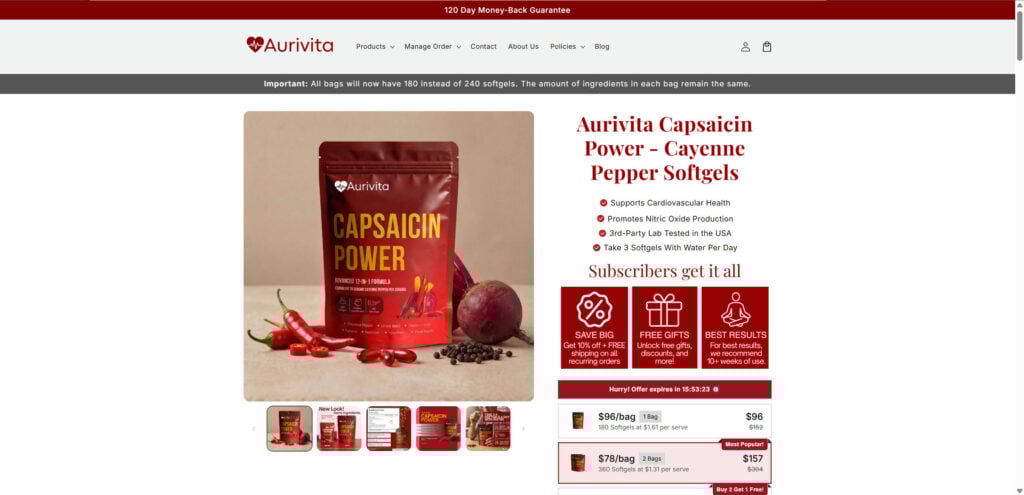
Overview
Aurivita follows the same model seen in many supplement funnels:
- Take a common ingredient (cayenne / capsaicin)
- Add a long list of trendy ingredients
- Wrap it in medical-style claims
- Sell it at a high markup with discounts
- Push bundles and subscriptions
The product may exist.
The problem is how it’s positioned and sold.
What They Claim vs What It Actually Is
What the site claims:
- Supports cardiovascular health
- Promotes nitric oxide production
- Improves circulation
- “Advanced 12-in-1 formula”
- “3rd-party lab tested in the USA”
What it actually looks like:
- A generic multi-ingredient supplement
- Based on common ingredients:
- Cayenne pepper (capsaicin)
- Turmeric
- Black pepper
- Beetroot
- Hawthorn
- Berberine
- Vitamins
From what we found:
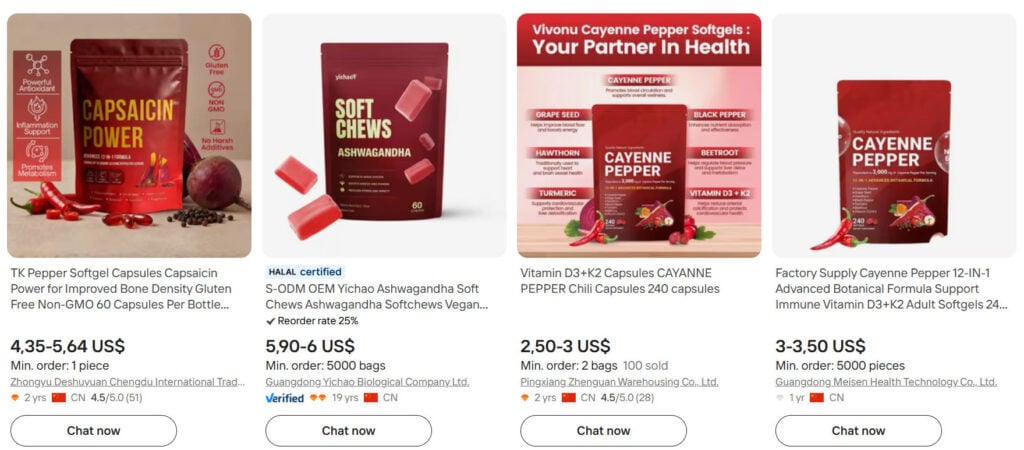
- Nearly identical products exist on wholesale platforms
- Prices range around $2–$6 per unit
This is not proprietary.
It’s private-label reselling with branding.
Major Red Flags
1. Generic Product Sold as “Advanced Formula”
“12-in-1 formula” sounds impressive.
In reality:
- It’s a mix of common supplement ingredients
- No unique formulation is shown
- No research specific to this product
This is a marketing upgrade, not a scientific one.
2. Strong Health Claims Without Proof
The product is positioned like a cardiovascular solution:
- “Improves blood flow”
- “Supports heart health”
- “Boosts nitric oxide”
But:
- No clinical studies shown
- No medical references
- No real validation
This is typical supplement marketing exaggeration.
3. Fake Premium Pricing
Pricing structure:
- ~$96 per bag
- “Discounted” from ~$152
Reality:
- Wholesale cost likely under $5
That means:
- Massive markup
- Artificial discount framing
This is designed to:
- Create urgency
- Make the product feel valuable
4. Subscription Trap Risk
The page pushes:
- “Subscribers get it all”
- Discounts for recurring orders
This is a continuity model, which can lead to:
- Unexpected repeat charges
- Difficult cancellation
Always a major red flag in supplement funnels.
5. “120-Day Guarantee” Sounds Better Than It Is
They advertise:
- Long refund window
- Risk-free purchase
But in reality:
- You must contact support first
- You may need to return the product
- You may pay return shipping
This is not frictionless.
It’s conditional and controlled by the seller.
6. Dropshipping / Private Label Evidence
Your screenshots confirm:
- Same product sold by multiple suppliers
- Same packaging style
- Same ingredient positioning
Prices:
- ~$2–$5 per unit wholesale
Conclusion:
- No exclusivity
- No brand ownership of formula
- No real differentiation
7. Visuals Designed to Sell, Not Inform
The product page uses:
- Highly polished product images
- Medical-style icons and claims
- Clean “lab-like” presentation
This creates:
- Authority illusion
- Trust perception
But without actual supporting data.
8. Weak Real Brand Identity
What’s missing:
- Real company story
- Product development details
- Transparent sourcing
- Scientific backing
This is not how serious supplement brands operate.
What You Will Actually Receive
If the product arrives, expect:
- A standard supplement
- Basic quality softgels
- No dramatic cardiovascular effects
- No “breakthrough” results
The product is likely average, not revolutionary.
Why This Model Works
This type of store relies on:
- Health fears (heart, circulation, aging)
- Authority language (science, lab tested)
- Pricing psychology (fake discounts)
- Subscription upsells
Most buyers:
- Don’t compare with wholesale sources
- Trust the branding
- Don’t return the product
Should You Buy It?
Short answer: Not recommended.
You are dealing with:
- A generic supplement
- Inflated claims
- High markup pricing
- Subscription risk
- Limited transparency
Even if it arrives, the value is questionable.
What To Do If You Already Ordered
1. Check for subscription
- Look at your order confirmation
- Monitor your card for recurring charges
2. Save everything
- Product page
- Guarantee claims
- Emails
3. Act fast on refunds
- Contact support early
- Don’t wait for the full period
4. Dispute if needed
If:
- You get charged again
- Refund is refused
- Product doesn’t arrive
Contact your bank.
The Bottom Line
Aurivita Cayenne Pepper Softgels are not a unique or premium product.
They are a generic supplement sold through a high-conversion marketing funnel using:
- Medical-style claims
- Inflated pricing
- Dropshipping/private-label sourcing
- Subscription tactics
You may receive something.
But you are not buying from a transparent or trustworthy health brand. Proceed carefully.









There is some research that supports some of the claims but at 10X the concentration you might receive. Here is the most significant problem. There is no capsaicin in the capsules. I requested an analysis of the product which someone in customer service emailed me and when you look at it there is a breakdown of the chemicals that are in the capsule. For capsaicin the note is ND. If you look to see what ND means it means NOT DETECTED. So the company or testing service that checked the product determined there was no active ingredient in the capsules.
This is not the only product that is a scam and also a significant cost. It is called Scuptique Lymphatic Drainage. If you do not subscribe they send the product anyway and charge your account. For any of these types of products do not use PayPal. PayPal is very difficult to work with.
That’s a genuinely useful piece of evidence, thank you. For anyone reading: ND on a certificate of analysis means not detected, so a cayenne product whose own paperwork shows no measurable capsaicin is selling capsules of filler at the price of an active supplement. It also explains the absence of any effect people report. Worth sending that document to your card issuer with the dispute, and to reportfraud.ftc.gov – a lab result contradicting the label is far stronger than a complaint about how it made someone feel.