

The Tryskintle Foundation Stick is being heavily promoted online as a “Korean color-changing” formula that adapts instantly to your skin tone, replaces multiple skincare steps, and delivers flawless results with minimal effort.
The product itself is not fake. It likely exists and may be delivered.
However, the way it is marketed, sold, and fulfilled raises serious concerns.
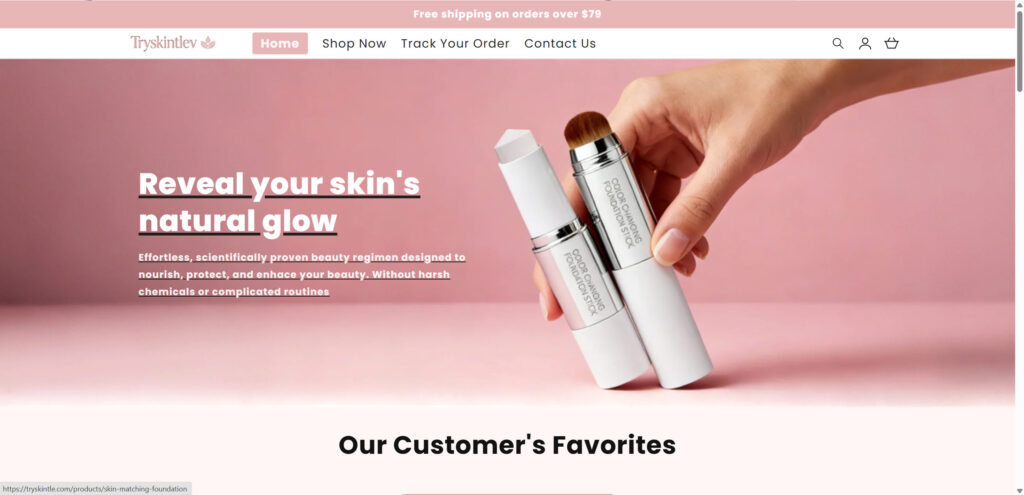
Scam Overview
At first glance, Tryskintle looks like a polished skincare brand. The website features clean design, lifestyle imagery, and confident marketing claims.
But once you look closer, the pattern becomes clear.
This is a typical dropshipping store built to:
- Sell a generic low-cost product at a large markup
- Create urgency and trust using inflated claims
- Make returns difficult or impractical
- Disappear or rebrand once complaints accumulate
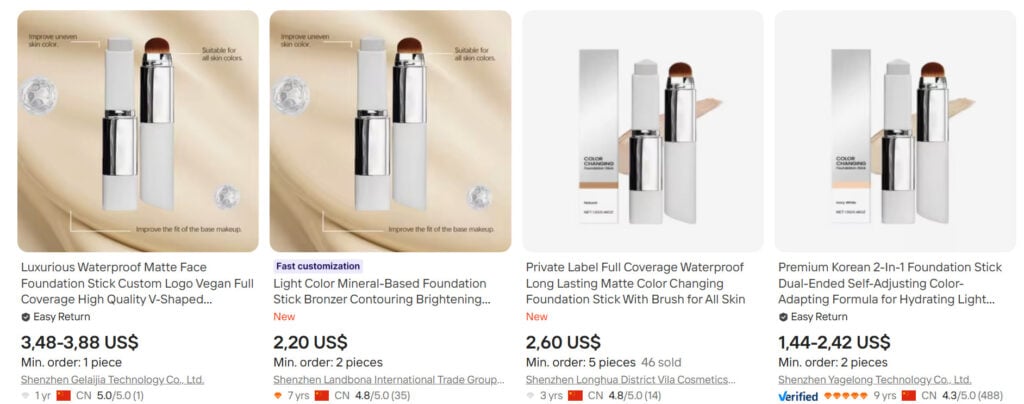
The foundation stick itself is not unique. Nearly identical products can be found from Chinese suppliers for a few dollars.
What you are paying for is not innovation — it’s marketing.
Major Red Flags You Should Not Ignore
1. Exaggerated and Misleading Claims
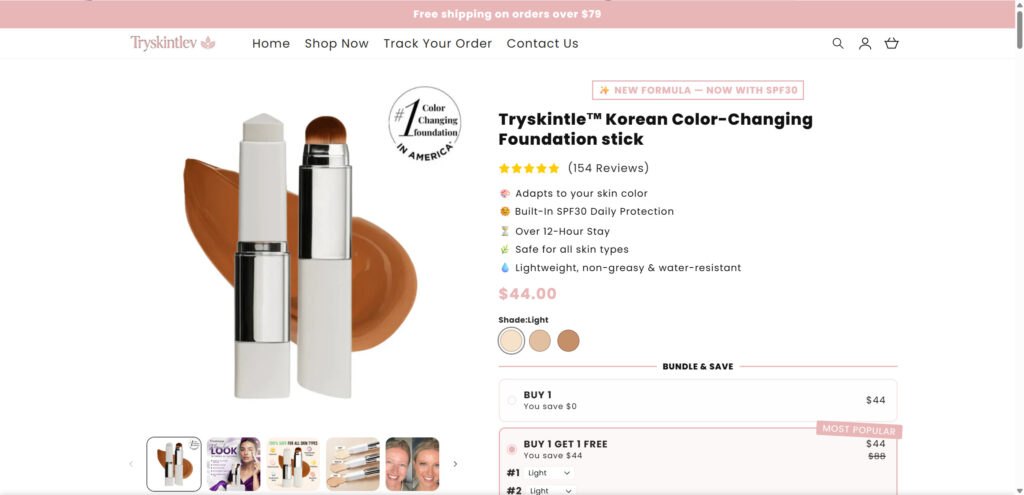
The product page makes bold promises:
- “Adapts to your exact skin tone”
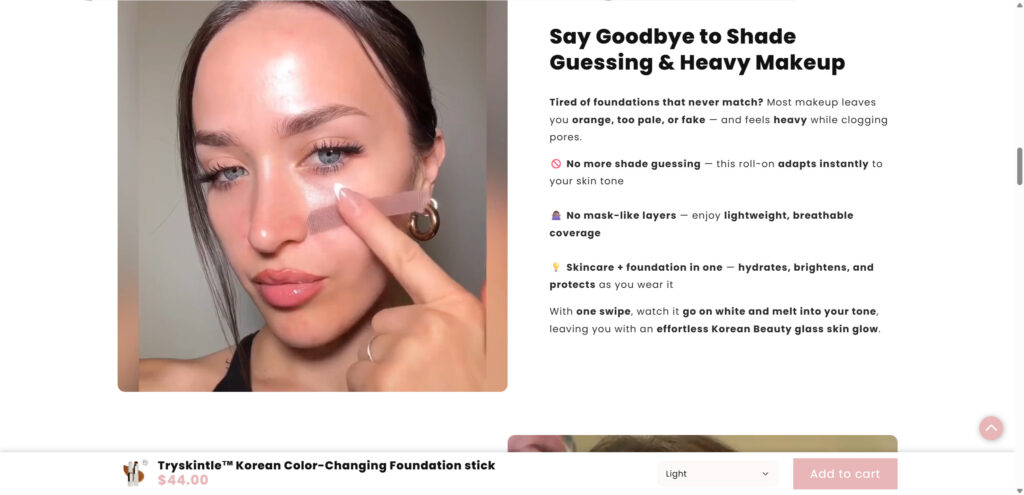
- “Skincare + foundation in one”
- “SPF30 protection”
- “12+ hour wear”
- “Works for all skin types”
There is no real evidence provided:
- No clinical studies
- No dermatologist verification
- No ingredient transparency
- No SPF certification details
These are classic marketing claims used to increase conversions — not scientifically backed guarantees.
2. Fake Scarcity and Inflated Social Proof
The site uses inconsistent and misleading numbers:
- One section shows ~150 reviews
- Another claims thousands of happy customers
- Another references completely different datasets
This is a common tactic to:
- Build artificial trust
- Make the product seem popular
- Push faster buying decisions
There is no verifiable proof these reviews are real.
3. Contradictory “Money-Back Guarantee”
The site promotes:
- “60-day money-back guarantee”
- “No questions asked”
But the actual policy says:
- Returns must be requested within 30 days
- 15% restocking fee applies
- Customer pays return shipping
- Returns go to China
- Some items may not be eligible
These contradictions are a major warning sign.
In reality, getting a refund is likely to be:
- Expensive
- Slow
- Or simply ignored
4. Returns Sent to China (High Risk)
The return address is in Wuhan, China.
This creates multiple problems:
- International shipping costs can exceed the product value
- Long delays and lost packages
- Seller can reject the return easily
- Refunds may never be issued
For most buyers, this makes returns practically useless.
5. Dropshipping Supply Chain
The product is not proprietary.
Nearly identical foundation sticks exist on wholesale platforms for:
- ~$1–$3 per unit
That means:
- You are paying a large markup
- The product is mass-produced
- No real brand ownership or quality control
This is standard dropshipping behavior.
6. No Real Company Transparency
The site provides almost no meaningful company information:
- No real brand story
- No founders or team
- No manufacturing details
- No verifiable business presence
Instead, it uses:
- Generic contact email
- Template-style pages
This is typical of short-term ecommerce stores.
7. Copy-Paste and Template Errors
Clear signs the site was quickly assembled:
- Terms mention unrelated products (like lashes)
- Broken pricing code (“-Infinity%” error)
- Generic Shopify-style layout
- No original brand identity
These are not details a serious cosmetics company would overlook.
8. AI-Generated or Heavily Edited Images
Many visuals appear:
- Over-edited
- Unrealistically perfect
- Possibly AI-generated
This is used to:
- Enhance perceived product quality
- Create unrealistic expectations
What you receive will likely not match what you see.
What You Will Actually Receive
If your order arrives, expect:
- A generic foundation stick
- Basic packaging
- Average or inconsistent quality
- Limited “color adapting” effect
The “magic transformation” shown in ads is exaggerated.
This is not a breakthrough cosmetic product.
Why This Model Works
Dropshipping stores like this rely on:
- Impulse buying from ads
- Emotional marketing (before/after visuals)
- Low product cost vs high selling price
- Difficult return processes
Most customers:
- Do not return the product
- Accept the loss
- Move on
That’s how these stores remain profitable.
Should You Buy It?
Short answer: No, unless you accept the risk.
You are dealing with:
- A non-transparent seller
- Inflated marketing claims
- Difficult refund conditions
- Generic product sourcing
Even if the product arrives, the experience may not justify the price.
What To Do If You Already Ordered
1. Monitor Your Order Closely
- Save all confirmation emails
- Track shipping updates
2. Be Ready for Delays
- Shipping may take weeks
- Packages may arrive in parts
3. Document Everything
- Take screenshots of the product page
- Keep proof of claims and guarantees
4. Act Quickly if There’s an Issue
- Contact support immediately
- Request refund before deadlines
5. Consider Chargeback if Needed
If:
- Product never arrives
- Seller ignores you
- Refund is refused
Contact your bank or card provider.
The Bottom Line
The Tryskintle Foundation Stick is not a revolutionary beauty product.
It is a generic, low-cost item sold through a high-risk dropshipping store using:
- Exaggerated claims
- Artificial trust signals
- Weak customer protections
You may receive something.
But you are not buying from a reliable or transparent brand.
Proceed with caution.








