


It can take a while to decide to withdraw money from an investment. So when you finally ask for it back, the answer matters more than another promising account update.
For people using DSJ Exchange, that answer came with a new set of conditions. What happened next is the part worth paying attention to.
Overview
The withdrawal started to require a fresh deposit
The DSJ Exchange withdrawal scam turned what looked like an account balance into leverage. People who wanted their money back were told they needed to pay a 12% tax first.
A final order from Washington State’s securities regulator found that the payment had to come from new funds. Paying it didn’t unfreeze the accounts.
That is different from a fee taken out of a payout. Whatever the site said you had, there was never a reason to put more money into this scheme.
A move to HQI Exchange was not a way out
After the withdrawal block, some investors were told their balances could move to HQI Exchange, also called HQIEX. The catch was that opening the replacement account required another payment.
Washington’s regulator heard from people who paid the tax and still couldn’t withdraw. The SEC’s later complaint also describes a demand for money to move accounts.
What the $130 million figure actually measures
On October 29, 2026, the SEC filed a civil case against BG Wealth Sharing Ltd and DSJ Exchange Pty Ltd. It alleges they raised more than $130 million.
That figure is the amount the SEC says the scheme raised. It isn’t money returned, an award to victims or an estimate of any individual’s account balance.
Washington’s June 30 order is an administrative decision. The companies didn’t request a hearing within the stated time, and the state adopted its findings as final.
The October federal complaint is different. It states the SEC’s allegations and asks a court for remedies. It isn’t a judgment or a payout announcement.
- Washington’s findings cover the false audit story and the new-money demand.
- The litigation describes deposits, withdrawal restrictions and the switch to HQIEX.
- A trade entry in the app didn’t show that the underlying trade happened.
- A regulatory filing wasn’t an approval to run the investment program.
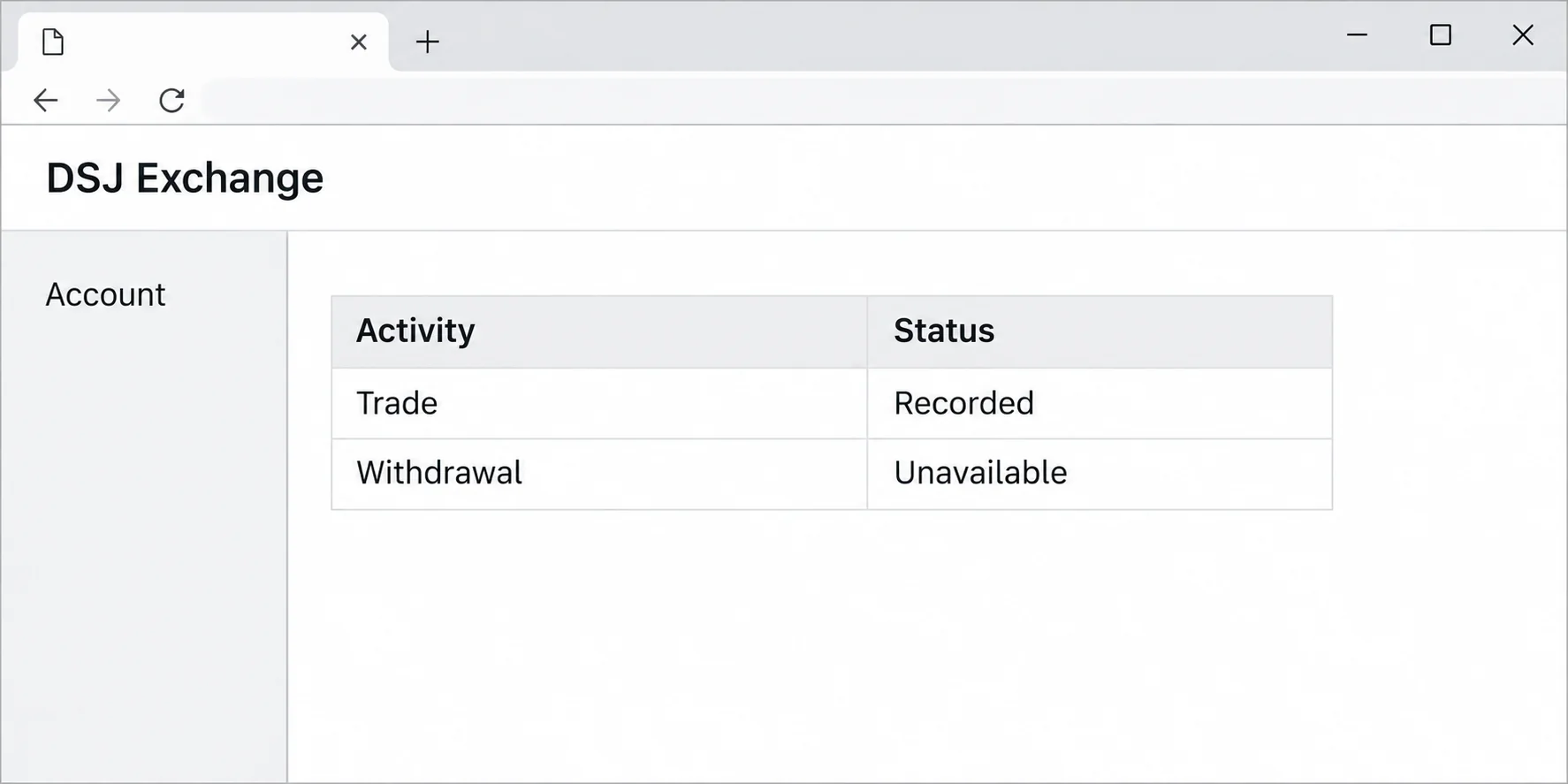
- The account screen above illustrates the activity and withdrawal states. It isn’t a captured customer account.
How the DSJ Exchange Withdrawal Scam Works
Step 1: The group gives you a place to see your money
BG Wealth provided investment instructions. DSJ Exchange was presented as the place that would hold the funds and carry out the trades. The names made the roles sound separate.
After receiving cryptocurrency, the platform showed what looked like a personal account. It gave members a place to follow activity and see numbers rise after the group’s daily trading prompts.
If a friend invited you, the account could look more convincing than the original pitch. You could come back tomorrow and see another line of activity. It felt like progress.
Step 2: Trade entries make the balance feel earned
Washington investigators found entries labeled as trades inside investors’ accounts. They couldn’t identify cryptocurrency wallet activity consistent with those supposed trades. The page and the underlying records told different stories.
Washington’s order describes an investor who put in $500 and was later shown $22,000. The larger number appeared on a screen. It wasn’t a payment to the investor.
This distinction matters if you’re trying to write down a loss today. Start with what actually went out and what actually came back. Keep the number displayed by DSJ separately.
Step 3: An early payout makes later delays easier to explain away
Washington found that some early investors were paid. That gave them a real event to tell friends about, even though it didn’t substantiate the trading activity they were promised.
The SEC alleges that withdrawal delays and fees discouraged people from taking out money while the platform still appeared active. A friend receiving one payment didn’t make later withdrawals reliable.
Some participants heard about the scheme through people they trusted. It’s possible for the person who introduced you to have believed the same account figures you did.
Step 4: A supposed audit puts withdrawals on hold
By early May, customers were told the operation was under an audit. Washington’s order says withdrawals were blocked unless customers paid a charge of 12% of their balance.
If you saw a large balance, the charge might have seemed like the smaller loss. The pitch suggested you’d get the rest of the money back after paying it.
That’s exactly when it was worth stopping. The tax wasn’t independently verifiable, and a screen claiming a balance existed couldn’t guarantee there was anything waiting on the other side.
Step 5: The platform won’t take the fee from the balance it displays
Washington found that customers couldn’t pay the charge from the funds shown in their accounts. They were asked to send fresh money, even though DSJ was showing a positive balance.
Consider an illustrative account displaying $10,000. A 12% charge would mean sending $1,200 more. The supposed $10,000 still hasn’t been withdrawn when the new payment leaves.
The regulator found that paying didn’t unfreeze the accounts. An additional transfer only changes one thing you can verify: more of your actual money has left your control.
Step 6: A new account is pitched as the solution
In its May warning, Washington’s regulator said investors were being directed to HQI Exchange and told to put in more funds to move over. That was another request for money.
Moving your account can sound safer than making a new investment. It sounds like you’re preserving what you have. But the new site can’t make the old balance real.
If someone says you’ve been selected for a priority migration, treat it as an unsolicited payment request. Don’t pay to move the account or hand over access to your wallet.
What the Company Filings Did and Did Not Show
BG Wealth’s filing was not an investment approval
The group used a filing with the SEC to imply it had approval for the program. Washington’s order says it also used a fabricated certificate to support that claim.
The SEC’s investor alert explains the distinction. An exempt reporting adviser can file information without being registered with the SEC. A Form ADV entry isn’t a certificate the agency issued.
DSJ’s money-services filing didn’t validate the exchange
Washington found that a filing with the Financial Crimes Enforcement Network, or FinCEN, was used to make DSJ Exchange look licensed and endorsed. That is not what the filing did.
Listing a business in a registry doesn’t show it executed the trades on your screen. Neither does a certificate image supplied by the same group asking you to deposit money.
The corporate names aren’t a substitute for verifying what they did
The entities named in the Washington order and the SEC case are BG Wealth Sharing Ltd and DSJ Exchange Pty Ltd. The names identify the subjects of those records.
If someone refers to a different company with a similar name, look for the exact entity in the relevant public record. This case doesn’t establish a connection to it.
A group administrator could not grant a real tax clearance
The person explaining the charge had a reason to make it sound official. What they did not give investors was a verified tax agency route for paying a genuine assessment.
If someone invokes a regulator or tax authority, find that office independently. Don’t pay a supposed tax bill in crypto or send account material to the group’s contacts.
What the Federal Case Adds to the Earlier Warnings
Filing numbers and marketing claims were different things
The SEC says BG Wealth filed Form ADV and DSJ Exchange filed Form D, both with false information. The SEC removed those filings from its website.
That matters if someone shows you an old download. A reference number or a genuine-looking PDF doesn’t mean the agency recommends the firm or will protect money you send.
Our earlier BG Wealth guide covers the original pitch and warnings. The later case documents what the scheme asked for once people tried to get their money out.
Transfers, addresses and people aren’t interchangeable
The federal complaint says the companies received more than $130 million from over 223,000 blockchain addresses between March and early June 2026.
Those addresses aren’t a count of individual investors. A person may send from multiple addresses, and some services send money on behalf of many customers.
The complaint separately alleges investor losses exceeding $100 million. The two figures describe different things: money that went into the scheme and estimated losses after accounting for what came back.
Don’t assume every person lost their full deposit, or that your withdrawal was backed by real trades because some payments went out. Save your own records, including small payouts.
Which Amount Belongs in Your Report?
Put deposits and actual receipts on separate lines
Write down the asset and amount for each transfer. If you sent USDT, record the USDT amount. Keep any local currency value shown on the original receipt separately.
Look for a payout in the wallet or account that received it. A DSJ screen saying the transaction was processed isn’t the same as seeing what arrived.
Separate any 12% payment or HQI deposit from the initial DSJ transfer. The dates and destinations may differ, even if one person arranged the entire process.
Save the old records before a chat disappears
Find the original withdrawal refusal, tax message and migration message if you still have them. Save enough surrounding conversation to show who made the demand and why you paid.
Use the records you already have. You don’t need to open a new account, reconnect a wallet, try another deposit, or engage a promoter to gather more proof.
Do not post account screenshots or transaction records in the group. Save the original files and send them only to the bank, exchange or agency through a verified channel.
What to Do If You Have Fallen Victim to This Scam
If the group is counting down to a deadline, stop there. Another payment was part of the withdrawal trap, not a way to meet a genuine deadline.
- Stop all payments. Don’t pay the supposed tax, approve a migration, or send a test deposit. Do not let an administrator talk you into starting over on another platform.
- Contact the exchange or bank you used to send the money. Use an independently verified support channel. Ask them to record the fraud and explain any options still available.
- Save the originals. Keep transfer confirmations, relevant chats and withdrawal screenshots. Record any transaction identifiers from your sending exchange. Don’t share passwords, seed phrases or recovery codes.
- Separate the payments by purpose. List the first deposit, later additions, supposed tax payments, migration payments and actual receipts. Include dates, amounts and the assets used.
- Report the scheme. In the US, file through the FBI’s Internet Crime Complaint Center and the securities regulator for your state. Keep any resulting report numbers.
- Secure exposed accounts. If you reused a password, replace it on each affected service. If you shared wallet recovery words, get help from your genuine wallet provider immediately.
- Warn people you referred. Tell them what the withdrawal demand said and that more money could be lost. Send the official regulator link without forwarding an active invitation.
- Reject private recovery offers. If a stranger promises to release funds for a fee, stop. Verify any case communication through the office or platform you previously contacted yourself.
Outside the US, start with your financial regulator and local police reporting service. The US cases give you reference material, but don’t replace your own report.
If multiple relatives were affected, help each person save their own receipts. Don’t combine their amounts into one number without saying whose money moved and which account sent it.
When speaking to people who joined on your recommendation, show them what the Washington order says about withdrawals. A specific finding is easier to check than a warning alone.
Frequently Asked Questions
Is the 12% DSJ Exchange tax genuine?
No. Washington’s final order identifies the payment as an additional way to extract money. It found that accounts weren’t unfrozen after the payment.
Can HQI Exchange unlock my DSJ balance?
Don’t pay to find out. Regulators identified demands for more money to move to HQIEX; sending a new deposit did not make the original funds available.
Did some people really withdraw before the freeze?
Yes. Washington’s order describes early payouts. An early receipt doesn’t show that trades produced the money or that a later balance was withdrawable.
Does the $130 million case mean reimbursement is available now?
No. The figure in the federal case concerns the amount allegedly raised. A civil complaint isn’t a reimbursement program and doesn’t guarantee anyone a distribution.
Should I report the dashboard balance as my loss?
Keep it as evidence of what the platform showed. Separately record actual outgoing payments and anything you received. Don’t mix expected returns with amounts you can document sending.
What if a person sends me a screenshot of an SEC registration?
Use Investor.gov to check the firm independently. Finding a filing and seeing proof of registration aren’t the same thing. Don’t treat a promoter’s screenshot as authorization.
The Bottom Line
Do not pay a DSJ Exchange withdrawal tax or send money to HQIEX to move an old balance. A fresh deposit didn’t unlock the funds Washington’s regulators investigated.
If you already sent money, start with the institution that handled your transfer. Save the actual receipts, report the payment, and don’t let a private recovery offer create another loss.

Join the discussion
0 commentsShare your experience or ask a question about this article.
Discussion
Start the conversation
Have a question or something useful to share? Add the first comment.