


The return parcel is back, and you expect a straightforward refund. Then you open it and notice a detail that doesn’t belong to the item you shipped.
Maybe it’s the serial number. Maybe the whole product is different. What you do next matters, especially while the return case is still open.
Overview
The seller receives a substitute instead of the original item
An eBay return-swap scam happens when someone deliberately sends back a different item while seeking a refund for the genuine purchase.
A working device might be replaced with a broken unit of the same model. Another return could contain an unrelated object or an item missing valuable components.
The distinction is intentional substitution. A mistaken parcel, a genuine defect, or an ordinary disagreement about condition needs investigation rather than an automatic fraud accusation.
A real return case can carry a dishonest claim
The transaction may begin normally, with a legitimate listing, payment, and delivery. The abuse appears later, inside the marketplace’s actual return process.
That makes this different from a fake eBay login email. You may be looking at a genuine case while disputing the contents sent back through it.
eBay itself isn’t the scam. Its rules prohibit abusive returns, including sending back something other than the item received. The problem is someone misusing that process.
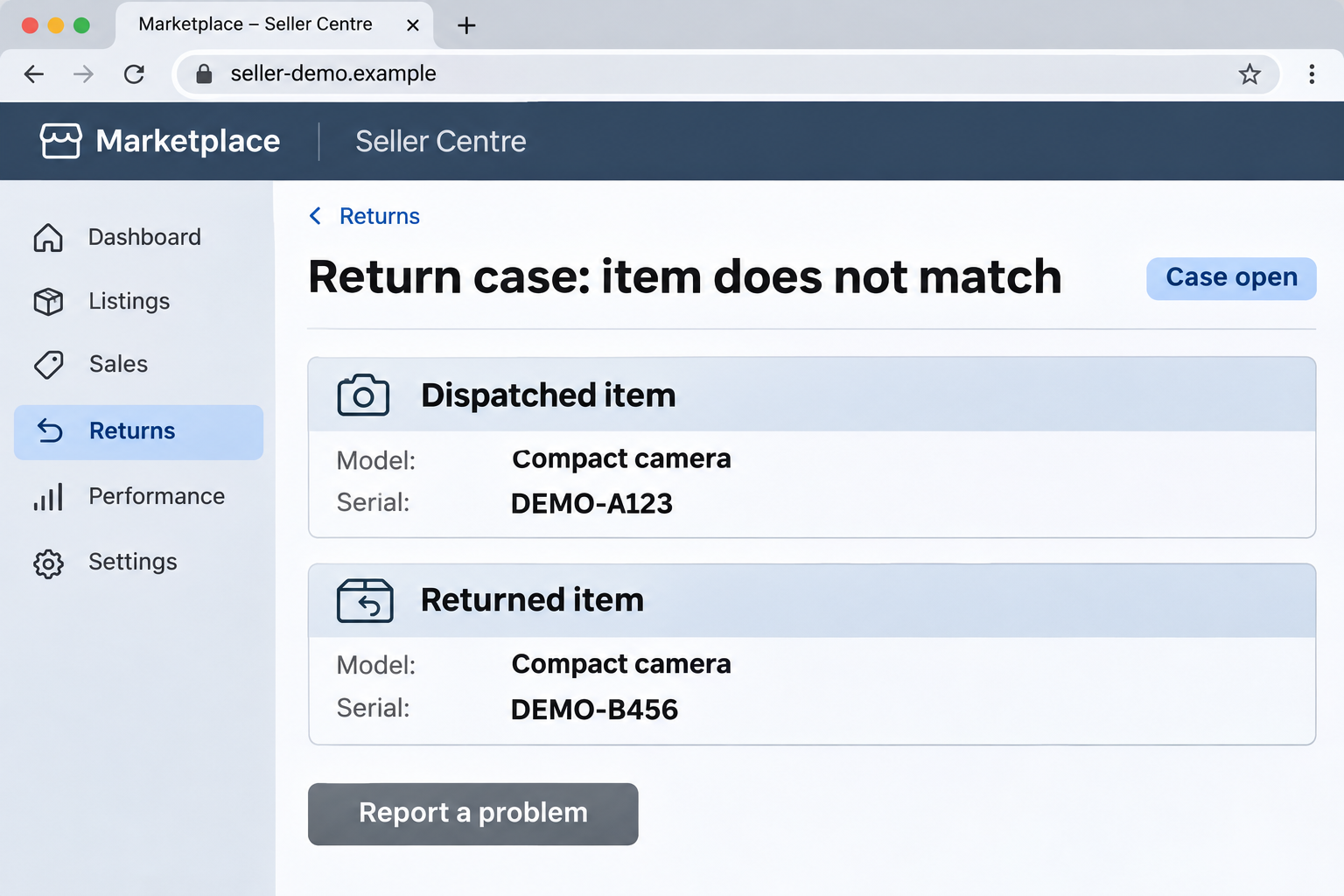
The illustration uses fictional item identifiers to show a mismatch. It isn’t a real buyer’s return case or evidence against an individual account.
Evidence and timing matter more than an angry message
- Keep the returned contents, packaging, labels, and tracking record.
- Compare identifiers against your original listing and dispatch records.
- Report the discrepancy through the actual return case promptly.
- Check the deadline and protection options attached to your account and transaction.
Do not ignore a return or send a private payment to make a dispute disappear. Build a clear item-identity comparison and ask eBay to review it.
A Different Item Is Not Just a Different Condition
Start by describing the problem accurately. A scratched phone with the original serial number is different from another phone carrying a different serial number.
Both can create a loss, but they raise different questions. One concerns condition and lost value; the other concerns whether your merchandise was returned at all.
Similarly, a missing cable isn’t automatically proof that someone replaced the main device. List the contents and discrepancies separately rather than combining everything into one accusation.
eBay’s abusive-buyer policy distinguishes prohibited behavior from legitimate return rights. A buyer can still raise a real problem with an inaccurately described item.
Your strongest position is specific: what you sent, what came back, and how your records establish the difference. Avoid guessing about motives before checking those facts.
How the eBay Return-Swap Scam Works
Step 1: A normal purchase establishes a return route
The buyer orders an item that can be kept, resold, or used to replace something they already own. Payment alone doesn’t reveal a future return problem.
A seller therefore needs ordinary dispatch records, not a theory about which customers look suspicious. Consistent documentation is fairer and more useful than profiling buyers.
For serialized merchandise, record the identifier on the actual unit you pack. A manufacturer’s stock photograph shows the model, but not the particular item dispatched.
Step 2: A return request creates pressure to resolve the order
The buyer opens a case, perhaps saying the item is defective or not as described. Those can be genuine reasons, so the request deserves a proper response.
Don’t assume a no-returns listing ends the matter. eBay’s buyer protections can require a return when goods are faulty, damaged, wrong, or inconsistent with the description.
Read the actual reason and the case’s response date. Ask clear questions through eBay Messages if the description or photographs don’t identify the claimed problem.
Step 3: The original product is replaced before shipping back
In a deliberate swap, the buyer keeps the purchased item and returns a substitute. Similar packaging can make the difference less obvious during a quick inspection.
Two devices can share the same model and color while carrying different serial numbers. Conversely, a changed outer box alone doesn’t establish that the device was replaced.
Compare the item itself, not just the packaging. Check the relevant markings and accessories without damaging the evidence or dismantling something you aren’t qualified to examine.
Step 4: A delivery scan makes the return appear complete
Tracking can show that a parcel reached you. It doesn’t establish what was inside that parcel or whether its contents match the original shipment.
That is why the arrival date becomes important. You need time to inspect the return and raise a discrepancy before the case moves forward.
Put returned high-value goods into a separate checking area. If they get mixed with stock or other returns, proving which object came from which parcel becomes harder.
Step 5: The seller must explain the mismatch inside the case
The useful report is not simply that the buyer is dishonest. Explain the mismatch and attach the records that connect each identifier to the transaction.
For example, compare the outgoing serial photograph with the returned unit’s label. Include the listing, order reference, return label, and relevant messages in a concise chronology.
Ask support which review route applies. A different-item return shouldn’t be casually treated as ordinary depreciation or a reason to invent a deduction yourself.
Build an Item-Identity Record That Someone Else Can Follow
Use the original listing as the starting point
Save the version of the listing associated with the order. Its condition description, included accessories, and photographs explain what the buyer agreed to purchase.
If you sell multiple identical units, connect the dispatch record to this order. A picture of a serial number from unrelated inventory won’t resolve the dispute.
Describe any preexisting marks honestly. Trying to hide an earlier scratch or repair can undermine an otherwise valid complaint about a completely different returned unit.
Photograph the return before changing its condition
Keep the shipping label and show the package as it arrived. Photograph the contents, identifying markings, and any apparent damage before cleaning or repacking them.
A continuous opening video may provide context, but it isn’t a guaranteed winning appeal. Clear still photographs are often easier for a reviewer to compare.
Don’t test visibly damaged electronics or handle leaking batteries merely to strengthen a claim. Explain the safety concern and obtain suitable handling advice.
Show a comparison, not a pile of attachments
Organize records into outgoing item, returned item, and transaction timeline. Label files plainly so a reviewer doesn’t have to guess which photograph belongs to which stage.
Keep full identifiers for the official case. Redact them from public posts, where they can be copied into other transactions or expose unnecessary personal information.
Don’t edit photographs in a way that changes their meaning. Retain the original files alongside any clearly labeled close-ups used to highlight a marking.
eBay’s Return Rules Still Apply While You Dispute the Contents
eBay’s seller return guidance tells sellers to inspect the case details and respond through the Returns dashboard.
The guide describes a two-business-day period after receiving a return to review it and refund the buyer or ask eBay to help.
Use the deadline displayed in your case and raise the issue promptly. Regional rules, account features, and transaction circumstances can affect the available route.
A refund might sometimes be processed before your own inspection is complete. Don’t interpret a status change as proof that eBay examined and authenticated the returned object.
Instead, preserve the record and ask support what review remains available. Explain when the parcel arrived, when you inspected it, and what you discovered.
Don’t treat a refund deduction as a universal solution
The official seller-protection policy describes conditional protections, including deductions for eligible changed-condition returns.
That doesn’t mean every seller can withhold 50%, refuse the entire refund, or apply a penalty because they suspect fraud.
A substituted item raises an identity problem. Ask how to report that specific problem instead of assuming a lost-value deduction is the correct response.
Eligibility depends on the seller and transaction. Escalation can also change which controls remain available, so read the current instructions before choosing an action.
Reporting and appealing serve different purposes
Reporting a buyer alerts eBay to behavior for review. It isn’t necessarily the same as asking for help with the financial outcome of your open return.
Keep both matters connected to the order. Ask whether your evidence was attached to the return case, not merely received in a separate conversation.
If a case decision has already been made, eBay’s seller appeal guidance describes submitting new information within 30 days of closure.
A stronger appeal adds evidence rather than repeating the same accusation. A documented identifier mismatch may be more useful than another description of how upsetting the loss feels.
What to Do if You Have Fallen Victim to This Scam
-
Secure the returned parcel and its contents. Keep everything separate from normal stock, including the shipping carton, labels, accessories, and internal packaging.
Don’t resell the substitute or throw it away while the case is unresolved. Its identity and condition may matter to the review.
-
Open the genuine return case immediately. Read its current status, response deadline, and available help controls. Don’t rely on a deadline quoted in a buyer’s message.
If a teammate handles refunds, flag the order internally so nobody completes a routine refund without knowing that the returned contents are disputed.
-
Compare outgoing and incoming records. Look at serial numbers, model identifiers, distinctive marks, included components, and the listing’s description of condition.
Check for an innocent explanation, including your own packing error or a buyer returning two orders incorrectly. Record facts that support or weaken your initial suspicion.
-
Contact the buyer calmly through eBay. State the discrepancy without threats, personal insults, or claims about their identity that you cannot establish.
Ask for clarification and keep the reply inside the platform. A cooperative explanation might resolve an error; an inconsistent answer can become part of the record.
-
Report the specific substitution to eBay and request the appropriate case review. Provide the order number, return tracking, arrival date, and your item comparison.
Ask what action preserves your position before the deadline. Don’t assume that reporting abuse pauses the return or guarantees reimbursement.
-
Keep a clear financial record. Note the original payment, return costs, refund status, and any later adjustment, without treating a provisional status as a final outcome.
If the case involves a separate payment dispute, follow its own instructions. Don’t submit inconsistent accounts of the same transaction to different providers.
-
Appeal through the official route if appropriate. Supply genuinely new information and explain how it resolves the point on which the first decision depended.
Save confirmation, case references, and support correspondence. A conversation that feels helpful isn’t a completed adjustment until the actual transaction record reflects it.
-
Reject off-platform fixes. Don’t pay a private recovery agent, send a buyer money elsewhere, or follow an emailed link to unlock a supposed seller refund.
This is a merchandise dispute, not evidence your device is infected. Security cleanup is relevant only if a separate suspicious download or account exposure occurred.
Make Future Dispatch Records Useful Without Making Every Order a Production
A sensible routine should fit the items you sell. A serialized camera needs different records from an inexpensive unnumbered accessory.
For costly electronics, capture the actual unit’s identifier and condition before packing. Keep the order reference with those files so the relationship remains clear months later.
For other goods, detailed listing photographs and a consistent packing checklist may be more practical. Don’t promise that photographs can uniquely identify every mass-produced object.
Train anyone handling returns to check identifiers before merging goods back into stock. A quick intake note can prevent a disputed item from being sold again accidentally.
Keep records securely and limit access to staff who need them. Shipping labels contain buyer information that doesn’t belong in a public warning post.
The goal isn’t to make honest customers fight for every return. It’s to preserve a reliable record when the object coming back isn’t the object sent out.
Frequently Asked Questions
Is a returned item with a different serial number proof of a scam?
It’s an important discrepancy, not automatic proof of intent. Confirm your outgoing record, rule out packing mistakes, and report the mismatch through the return case.
Can I refuse every return if my listing says no returns?
No. eBay protections can still apply when an item is faulty, damaged, wrong, or not as described. Follow the actual case instructions.
Should I automatically deduct 50% from the refund?
No. Deduction eligibility is conditional, and a different-item return isn’t simply lost value. Ask eBay which process applies to your evidence and transaction.
Does return tracking prove the buyer sent my item back?
It can establish movement or delivery of a parcel. It doesn’t authenticate its contents. Preserve the label and compare the returned item with your dispatch records.
Will an unboxing video guarantee seller protection?
No. It can support your account, but the decision depends on the evidence, relevant policies, and case circumstances. Keep clear photographs and transaction records too.
How is this different from Amazon return-swap coverage?
This guide addresses an eBay seller receiving substituted merchandise and navigating a return case. A later Amazon buyer receiving contaminated inventory faces a different response process.
The Bottom Line
Don’t dismiss a returned substitute as an ordinary refund problem, but don’t abandon eBay’s process either. Preserve the item, establish the mismatch, and report it promptly.
If money has already been refunded, ask about the review or appeal available for that exact case. Clear evidence and timely action are more useful than threats.

Join the discussion
0 commentsShare your experience or ask a question about this article.
Discussion
Start the conversation
Have a question or something useful to share? Add the first comment.