


Santa crosses a glowing moon, snow fills the ceiling, and a small white ball supposedly supplies the Christmas atmosphere. That’s the Emberante Christmas Sky Projector pitch.
The tempting part isn’t just the picture. It’s the suggestion that you can bring the scene home, try it, and send it back.
Overview
The offer sells a complete Christmas scene
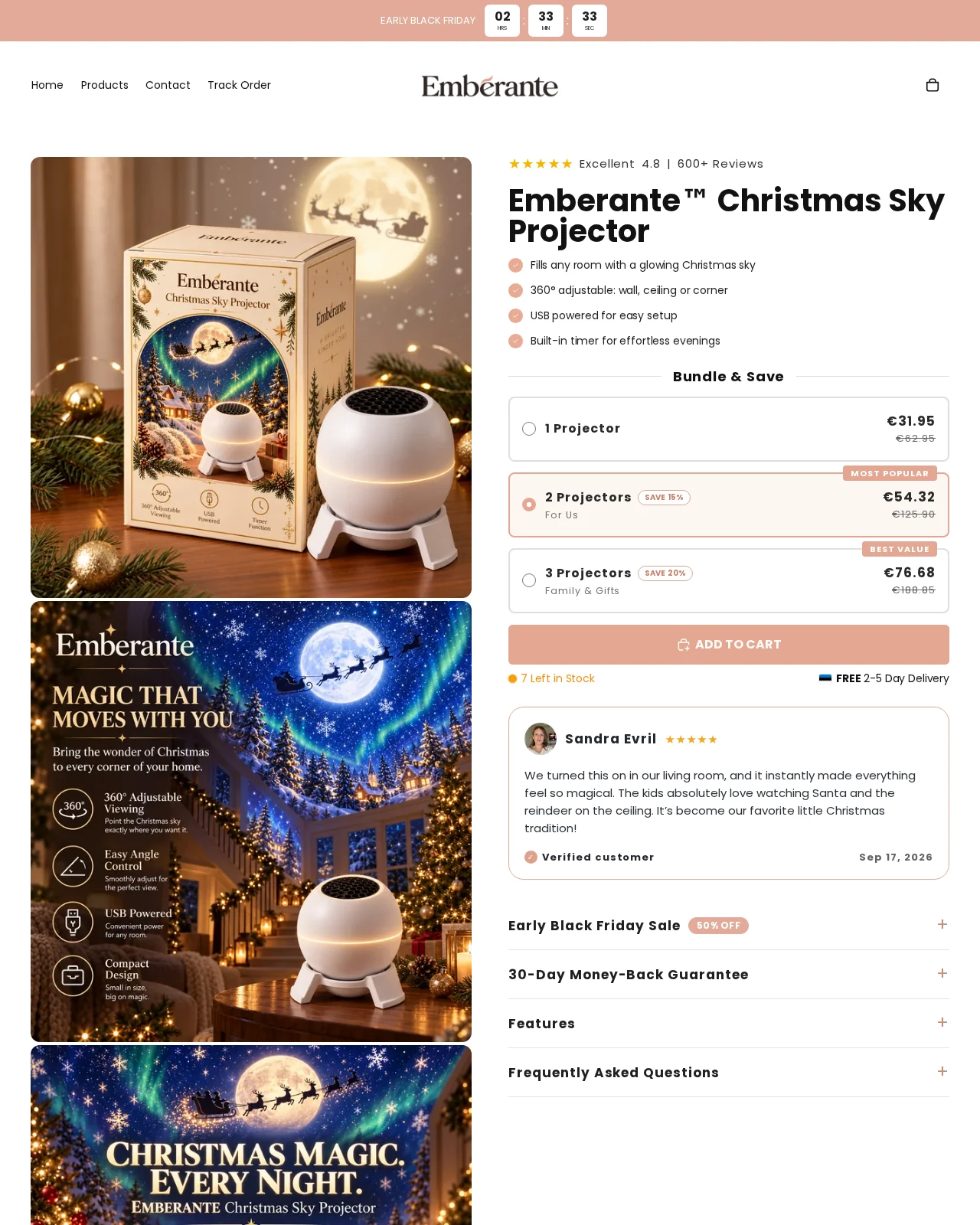
Emberante.store markets a compact decorative projector for walls and ceilings. Its feature list includes an adjustable base, USB power, a remote, and a timer.
The advertised effect combines a sleigh, moon, snow, and northern lights. That is considerably more specific than simply buying a lamp that produces colored light.
Those details matter when comparing the parcel with the promotion. A powered-on light is not automatically the Christmas scene you were sold.
The refund language changes the purchase
The sales page offers a month to decide whether the projector meets expectations. The separate return conditions introduce restrictions that directly affect that decision.
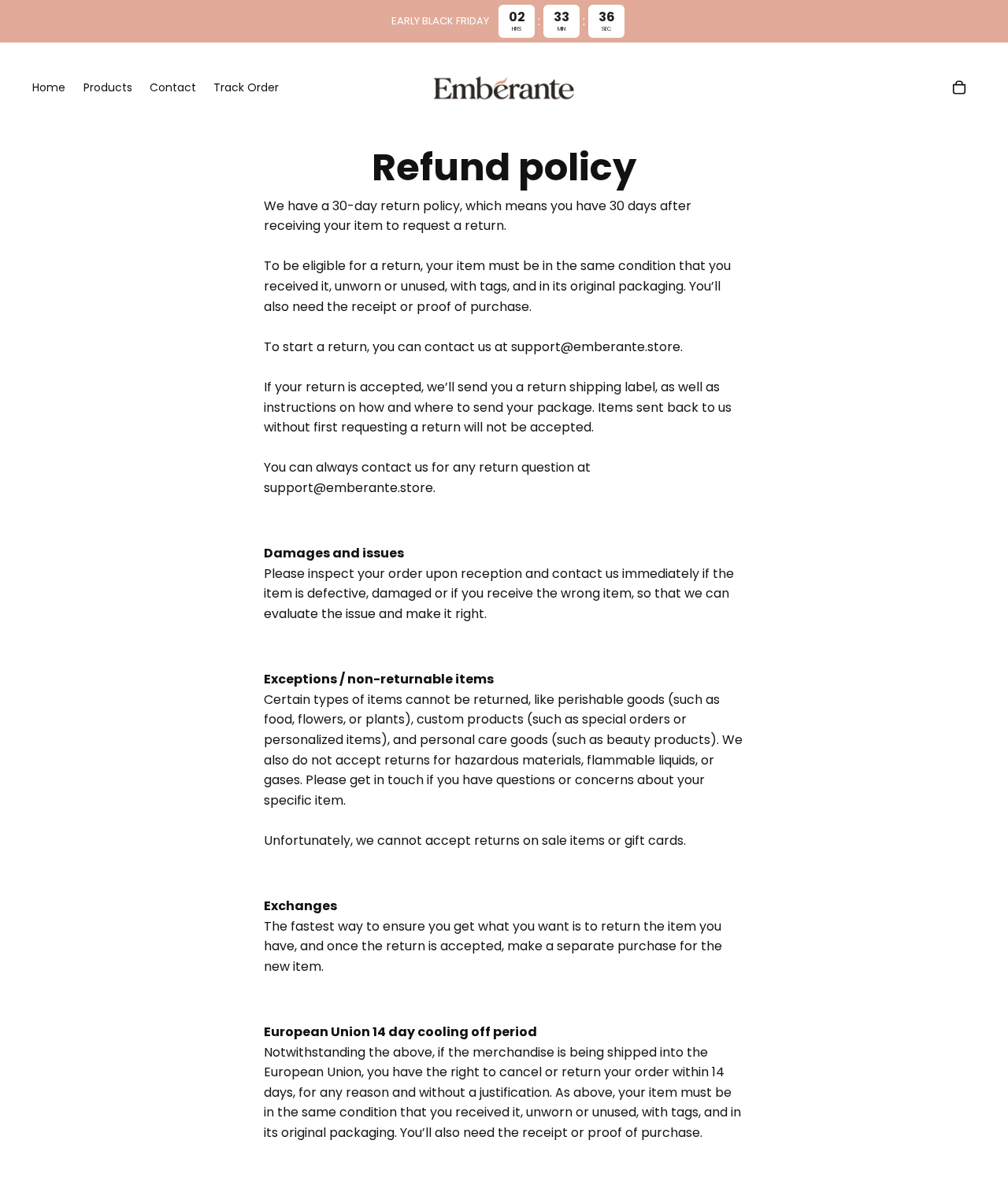
The same listing is discounted, but its policy excludes sale merchandise from ordinary returns. It also requires returned products to remain unused.
That is a material buying problem, not a minor wording error. Testing the advertised effect is exactly what a projector buyer would need to do.
The checks that matter more than the festive artwork
- Whether the advertised home trial actually permits powering on the projector.
- Whether a discounted order qualifies for a return.
- What physical model and supplied patterns produce the pictured effect.
- Which quantity, currency, delivery service, and total the order contains.
- Who must accept the complaint and where an authorized return goes.
The recommendation is to skip this offer. Its purchase reassurance does not line up with the conditions a disappointed customer would have to navigate.
A Sale You Can Buy, but a Trial You May Not Get
The central contradiction is straightforward: the projector is sold at a reduced price while the return policy excludes discounted items.
Meanwhile, the product page describes the purchase as “risk-free” and invites a return if it isn’t what the customer hoped for.
An ordinary buyer could reasonably understand that as permission to assess the effect at home. Keeping the box untouched would not answer that question.
The unused-condition requirement moves in the opposite direction. It leaves the shopper wondering whether the very act of checking the advertised result will undermine the return.
Do not resolve that conflict by assuming the friendlier paragraph wins automatically. A store can still create delay and disagreement even when a complaint is justified.
A useful written answer would identify the specific projector order, acknowledge its sale price, and confirm whether a brief functional test is permitted.
A response that merely repeats the number of return days misses the point. Eligibility, not the length of the window, is the unresolved issue.
The policy also distinguishes ordinary returns from damaged, defective, or incorrect goods. Those problems should be described accurately rather than squeezed into a change-of-mind request.
The EU Clause Is Important, but It Doesn’t Fix the Advertising
Emberante’s policy expressly includes a separate 14-day cancellation provision for goods shipped into the European Union, despite the preceding exclusions.
EU customers should keep that clause with their order records, particularly if the store later relies on the sale exclusion to refuse a request.
However, a regional cancellation provision is different from the broader month-long home trial suggested by the sales page. Buyers should not treat them as interchangeable.
The European Union’s official withdrawal guidance explains the usual 14-day period for qualifying distance purchases and the relevant exceptions.
It also distinguishes return postage for a change of mind from the cost of returning defective goods. The reason for the request matters.
Separately, EU guidance on goods that are faulty or not as advertised describes legal remedies that commercial warranties cannot reduce.
Applicability depends on the transaction and relevant law. Seek local consumer advice if a merchant uses its own policy to reject a supported complaint.
The practical lesson is not to buy a questionable offer because a dispute might eventually succeed. Choose clear terms before the money leaves your account.
What the Christmas Projector Pictures Actually Establish
One Emberante promotional graphic shows an opaque white sphere on a stand, a dark honeycomb-style opening, and a glowing ring around the body.
The room behind it contains detailed Christmas imagery. The composition suggests the small object is responsible for the entire surrounding scene.
What it does not provide is a continuous demonstration connecting that exact unit to that exact output. A finished advertising graphic cannot supply that missing link.
USB power describes how a product receives electricity. It does not, by itself, explain image quality, projected scene coverage, or the contents of a pattern set.
Likewise, an adjustable base describes positioning. It says little about whether the scene remains recognizable when projected across the surfaces shown in the promotion.
The physical model, included image material, and delivered performance remain unconfirmed. No purchased unit or verified manufacturer identification establishes that this graphic depicts the actual shipment.
You should not have to pay first to discover what the advertised projector actually produces. Ask for the demonstration before ordering, not after the return clock starts.
A Familiar Sales Script Isn’t Proof of the Same Device
MerryGlow.co also markets a Christmas Sky Projector using closely matching scene descriptions, feature combinations, and room-to-room gifting language.
The wording about Christmas in the stars, a sleigh passing the moon, and falling snow recurs across both offers. It is a reusable sales presentation.
But their product graphics differ. MerryGlow depicts a translucent star-patterned dome with front buttons; Emberante depicts an opaque sphere with a different upper opening.
Those differences prevent an honest comparison from declaring them the identical physical model. Shared promotional language also does not identify a common business owner.
For shoppers, the useful warning is narrower: changing the brand on an attractive Christmas pitch is not evidence of a distinct, independently demonstrated invention.
The separate MerrySky projector investigation explains another trial-versus-return conflict. Different stores and conditions require separate checks, even when the sales pitch feels familiar.
How the Emberante Offer Leads Toward an Order
Step 1: Make the room transformation the main attraction
The presentation starts with the family experience: a bedroom or living room transformed into a holiday setting. The emotional result takes priority over identifying the hardware.
That makes an ordinary shopping comparison harder. Someone buying a child’s Christmas surprise may focus on the scene and overlook the information needed to reproduce it.
Step 2: Add urgency and seller-controlled reassurance
Discount messaging, limited-stock wording, and customer testimonials surround the offer. Their placement encourages a quick decision before a shopper reaches the separate policy.
A stock badge is not an inventory audit. A testimonial inside the store is not the same as an independently documented customer demonstration.
Neither feature answers the practical questions about the projector’s output or whether testing it affects return eligibility.
Step 3: Turn one projector into a quantity decision
The ordering section offers packages containing one, two, or three units. A lower per-unit amount can make a larger purchase appear like the sensible choice.
The captured order form already had two projectors selected. A shopper wanting one would need to change that choice before continuing.
In that euro-priced version, the selected pair cost €54.32, compared with €31.95 for one. A discount on each unit still increased the payment.
These visible quantity options are not evidence of unauthorized extra shipments. Read the selected package and order confirmation rather than assuming the smallest advertised figure is your total.
The Seller, Shipping, and Return Trail
The contact pages identify a mailbox, not the whole business
The contact pages supply support@emberante.store and a web form. Those are routes for correspondence, not a complete account of the contracting company’s identity.
The contact-information page does not name a registered company or provide a registration number. Ask which legal business will appear on the invoice before paying.
For an existing order, retain the invoice and payment descriptor. They can help connect the brand on the webpage with the merchant handling the transaction.
The return destination comes after permission
The policy tells buyers to request authorization before returning goods. It says accepted requests receive a shipping label and instructions.
That is not the same as publicly identifying a return destination or explaining every possible postage deduction. Obtain those details before sending a parcel.
Keep the authorization together with tracking and delivery confirmation. A package arriving at an unauthorized address may create another argument instead of resolving the first one.
The delivery badge and shipping table need to agree
The product presentation advertises fast delivery, while the separate shipping table describes regional estimates measured after dispatch. Processing and transit are not the same interval.
For major EU countries, that table lists four to seven business days for standard shipping and two to five for express service.
A buyer expecting the faster range should establish which service the order actually includes. A festive badge does not convert an estimate into a guaranteed arrival date.
A matching model matters more than a brand label
A product’s model number would let a buyer compare instructions, included parts, power requirements, and independently recorded output. The promotional name alone does not enable that comparison.
Ask for a photograph of the actual unit label and supplied accessories. Match them to the demonstration rather than accepting another lifestyle image.
The Demonstration Worth Asking For
A useful projector demonstration should begin with the actual unpacked product and its label visible. It should then show the power connection and controls.
The recording should continue as the camera moves toward the wall or ceiling. Cuts that replace the room with a finished scene prevent a meaningful comparison.
Ask to see the supplied Christmas patterns individually. If the scene requires an extra film, accessory, or separate purchase, that belongs in the offer.
Have the seller show the result with ordinary room lighting as well as darkness. A tightly cropped bright spot is different from a detailed ceiling-wide effect.
These checks are not a request for expensive laboratory testing. They are basic evidence for the particular experience the advertising asks you to buy.
If the store cannot provide them, don’t substitute a larger discount for an answer. Buying three unknown units multiplies the uncertainty rather than resolving it.
What to Do If You Already Ordered From Emberante
-
Keep the exact order and advertisement together. Save the product name, quantity, currency, final payment, delivery service, and the promise that influenced your decision.
Include the product page and linked policy, not just a cropped price. They show why you expected a usable return option.
-
Request cancellation promptly if you no longer want the purchase. Send the order number to the published support address and ask whether dispatch has occurred.
Request written confirmation of the outcome. Do not assume a sent message, a contact-form submission, or an unanswered request has canceled anything.
-
Document what arrives before discarding packaging. Photograph the label, model markings, accessories, and any damage. Preserve the box if a return remains possible.
If you test the projection, record the actual result without decorative filters. Note the settings and show enough of the room to make the comparison understandable.
-
Describe the right complaint. Separate an unwanted purchase from a missing item, damaged product, or effect that fails to match a specific advertised promise.
Ask the seller to address the evidence and explain its proposed remedy. Keep its answer, including any reliance on the sale or unused-condition exclusions.
-
Get complete return instructions before paying postage. Confirm the address, authorization, shipping method, reimbursement terms, and expected refund amount.
Do not send the product to an address copied from an unrelated listing. If offered a partial refund, establish whether accepting it settles the complaint.
-
Escalate a supported unresolved dispute within the relevant deadline. Ask your card issuer or payment provider which process fits the documented problem.
Present an accurate timeline and requested remedy. A refund is not guaranteed, but repeated unanswered emails should not make you miss the provider’s filing window.
Frequently Asked Questions
Is the Emberante Christmas Sky Projector a scam?
The documented problem is a misleadingly reassuring offer: the home-trial pitch conflicts with sale and unused-item restrictions. Do not buy this offer expecting a straightforward trial.
Does it really project the whole Christmas scene?
That performance has not been independently demonstrated for the supplied physical model. Request continuous footage of the labelled unit producing the advertised patterns before considering a purchase.
Can discounted projectors be returned within 30 days?
The sales reassurance suggests a broad return opportunity, but the linked policy excludes sale goods. Its separate EU cancellation clause and applicable consumer rights require separate consideration.
Is it the same projector as MerryGlow?
The offers share distinctive promotional wording, but the pictured devices have different designs. That is insufficient to identify one model, factory, or common seller.
Why are two projectors selected on the order form?
The captured version preselected the two-unit package. Change it if you want one, then verify the total and confirmation. A highlighted discount does not reduce the quantity.
What if the seller says a tested projector is ineligible?
Preserve its response and the advertised trial invitation. Explain any specific misdescription or defect, then seek payment-provider or local consumer assistance before the relevant deadlines.
The Bottom Line
Do not buy the Emberante Christmas Sky Projector through this offer. The sale price and unused-item restrictions undermine the supposed reassurance of trying it at home.
If you already paid, act on your order’s actual status: request cancellation, document any delivery problems, and preserve the conflicting promises for a clear refund request.

Join the discussion
0 commentsShare your experience or ask a question about this article.
Discussion
Start the conversation
Have a question or something useful to share? Add the first comment.