

AI-powered cryptocurrency signal groups promoted on social media platforms like Facebook, Instagram and Tiktok are increasingly being used to scam victims out of money. These elaborate scams start with ads featuring celebrities like Elon Musk and misleading claims of huge profits. The ads direct victims to fake websites that convince them to join WhatsApp or Telegram groups controlled by scammers posing as AI trading experts. This article will reveal how this scam works starting from social media ads, tactics used to manipulate victims, and ways to avoid falling prey.
Scam Overview
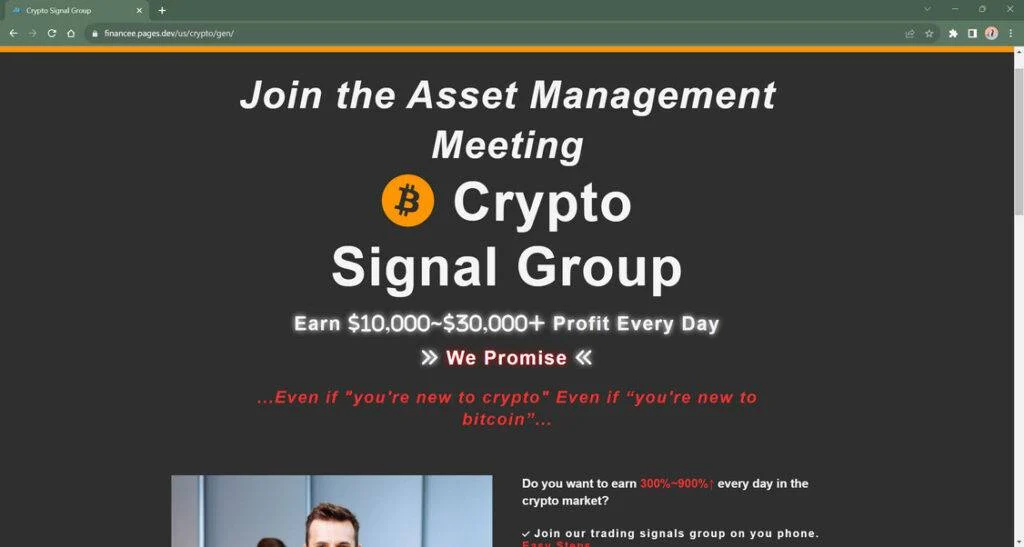
This scam begins with social media ads promoting AI crypto trading signal groups claiming to generate 300-1000% returns daily. The ads feature images/names of celebrities like Elon Musk, BlackRock, and Leonardo DiCaprio to appear legitimate.
People who click on the ads are taken to convincing fake websites promising big profits by joining an AI trading group on WhatsApp or Telegram.
Once they join the messaging group, scammers employ manipulation tactics to extract payments of $250-$600 for fake registration or subscriptions fees. Some also pressure victims to transfer actual crypto currency to their wallet addresses, falsely promising to invest and trade it on the victims’ behalf using AI bots. There are no AI bots, just scammers running an elaborate hoax to steal money.
How the Scam Works
Here are the typical steps used by scammers to perpetrate this scam:
- Place ads on social media (Facebook, Instagram, Tiktok) promoting AI crypto signal groups with claims of generating 300-1000% daily returns. The ads use fake endorsements from celebrities like Elon Musk to appear legitimate.
- When people click on the ads, they are taken to convincing-looking fake websites that continue the deception. These websites promote joining an AI crypto trading signal group on Telegram or WhatsApp to access the highly profitable alerts.
- Victims join the Telegram or WhatsApp group using a link or invitation code provided on the fake website.
- Upon joining, scammers use social engineering techniques to manipulate victims and extract money. Fake testimonials and an AI bot build credibility.
- Scammers require victims to pay a registration fee of hundreds of dollars to access the supposed AI trading signals. This is the first monetization of the scam.
- Once registration money is obtained, scammers pivot to pressuring victims to pay for fake “premium signals” subscription packages costing thousands of dollars.
- Scammers have victims recruit new members to expand the scam’s reach. The cycle continues with newly joined targets socially engineered into paying registration fees and premium subscription costs.
- Any members who wise up to the scam or ask too many skeptical questions are banned. This keeps only compliant victims who can continue to be defrauded.
- The scam continues until victims are drained of all money or intervention disrupts the con artists’ operation. The scammers then move on to running new groups targeted at fresh victims.
So in summary, scammers rely on social media ads, fake authority websites, and messaging groups to execute an elaborate bait and switch fraud designed to extract as much money as possible from victims through manipulation.
Scam Tactics Used
Here are the manipulation methods scammers use once they have targets in the fake signal groups:
- FOMO – Scammers have fake members talking about making tons of easy money from the AI signals. This instills fear of missing out which pressures victims to pay up.
- Social Proof – Fake member testimonials further reinforce that the group is making people rich. This convinces targets to pay fees to tap into the signals too.
- False Authority – The phony AI bot lending credibility to the group pressures victims by telling them they are losing money every minute they delay paying registration fees.
- Requiring Fees – Mandatory upfront registration/subscription fees to access the full groups’ signals is a huge red flag signaling a scam.
- Flattery – Scammers shower victims with praise and compliments on their investing acumen. This strokes the ego to further build obedience.
- Censorship – Anyone questioning the validity of the group gets banned. This keeps only compliant victims who can be manipulated without resistance.
Recognizing Warning Signs
Here are signs that a supposed AI crypto signal group on WhatsApp/Telegram is a scam:
- Ads on social media promising unrealistic 300-1000%+ daily returns from AI trading signals.
- Ads use fake endorsements from celebrities and well-known companies.
- Website looks hastily assembled or amateurish.
- Website has no substantiated claims of past performance.
- Required upfront fees to access the full groups’ signals.
- Admins aggressively push victims to recruit more members.
- Admins demand additional payments for bogus things like “AI Management Fees”.
- Group members display cult-like devotion and refuse to acknowledge flaws.
- Questioning anything leads to you being banned from the group.
Avoiding These Scams
Use these tips to avoid becoming victimized by these scams:
- Be skeptical of outlandish claims in social media ads related to money making.
- Research groups thoroughly before joining or paying anything.
- Don’t fall for fake endorsements from celebrities and corporations. Verify directly with the source.
- Watch for poor website quality and lack of verifiable details.
- Reject any group requiring upfront fees before granting access.
- Beware of admin pressure to recruit more members or upgrade packages.
- Verify registration numbers, addresses and other info provided toexpose fakes.
- Communicate with group admins outside the group to gauge if they are real professionals.
- Think critically and override emotional appeals to FOMO and greed.
What to Do if Scammed
If you paid money to one of these scam groups, immediately:
- Gather all evidence and documentation on the scam group, admins, fake websites, etc.
- Contact bank/credit card companies to stop any pending transactions if caught fast enough.
- Report the incident to cybercrime authorities in your area and file complaints regarding any fraudulent transactions.
- Notify Facebook, Instagram, Tiktok, and the social media ad networks by reporting the ads/accounts.
- Report the scam websites to their hosting providers to get them taken down.
- Report the WhatsApp/Telegram groups and user accounts to get them deleted.
- Spread warnings about the specific scam groups/websites on social media and crypto forums to protect others.
- Consult an attorney regarding any options to potentially recover some of the lost funds.
The Bottom Line
Fake AI crypto trading signal groups promoted on social media via ads featuring celebrities and eventually funneling victims to WhatsApp and Telegram are an increasingly prevalent scam. Avoid being manipulated by researching groups thoroughly, looking for warning signs, thinking critically, and never sending payments based purely on social proof or emotional appeals. With caution, you can protect yourself from these elaborate cryptocurrency investment scams orchestrated on social media platforms and messaging apps.
Frequently Asked Questions
How do the scammers advertise the fake groups?
The scammers place ads on social media sites like Facebook, Instagram, and TikTok promoting AI crypto trading signal groups that supposedly generate 300-1000% daily returns. The ads use fake endorsements and images of celebrities to appear legitimate.
What happens when you click their ads?
Clicking the ads takes you to elaborate fake websites that further the deception with false claims, testimonials, and instructions to join the group on Telegram or WhatsApp.
Is it real AI generating the trading signals?
No, there is no AI technology involved. Any bots in the groups just send random or copied data. The signal alerts are fabricated.
Should I pay their registration fees to access the signals?
No, you should never pay any upfront fees or subscriptions for signal groups. This is a clear scam tactic.
How do they pressure people to pay?
Scammers use FOMO, fake social proof, flattery, censorship, false authority figures, and other manipulation techniques to coerce payments from victims.
Can I make money by recruiting new members?
No, any commissions made are just a fraction of the registration fees paid by new victims you helped lure into the scam.
Is it possible to get a refund if scammed?
Unfortunately refunds are very unlikely. You can try reporting it immediately to have payments stopped, but most funds are stolen quickly.
Are there any legitimate crypto signal groups?
Yes, but scams are pervasive. Thoroughly research any group before joining and never pay upfront fees or subscriptions.
How can I avoid these scams?
Avoid ads touting investment opportunities. Vet groups completely before joining. Watch for warning signs of scams. Think critically – if it seems too good to be true, it usually is.

Join the discussion
0 commentsShare your experience or ask a question about this article.
Discussion
Start the conversation
Have a question or something useful to share? Add the first comment.