

A BWB airdrop page looks like Bitget Wallet, and the prize sounds plausible. Bitget has run real promotions before, which makes this one worth a closer look.
The question is not whether BWB has ever existed. It is whether the page asking for your wallet belongs to the company behind the name.
Overview
A familiar promotion on the wrong website
The Bitget Wallet BWB airdrop scam uses the language of a token giveaway to bring visitors to an unofficial claim page.
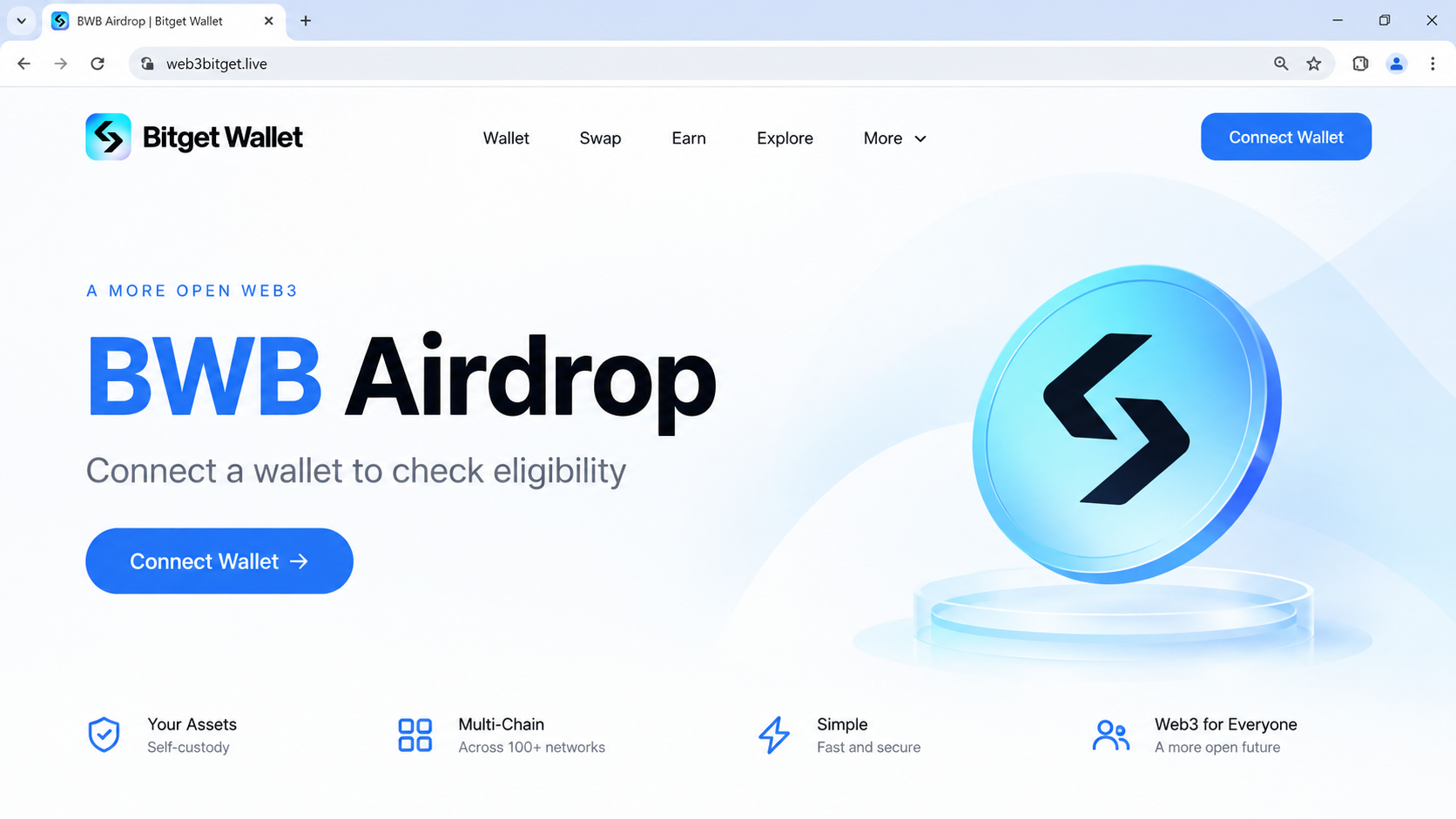
Reported examples used web3bitget.live and multiairdrop.org. Neither domain is the main Bitget site, and a familiar logo does not turn either page into an official campaign.
A site that borrows campaign graphics can feel familiar at a glance. The crucial detail is who owns the address asking for wallet permissions.
The reported domains were unavailable during this review. A dead page today does not make the original claim genuine, and the lure may reappear elsewhere.
Why the offer can fool careful people
Bitget did publish a real BWB promotion in 2024. That history gives an impostor a plausible name and a story people may remember.
The real offer had dates, eligibility rules, and official support documentation. A new third-party claim page cannot inherit that legitimacy by repeating the token name.
Scammers count on the reader remembering the promotion but not its exact rules. A promise of “unclaimed BWB” can bridge that memory gap.
The decision before clicking
Do not connect your wallet to the reported lookalike domains. Start at the Bitget Wallet app or official website and verify any current promotion there.
Keep these distinctions in mind:
- Bitget Wallet is a real service. The reported imitation pages are the problem.
- A real past BWB campaign does not validate a current outside website.
- Connecting may expose your public address; signing or approving can expose assets.
- A seed phrase should never be entered into an airdrop form.
How much risk exists after a visit depends on what you actually did. The recovery steps later in this guide separate those cases.
The Real BWB Promotion Does Not Travel With Every Link
Bitget’s published 2024 event was limited in time and tied to specific use of the Bitget Wallet app. It was not a standing invitation to claim tokens anywhere online.
The support page described eligibility and actions inside Bitget’s own ecosystem. It did not authorize strangers to recreate a claim portal on unrelated domains.
That is the core distinction. A token can be real while an offer using its name is fraudulent.
The same pattern appears with concert tickets, delivery companies, and banks. The brand is genuine; the message and destination are not.
Bitget has warned about fake websites that imitate its services and draw people into unauthorized activity.
Bitget Wallet also tells users to access its services through its app or official website rather than through unexpected links.
These warnings do not mean every message about BWB is malicious. They give you a concrete verification route before a wallet request.
How an old announcement becomes a new lure
An impostor can quote a real promotion’s token name, prize pool, or general wording. The copied details make a false page seem researched.
But a past event’s closing date does not disappear. If a page revives the claim without a matching official announcement, ask why.
Scammers may also imply that eligibility is automatic or that a claim expires within minutes. That pressure replaces the careful checks a real user needs.
A legitimate campaign can have deadlines. The warning sign is a deadline presented on an unverified domain with no official path back to Bitget.
Why visual polish is weak evidence
A copied navigation bar, token graphic, and professional typeface can all be assembled without any connection to Bitget Wallet.
A wallet selector is similarly easy to add. It may list MetaMask, WalletConnect, or Bitget Wallet because those names are recognizable, not because they endorse the page.
The browser’s padlock only indicates an encrypted connection. It does not certify who built the website or how its contract behaves.
Check the complete domain before interacting. Additions such as “web3,” “claim,” or “airdrop” can make a URL feel relevant while moving you away from the official service.
How the Fake Bitget Wallet BWB Airdrop Scam Works
Step 1: A BWB claim appears where crypto users gather
The lure may arrive through a social post, search result, direct message, advertisement, or a compromised account that usually discusses crypto.
It promises eligibility for BWB tokens and points to a claim link. The message may borrow imagery from Bitget Wallet to avoid looking like a random giveaway.
Because a genuine BWB promotion happened before, the claim can seem less absurd than an unfamiliar token appearing from nowhere.
That familiarity is useful to the attacker. It encourages the reader to verify the token’s existence instead of verifying the exact claim destination.
Step 2: The visitor lands on an unofficial claim page
The reported web3bitget.live and multiairdrop.org pages used Bitget Wallet branding to present a supposed BWB airdrop.
The domain name is the first break in the story. It is not the same as navigating into a promotion from Bitget’s app or official support center.
A site can be replaced, moved, or shut down. The same deception may reappear on another address with slightly different graphics.
Do not make a safety decision based only on whether one reported domain still loads. Examine the claim and the path that brought you there.
Step 3: Eligibility becomes a wallet connection
The page asks the visitor to connect a wallet to check or collect tokens. This feels routine because genuine decentralized apps also use wallet connections.
Connecting normally shows the site a public address. It does not, by itself, provide the secret recovery phrase or authorize every transfer.
The request that follows deserves more attention. A malicious page may ask for a token allowance or a transaction framed as “verification.”
Never read “Connect Wallet” as proof that an airdrop exists. It is merely an interface action available to almost any website.
Step 4: The approval gives the scam its leverage
A reported drainer flow aims to turn a token claim into authorization that can move assets away from the visitor’s wallet.
One prompt may request permission to spend a token. Another may present an immediate transfer. The precise effect depends on the contract and chain.
Read the spender, amount, and network shown by your wallet. If a claim requires broad permission unrelated to the promised reward, decline it.
Some wallets display simplified labels that hide important contract details. When uncertain, stop and inspect the request with a trusted block explorer or adviser.
Step 5: The page can keep promising while funds move
After a harmful approval, the website may show a failed claim, ask for another signature, or display an empty countdown.
Meanwhile, an authorized transfer can be submitted to the blockchain. Closing the tab does not cancel a transaction already confirmed.
Repeated attempts only create more opportunities for a malicious request. If the claim fails, do not keep approving new prompts to “fix” it.
The first useful check is the wallet’s transaction and approval history. That record is more reliable than the status message on the claim page.
How to Verify a Bitget Wallet Offer Without Taking the Bait
Open Bitget Wallet from an app you installed independently or type the official website yourself. Do not follow the offer’s link to perform the verification.
Search the official support center for the promotion’s name and date. Read who qualifies, where claims happen, and whether the event is still active.
If the offer asks you to download a new wallet app, verify the publisher in the official app store. A lookalike download adds device risk to the wallet risk.
Do not give a recovery phrase to “sync” or “validate” a wallet. Anyone with that phrase can restore the wallet elsewhere and control its assets.
Ask whether the official announcement links to the exact site you were sent. A matching token symbol is not enough.
When a page is promoted by a popular social account, check whether that account was recently compromised or renamed. A familiar profile can carry an unfamiliar link.
Be suspicious of a page that says your allocation is guaranteed before it knows your wallet or eligibility. That message may be designed for everyone.
Keep a clean bookmark to the service you use. It is easier to spot a false claim when you can compare it with a known route.
The wallet prompt deserves its own check
A site and a wallet extension are separate components. The extension may faithfully show a request that the site has designed to mislead you about.
Read the network and the contract address. If you do not know why the transaction needs permission to spend your existing assets, do not approve it.
For large holdings, consider testing unfamiliar interactions with a separate low-balance wallet. Never use your primary wallet to explore an unverified claim.
If a page insists you turn off security warnings, that is another reason to leave. Security prompts are not obstacles to a legitimate airdrop.
The limits of a blacklist warning
Security tools can flag known phishing domains, but a fresh address may not appear on a blocklist immediately.
No warning from your browser does not mean the offer is endorsed. Follow the official-announcement check even when the page loads without alerts.
Likewise, one blocked domain does not end the campaign. Impersonators can register replacements while keeping the same BWB promise.
Search snippets can also preserve an old promotion long after its event closes. Read the publication date and the actual terms before assuming a claim is live.
On social media, inspect the account’s recent posts rather than trusting its follower count. An established account can be stolen and used for a short campaign.
If a friend sent you the link, ask them through another channel whether they meant to send it. Their account may have forwarded the message automatically.
Be careful with browser extensions that offer to “fix” a failed claim. An extension can request broad access to websites and wallet interactions.
Use the same verification habit for the next token event. A fake page does not become safe because it swaps BWB for another familiar symbol.
What to Do if You Have Fallen Victim to This Scam
Focus on the wallet actions that happened, not the page’s final message. A failed-looking claim can still include a signed approval.
- Stop the claim attempt. Close the tab and reject pending wallet prompts. Do not pay an “activation” charge or try another unofficial claim domain.
- Review on-chain activity. Use a trusted explorer to inspect recent transactions and token approvals for the correct chain and wallet address.
- Revoke dangerous allowances. Remove permissions granted to unfamiliar spenders. This may stop future transfers, but cannot reverse assets already sent.
- Move remaining funds if necessary. If you exposed a seed phrase, generate a new wallet on a clean device and transfer assets immediately.
- Secure Bitget credentials separately. If you entered a Bitget login on a lookalike site, change it through the real app and review account sessions.
- Save and report evidence. Keep the full URL, messages, screenshots, wallet address, and transaction hashes. Report the site to Bitget and your local fraud authority.
- Ignore recovery agents. A stranger promising to retrieve stolen crypto for a fee can take more money from the same victim.
If you only viewed the page, you have not automatically authorized a transfer. Do not panic or move assets without checking what the wallet actually recorded.
Run a malware scan if you downloaded an installer or browser extension from the page. A web-based drainer is not evidence of a Windows infection by itself.
AdGuard can reduce exposure to some malicious advertisements, but it cannot inspect or undo a wallet signature you already approved.
Frequently Asked Questions
Did Bitget ever offer a real BWB airdrop?
Yes. Bitget published a time-limited BWB event in 2024. That history does not validate a later claim on an unrelated website.
Are web3bitget.live and multiairdrop.org official Bitget domains?
No. They were reported as lookalike claim sites. Reach Bitget Wallet through its official app or website rather than those addresses.
Can a wallet connection alone empty my account?
A basic connection generally reveals a public address. Harmful approvals, transfers, signatures, or disclosure of a seed phrase create the serious loss risk.
What if the site says I was eligible for BWB?
A page can display any eligibility message it wants. Confirm the offer and its rules through Bitget’s official support information.
Will revoking permissions refund missing tokens?
No. Revocation can prevent a spender using the allowance again. It does not undo a confirmed blockchain transfer.
Is Bitget Wallet itself a scam?
No. This warning concerns impersonating pages that misuse its name. The real wallet and a fake BWB claim website are different things.
The Bottom Line
Do not claim BWB through web3bitget.live, multiairdrop.org, or another unverified lookalike page. A real past Bitget event does not make a new wallet prompt safe.
If you already signed something, inspect permissions and transactions now. Secure any exposed account or seed phrase from a clean device, then report the fraudulent link.








