


If you earned Sparks or tried ProverNet, a notice about a Brevis snapshot probably sounds like something you should read. It uses terms you have seen before.
The hard part is separating a real program from a page that simply knows its vocabulary.
Overview
A snapshot that supposedly needed your participation
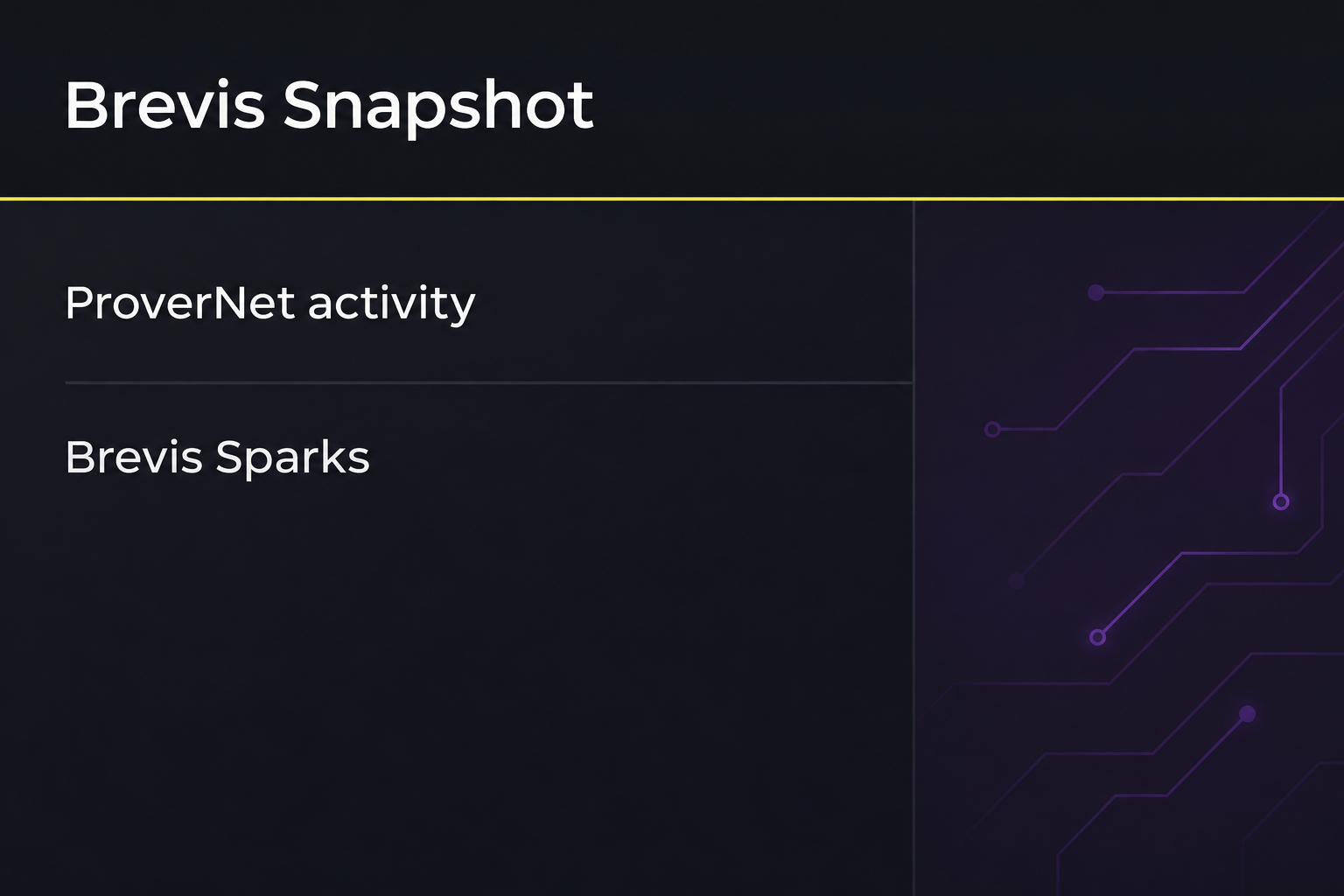
The fake Brevis Snapshot page said it would record activity from ProverNet and Brevis Sparks to determine future rewards. It then asked visitors to connect a wallet.
The archived copy appeared at brevis-snapshot[.]xyz. Its design borrowed Brevis branding and put the snapshot announcement where a user might expect to find official program news.
It did not have to promise a specific amount. If you had already contributed time or effort, the suggestion that those contributions might not be counted was enough to matter.
The page therefore leaned less on the appeal of free tokens than on the fear of missing credit for something you had already done.
Brevis really did connect Sparks with eligibility
Brevis’s own Proving Grounds announcement explains that Sparks could influence eligibility and allocation. That makes the terminology in the fake announcement sound plausible.
But genuine program terminology is not proof that a page runs the program. The Brevis team published separate dates and steps to check eligibility and later claim tokens.
Brevis opened official registration on December 29, 2025. Its published process distinguished wallet eligibility from social-account qualification. The snapshot lookalike was documented on December 18.
The project announced its mainnet launch and claim portal on January 6, 2026. Those dates explain what happened then, not whether any registration or claim is open now.
A record of activity is not a spending approval
A snapshot records a state or activity at a defined point. Recording past participation is a different operation from asking the holder of a wallet to authorize a financial action.
Here are useful distinctions if the story sounds familiar:
- Sparks and ProverNet are real Brevis terms, not credentials that authenticate a site.
- Eligibility checking and claiming assets can be separate events with different rules.
- A wallet prompt must be assessed by what it actually requests.
- A password, private key, or recovery phrase is not evidence of participation.
The archived pages show what was presented to users. They do not contain a confirmed malicious signature or a transaction showing that someone lost assets after visiting this copy.
How the Fake Brevis Snapshot Scam Works
Step 1: The announcement appeals to people who have already done the work
Someone who has followed a points program is likely to react to the word “snapshot.” It suggests that previous effort is about to be counted, or possibly missed.
The fake page tied that idea to ProverNet and Sparks. Both were already familiar to a group of people with a reason to care.
There is a useful distinction here between recognizing the words and recognizing the publisher. One tells you the announcement is well targeted; the other tells you whether it is official.
You can make that distinction without giving the page your wallet address. Start by checking whether Brevis published the same request in its own dated announcement.
Step 2: The page makes a records check sound like a deadline
The site implied that people needed to participate immediately to secure a place. It turned a notice about past activity into a request for action now.
A legitimate program can have deadlines too. What matters is whether the deadline and the required action match primary documentation, not whether the site looks convincingly urgent.
Compare the instructions as well as the date. A notice that says “check your eligibility” is not necessarily asking you to register again, pay a fee, or switch accounts.
This case also shows why a genuine later claim does not validate an earlier imitation. Two pages can talk about the same project at different times and have no relationship.
Step 3: The copy funnels the reader toward a wallet connection
The archived page placed a connection control beside the snapshot claim. That made the move from reading the notice to sharing a public wallet address feel like one continuous process.
The genuine registration materials in fact described wallet checks. The problem is not that a wallet might be involved somewhere, but that the wrong site invited the reader to interact.
Choosing a wallet normally starts a connection, not an instruction allowing the page to take funds. What you do with any later request determines whether you granted additional authority.
If you switched accounts just to see whether one qualified, note which addresses you used. Do not approve a new request to see how much the site says you earned.
Step 4: The page’s promise can distract from the wallet’s own wording
People expecting a reward often watch for a number on the page and give less attention to the action described by the wallet. That is the point to pause.
A signature or transaction can do more than identify an account. It can authorize spending or other changes, depending on the network and precisely what is being requested.
The snapshot headline does not define the request. If the wallet asks about an asset or permission unrelated to your task, declining is a reasonable response.
The archive cannot tell us which request, if any, a particular visitor saw after connecting. Readers should use their own activity records to determine what happened.
Step 5: A copy can still circulate after the genuine event has passed
Old promotional links can reappear in messages long after a real program changes stage. That does not turn a dated screenshot into a current announcement.
Check whether the message names a phase, such as registration versus claiming. Brevis used those terms for distinct actions in the published rollout.
Neither an expired official window nor a frantic private message is a reason to ask a stranger to unlock an allocation. That shortcut can expose you to another scam.
If you reached the imitation, resolve the wallet question first. Whether you had a real allocation is separate from what you did on the wrong page.
What to Do if You Have Fallen Victim to This Scam
-
Leave the page and identify the account involved. Note whether you were using a wallet address, trying to qualify via a social account, or simply reading the announcement.
Save what you already have, such as the message that contained the link. Do not return to the page for a screenshot or accept a new request to collect evidence.
-
If you only connected, remove the connection through your installed wallet. Use its normal connected-apps screen and look for the suspicious site rather than trusting a link sent afterward.
Check the accounts you switched between, if any. A clean history under one address does not answer what happened under another address you also used.
-
If you signed anything, look at the network and effect. Use your wallet’s official help and an independently located explorer to inspect activity around the time of the visit.
Check for recent approvals as well as transfers. The effect of a permission may be separate from any transaction that originally granted it.
Use a trusted method to revoke unwanted authority where supported. If the record does not explain what you signed, ask the wallet provider for assistance.
-
If you authorized social access, review that account too. Go directly to its security settings and remove unfamiliar connected applications or suspicious sessions.
If you entered a social-network password on a lookalike page, change it through the real service. Protect accounts where you reused that password and check your recovery settings.
The archived Brevis copy does not establish that this happened. The recommendation applies only if the page you encountered actually asked for or received that access.
-
Treat a disclosed recovery phrase as a separate emergency. Create a replacement wallet with new credentials on a trusted device and arrange to protect any assets you can safely move.
See MetaMask’s guidance for compromised wallets if you need to distinguish an unsafe approval from a wallet whose recovery phrase is no longer secret.
If funds were transferred without permission, retain the transaction references and report through your local fraud channel. Do not give your phrase to anyone doing an investigation.
-
Verify your actual Brevis eligibility independently. Resume only through links you reached from the project’s genuine announcements or official support, not from a message that promises to fix things.
If the documented deadline passed, ask what current options exist. No one can credibly promise to extend a real token claim through a private payment.
How to Read a Token Launch Notice Without Losing the Plot
Keep separate notes for when eligibility is measured, when registration closes, and when claims open. Those three dates do not have to be the same.
Then record what you actually need to verify. An eligible wallet, a social account that needs an address bound to it, and an allocation amount are different pieces of information.
Read the project’s conditions rather than assuming that failure to visit one page affects every category. In the official Brevis notice, eligible wallets and social accounts had different requirements.
If you are uncertain whether a page is official, the safest verification is the one that does not involve your keys. Start with the project’s previously known website or profile.
People who moderate a Brevis community can make that easier. Share the original dated announcement when correcting a rumor, and avoid spreading active links to the imitation while warning others.
Keep the date attached to the instruction
The sequence matters more than any remembered screenshot. The imitation was reported December 18, followed by Brevis’s token explainer December 24 and the genuine registration notice December 29.
In its token announcement, Brevis described what the token was for. That does not authenticate every page that appeared ahead of the launch or reused a project term.
When reading dated announcements, note whether they explain a past event or invite a current action. A tokenomics article can still be useful after a participation window closes.
Timing alone cannot authenticate a website either. A lookalike might quote the correct current date, which is why you must identify the publisher and compare the requested action.
Check the right eligibility path
Brevis offered multiple ways to check eligibility. Someone who qualified through a social account could face different requirements from a user with an eligible wallet.
For the social routes, the official announcement explained that an eligible account needed a claim address bound during registration. That is not a reason to give anyone your private key.
The same notice distinguished checking eligibility from seeing an allocation amount. A message that promises to calculate an immediate payout is making a different claim.
If you think multiple profiles qualified, read rules about combining or reusing claim addresses before doing anything. A stranger cannot settle that question by asking which accounts you control.
Screen a shared announcement before forwarding it
Read the date and source aloud or copy them into a private note. That simple check makes it easier to see when the notice and official release are separate events.
When sharing a warning, give readers the exact task they should stop doing. Here, it is interacting with an unofficial snapshot page, not using or researching Brevis generally.
If you are documenting your own participation, keep a record of the original account you used rather than relying on a copied countdown or a screenshot from another person’s wallet.
You do not have to start another transaction to find the account you used. Check the original contribution record, if available, before considering any action.
Frequently Asked Questions
Is the Brevis Snapshot page the official Brevis airdrop?
The reported .xyz page was a lookalike. The real project published registration and claim notices through its own site, with specific instructions for different eligibility paths.
Did real Sparks count toward the Brevis airdrop?
Brevis explained that Sparks could affect eligibility and allocation. That historical fact does not make a separate page asking for a wallet connection part of the real program.
Did I have to register every eligible wallet in December 2025?
The official registration notice said a qualifying wallet could still be used to claim without checking during registration. Eligible X or Discord users had different address-binding instructions.
Does seeing a snapshot establish how much I earned?
Not by itself. A snapshot or eligibility label is not an amount, and the official registration notice said it was not displaying exact allocation figures at that stage.
Can I tell from my browser history whether I signed?
Browser history may help confirm that you visited, but it does not tell you what your wallet authorized. Check your wallet and network activity for that.
Should I share my wallet recovery phrase to prove I own it?
Never share it as proof of ownership. Anyone with that information can control the wallet, and a legitimate eligibility check does not need it.
The Bottom Line
Real ProverNet activity and Sparks made the fake snapshot believable. Check the original announcement and decline wallet actions that the verified program does not require.
If you acted on the copy, review the account you used and what you granted. Do that before returning to any legitimate claim or trusting a recovery offer.

Join the discussion
0 commentsShare your experience or ask a question about this article.
Community experiences
Did this happen to you?
Your experience could help someone recognize the same scam. Submit a private report for our team to review.
I experienced this tooReports are reviewed before publication. Sharing publicly is always your choice.
Discussion
Start the conversation
Have a question or something useful to share? Add the first comment.