

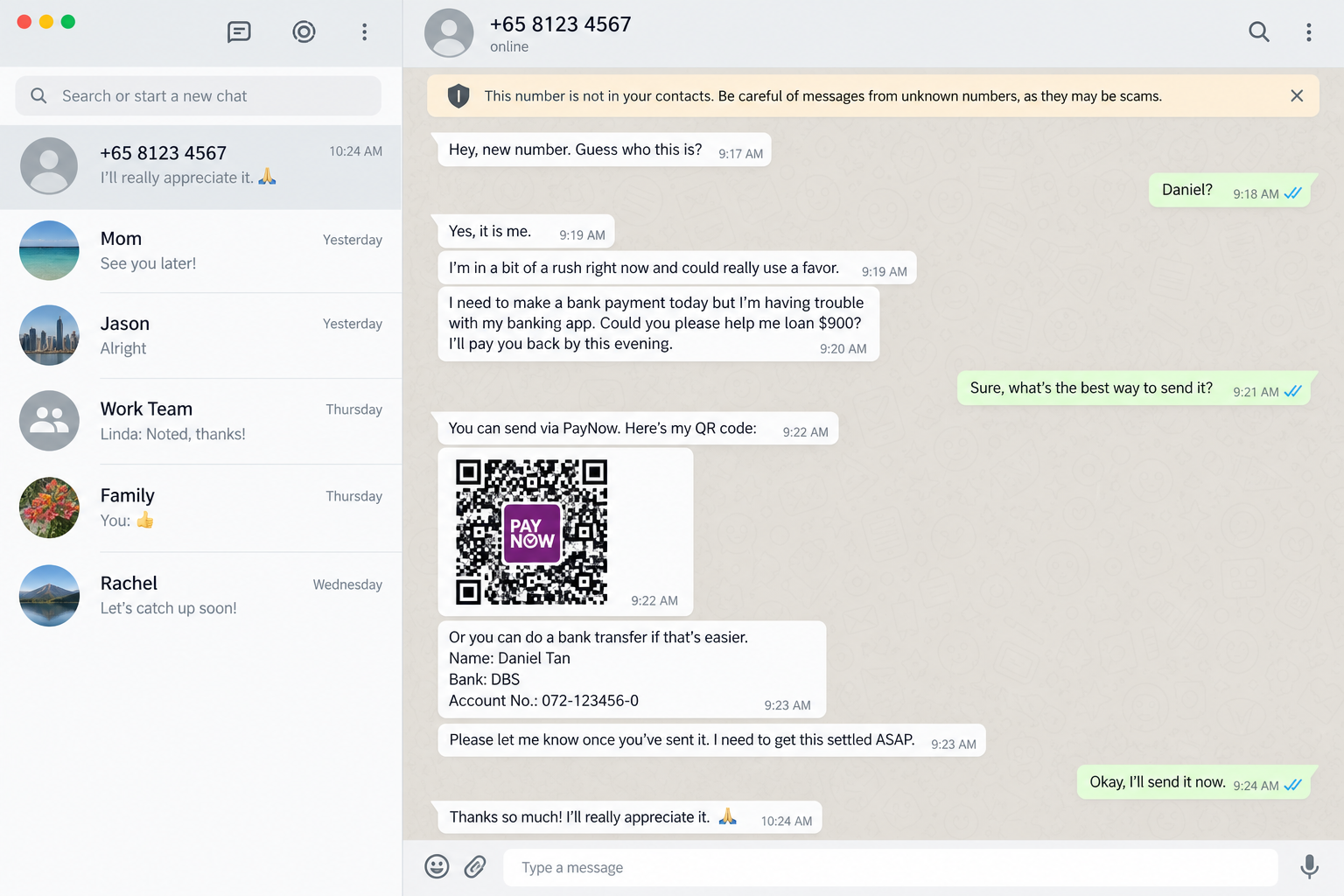
The fake friend call scam starts when an unknown number says, “I changed my number. Guess who this is?” The voice sounds friendly, and the recipient supplies a name.
From that moment, the stranger no longer needs to guess whom to impersonate.
Overview
The victim unknowingly gives the scammer an identity
The fake friend call scam begins with deliberate vagueness. The caller says a telephone was lost, a number changed, or a messaging account was replaced, then asks the recipient to recognize the voice or guess the name.
Most people respond with the name of someone who might reasonably make that call. The scammer accepts the answer and becomes that person. A stranger who knew almost nothing now has a trusted identity supplied by the victim.
The criminal may chat briefly about work, family, or a recent event. General replies are used to avoid facts that the real friend would know. The aim is to establish a new contact before making a request.
The money request arrives after the new number feels normal
Some scammers ask for a loan during the first conversation. Others wait until later that day or the next morning. The delay makes the new number feel stored and familiar.
The request usually involves an urgent bank payment, broken banking app, emergency purchase, supplier invoice, or relative in trouble. The victim is given a bank account, instant-payment address, or QR code that does not belong to the real friend.
A promise to repay within hours makes the transfer feel temporary. The story is built so that calling the old number seems unnecessary or inconvenient.
This is a widespread, confirmed scam pattern
The Singapore Police Force reported at least 146 fake friend call cases and at least $311,000 in losses from March 2026. The warning covers unsolicited calls, WhatsApp calls, and messages.
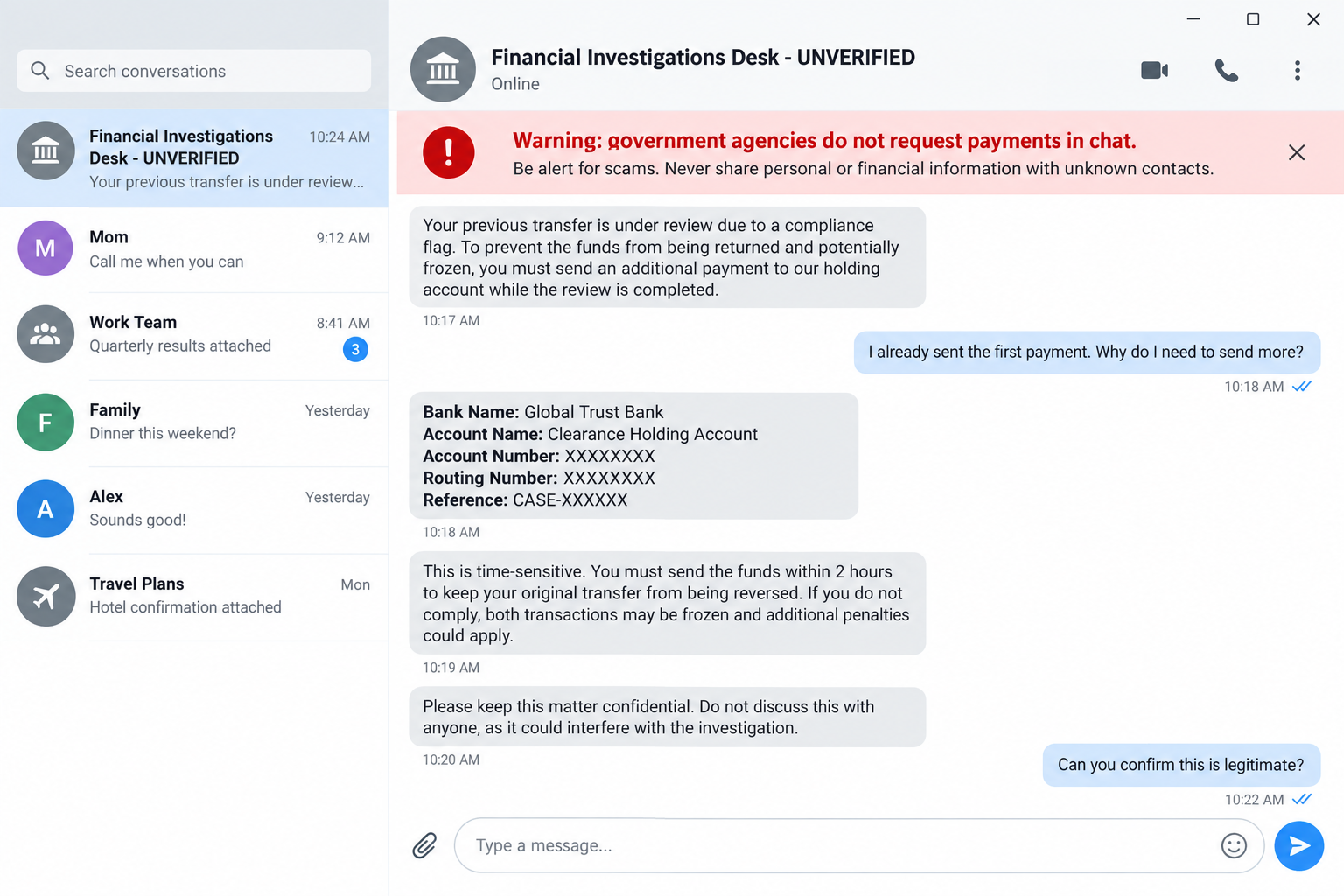
Authorities said scammers asked victims to guess their identity, adopted the name provided, and later requested urgent financial help. Some victims then faced a second scam involving a fake police or financial regulator investigation.
Common warning signs include:
- an unknown number asks you to guess who is contacting you;
- the person avoids giving a name or shared detail first;
- the supposed friend says the old number cannot be reached;
- an urgent loan or bank transfer is requested soon afterward;
- the receiving account belongs to a different name;
- the caller discourages a video call or callback;
- you are asked to keep the favor private;
- a second caller claims the transfer is under government investigation.
Why “Guess Who” Is More Than Small Talk
The opening works because it reverses the normal verification process. Instead of the caller proving an identity, the recipient offers possible identities until one feels right. The scammer only has to agree.
Voice recognition is unreliable during a short call, especially with background noise, a poor connection, or a claim of illness. People also hear what they expect after naming someone they know.
Messaging removes the voice problem entirely. A profile can display a familiar name after the recipient saves the number. Once saved, later messages look as though they come from an established contact, even though the number was never verified.
The scammer may say contacts were lost with the old phone. That explains why the caller asks basic questions or cannot recall details. Every gap in knowledge is blamed on the device change.
Public social posts help the criminal answer just enough. A photo, workplace announcement, vacation post, or family comment can supply a convincing sentence without proving a real relationship.
The request is usually framed as a favor rather than a purchase. The victim is helping a friend overcome a temporary problem, so there is no product page, invoice, or seller to investigate.
Urgency protects the weak story. The recipient is asked to transfer money before calling the real friend, checking the beneficiary, or discussing the request with someone else.
How the Fake Friend Call Scam Works
Step 1: The criminal contacts many numbers
Calls and messages are sent from local-looking or internet-based numbers. The scammer may have a name from leaked data, but the opening can work even without one.
A simple “new number” explanation is common enough to avoid immediate suspicion. Recipients who ignore the contact cost the criminal little time.
Step 2: The recipient is asked to identify the caller
The scammer says “You don’t recognize me?” or “Guess who.” The recipient names a friend, relative, coworker, customer, or former classmate.
The caller responds warmly and confirms the guess. The victim has now chosen the most believable identity for that relationship and telephone number.
Step 3: A short conversation builds comfort
The scammer explains the new number and asks the recipient to save it. General conversation follows, with the caller mirroring information provided by the victim.
If challenged on a detail, the caller may blame poor reception, stress, a damaged device, or a busy situation. The conversation stays brief to limit mistakes.
Step 4: An urgent financial problem appears
The supposed friend needs to settle a bill, pay a supplier, book travel, help a relative, or complete a bank transaction. The person’s own banking app is supposedly unavailable.
The request is presented as a short loan with quick repayment. A deadline of minutes or hours prevents the recipient from slowing down.
Step 5: Payment goes to a different account
The scammer provides bank details, an instant-payment identifier, or a QR code. If the beneficiary name differs, the caller may say it belongs to a colleague, merchant, spouse, or person receiving the payment.
That explanation removes the final visible link to the real friend. The money goes to an account controlled by the criminal network.
Step 6: More problems create more payments
After the first transfer, another invoice or failed transaction may appear. The victim has already accepted the identity and may send more rather than admit uncertainty.
The scammer can also ask the victim to receive and forward money, turning the victim into an unwitting mule.
Step 7: A fake official targets the victim again
Authorities have documented follow-up calls from scammers posing as police or financial regulators. They claim the earlier transfer is linked to crime and demand money for an investigation.
No legitimate officer clears a suspicious payment by requesting another one. The second call uses knowledge of the first loss as its main proof.
The One Check That Breaks the Entire Story
End the conversation and contact the person through a channel you already trusted before the message arrived. Call the old number, use an established email, or contact a close relative who can reach the person.
Do not ask the new number to confirm itself. A scammer can answer “yes” to a birthday, workplace, or family detail guessed by the victim. Ask the real contact through the old channel whether the new number belongs to them.
If the situation is genuinely urgent, a short verification call helps the friend rather than harms them. A person who becomes angry because you want to verify a large transfer is giving you another reason to stop.
A video call can help, but it is not absolute proof. Recorded video, deepfake tools, poor connections, and excuses can still mislead. The strongest check uses a previously trusted channel and information not supplied during the new conversation.
Create a family payment rule before an emergency occurs. For example, no transfer to a new beneficiary without a callback and a shared verification phrase. A rule removes the need to negotiate while under pressure.
Why the Request Often Arrives in Two Conversations
A scammer does not always ask for money immediately. The first conversation may exist only to get the number saved under a familiar name. When the request arrives later, the screen already looks like a normal contact.
The pause also helps the criminal collect information. A casual question about work, travel, or family can reveal details that support the next story. The victim may interpret that exchange as harmless catching up.
When the financial request appears, it is usually specific enough to sound urgent but vague enough to avoid verification. The caller needs to pay someone now, yet cannot use the usual account or explain why the recipient changed.
A small first request can test compliance. If it succeeds, the scammer may report another obstacle and ask for more. Each payment makes it psychologically harder to stop and accept that the identity was false.
The gap between conversations is not evidence of authenticity. It is part of the setup. Verify the new number before saving it, even when no money has been mentioned yet.
Families who discuss this script in advance recognize it faster. The opening may sound harmless, so the warning should focus on identity verification before any new contact is trusted.
Company, Address, and Fulfillment Checks
The new number has no trusted history
A familiar profile name may simply be the label saved after the first message. Check when the conversation began and whether the number appears in older records.
Search results and messaging profile photos can be useful clues, but they do not replace direct confirmation through the old contact route.
The caller should provide identity before receiving hints
Ask the person to state the full name and explain how you know each other without offering possibilities. A real friend can answer; a mass scammer often cannot.
Do not use public facts as the only test. Choose a detail from the relationship that was not posted online or included in the current chat.
The beneficiary should match the person asking
Read the bank’s beneficiary warning and compare the account name. A third-party account needs independent confirmation from the real friend, not another explanation from the new number.
QR codes hide account details until scanned. Review the recipient and amount inside the payment app before approval.
The favor is not fulfilled until the real friend confirms it
A payment receipt shows where money went, not who requested it. Contact the real person and ask whether the request was genuine.
If the friend knows nothing about it, call the bank immediately. Do not wait for the scammer’s promised repayment time.
What to Do if You Have Fallen Victim to This Scam
- Call the bank immediately. Report an impersonation transfer and request a recall, freeze, or contact with the receiving bank. Speed matters.
- Contact the real friend. Use the old number or another established channel. Warn them that their name is being used.
- Stop all further payments. Do not send a processing fee, replacement transfer, investigation deposit, or money to unlock a refund.
- Preserve the conversation. Save the unknown number, profile, chat export, voice messages, QR code, beneficiary, payment receipt, and timestamps.
- Report and block the account. Use the messaging platform’s scam-reporting function after evidence is saved.
- Report the financial crime. Contact local police or the national fraud service. US victims can report through IC3.gov and ReportFraud.ftc.gov.
- Secure any account details you shared. Change passwords and PINs, revoke unknown sessions, and replace exposed payment credentials.
- Warn mutual contacts. The same scammer may contact people connected to the named friend or reuse the victim’s identity next.
- Check for account takeover. Review messaging linked devices, email forwarding rules, carrier changes, and social account sessions.
- Scan after suspicious downloads. Use Malwarebytes if the caller sent an app or file. AdGuard can help block known phishing destinations, but it cannot verify a new telephone number.
- Reject fake officials. End any follow-up call claiming the first transfer is under investigation. Contact police or regulators through published numbers.
- Watch for recovery scams. No private agent can guarantee recovery for an upfront fee or ask you to move funds to a safe account.
Frequently Asked Questions
Why does the scammer ask me to guess?
Your guess supplies the identity most likely to work. The scammer avoids researching a relationship and lets you explain any uncertainty.
What if the voice sounds like my friend?
Short calls, poor audio, expectation, and voice manipulation can mislead. Verify through an old number or another trusted channel.
Is a local telephone number safer?
No. Caller ID can be spoofed, and internet calling services can provide local-looking numbers from almost anywhere.
What if the beneficiary is the friend’s coworker?
Do not rely on the new caller’s explanation. Confirm the third-party recipient with the real friend through a previously trusted channel.
Can the bank recover an instant payment?
Recovery is not guaranteed, but immediate reporting gives the bank the best chance to contact the recipient institution and stop movement of funds.
Should I confront the scammer?
No. Save evidence, report the account, and block it. Continued conversation can expose more information and invite additional pressure.
The Bottom Line
The fake friend call scam lets the victim write the criminal’s script. A vague “guess who” opening becomes a trusted identity, and that identity becomes an urgent request for money.
Never save a new number or send money until the person is verified through an established channel. If you transferred funds, call the bank and the real friend immediately. Treat any later investigation or recovery demand as a separate scam until confirmed independently.








