

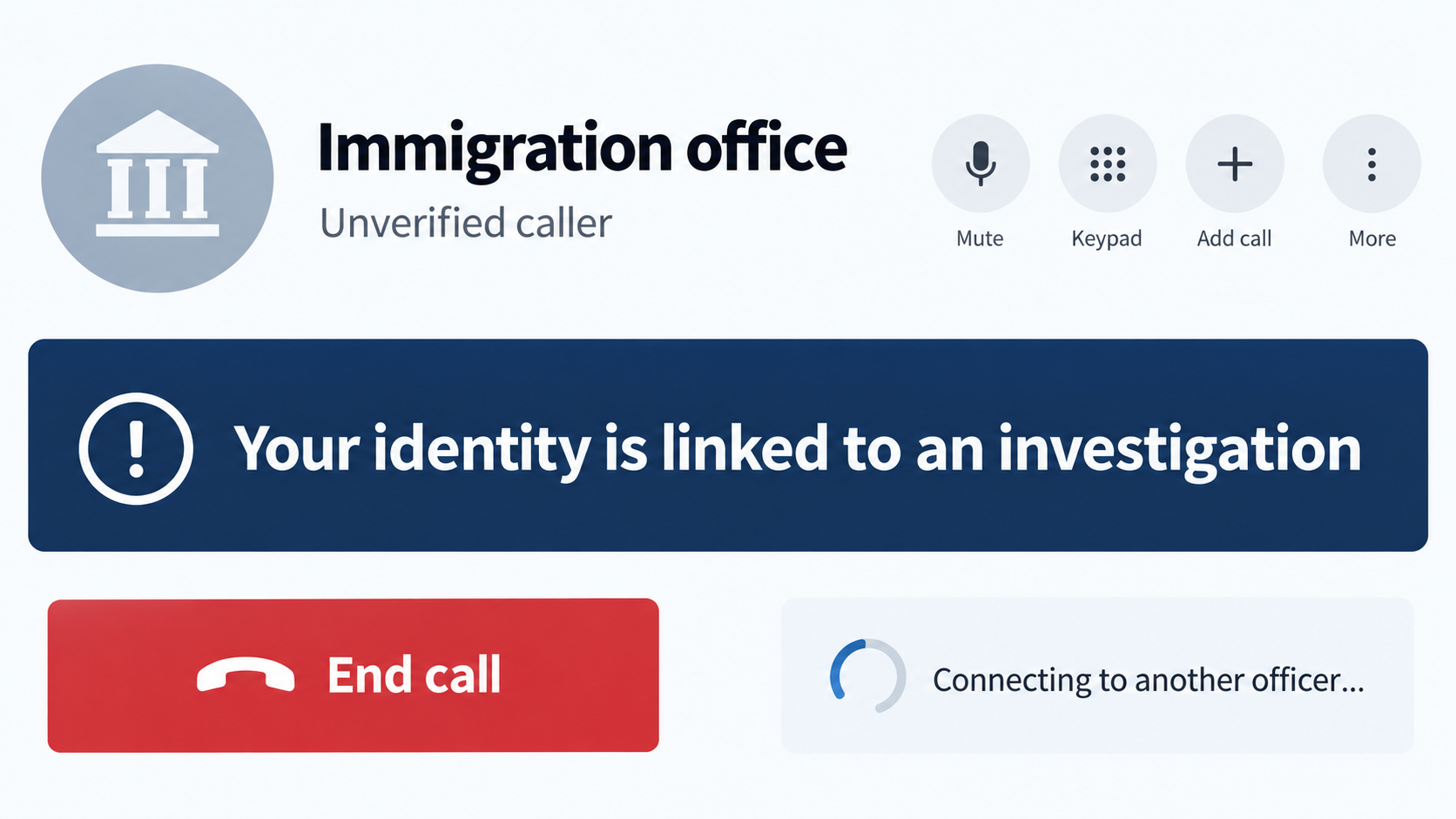
Your phone rings, and the caller says your identity has become part of a serious investigation. The voice sounds official and already knows a few details.
Fear can make a conversation feel urgent. Before you answer another question, notice what the caller asks you to do next.
Overview
The warning behind this call
The Singapore Police Force and Immigration & Checkpoints Authority, or ICA, warned on September 25, 2026 about calls from people impersonating ICA officers.
The caller says a person’s details or phone number have been linked to criminal activity. The call is then passed to someone pretending to be an official from China.
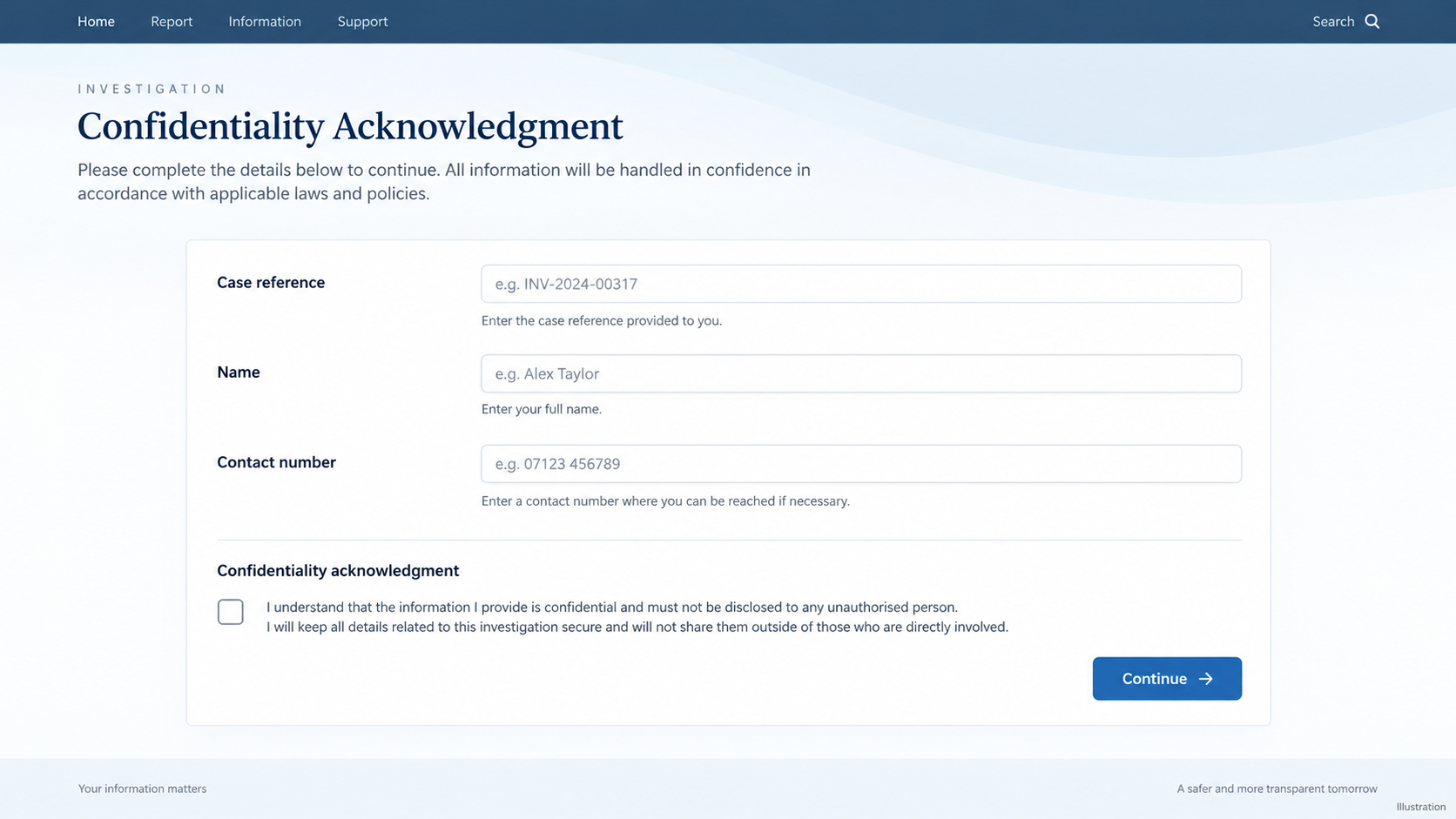
That second person demands money for a supposed investigation or bail. Some targets are told to meet an unknown person and sign a fake confidentiality document.
Why this is not an ordinary agency call
ICA’s real work concerns immigration, identity, and checkpoints. The problem here is not the agency; it is a stranger borrowing its name.
The joint advisory states that Singapore government officers do not transfer calls to police or other government officials and do not demand money or valuables this way.
At least 117 cases of this specific call variant had been reported since January 2026, with at least $8.4 million in losses, according to the advisory.
The safest first response
End the call and contact ICA through a channel you find yourself. Do not use a number the caller dictates, even if the caller ID appears official.
- Do not transfer money or hand cash to someone described as an investigator or courier.
- Do not sign a document brought by a stranger to make a phone investigation appear legitimate.
- Do not share bank credentials, one-time codes, or identity documents during the call.
- Call ICA at 6391 6100 or use its official feedback form if you need to check a real immigration issue.
If you already paid or shared banking access, contact your bank immediately before trying to argue with the caller. Speed can matter more than winning the conversation.
The Exact Story Police Say Callers Use
The call begins without a request from the recipient. A person claiming to represent ICA says that personal details have been misused.
Sometimes the story is narrower: the victim’s phone number allegedly sent scam messages. It sounds plausible because people know identity theft exists.
The caller’s knowledge of a name or number is not proof of government access. Such details can come from public records, marketing lists, or previous breaches.
Next comes the transfer. Rather than tell the person to verify independently, the fake ICA officer connects them to another voice presented as a China official.
That transition is the giveaway. The police advisory says Singapore officials will not transfer callers to the police or other government officers.
The supposed China official raises the stakes. Money is needed for an investigation, bail, or some other process said to keep the target out of trouble.
A demand for cash makes the invented case feel immediate. It also removes the normal safeguards of a written notice, case number, and independently verified agency process.
Some targets are instructed to meet an unknown individual. A fake non-disclosure agreement may be produced to make the encounter resemble official procedure.
Secrecy benefits the scammer. A person told not to speak with family, the bank, or local authorities loses the very checks that would expose the impersonation.
Police say many victims realize what happened only after multiple transfers or when the caller can no longer be reached.
The reported losses show how damaging this can become. The figure reflects reported cases, not an estimate of what every victim loses.
This article concerns the call-and-transfer variant. The same advisory also discusses fake permanent-residency consultants, but that is a separate route with different entry points.
Mixing the two stories would make the response less useful. A person who received an unsolicited call needs guidance about the caller, not a consultant’s application form.
How the Fake ICA Officer Call Scam Works
Step 1: The caller reaches you unexpectedly
An unsolicited call interrupts an ordinary day. The caller uses an agency name and a serious tone before you have time to decide whether the number is trustworthy.
Caller ID can be spoofed, and a number that resembles an official line is not authentication. The caller wants the conversation to be its own evidence.
It may help to remember that you did not start a case, book an appointment, or ask ICA to call you back.
Step 2: A crime allegation creates fear
The first speaker says your identity or phone has been connected to scam messages. That allegation is frightening because it turns you from listener into suspect.
A frightened person may try to cooperate quickly to clear their name. The script uses that instinct instead of providing a verifiable written notice.
If the caller knows your identity number or address, do not treat that as proof. Scammers may already possess personal information before dialing.
Step 3: The handoff manufactures authority
The caller then transfers you to a supposed China official. A second voice can make the story feel like it passed through an official chain.
In reality, both voices can belong to the same fraud operation. The transfer keeps you inside a controlled conversation with no independent verification.
Hanging up breaks that control. Call an official number yourself, from the agency’s own website, to ask whether there is any genuine issue.
Step 4: The second speaker demands payment
The fake official says money is required for bail or investigation. The payment may be described as temporary, refundable, or necessary to show cooperation.
None of those labels makes it a real government request. The joint advisory says officials do not ask people to transfer or hand over cash, gold, cryptocurrency, or luxury watches.
If the caller says you should borrow money, that is another warning sign. The advisory explicitly says government officers will not direct people to obtain such loans.
Step 5: A document and secrecy prolong the deception
A target may be told to meet a stranger and sign a supposed non-disclosure agreement. The paper creates a physical prop for a nonexistent investigation.
It also discourages the target from speaking with anyone who could check the facts. A legitimate legal restriction is not established by a stranger’s unverified form.
Do not travel to a meeting point or hand over documents because a caller says the matter is confidential. Tell the police what was requested.
Step 6: Repeated transfers can drain an account
One payment may lead to another demand: a new fee, a larger security amount, or a promise that the case will soon be closed.
The person may keep paying because stopping feels like admitting guilt. That is why early contact with a bank and trusted person matters.
The fraud ends when the target checks independently, the money runs out, or the scammers disappear. None of those outcomes creates a real case with ICA.
Why the Second Voice Can Feel Convincing
Most people recognize that a random caller asking for cash is suspicious. This scheme first spends time making the payment seem like part of a larger process.
The opening speaker supplies a government name. The second speaker supplies a supposedly specialized investigation. Together, they create an illusion of institutional coordination.
The caller may refer to your real phone number or identity details. That specificity can make the allegation feel researched, even if the information came from elsewhere.
A claim about messages sent from your number is also difficult to disprove during a call. The scammer controls the pace and will not allow a proper check.
People who live or work across borders may be particularly unsettled by an international allegation. The caller uses that uncertainty to justify the sudden China official.
But real jurisdictional cooperation does not mean an unsolicited caller can transfer you to an overseas officer and collect bail by bank transfer.
The secrecy request adds pressure. If you are told that talking to family would obstruct an investigation, you may lose the simplest source of perspective.
A non-disclosure form can reinforce that pressure by making silence appear legally required. The police advisory identifies such documents as part of the deception.
The first payment can become a psychological trap. After sending money, a person may want to believe the process is genuine rather than face a painful possibility.
Scammers can exploit that feeling with another fee. The second request should be treated as a fresh warning, not proof the first payment advanced anything.
No victim is foolish for responding to a carefully staged threat. The perpetrators rely on surprise, authority, fear, and isolation.
The useful countermeasure is simple but powerful: end the call, make a new contact through the real agency, and discuss the claim with someone you trust.
Do not let the caller stay on the line while you search. A scammer can coach you toward a fake result or interrupt your attempt to verify.
If a family member receives such a call, ask them to pause payments and sit with them while they contact their bank and ICA.
A nonjudgmental response matters. Shame can keep a person in the scam longer, especially when the caller has demanded silence.
How to Verify a Real ICA Contact
Use a fresh route to the agency. Type the official website yourself or use a bookmark you already trust.
The police advisory lists ICA’s call agents at 6391 6100 and points readers to the ICA feedback form for verification.
Tell the agent what the caller alleged, but do not repeat unnecessary personal details until you know you are speaking through the official channel.
If a real matter exists, the agency can explain the correct process. It will not require you to stay connected to an unsolicited call while money moves.
The ScamShield helpline at 1799 is another route for checking a suspicious contact in Singapore. Its advice is independent of the caller’s script.
Look for the entire pattern, not one word. A criminal allegation, sudden transfer, secrecy instruction, and payment demand together are much stronger signals than an accent.
A caller’s nationality is not evidence of fraud. The issue is the false official identity and demands that contradict government procedure.
If someone contacts you again claiming to be an investigator assigned to recover the money, verify that approach too. Recovery scammers often target recent victims.
Do not send a second payment to release the first. Banks and police do not recover funds by asking victims to pay a stranger another fee.
Save the call log and messages without continuing the conversation. Screenshots can help investigators identify numbers, links, and payment instructions.
Consider telling someone close to you before taking further action. A calm second opinion can interrupt the fear the scammer created.
What to Do If You Fell Victim to the Fake ICA Call
- Stop contact safely. End the call and do not meet the person who was supposed to collect cash or documents. Move to a safe place if a meeting was arranged.
- Call your bank immediately. Report each transfer, recipient account, and time. Ask what can be recalled, blocked, or frozen and secure online banking access.
- Report to Singapore police. Provide the caller’s number, messages, account details, meeting instructions, and any fake document. A prompt report may help trace the payment path.
- Verify your identity information. If you shared identity documents or phone details, ask the relevant providers what monitoring or protective steps are available.
- Secure affected accounts. Change passwords from a trusted device and enable multi-factor authentication if credentials or codes were disclosed.
- Tell a trusted person. The caller may have imposed secrecy. Break that instruction and get help reviewing the full timeline and any follow-up contacts.
- Check for further misuse. Review bank activity and, where relevant, the number of phone lines registered under your identity through official tools.
Keep evidence even if you feel embarrassed. The police report documents a criminal act, and precise dates, amounts, and account numbers make it more useful.
There is no guarantee a transfer can be recovered. Acting quickly gives the bank and authorities the best chance to respond.
Frequently Asked Questions
Would ICA transfer my call to an official in China?
The joint police and ICA advisory says Singapore officials will not transfer calls to police or other government officials. Treat that handoff as a warning.
What if the caller knows my identity number?
Knowing private details does not authenticate a caller. End the conversation and verify through ICA’s official phone number or feedback form.
Can an investigation require a cash payment or bail by phone?
Not in the manner described here. The police advisory warns that officials will not demand transfers, cash, gold, cryptocurrency, or luxury watches.
Is the confidentiality form real?
Police say scammers have used fake documents, including non-disclosure agreements. Do not sign one brought by an unknown person after an unsolicited call.
How many cases have police reported?
Since January 2026, the joint advisory counted at least 117 reports for this call variant and at least $8.4 million in losses.
Where can I check a suspicious call in Singapore?
Contact ICA through its official channels or call the 24/7 ScamShield helpline at 1799. Do not use a number supplied by the caller.
The Bottom Line
The fake ICA officer call turns a personal-data allegation into a staged handoff and a demand for money. The transfer itself contradicts the official warning.
Hang up, verify independently, and call your bank immediately if money moved. No real investigation is helped by obeying a stranger’s secrecy order.

Join the discussion
0 commentsShare your experience or ask a question about this article.
Discussion
Start the conversation
Have a question or something useful to share? Add the first comment.