

A fake investment club stock scam may begin with a polished social media ad. Inside the private group, an analyst appears to make winning calls while thousands of members celebrate each trade.
The most dangerous recommendation may arrive only after the group has earned your trust.
Overview
The club impersonates expertise and community
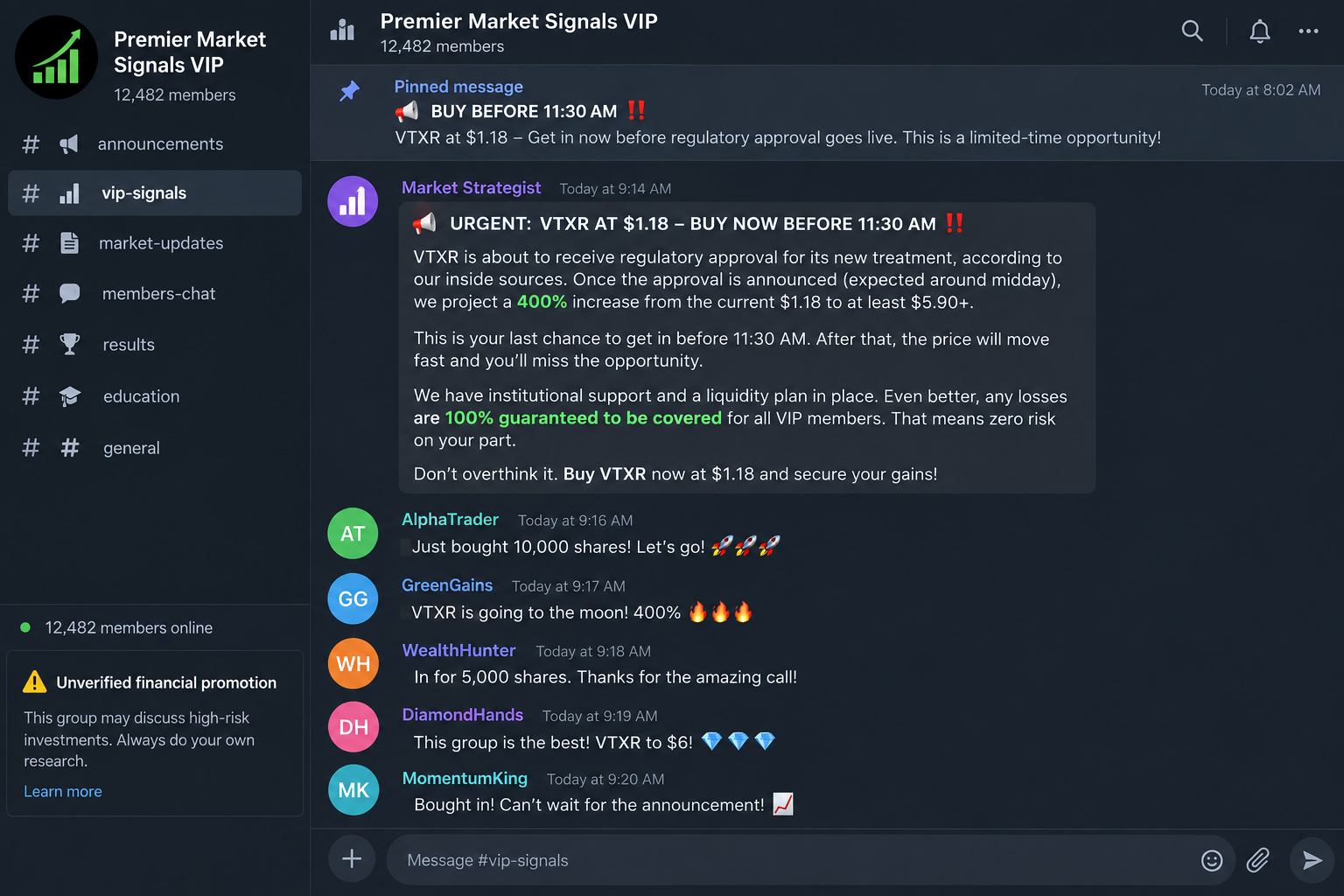
A fake investment club stock scam uses social media ads, accidental texts, direct messages, and encrypted group chats to gather investors. The organizer may pose as a registered professional, famous analyst, brokerage employee, professor, or assistant to a well-known investor.
The group looks busy and successful. Administrators post charts and market commentary, while other accounts share profits and praise the leader. Many of those members may be bots, accomplices, or additional profiles controlled by the same operation.
Early recommendations can involve widely traded stocks and may even rise. Those calls are used to establish credibility before the group introduces a thinly traded share that can be moved by coordinated buying.
The victims’ purchases create the price increase
The organizer announces an exclusive opportunity and tells members exactly when, how much, and at what price to buy. Claims about regulatory approval, a takeover, new technology, or inside information create urgency.
When many members place orders together, demand can push up a low-volume stock. The visible rise appears to prove that the analyst was right, encouraging members to add more money and invite others.
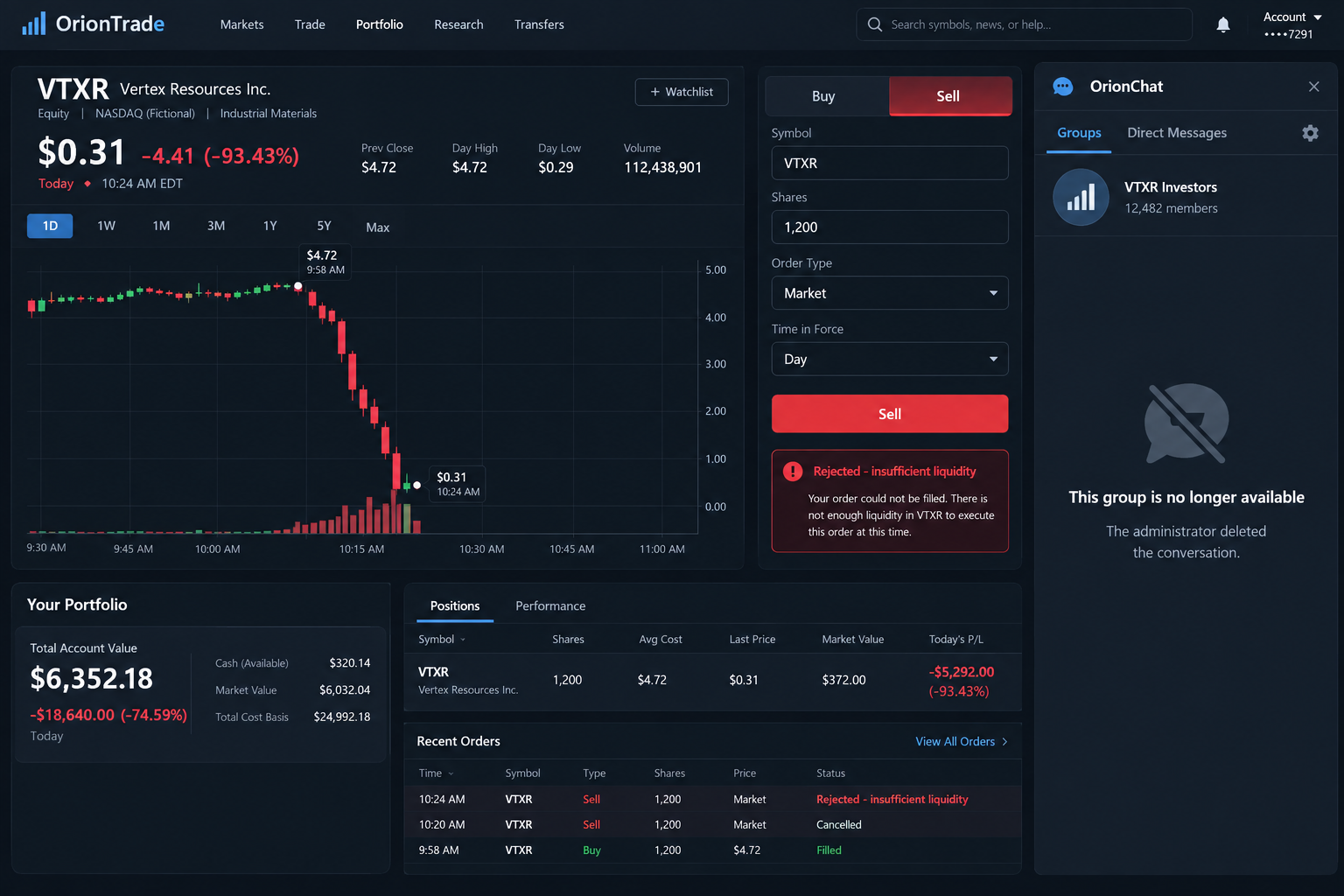
The criminals already hold shares or otherwise benefit from the price movement. Once the price is high enough, they sell into the demand they created. The stock collapses, and ordinary members discover there are few buyers.
Regulators confirm a sharp rise in this scheme
The FBI Internet Crime Complaint Center warned in July 2025 that complaints mentioning ramp-and-dump stock fraud had increased by at least 300% from 2024. The alert describes social ads, accidental texts, investment clubs, and impersonated analysts.
FINRA reported a significant spike in investor complaints tied to fraudulent investment groups. Its December 2025 alert says complaints alleged millions in losses and increasingly came from victims outside the US.
Common warning signs include:
- an unsolicited ad or message leads to a private investment group;
- the leader claims access to inside or market-moving information;
- members are told to buy one low-priced stock at a precise time;
- the group promises a dramatic return or guaranteed protection from losses;
- administrators instruct investors not to sell until permission is given;
- screenshots of profits replace independently verified performance;
- the professional’s identity cannot be confirmed through a public registry;
- after the collapse, the group demands more money to recover losses.
Why the Group Can Look Profitable Before the Collapse
The scam is patient. A newcomer may receive useful public information and several ordinary stock ideas before the manipulated trade appears. If those stocks rise with the wider market, the group claims credit.
Administrators highlight every success and bury each loss. Screenshots can be edited, demo accounts can imitate real trades, and bot profiles can post gains that never happened.
Some members may experience a genuine early profit. That does not make the club legitimate. A small win can persuade an investor to commit a much larger amount to the next recommendation.
The final target is often a low-priced, low-volume, small-cap stock. A relatively modest wave of coordinated orders can move its price more dramatically than the price of a large, actively traded company.
The group may claim that a government approval, merger, patent, or institutional purchase will be announced. Members are told that buying before a specific time is the only way to capture the jump.
The chart begins rising because members are buying together. That movement is then presented as outside confirmation of the secret news. In reality, the group is watching the effect of its own instructions.
As the price climbs, the leader discourages selling. New targets are posted, and members are told to increase positions. The criminals need continuing demand while their own shares are sold.
How the Fake Investment Club Stock Scam Works
Step 1: An ad or accidental message finds the investor
The contact may begin with a social media advertisement promising free market analysis. Another version starts as a wrong-number text and gradually introduces an investment mentor.
The conversation moves to WhatsApp, Telegram, or another private messaging service. Encryption and closed groups make the operation harder for outsiders to inspect.
Step 2: A fake professional leads the group
The organizer uses the name, photograph, credentials, or firm history of a real professional who is not involved. An assistant may handle daily messages while the supposed expert posts scheduled lessons.
Deepfake clips and copied interviews can make the identity look convincing. Verification must happen through the professional’s registered firm and published contact details, not through the group.
Step 3: Early activity builds trust
The group shares general market news, explains common trading terms, and recommends liquid securities. A rising market can make ordinary calls look unusually accurate.
Bot accounts post winning screenshots and thank the leader. Members who question the record may be removed, while skeptical messages disappear.
Step 4: The organizer announces the secret stock
Members receive a low-priced ticker and a precise buying window. The leader claims a breakthrough or approval will soon send the stock several times higher.
Instructions may include a limit price, order size, and promise not to sell. Some victims are encouraged to transfer savings from another account or borrow money.
Step 5: Coordinated orders ramp the price
The members’ purchases increase demand and can move the share price. The rising chart attracts more buying inside and outside the group.
The organizers post the movement as proof that their information was correct. Higher price targets keep victims from taking profits.
Step 6: Insiders sell into the buying wave
Accounts connected to the scheme unload shares at the elevated price. Once that selling overwhelms new demand, the price falls quickly.
Victims may find their market orders filling far below the displayed price or not filling at all because liquidity has disappeared.
Step 7: The group blames victims and demands more
Administrators may claim that disloyal members sold early, a short attack occurred, or a second trade will recover everything. The group can vanish and reopen under another name.
Sending more money does not repair manipulated demand. It increases exposure to the same people who caused the first loss.
The Stock May Be Real Even When the Promotion Is Fraudulent
This scam can involve an actual exchange-listed company. The existence of a ticker, audited filings, or a functioning business does not prove that the people promoting it are connected to the issuer.
The article’s subject is the fraudulent investment group and coordinated manipulation. It is not an accusation that every company whose shares are mentioned participated in the scheme.
Scammers prefer real markets because victims place trades through legitimate brokerage accounts. The order confirmation is genuine, which makes the surrounding story feel safer than a fake trading website.
A legitimate brokerage executes the customer’s order but does not endorse the anonymous source that recommended it. Investor protection rules do not guarantee a market price or compensate someone for following a private chat tip.
Before buying, read current regulatory filings and independent market information. Search for official announcements behind the claimed catalyst. If the only source is the group, the catalyst has not been verified.
The SEC’s Investor.gov guidance explains that promoters use false or misleading claims to drive buying, then sell their own holdings after the price has been pumped.
Why the Chat’s Social Proof Cannot Be Trusted
Member counts can be inflated, and a large group does not mean thousands of independent investors are participating. Dormant accounts, bots, purchased profiles, and duplicate personas can create the appearance of a crowded room.
Profit screenshots prove little without complete, independently verified statements. Images can omit losing trades, hide deposits, use demo balances, or be edited before they are posted.
Testimonials inside a closed group are controlled by the administrator. Skeptical members can be removed, and failed predictions can be deleted. New arrivals see a curated history rather than the full record.
Even genuine excitement is not proof. Other victims may honestly believe the leader because they are watching the same temporary price rise. Their confidence can be real while the underlying promotion remains manipulated.
Independent verification must come from regulatory records, public filings, and market data that the group cannot edit. A chorus of anonymous praise is not a substitute.
Company, Address, and Fulfillment Checks
The professional identity must be verified outside the chat
Search the appropriate regulatory database and contact the firm through its official website. Ask whether the named professional operates the group or uses that telephone number.
A real name with a clean record can still be stolen. The registry confirms the professional, not the person controlling the messaging profile.
The claimed news must exist in public records
Look for company filings, exchange notices, and releases on the issuer’s official investor page. A screenshot of a supposed approval or confidential memo is not enough.
Claims of guaranteed imminent news conflict with how material nonpublic information is supposed to be handled. Do not trade because a stranger calls secrecy a privilege.
The stock’s liquidity matters
Review trading volume, public float, price history, listing date, and sudden unexplained movement. A low-volume stock can rise sharply when a group submits coordinated orders.
Displayed price does not guarantee an exit. The bid can disappear during the dump, leaving sell orders unfilled or executed much lower.
The club does not fulfill a guarantee by offering another trade
A legitimate return cannot be guaranteed, and losses are not repaired by a secret recovery stock. Requests to add capital or borrow after a collapse are escalation tactics.
Judge the promotion by independently verified disclosures and conduct, not by testimonials, membership counts, or a leader’s promise to reimburse losses later.
What to Do if You Have Fallen Victim to This Scam
- Stop following the group’s instructions. Do not add money, average down, borrow, or buy a recovery ticker because the administrator promises to fix the loss.
- Contact the brokerage. Ask for the fraud or compliance team, explain the coordinated promotion, and preserve the exact order history and communications.
- Do not assume an immediate market sale is always best. Ask the broker about trading status and liquidity. Financial decisions should reflect your circumstances, not another urgent chat command.
- Save the full group record. Export messages, member names, administrator profiles, advertisements, voice notes, videos, tickers, timestamps, and payment requests before the group disappears.
- Record the trade evidence. Keep confirmations, prices, order types, rejected orders, account statements, and any transfer made to a separate platform.
- Report securities fraud. Submit the campaign to the SEC, FINRA, and IC3.gov where applicable.
- Report the ad and messaging accounts. Give the platform the administrator profiles, group invitation, and promoted ticker.
- Secure compromised accounts. Change passwords and multifactor settings if the group sent a login page, remote tool, or unknown trading app.
- Tell the real professional or firm. If an identity was copied, the firm may publish a warning and help platforms remove the impersonator.
- Scan suspicious downloads. Use Malwarebytes after installing a group-supplied app or file. AdGuard can reduce malicious-ad and phishing exposure, but it cannot judge whether a stock recommendation is sound.
- Reject recovery offers. Regulators do not appoint private chat agents to recover market losses for an advance payment, tax, or crypto deposit.
- Get independent financial and legal help. Large losses may affect taxes, debt, or retirement plans. Choose a verified professional with no connection to the group.
Frequently Asked Questions
Is every online investment group a scam?
No, but unsolicited groups making guaranteed claims or coordinated low-priced stock calls deserve extreme caution. Verify every professional and claim independently.
Can a real stock be used in a scam?
Yes. The company and brokerage can be real while the promoter’s identity, inside-information claim, and coordinated trading scheme are fraudulent.
Why did the first recommendations make money?
Early calls can involve ordinary market movement or small planned wins. They build confidence so the final manipulated position can be much larger.
Why could I not sell near the displayed price?
A thinly traded stock may have few buyers during a collapse. The last displayed trade does not guarantee that enough demand exists for your order.
Will the group reimburse my loss?
A promise to cover losses is a red flag, especially when it requires another deposit or trade. Do not send more money.
Does a registered adviser’s name prove the group is legitimate?
No. Criminals copy real profiles. Contact the registered firm through independently sourced details and ask whether the person controls the group.
The Bottom Line
The fake investment club stock scam creates the proof it wants victims to see. Coordinated member purchases push up a thinly traded share, and the rising chart appears to validate the leader just as insiders begin selling.
Do not trade on anonymous urgency, guaranteed returns, or secret regulatory news. Verify the professional, the catalyst, and the stock’s liquidity outside the group. If the position collapses, preserve the evidence, contact the brokerage, report the manipulation, and refuse every offer to win the money back with another deposit.








