


Yellow glasses that turn a dark road into broad daylight and cut LED headlight glare sound like a bargain at $39.99, and Fanyil NightGlo Glasses are sold that way.
We followed the funnel from advertising page to store, read the policies, compared prices and stock counts across archived copies, and checked the lens promise against an eye-care source.
Overview
What the store sells and for how much
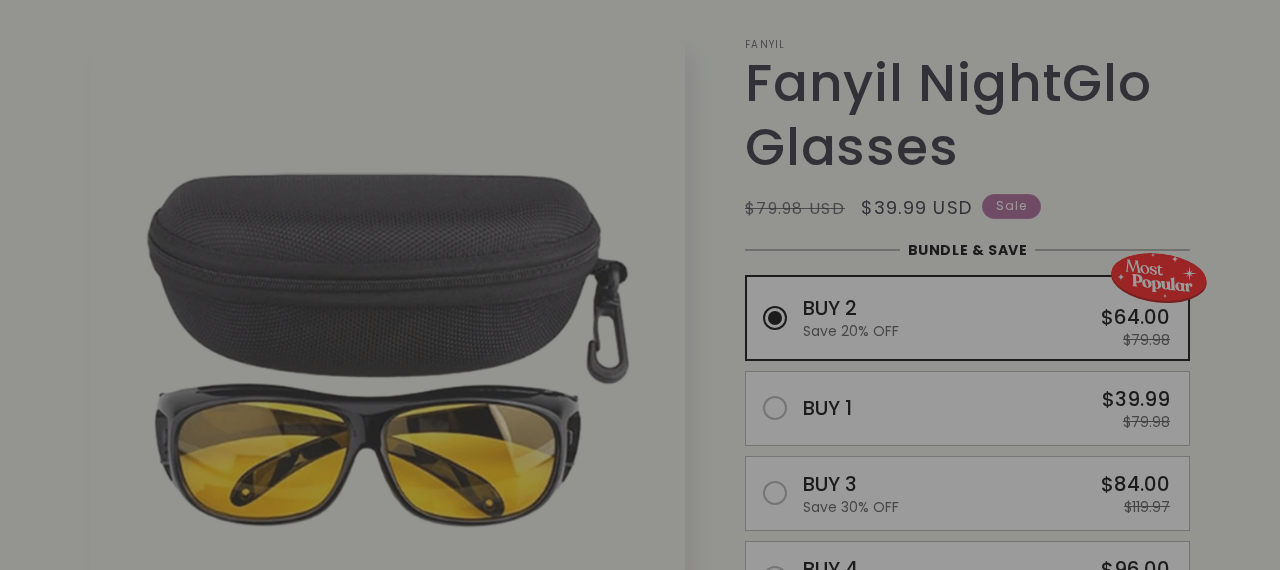
The product page at fanyil.com sells one pair for $39.99, with $79.98 crossed out beside it, and offers bundles from two pairs at $64.00 up to six at $139.20.
A separate advertising page on its own domain, fanyilnightglo.com, tells readers the glasses are the number one choice of ophthalmologists and promises a one-time discount of up to 70%.
What does not add up
The real discount on a single pair is exactly 50%, and the sale price has not changed in the 21 months our archived copies cover, so the urgency is decoration.
The advertising page promises a 90-day money-back guarantee, while the store’s refund policy gives 30 days and deducts the return shipping from any refund.
The author date on the advertising page moves with the visitor: in five archived copies it always sits exactly nine days before the day the copy was saved.
What we could and could not verify
This is where the evidence stands after our checks:
- Verified by us: the live page, the price ladder, the unchanged sale price, the stock counter, the refund and shipping text, three different company names and the domain dates.
- Not found: any named ophthalmologist, any lens test, a company registry record for either company name, or a delivery time shorter than ten business days.
- Not verified: how well the glasses work on a real road, delivery in practice and the real refund experience, because we did not place an order.
Our advice is to skip this offer, and the response section below explains what to do if you already ordered.
How the Fanyil NightGlo Sales Path Works
Step 1: An Advertising Page Opens the Funnel
A search for the product leads to fanyilnightglo.com, a page dressed as a magazine article headed Why Are Seniors Everywhere Wearing These Night Vision Glasses While Driving At Night.
Above the headline sits a banner reading #1 Choice by Ophthalmologists, with a five-star row and an author byline, and no ophthalmologist is named anywhere on the page.
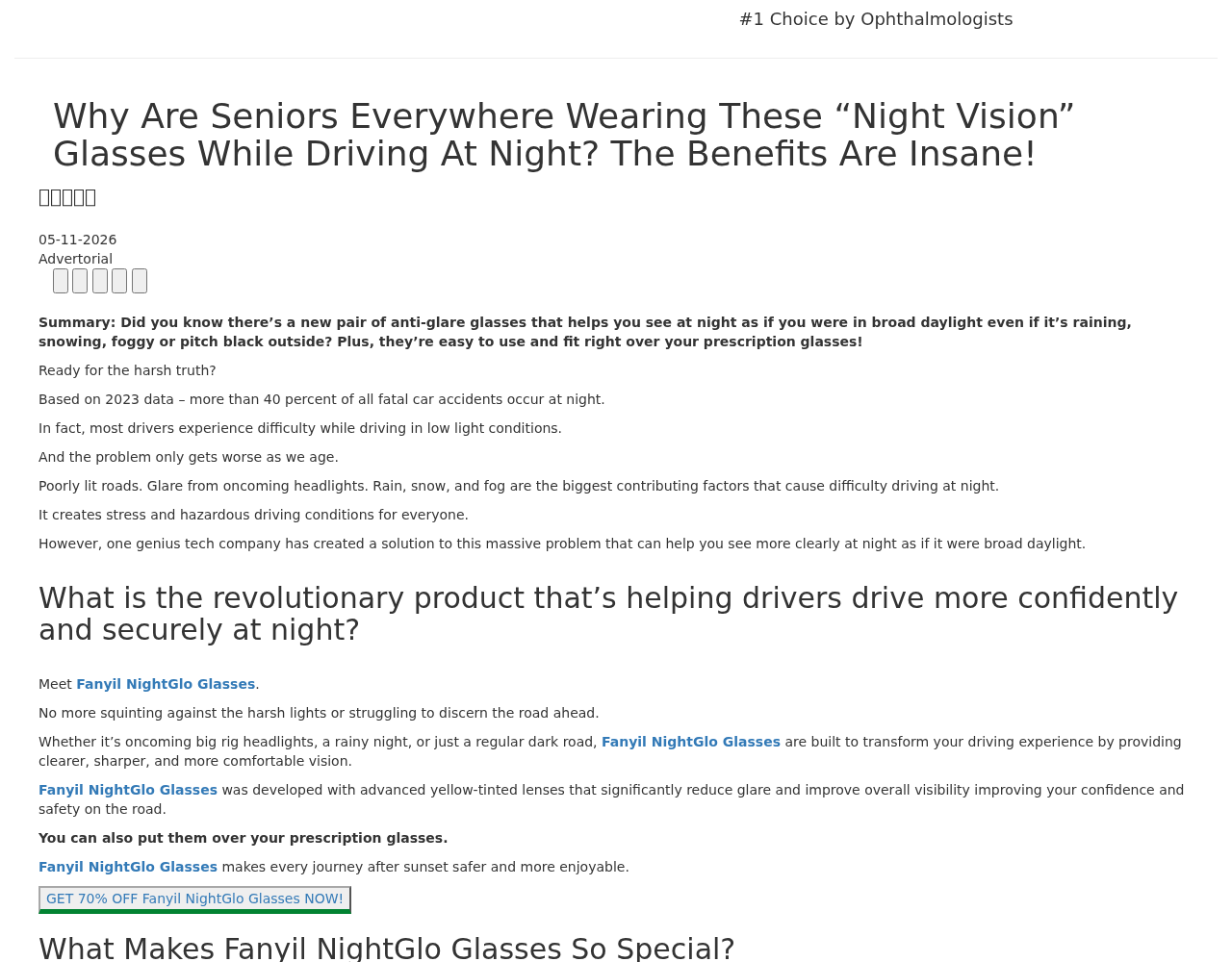
The small label Advertorial under the byline is the only hint that this is an advertisement, and the long footer repeats it in capital letters.
That footer calls the site a marketplace whose owner is paid for every qualified lead. It also accepts no responsibility for returns, shipping or support.
That is odd for a page that carries the brand name in its web address.
The domain fanyilnightglo.com was registered on January 8, 2025 through Namecheap and sits behind Cloudflare, while fanyil.com was registered through GoDaddy, so the two are set up separately.
When we requested the page today, the server answered with a 522 error, which means the page is not loading at present. We used archived copies to read it.
Every button on the page points to get.fanyilnightglo.com with a long tracking string. We requested only the bare address once, received a not found answer and followed nothing further.
Step 2: The Date Moves With the Visitor
Under the headline, the page shows a publication date. We opened five archived copies saved between May 2025 and May 2026 and wrote down the date each one displayed.
The copy saved on May 19, 2025 shows May 10, 2025. The copy of August 11 shows August 2, October 6 shows September 27 and December 13 shows December 4.
The copy saved on May 20, 2026 shows May 11, 2026. In all five copies the gap between the displayed date and the day of saving is exactly nine days.
We did not find the code that sets the date, so we cannot say how it is produced.
We can say that a real article does not stay nine days old for a year.
The effect on a reader is a page that always looks freshly published, which supports the story that this is a new discovery and not a product sold since 2024.
Step 3: The Store Page Repeats the Story
The product page opens with a headline telling drivers to stop risking their lives at night, then a photo, an author name and the date January 11, 2024.
The same text announces that a Silicon Valley start-up named Fanyil launched the world’s first night-driving eyewear and that its GlareCut technology has protected more than 300,000 drivers.
The registry shows fanyil.com was created on January 6, 2024, five days before that article date, so a firm with 300,000 customers would have been five days old.
The sister domain shirem.com was registered two seconds before fanyil.com at the same registrar.
A December 2025 copy of the store menu lists Fanyil, Shirem and Solymall as product groups.
The store’s product data shows this item was added on November 27, 2024, so the January 2024 text predates the product’s existence in the store.
That order of dates proves nothing illegal, but the history on the page looks borrowed, so a buyer cannot use it to judge how long the seller has traded.
Step 4: The Discount Does Not Match the Headline
The advertising page offers first-time buyers 70% off. The product page lists one pair at $39.99 against a crossed-out $79.98, and our arithmetic gives a saving of exactly 50%.
The bundle table below it shows two pairs at $64.00, three at $84.00, four at $96.00 and six at $139.20, with labels reading Save 20%, Save 30% and Save 42%.
Those labels are measured against $39.99 multiplied by the number of pairs, which gives $79.98, $119.97, $159.96 and $239.94, and not against the $79.98 shown for a single pair.
The figure $79.98 therefore appears as the regular price of one pair and also as the regular price of two, and both cannot be true at once.
Per pair, the ladder runs $39.99, $32.00, $28.00, $24.00 and $23.20. Only the six-pair bundle, at 71% below $79.98, ever reaches the 70% the advertising page puts in capital letters.
Few buyers need six pairs of night driving glasses, so the number that attracts the click is one that almost nobody gets.
Archived copies of the product page from February, July, August and December 2025 all contain the same figures, $39.99 and $79.98, and the live page shows them again today.
The advertising page warns that the price will rise once it goes viral, and a December 2025 copy carries a banner reading Holiday Deal, Lowest Price of the Year.
The price in that December copy is the same $39.99 as in February, so the lowest price of the year was the price all year.
Step 5: The Stock Number Barely Moves
The archived product page shows a low-stock line reading Only 9,834 items in stock on February 7, 2025, and 9,818 on both July 10 and August 5.
The copy saved on December 5, 2025 shows 9,812, so across ten months the counter fell by 22 units, or about two per month.
The same page says its technology has protected more than 300,000 drivers. A product with that many users would not shed 22 units of stock in ten months.
The counter comes from the store’s inventory setting, which the seller controls, so we read it as a sales prop and not real demand.
The live page we captured today does not display the line in the area visible to us, so we cannot say whether the counter still runs.
Step 6: The Refund and Shipping Promises Shrink
The advertising page ends with a promise of a 90-day money-back guarantee, and tells the reader the glasses will arrive at the door in a couple of days.
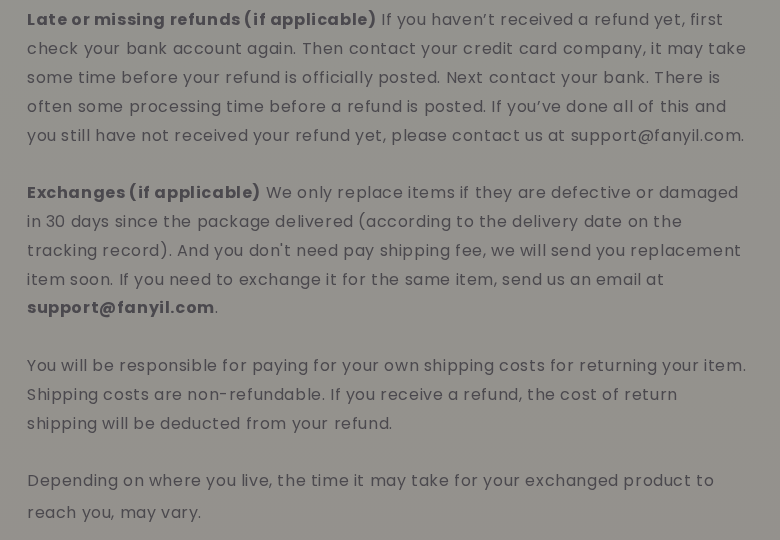
The store’s refund policy lasts 30 days, counted from the delivery date on the tracking record, and the glasses must come back unused and in the condition they arrived in.
The buyer pays the return shipping, shipping costs are non-refundable and the return cost is deducted from any refund. The policy gives no return address, only an email.
A 30-day policy with the buyer paying postage is not the 90-day guarantee the advertising page puts in bold, and the page that sells the glasses never mentions the difference.
The shipping page gives the United States 10 to 15 business days, plus one to four days of preparation, so the store itself never promises a couple of days.
It also charges a flat $9.99 on orders under $119. By that rule a single pair costs $49.98 delivered, and only the six-pair bundle at $139.20 ships free.
We read these amounts from the policy and did not see the checkout, so the final total on your screen may differ from our reading.
What the Glasses Actually Are
The photo on the product page shows ordinary yellow lenses in a wraparound frame sized to fit over prescription glasses, and the advertising page describes them as yellow-tinted lenses.
The product page text calls them polarized orange lenses, and explains that orange is the complement of blue and so reduces the blue light of LED headlights.
That text contradicts the photo and the advertising page, so even the color of the lenses is not consistent across the pages that sell them.
The crash statistic also changes between pages: the advertising page puts more than 40% of fatal crashes at night, and the product page puts more than 60% there.
The product page then warns buyers against wearing the glasses in daylight, because they enhance brightness, which is the opposite of what a tinted lens does to light.
We opened the American Academy of Ophthalmology page Driving at Night: Do Yellow-Tinted Lenses Improve Vision? to check the central promise.
The page, dated November 2019, summarizes a simulator study in which 22 adults with normal vision drove at night in yellow or clear lenses and reacted to a pedestrian.
The summary reports no significant difference in response time between yellow and clear lenses in any condition, and concludes the lenses do not live up to product claims.
That study was small and simulated, so it does not prove that no yellow lens helps anyone, and we are not claiming it does.
It does mean that a seller promising safer night driving owes buyers evidence, and neither page gives a test report, a lens specification, a transmission figure or a named optician.
Comfort is a separate matter. Some drivers find a yellow tint pleasant under bright headlights.
A $39.99 pair is harmless for that purpose, as long as nobody trusts it for safety.
The risk is relying on it. Any tint cuts the light reaching the eye, which can make dim roads and dark pedestrians harder to see, not easier.
We covered the same lens type in our investigations of yellow night driving glasses and night vision driving glasses.
Who Runs Fanyil NightGlo Glasses?
Three company names appear in the documents
The contact page of the store names its company as Bobbi Co., Ltd., with a business address in Albany, New York, and a customer service email and phone line.
The About page names Fanyil-Bobbi Co., Ltd, and describes a shop for home decor, daily gadgets and lifestyle accessories, with no mention of glasses or eye care.
The terms of service name a third operator, Fanyil International Limited, with no registration number and no address, and they place every dispute under the laws of Hong Kong.
So the store points to New York for its mail, to Hong Kong for its law, and the advertising page points to a Silicon Valley start-up as the maker.
A real seller knows its own legal name, so three names for one store means at least two of them were copied from somewhere else or are trade labels.
Where the address leads
The contact page lists 418 Broadway, Suite R, Albany, NY 12207. Public legal notices place registered-agent firms at that suite, which receive mail for companies formed in New York.
That does not show the seller uses such a firm or who owns the company, but a registered agent is not a shop, a warehouse or a returns desk.
The refund policy gives no return address and promises one only after you write, so a buyer learns where to send the glasses only after asking.
We searched for both company names and found no registry entry for either, so neither a legal owner nor an incorporation date can be shown from public records.
Domain, platform and sister stores
The store domain fanyil.com was registered on January 6, 2024 through GoDaddy and runs on Shopify. Its public product feed lists 416 items under 41 different brand labels.
The label Fanyil sits on 241 items, Puzzloom on 60, and the rest are small names, including Ribili, Shirem, Solymall and several spelled one letter apart.
The advertising page runs on WordPress, and its upload paths carry the site number 128, which suggests a large network of pages hosted together, though that is an inference.
We already described this store’s multi-brand setup in our Shiorey investigation, and its general scam record in our earlier Fanyil.com report.
What we could not confirm
We did not place an order, so checkout, the real shipping fee, delivery time, packaging and refund handling are untested.
We could not test the lenses, so we cannot say whether they are polarized, what light they pass or how they behave on a dark road.
We did not confirm who writes the advertising page, who pays for it or whether it shares an owner with the store, because the page names no one.
The Albany address reading rests on public notices and not on a registry record, and we do not know whether the seller uses a registered agent.
What to Do If You Ordered or Plan to Order
-
Save the pages. Capture the advertising page, the product page and the refund policy today, because the guarantee and the discount differ between them.
-
Do not trust the countdown. The 70% offer, the low-stock line and the holiday banner did not change the real price in any copy we read.
-
Check the total. Read the final amount at checkout, since the shipping page charges $9.99 on orders under $119 and a single pair then costs $49.98.
-
Ask in writing. If you ordered, email support within 30 days of delivery, keep the tracking number and the reply, and ask for the return address.
-
Dispute the charge. If the store refuses, contact your card or PayPal issuer promptly, following the card dispute guide.
-
Keep your own glasses on. Do not use these glasses as a safety aid, and see an eye-care professional if night driving has become harder for you.
-
Ask for proof. If a seller says an ophthalmologist recommends it, ask for the name and a test report, and walk away if neither arrives.
-
File a complaint. Report what happened at ReportFraud.ftc.gov, naming the domains and the promises you relied on.
Frequently Asked Questions
Is Fanyil NightGlo a scam?
We cannot prove fraud. The discount, the guarantee and the company history do not match the pages that sell the glasses, and that is reason enough to skip the offer.
Do yellow night driving glasses work?
The eye-care page we read summarizes a simulator study in which yellow lenses did not improve pedestrian detection. Some drivers like the comfort, but safety benefits are not shown.
Is the 70% discount real?
For one pair it is 50%, from a crossed-out price we could not see anyone paying. Only a six-pair bundle reaches 71% below that figure.
How long do I have to ask for a refund?
The store’s refund policy gives 30 days from delivery, and you pay the return shipping. The advertising page’s 90-day guarantee does not appear in the policy.
Is the stock really almost gone?
No. Archived copies show about 9,800 units in stock throughout 2025, and the counter fell by only 22 units in ten months.
Who is the company behind Fanyil?
The store names three different companies and an Albany suite where registered agents operate. We found no registry record, so we cannot name an owner.
The Bottom Line
Do not buy Fanyil NightGlo Glasses on the strength of its advertising page: the dates move, the real discount is 50% and no tested evidence supports the safety promise.
If glare bothers you at night, see an eye-care professional, keep your windshield and glasses clean, and treat any tinted pair as a comfort accessory and not as safety equipment.
If you already ordered, save the pages, write to support inside 30 days, dispute the charge with your card or PayPal issuer and file a complaint with the FTC.

Join the discussion
0 commentsShare your experience or ask a question about this article.
Discussion
Start the conversation
Have a question or something useful to share? Add the first comment.