

As shoppers search for discounted outdoor gear deals, scammers are capitalizing by creating fake Filson clearance websites. These convincing sham sites advertise huge markdowns up to 90% off clothing, bags, and equipment from the renowned outdoor brand.
However, these fraudulent schemes are intended solely to swindle customers and never fulfill orders as promoted. The unbelievable discounts and limited-time deals are fabricated to steal funds and personal data.
This article will examine how the Filson clearance scam works, red flags of the fake websites, potential shipment outcomes, steps if victimized, and most crucially – how to detect and avoid these outdoor gear scams.
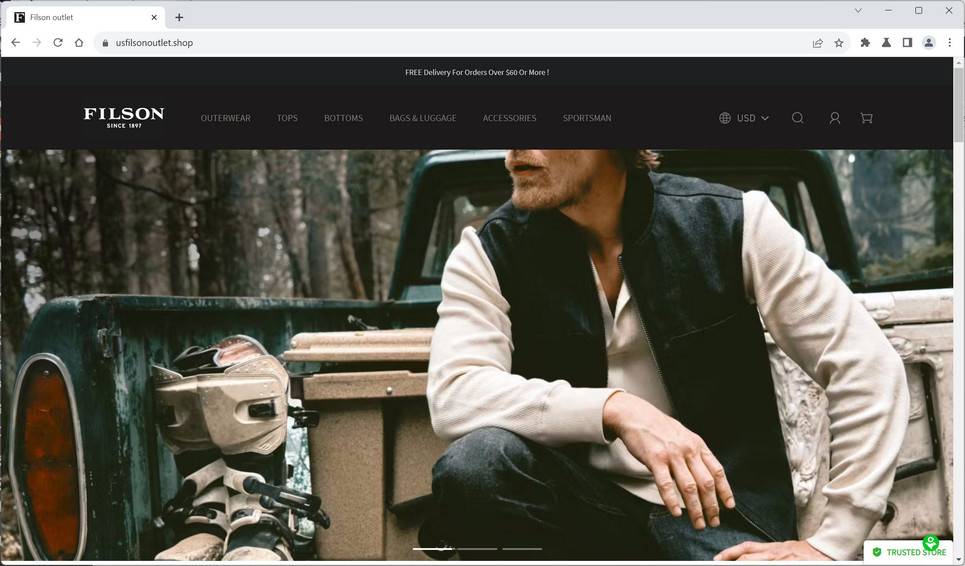
Filson Clearance Sale Scam Overview
Let’s examine the manipulative strategies scammers use to trick shoppers into placing orders through their fraudulent Filson “clearance sale” scam websites:
Manipulative Domain Names
Rather than using Filson’s name directly, scam sites rely on bargain-focused domains. Examples include “FilsonWarehouseOutlet” or “ClearanceOutdoorGearShop. In reality, these domains have zero relationship with Filson.
Realistic Looking Website Designs
Beyond just the domain, scam outdoor gear sites invest in legitimate-appearing templates. They copy Filson’s logo and visuals to mimic the real website.
To an average visitor, the pages appear convincingly like an authorized Filson dealer. But in reality it is an intricate scam facade with no functional retail backend aside from processing payments.
Advertising Fake Limited-Time Deals
A core strategy for driving impulse orders is promoting short-lived clearance events suggesting extreme savings. Scammers use tactics like countdown timers, limited quantity claims, and expiring sale warnings.
But in reality, the blowout discounts up to 90% off are completely fabricated. No actual Filson liquidation sale is occurring.
Stealing Brand Assets
Nearly all product images used on scam sites are stolen directly from Filson.com without permission. Photos, logos and other assets are copied to make the fake sales seem real.
Some sites even have images of new gear not yet released to the public. This makes it appear as if the scam stores have inside Filson access.
Generating Fake Customer Reviews
Fraudulent outdoor website templates usually contain fake reviews praising the ordering process, product quality, delivery times and savings.
These sham reviews establish legitimacy for otherwise unverified websites. Without real negative feedback, new visitors assume the deals are validated by past purchasers.
Disabling Real User Feedback
While fake reviews are added, actual user comments are disabled on scam sites to suppress warnings and negative experiences.
This allows scammers to maintain total control of product narratives. Disabling real reviews stops victims from exposing the sham discounts and non-delivery.
Deceptive Contact and Policies
Scam outdoor gear websites also create deceptive satisfaction guarantees, shipping policies and contact forms. But there are no working ways to actually reach the scammers or activate protections once payments are processed.
Any posted policies, phone numbers, emails or forms are completely fake and non-functional. They exist purely to manipulate trust from customers.
Anonymity of Operators
Fraudulent athleticwear websites provide absolutely zero legitimate business registration details, location info, owner identities or other standard transparency data.
This anonymity allows fly-by-night sites to instantly disappear without a trace once purchases are made. Victims have no way to pursue recourse from faceless scammers.
Collecting Personal and Payment Data
While no products are delivered from the sham websites, they excel at harvesting users’ financial and personal data during checkout.
Details entered like names, addresses, phone numbers, emails and credit card info have high value for committing additional frauds down the road.
Common Outcomes of Orders Placed on Scam Sites
Here are the frequent scenarios users encounter after ordering discounted gear through the fraudulent Filson clearance websites:
No Products Delivered
The most common outcome is no merchandise arrives after the fake clearance websites accept payment. Any order tracking numbers are invalid, and all communication channels associated with the sites go silent.
Scammers take the money without any intent or ability to fulfill the heavily discounted outdoor gear orders. The websites are complete shams designed only to illegally steal funds.
Cheap Knockoffs and Fakes
Some scam victims do receive shipments after ordering, but not genuine Filson gear as described and pictured. Instead they get poorly made knockoffs and fakes clearly manufactured overseas.
These are inferior imitation products trying to resemble real Filson outdoor equipment. But material, construction and design flaws prove the items are fraudulent.
Used, Damaged or Tampered Goods
Certain orders arrive as previously used, damaged or tampered-with merchandise clearly not brand new direct from Filson as advertised.
This demonstrates the scam outdoor stores have no actual relationship with Filson and are just peddling old discarded gear likely salvaged from donation centers.
Random Unrelated Items
Perhaps the most bizarre outcome is victims receiving random electronics, toys, tools and junk in the mail totally unrelated to the outdoor products ordered.
This again confirms the scam sites have no actual merchandise inventory or intent to fulfill orders properly. They simply mail whatever discarded items are on hand while stealing victims’ money.
Identity Theft Risks
Even victims wise enough to recognize the scam before being charged still share valuable personal data that exposes them to identity theft and other frauds.
Criminals can easily exploit stolen names, addresses, birthdates and other info entered on scam websites. So it’s critical to avoid engaging them at all, even just browsing.
Steps to Take if Scammed By a Fake Website
If you unfortunately fell for a fraudulent Filson outdoor gear website, take these urgent steps:
- Contact your credit card provider immediately to dispute any charges from the scam website as fraudulent. This provides the best chance of reversing the charges. But act fast, as longer wait times reduce your odds of successful chargebacks.
- Consider placing fraud alerts on your credit reports to help prevent potential misuse of your information obtained by scammers. Free 90-day alerts are available through Equifax, Experian and TransUnion.
- Closely monitor financial statements and credit reports for any unusual transactions, accounts or credit inquiries stemming from your compromised details. Promptly report any suspicious activity.
- Change passwords on online accounts that used the same credentials entered on the scam website as a preventative measure. Prioritize accounts containing more sensitive personal or financial data.
- Avoid further outdoor website scams by applying extra scrutiny to tempting deals, verifying seller legitimacy extensively, and never again entering data onto unknown or unvetted stores. Only order from retailers you can fully confirm through research.
- File detailed scam reports with the FTC, FBI, state attorney general and other relevant authorities. Your complaints help build cases against crooks and prevent ongoing victimization.
While risks from stolen data cannot ever be eliminated fully, taking countermeasures helps limit scammers’ ability to further exploit the details they obtained illegally. Be proactive.
Avoiding Outdoor Gear Website Scams
Here are some tips for detecting and avoiding fraudulent Filson clearance websites:
- Verify sellers – Thoroughly research stores and confirm their legitimacy before providing payment info or ordering. Search business registrations, reviews, locations and other details.
- Avoid sales pressure – Never allow countdown timers, limited quantity claims or other fictitious urgencies to push you into hasty purchases. Exercise patience.
- Beware “too good to be true” deals – Extreme discounts like 90% off are always too good to be true. Filson does not offer such unrealistic pricing on its real website.
- Compare product photos – Scammers steal images directly from Filson.com. Identical copies indicate a likely scam.
- Read reviews carefully – Fake reviews are vague and overly positive. Seek out critical reviews on independent sites like Trustpilot and Reddit.
- Avoid new unknown sites – Only order from longtime retailers you recognize as authorized partners.
- Pay securely – Never pay by bank transfer, wire or crypto. Only use credit cards with fraud protections so you can contest scam charges.
- Search scam forums – Look on scam warning sites to see if a website is called out as fraudulent by past victims.
With knowledge of their tricks, you can outsmart Filson clearance scams and enjoy outdoor deals safely. Don’t let tantalizing discounts override your common sense and skepticism.
Frequently Asked Questions About the Filson Clearance Sale Scam
Are there real Filson sales going on now?
Filson runs promotions on its website, but beware of major markdowns from mystery third-party sites. Fake outdoor gear clearance scams are very common. Check Filson website directly for available deals you can trust.
How can I tell if a Filson sale site is fake?
Warning signs include prices too good to be true, stolen brand images, countdown timers, disabled reviews, credit card only payments, and no physical address. Verify legitimacy through research before purchasing.
What happens if I order from a scam Filson site?
Most likely you’ll receive nothing and lose your money entirely. Sometimes people get cheap knockoffs, used gear or random junk instead of Filson products. Best case is realizing it’s a scam in time to do a credit card chargeback.
Can I get a refund if scammed by a fake outdoor site?
Getting money back directly from scammers is extremely rare. Act immediately upon realizing it’s a scam to have any chance of a successful credit card chargeback. The criminals behind sham sites will not respond or refund anyone.
What should I do if a fake Filson site stole my information?
Contact credit bureaus for fraud alerts on your files, monitor financial statements for misuse, change account passwords, check credit reports frequently, and take preventative identity theft steps. Unfortunately compromised data cannot be recovered fully.
Where can I report fake Filson websites?
File detailed scam reports with the FBI, FTC, state attorney general, and other enforcement agencies. These complaints aid law enforcement in pursuing fraud rings and stopping repeat offending sites. The more they understand current tactics, the better chance they have at catching crooks.
How can I avoid Filson gear scams in the future?
Always thoroughly verify sites before providing payment information or ordering. Research sellers, compare product photos, read real reviews, and avoid shady unknown sites. Never pay using direct bank transfers – use only credit cards with fraud protections.
Conclusion
In summary, deceptive outdoor websites advertising fake Filson discounts rely on convincing branding, emotional sales tactics and reputable assets to trick hurried shoppers seeking deals online. But what appears an amazing clearance sale is just a scam to steal money and data.
Recognizing their manipulative red flags is key to avoid ending up with nothing but compromised information and payments in the hands of crooks. Use the knowledge in this guide to detect and resist clearance sale scammer traps.
Stay vigilant when shopping sales online and always thoroughly verify a website’s legitimacy before providing payment or personal details – no matter how spectacular the discount. Your awareness is the best defense against increasingly sophisticated clearance sale scammers. Protect yourself by being a savvy consumer.

Join the discussion
0 commentsShare your experience or ask a question about this article.
Discussion
Start the conversation
Have a question or something useful to share? Add the first comment.