

An email headed “Court Order” says Flanderijn has been trying to reach you. Now you’re expected to open a debt file before things go further.
Even if you can’t place the debt, the legal wording can make you hesitate. Before opening that file, check who is really asking.
Overview
A Legal-Sounding Subject Makes an Unexplained Debt Feel Urgent
The Flanderijn email scam borrows the identity of a genuine collection and bailiff organization. It uses debt warnings to push recipients toward an unverified case-file link.
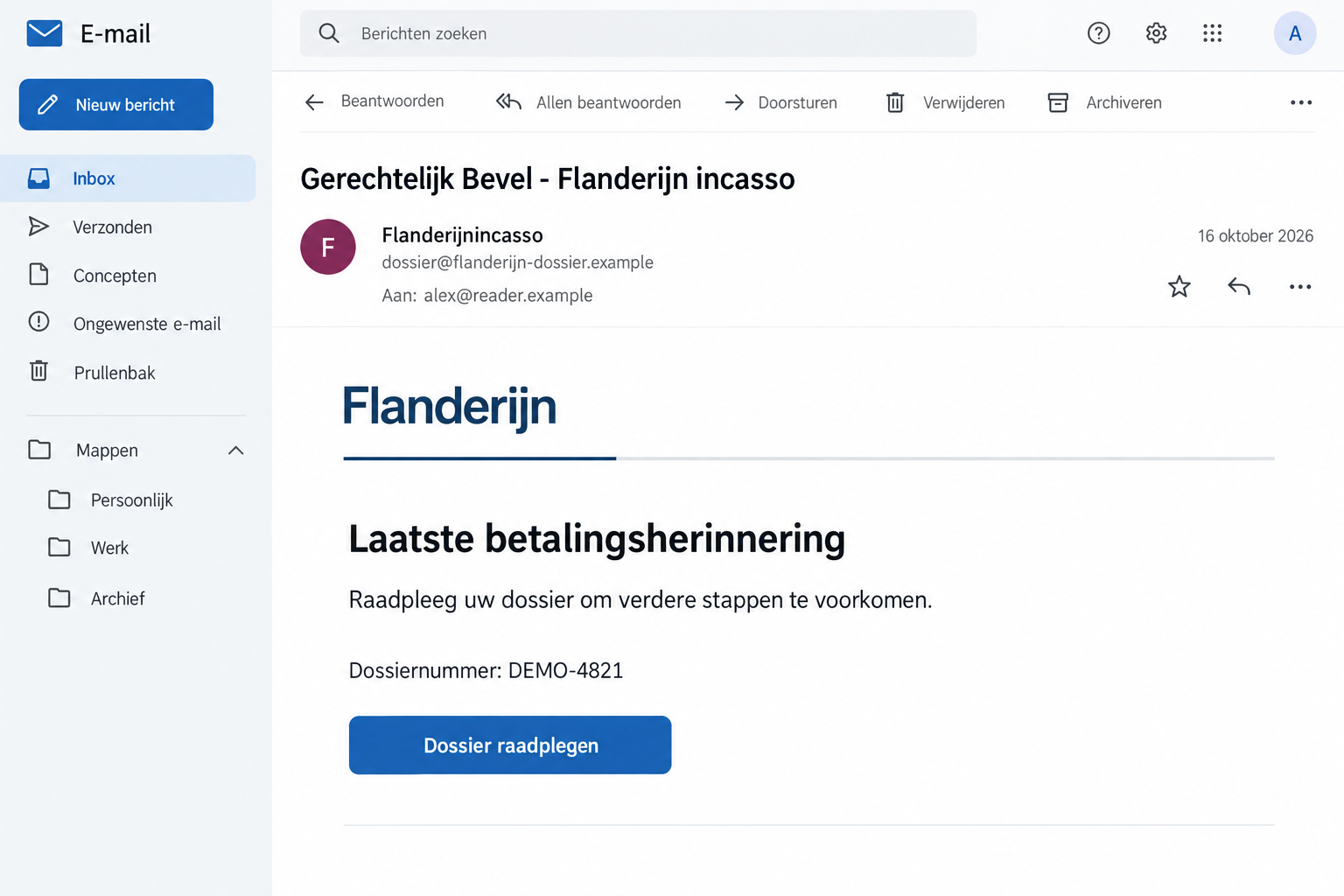
One reported version puts “Gerechtelijk Bevel,” meaning “Court Order,” in the subject. The body describes a last payment reminder and warns about further action.
That heading is the sender’s claim, not proof of an actual court order. The message doesn’t establish that you owe the person who sent it money.
The Real Collector Confirms Active Impersonation
Flanderijn warns about phishing using its name and tells recipients to verify contact and payment details independently.
The October 12 false email shows the court-order subject, a case reference, and a button inviting the recipient to consult the file.
Our lead illustration uses fictional identifiers. Its reference, address, and date are not a genuine case record or an original recipient capture.
Verify the Collector and the Debt as Separate Questions
Flanderijn is real. That doesn’t mean the message is real, and it doesn’t answer whether any debt attributed to you is valid.
- The confirmed scam is the false message impersonating Flanderijn.
- A case number or legal phrase isn’t independent evidence of a debt.
- Don’t use the supplied file link to decide who should receive your information or payment.
- Check any genuine matter through the real collector’s published contact routes.
Why “Court Order” Can Overpower an Ordinary Check
A routine invoice invites questions about what you bought. A legal-sounding notice can make those questions feel like something you should have asked earlier.
The message suggests the situation has already escalated. You may worry that pausing now will make an unfamiliar debt more expensive or difficult.
That pressure doesn’t give the sender legal authority. An email subject can contain intimidating words without documenting what they imply.
The reported message also claims unsuccessful earlier contact. That can make you wonder whether you missed a letter, email, or call.
Don’t fill the gaps in the story for the sender. Ask the real organization what, if anything, is actually recorded under your details.
You’re allowed to distinguish a worrying claim from a verified fact. Checking through a trusted contact is a practical response, not an admission that you owe money.
If you need advice about a genuine legal document, get appropriate independent help. This phishing warning shouldn’t be used to dismiss real proceedings or deadlines.
How the Flanderijn Email Scam Works
Step 1: The Message Presents an Existing Collection Case
The sender doesn’t begin by explaining a new purchase. It tells you that a collection matter already exists and needs attention.
A case reference supports that framing. It looks like something you could quote to a member of staff, which makes the demand feel organized.
But the person writing the message controls that reference. Its presence doesn’t tell you whether it matches any genuine record.
If you receive the notice at work, don’t forward it as an approved payment task. Ask the responsible person to verify it before processing anything.
Step 2: Vague Further Action Encourages a Quick Response
The documented version warns that additional steps may follow if the matter isn’t handled. Its legal subject makes that warning feel more consequential.
You don’t need to identify every possible consequence before rejecting the false route. Verify the underlying matter outside the email.
The October example doesn’t show a sum owed. If your message names an amount, check it against a genuine case rather than another email’s demand.
Different false reminders can reuse the collector’s name while changing the request. A new reference or wording doesn’t make the next one genuine.
Step 3: The Case-File Button Becomes the Proposed Answer
Opening a file sounds less risky than making a payment. You may think you’re simply finding out what the demand concerns.
That is why the destination still matters. A page reached from an impersonator’s email isn’t an independent explanation of the alleged debt.
The published message doesn’t reveal its final form or payment destination. It doesn’t establish a particular malware download or completed loss.
Don’t follow the button to fill those gaps. Contact the genuine collector instead, using details found separately from the message.
If a page asks you to identify yourself, sign in, or pay, stop until the organization and request have been confirmed.
What to Ask the Real Collector
Start with the official Flanderijn website, not the email’s signature. Locate customer contact there and explain that you are checking a possible impersonation.
Ask whether the message and reference correspond to a genuine matter. Let staff explain how to verify your identity through their proper process.
You can describe the email without supplying a password or banking security code. Those secrets are not case-reference information.
If a real case exists, ask who the original creditor is, what the amount concerns, and where you can obtain the relevant documentation.
Compare that explanation with records you already hold. A debt you recognize still doesn’t authenticate a separate payment destination supplied by an impostor.
If you dispute a genuine debt, use the collector’s actual dispute process or independent advice. Don’t negotiate through the questionable email to make it go away.
Keep a record of the confirmed contact and response. That helps you separate the legitimate matter from any further false reminders.
A period on hold or a delayed reply doesn’t validate the suspicious sender. The false route doesn’t become safer because the genuine check takes longer.
If the notice concerns someone else in your household, involve that person rather than paying to spare them embarrassment. A shared address doesn’t authenticate the demand.
Keep their private financial information out of group chats. You can help locate the genuine collector without circulating the entire alleged case.
For a business, match any confirmed obligation against purchasing and invoice records. A colleague recognizing the company name isn’t the same as approving this payment.
Ask who verified the case and through which independently obtained contact. Keep that answer with the records before any legitimate payment is processed.
If no matching obligation can be established, don’t let the reference number become a substitute for documentation. Continue through the genuine organization’s inquiry process.
The Sender and Payment Destination Need Their Own Checks
Flanderijn identifies flanderijn.nl and flanderijn.be as its email domains. Check the full sender address, not only the name displayed above it.
A convincing address is not the entire test. The requested payment details and the actual case still need confirmation through the genuine organization.
The collector publishes current payment-account information on its official warning page. Use that independently opened source rather than a list copied into an email.
Don’t use an amount or reference as proof of the bank recipient. Those fields can look plausible while the money is directed elsewhere.
If you don’t recognize an account, stop and ask. Don’t transfer a small test payment to establish whether the collector receives it.
A copied genuine number can also appear in a false message. Contacting the real organization doesn’t certify every other instruction in the original email.
A Genuine Payment Processor Can Appear
Flanderijn’s guidance explains that Pay.nl can process an iDEAL or Wero payment. An outside processor is therefore not automatically evidence of fraud.
It also warns against manually transferring money to the processing account shown in that context. Follow only a payment process you’ve independently verified.
If a bank record shows an unfamiliar processor after payment, ask the bank and collector about it. Don’t assume either fraud or legitimacy from the name alone.
This is why the real account and case matter more than a single visual clue. Verification should connect the request, recipient, and legitimate obligation.
Knowing Your Name Doesn’t Make the Debt Real
Fraudehelpdesk warns about recurring false collection messages, including some that address recipients personally.
A correct name can make the email feel directed specifically at you. It doesn’t establish how the sender obtained that information.
Don’t assume a breach at the real collector merely because a false notice contains personal details. That would require separate evidence.
The useful response is to confirm the actual case through trusted channels. Sending more details to the suspicious sender doesn’t settle who they are.
If a caller follows up, ask yourself whether you independently verified that contact. Familiarity with the email’s reference could come from sending it.
Don’t let a conversation about debt turn into instructions to install remote-help software or approve unrelated banking activity. Those would require separate scrutiny.
What to Do if You Have Fallen Victim to This Scam
Prioritize any money or account access exposed, then clarify whether a genuine collection matter exists. Those are connected concerns, but they are not interchangeable.
-
Stop responding through the suspicious route. Close the linked file page and don’t send further documents or payments.
Keep the email, reference, and any evidence already available. You don’t need to return to the page to build a complete account of its design.
-
Contact your financial provider after a payment or banking disclosure. Use an established app or independently located number.
Provide the amount, time, recipient, and payment method from your records. Ask what can be blocked, investigated, disputed, or recalled in your circumstances.
Don’t wait for the impersonator to authorize a refund. Its promise of a reversal shouldn’t delay reporting the transaction.
-
Confirm any genuine case with Flanderijn. Use its official contact information and explain that a false message may be involved.
If a legitimate balance also exists, address it separately through verified instructions. Paying a scammer doesn’t necessarily reduce what you genuinely owe.
-
Protect any password entered. Change it through the real account and replace reused copies at other services.
Review available recovery settings or activity for unfamiliar changes. A phishing page’s error message doesn’t establish that your password wasn’t received.
-
Describe any documents or personal information disclosed. Keep a factual list of what was supplied rather than assuming every possible form of identity misuse occurred.
If actual misuse appears, preserve the evidence and seek official assistance. Avoid sharing sensitive document copies in public warnings or broad email chains.
-
Report the impersonation. Flanderijn directs suspicious-message reports to Fraudehelpdesk. Use the independently opened reporting page.
For a fraudulent payment, the collector also advises police reporting and informing the bank. Keep report references together with the original demand.
-
Check software exposure when relevant. A case-file email doesn’t prove infection. An unexpected download, installation, or persistent redirect is a separate concern.
Malwarebytes may help assess suspicious software. If browsing now brings unwanted advertising or redirects, AdGuard may provide an additional blocking layer.
A clean device check doesn’t clear a disclosed password or recover money. Continue the appropriate account and payment steps as well.
If You’re Worried a Real Debt Was Forgotten
You don’t have to choose between paying the email and ignoring the possibility of a debt. There’s a third option: verify the matter independently.
Gather your own records of the creditor or service you recognize. Keep the information from your records distinct from claims in the suspicious notice.
Ask the genuine organization to explain anything unclear. If the explanation concerns a different customer or an unfamiliar obligation, follow its proper correction or dispute process.
For a difficult genuine case, consider qualified local debt or legal assistance. Don’t take case-specific legal advice from a stranger who contacted you about this email.
A fraudulent subject line doesn’t create a court decision. It also doesn’t cancel real documents you’ve received through verified channels.
If you’re helping a family member, work through the real contact route together. Keep their account secrets private while you help organize the records.
Once the situation is clear, save the genuine contact details. A later message should be checked against that established relationship, not its own signature.
Frequently Asked Questions
Is the Flanderijn Court Order Email Genuine?
The reported October message is false. Its subject doesn’t establish a court order or authenticate the linked case file.
Is Flanderijn Itself a Scam?
No. This warning concerns criminals impersonating a genuine collection organization. Flanderijn has published its own phishing warning.
Does a Case Reference Prove That I Owe Money?
No. Verify the reference and underlying obligation with the real collector. A number printed in an email can be invented or copied.
Should I Pay Just to Prevent Further Action?
Don’t pay through the false message. Establish whether a genuine matter exists and use verified instructions for any legitimate obligation.
Is a Pay.nl Entry Automatically Fraudulent?
No. Flanderijn identifies Pay.nl as a legitimate processor in certain payment flows. Confirm the actual case and transaction instead of judging by that name alone.
Can I Ignore Real Collection Documents After Receiving Phishing?
No. Handle genuine correspondence and deadlines separately. Get independent help if you need advice about a verified debt or legal document.
The Bottom Line
Don’t open the case file or pay through this Flanderijn email scam. Legal wording and an unexplained reference aren’t proof of an official demand.
Verify the matter with the real collector. If you already paid or disclosed financial access, contact your bank promptly and preserve the false message for reporting.

Join the discussion
0 commentsShare your experience or ask a question about this article.
Discussion
Start the conversation
Have a question or something useful to share? Add the first comment.