

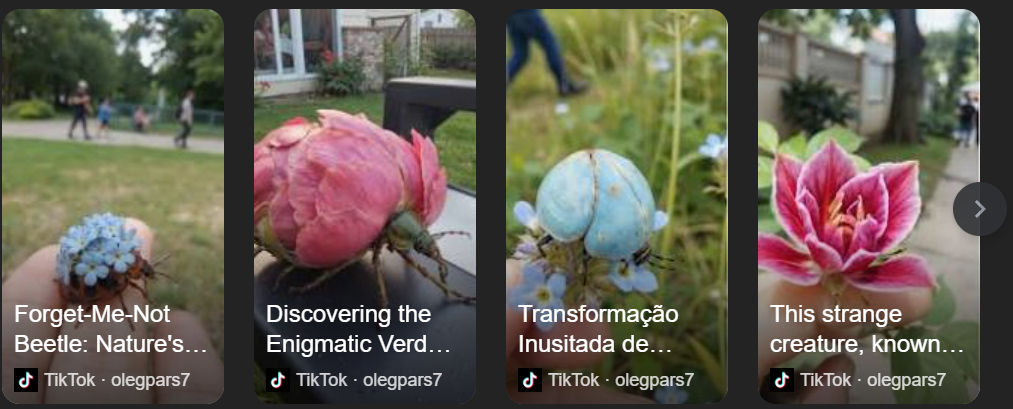
In the past weeks, social media has been flooded with astonishing clips of a supposed beetle that blooms into colorful flowers. Known online as Floracera Solis, this strange insect has been portrayed as a newly discovered species filmed at the Vermilion Cliffs in Arizona, USA.
The videos show beetles that appear ordinary at first glance. But once they stop moving, their backs split open and blossom into vibrant blooms that look like roses, tulips, or even hydrangeas. Viewers across TikTok, Instagram, and YouTube are convinced they’re witnessing a miracle of nature. Captions claim it is a rare species of “flower beetle” discovered in one of the world’s most beautiful desert landscapes.
But is Floracera Solis real, or is it yet another viral digital hoax? This article investigates the origins of the phenomenon, the scientific red flags, and why millions of people were deceived into believing a beetle could sprout flowers.
What Is Floracera Solis Supposed to Be?
According to viral claims, Floracera Solis is a beetle with a defense mechanism unlike anything ever seen. Instead of relying on camouflage or chemical sprays, it allegedly “blooms” into flowers when threatened, tricking predators into thinking it is a harmless plant.
The name itself sounds convincing:
- Floracera suggests “flora” (plants) and “scarab” (a family of beetles).
- Solis hints at sunlight, suggesting the blooms flourish in bright desert environments.
Videos also attach the name Vermilion Cliffs, a real landmark in Arizona known for its dramatic red rock formations and ecological diversity. Combining a real location with a fake species gives the hoax a sense of authenticity.
How the Viral Beetle Spread Across Social Media
The phenomenon first gained traction on TikTok under accounts sharing CGI wildlife clips. Users posted 10–15 second videos of beetles on people’s hands or resting in grass. Suddenly, the beetles “blossomed” into vibrant flower heads in impossible hues like neon pink, baby blue, or bright purple.
The combination of:
- Short, eye-catching clips
- A mysterious scientific-sounding name
- Association with real landmarks
…was perfect for virality. People commented with awe, disbelief, and curiosity. Some called it “the most beautiful bug ever discovered,” while others demanded scientists explain how such a creature could exist.
Fact-Check: Is Floracera Solis Real?
The answer is no. Floracera Solis is not a real species. It is a digital fabrication created with CGI and AI tools. No scientist, research paper, or natural history database mentions such a creature.
Why It Cannot Be Real: Key Scientific Red Flags
- Biological Impossibility
Plants and animals belong to entirely different biological kingdoms. Animals cannot sprout flowers. Some species mimic plants in appearance (like orchid mantises), but true flower-blooming is biologically impossible. - No Scientific Documentation
Every genuine discovery of a new species is published in scientific journals and catalogued in taxonomic databases. For something as groundbreaking as a beetle that blooms into flowers, there would be international coverage in scientific news. None exists. - Signs of CGI in the Videos
The transitions between beetle shells and blooming petals are unnaturally smooth. Lighting does not match the environment. The flowers often appear too symmetrical or glossy, characteristics common in digital renderings. - Overly Perfect Colors
Natural camouflage tends to be muted, blending into ecosystems. Floracera Solis videos feature electric blues and neon pinks—colors rarely seen in desert-adapted insects or plants.
Origins of the Floracera Solis Hoax
The viral beetle videos can be traced back to digital artists who specialize in CGI insect-plant hybrids. These creators often post their work on TikTok or Instagram, tagging them as art. However, once reposted without context, viewers began believing the clips depicted real wildlife.
The account names often linked to this content, like olegpars7 (seen in many viral clips), are known for creating imaginative insect-flower hybrids. Their work is a mix of visual art and AI-assisted design, not biological documentation.
Why Vermilion Cliffs Was Named in the Hoax
The Vermilion Cliffs National Monument in northern Arizona is a real location managed by the U.S. Bureau of Land Management. It is famous for The Wave, Coyote Buttes, and striking desert landscapes.
Attaching this real landmark to the fake beetle makes the claim feel more plausible. After all, remote and rugged places are believable settings for new species discoveries. But there is zero evidence that any beetle resembling Floracera Solis has ever been recorded in Vermilion Cliffs—or anywhere else on Earth.
Real-Life Beetles That Inspired the Hoax
Although Floracera Solis is fake, it borrows inspiration from real beetles that display striking beauty:
- Flower Beetles (Cetoniinae subfamily): Many have iridescent shells resembling flower petals.
- Orchid Beetles: Found in tropical forests, often associated with orchids.
- Jewel Beetles (Buprestidae): Known for brilliant metallic colors that look like enamel or gems.
These beetles showcase dazzling colors and textures, but none bloom into flowers. The hoax exaggerates real beauty into digital fantasy.
Comparing Floracera Solis to Real Camouflage and Mimicry
In the animal kingdom, mimicry is common. Creatures evolve to resemble plants or other animals for survival. Examples include:
- Orchid Mantis (Hymenopus coronatus): A praying mantis that looks like orchid petals.
- Leaf Insects (Phylliidae): Insects that mimic leaves, complete with vein-like patterns.
- Stick Insects: Masters of twig mimicry.
These examples show the power of natural selection. However, none involve cross-kingdom transformation. The Floracera Solis hoax falsely combines mimicry with full biological transformation.
Why People Believe in Viral Nature Hoaxes
The psychology behind believing in Floracera Solis is rooted in wonder, novelty, and digital culture:
- Visual Shock Value: The sudden transformation is mesmerizing.
- Scientific-Sounding Names: “Floracera Solis” sounds like real taxonomy.
- Exotic Locations: Attaching “Vermilion Cliffs” makes it sound credible.
- Desire for Discovery: People want to believe there are still mysteries in nature waiting to be found.
The Dangers of Viral Nature Misinformation
While Floracera Solis may seem like harmless entertainment, viral hoaxes can cause harm:
- They mislead people about real science.
- They erode trust in legitimate discoveries.
- They overshadow actual endangered species in need of attention.
- They spread faster than corrections, fueling confusion.
Red Flags to Spot Future Nature Hoaxes
To avoid being fooled by viral fakes, remember these red flags:
- Check Scientific Sources: If no reputable scientific body mentions it, be skeptical.
- Examine the Footage: Look for lighting mismatches, overly smooth transitions, or hyper-saturated colors.
- Consider the Source: If it originates from TikTok without links to research, treat it as art.
- Ask if It’s Too Perfect: Nature is extraordinary, but rarely “flawless” like CGI.
Lessons From the Floracera Solis Hoax
- Digital Art vs. Science: Artistic works should be enjoyed as creativity, not mistaken for biology.
- Critical Thinking: Always cross-check extraordinary claims with credible institutions.
- Value Real Nature: The actual insect world is already full of wonders without digital embellishments.
Final Verdict: Floracera Solis – Real or Fake?
After thorough investigation, the conclusion is clear: Floracera Solis is fake. It is not a beetle that blooms into flowers. The viral videos are AI-assisted CGI creations by digital artists, not scientific discoveries at Vermilion Cliffs.
The beauty of real nature does not need digital exaggeration. From orchid mantises to jewel beetles, the planet already offers astonishing creatures. Appreciating them truthfully is far more rewarding than chasing illusions.
Conclusion: Real Wonders Outshine Fake Hoaxes
The viral beetle Floracera Solis captivated millions because it embodied the fantasy of nature’s magic. But the truth is even more inspiring: evolution has already produced species so strange and beautiful they defy belief—without CGI.
By learning to separate fact from fabrication, we can both enjoy digital creativity and protect the credibility of genuine science.
The next time a flower-beetle hybrid appears in your social media feed, pause, fact-check, and then marvel at the real insects around us. The wonders of nature are not only real, but they are enough.

Join the discussion
0 commentsShare your experience or ask a question about this article.
Discussion
Start the conversation
Have a question or something useful to share? Add the first comment.