

The Hemios Hematite Bracelet is being promoted through dramatic social media ads as more than ordinary jewelry. According to the marketing, this small black bracelet can sharpen focus, raise energy, boost testosterone, improve libido, support metabolism, burn fat, and help men reclaim their “masculine edge.”
What customers appear to be buying, however, is a simple elastic hematite-style bracelet similar to products sold by Chinese wholesalers for only a few dollars—or even less.
The store charges $39.90, surrounds the bracelet with extraordinary wellness claims, and advertises a reassuring 30-day money-back guarantee. But the actual return conditions are far less generous, while customer reviews describe poor quality, overseas shipping, unanswered messages, and difficulties obtaining refunds.
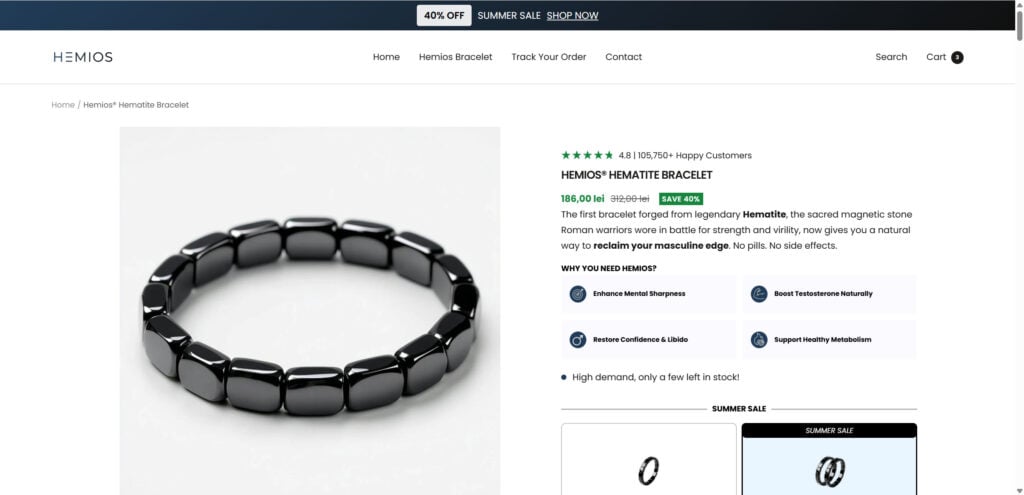
What Is the Hemios Hematite Bracelet?
Hemios sells a black elastic bracelet made from polished rectangular beads. The website currently prices it at $39.90, supposedly reduced from $67 during a 40% sale.
Instead of presenting it as basic jewelry, the product page claims that the bracelet can enhance mental sharpness, naturally boost testosterone, restore confidence and libido, support metabolism, burn stubborn fat, eliminate brain fog, and increase masculine energy. The page even describes the product as “engineered masculinity” and suggests that its magnetic force works continuously against the skin.
Those are extraordinary promises for an elastic stone bracelet.
The website attempts to support the story with references to Roman generals, Viking warriors, Egyptian pharaohs, magnetic energy fields, and “primal strength.” It also includes customer-style testimonials claiming that men became more focused, confident, productive, and successful after wearing it. (Hemios)
But none of that proves the bracelet can deliver the advertised effects.
A $1 Bracelet Sold for Nearly $40
The image supplied for this review shows visually near-identical black square-bead hematite bracelets listed on a Chinese wholesale marketplace for approximately $0.76 to $2.01 each, depending on the seller and quantity ordered.
The shape is extremely similar: polished rectangular black beads, an elastic construction, and a total length of about 20 centimeters. That does not conclusively prove that Hemios buys from one of those exact suppliers, but it shows that this is a common, inexpensive wholesale design—not a revolutionary product requiring advanced engineering.
Public wholesale listings tell the same story. Chinese suppliers advertise similar hematite elastic bracelets for around $0.30 to $3.98 each, while other square-bead designs are offered for approximately $1 to $2.40 depending on quantity.
Hemios sells its version for $39.90.
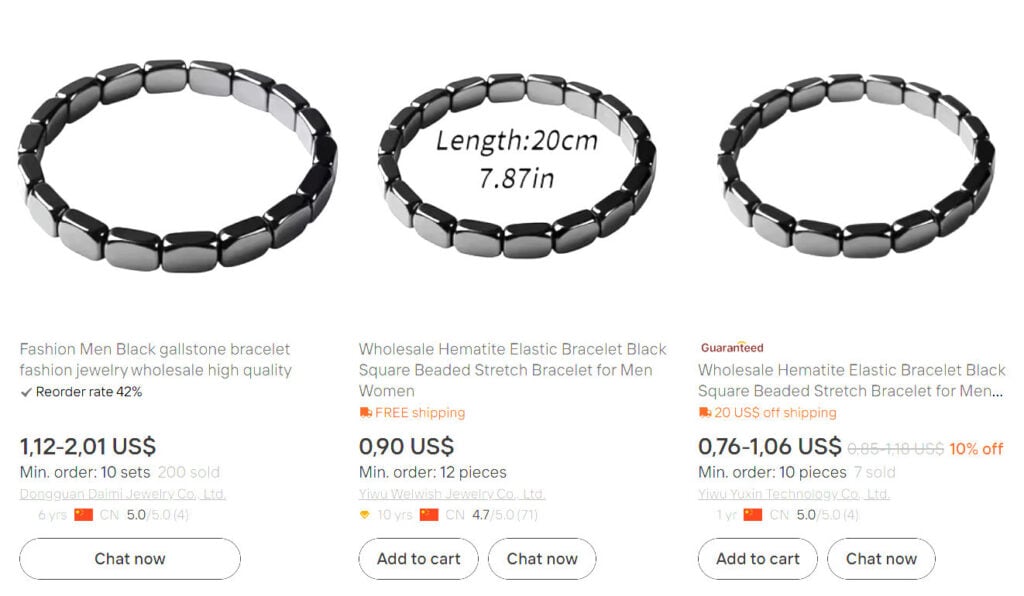
The issue is not that a retailer adds a markup. Every business does that. The problem is that the bracelet is presented as an exclusive, highly engineered wellness product rather than what it appears to be: a generic elastic bracelet that can be sourced cheaply through Chinese wholesale suppliers.
The Advertising Uses Exaggerated Wellness Claims
Hemios does not simply say the bracelet looks good or feels substantial on the wrist. Its product page links the item to testosterone, libido, fat loss, metabolism, confidence, focus, energy, and masculine performance.
The advertising says the bracelet creates a connection with the wearer’s “energy field” and provides continuous magnetic stimulation. It also claims that more than 90% of users experience increased energy, stronger libido, and greater confidence, although the page does not show the underlying research, survey methodology, participant data, or independent testing needed to verify that statistic.
The store’s own transparency page tells a much more cautious story.
There, Hemios describes the bracelet as a non-medical wellness accessory whose actual effects come from the natural weight of the beads, light pressure against the skin, and its role as a physical reminder that may support mindfulness or confidence. The company says individual experiences are subjective and that it does not guarantee any specific result.
That is a major contradiction.
On the sales page, the bracelet supposedly supports testosterone, metabolism, libido, fat loss, energy, and focus. On the safety page, it is essentially described as a polished elastic accessory that may serve as a personal reminder.
The cautious description is much closer to what buyers should realistically expect.
There Is No Convincing Evidence That Magnetic Bracelets Produce These Results
Static magnets have been marketed for decades through bracelets, wristbands, insoles, mattress pads, and other wellness products.
However, the National Center for Complementary and Integrative Health states that research does not conclusively support static magnets even for pain relief, one of the most commonly advertised uses of magnetic jewelry. The agency distinguishes passive static magnets from legitimate electromagnetic medical treatments that use powered equipment.
That does not prove every wearer will feel nothing. A bracelet can act as a placebo, personal ritual, fashion accessory, or reminder to behave more confidently. But those subjective experiences are not evidence that the stone raises testosterone, burns fat, increases metabolism, or changes a person’s biological energy.
The Federal Trade Commission has previously taken action over unsupported bracelet advertising. In the Q-Ray case, a court found that claims suggesting a bracelet’s effects were scientifically proven were false and unsubstantiated.
Hemios does not provide reliable clinical evidence for the biological claims promoted on its main product page.
How the Hemios Dropshipping Operation Works
Step 1: An Emotional Ad Targets Men’s Insecurities
The process begins with an aggressive social media advertisement.
Rather than selling the bracelet as jewelry, the ad focuses on low energy, poor concentration, reduced confidence, weight gain, lower libido, and declining masculinity. It suggests that modern men have lost an ancient source of strength and that Hemios can restore it.
This approach is effective because it connects a cheap physical product to deeply personal concerns. A buyer is no longer purchasing a black bracelet. He is being offered sharper focus, stronger performance, more confidence, and a return to the person he believes he used to be.
The marketing also contrasts the bracelet with pills, injections, powders, and supplements. That makes it sound safer, simpler, and more natural, even though the claimed benefits remain unsupported.
Step 2: History and Pseudoscience Make the Product Feel Special
The ads and sales page then build an elaborate story around hematite.
Roman generals, Viking warriors, Egyptian pharaohs, magnetic energy, primal strength, iron, and ancient traditions are combined into one dramatic narrative. The bracelet is portrayed as though it contains forgotten technology rediscovered for modern men.
This presentation distracts from the physical product.
When the marketing is removed, the customer is looking at polished beads threaded onto elastic. The historical story gives a generic bracelet an identity, perceived exclusivity, and a much higher selling price.
Step 3: A Generic Wholesale Bracelet Is Rebranded
Visually similar hematite bracelets are widely available through Chinese wholesale suppliers at extremely low prices. Some listings offer basic magnetic or hematite stretch bracelets for less than $1 per unit when purchased in quantity.
A dropshipping seller can take a generic item, create a new brand name, build an emotional story around it, and sell it for many times the wholesale price.
The seller may never physically handle most orders. When a customer buys, the order can be forwarded to an overseas supplier or fulfillment warehouse, which then ships the bracelet directly to the customer.
The exact Hemios supplier is not publicly confirmed. However, the bracelet’s generic design, the availability of visually similar products from Chinese suppliers, and customer reports of overseas fulfillment strongly support concerns that this is a heavily marked-up dropshipping product rather than an exclusive California-made invention.
Step 4: Fake Urgency Pushes the Customer to Buy
The product page displays a 40% discount and warns that demand is high, with only a few bracelets left in stock. It also advertises free shipping and a 30-day money-back guarantee.
These elements reduce hesitation.
The discount makes the $39.90 price seem temporary. The stock warning creates pressure. The guarantee makes the purchase feel risk-free.
A shopper may therefore order before checking wholesale prices, independent reviews, scientific evidence, or the detailed refund conditions.
Step 5: The Bracelet Is Shipped From Overseas
Customer reports describe long waits and indicate that orders arrive from overseas. One recent Trustpilot reviewer specifically warned that the bracelets were coming from abroad and described complications after receiving the wrong size. Other reviewers report delayed deliveries, missing tracking information, and customer service that did not respond.
The website itself does not clearly identify the bracelet’s factory or manufacturing country. It lists a San Francisco contact address and describes Hemios as an international brand, but it does not provide transparent details about where each bracelet is manufactured or dispatched.
Buyers may therefore believe they are ordering an exclusive American-designed wellness product, only to receive a generic bracelet through an overseas supply chain.
Step 6: The Delivered Product Looks Cheap
Once the package arrives, the customer may discover that the supposedly premium bracelet is simply a collection of glossy beads held together with elastic.
Independent reviews mention bracelets fraying, chipping, breaking, fitting incorrectly, and appearing poorly made. One reviewer said the first bracelet chipped within a week and that the elastic broke. Another described the quality as poor after only a few da
The bracelet may still technically match the basic product photograph. That makes a dispute more difficult.
The customer received a black hematite-style bracelet, but not the extraordinary experience promised by the ads. The seller can argue that subjective claims such as increased confidence, stronger energy, or improved focus vary between individuals.
Step 7: The “No Questions Asked” Refund Becomes Difficult to Use
The homepage promises customers a full refund with “no questions asked” if they do not feel results within 30 days.
The actual refund policy says something different.
To qualify for a return, the bracelet must be unworn, unused, in its original condition, and returned with its tags and packaging intact. The customer must first obtain authorization, pay the return shipping cost, and wait for Hemios to receive and inspect the product before any refund is approved. Final-sale items are excluded.
That creates an obvious problem.
How can a customer wear the bracelet for 30 days to see whether it improves energy, focus, libido, or confidence while also keeping it unworn and unused for the return?
The money-back promise encourages customers to test the product. The formal return policy may then disqualify them because they tested it.
In practice, this can function like a no-return system even though the website technically has a refund page.
Step 8: The Customer Gives Up
Returning a low-value bracelet internationally can cost a significant portion of the original order amount. The customer may also face approval delays, unanswered emails, requests for additional evidence, or uncertainty about the return destination.
Trustpilot currently shows Hemios with a 1.4 rating based on 105 reviews, with 87% of reviewers awarding one star. The review summary highlights negative experiences involving orders and refunds.
Some buyers will file a card dispute. Others will decide that recovering $39.90 is not worth the time and frustration.
That is what makes low-cost dropshipping schemes profitable. The markup is high, while the individual loss is often low enough that many customers eventually stop fighting.
The Return Guarantee Is Misleading
The phrase “30-day money-back guarantee” sounds clear and reassuring. A reasonable buyer may understand it to mean that they can wear the bracelet, decide whether it works, and return it if they are dissatisfied.
But Hemios requires returned items to be unused and unworn. It also makes customers pay return shipping and obtain approval before sending anything back.
Those conditions are not consistent with the prominent promise to wear the bracelet for 30 days and receive a no-questions-asked refund if no improvement is felt.
The policy may exist on paper, but it does not provide the simple, risk-free trial suggested by the advertising.
Customer Complaints Support the Warning
Independent customer feedback is overwhelmingly negative.
As of this review, Hemios has a 1.4 Trustpilot score. Customers report poor construction, broken elastic, chipped beads, incorrect sizing, slow shipping, missing tracking details, unresponsive support, and refund difficulties. One customer said the bracelet failed a simple magnet demonstration featured in the advertising, while another warned buyers that orders were arriving from overseas.
Reviews are individual reports and do not prove that every order will have the same outcome. However, the volume and consistency of the complaints directly contradict the polished testimonials shown on the seller’s own website.
Final Verdict: Do Not Order the Hemios Bracelet
The Hemios Bracelet appears to be an overpriced dropshipping product sold through exaggerated wellness marketing.
The bracelet’s design is visually similar to generic hematite elastic bracelets available from Chinese wholesalers for a fraction of the $39.90 retail price. The seller then surrounds that inexpensive product with dramatic claims involving testosterone, libido, metabolism, fat loss, mental focus, confidence, and ancient warrior energy.
Hemios provides no convincing scientific evidence that wearing the bracelet produces those biological effects. Its own transparency page retreats to a much weaker explanation, describing the product as a non-medical accessory that offers weight, pressure, and a possible psychological reminder.
The advertised money-back guarantee is also undermined by a policy requiring the bracelet to remain unused and unworn, with customers responsible for return shipping. Independent reviews describe poor quality, overseas fulfillment, weak customer service, and major refund problems.
Do not order the Hemios Hematite Bracelet.
You are likely paying nearly $40 for a cheap elastic bracelet that may have been sourced from China for only a few dollars. It may work as ordinary jewelry, but there is no reliable reason to expect it to raise testosterone, burn fat, improve libido, sharpen focus, or transform your masculine energy.
What to Do If You Already Ordered
Save screenshots of the original advertisement, product page, promised benefits, price, guarantee, and order confirmation. The marketing may change later, so preserve the exact claims that influenced your purchase.
Contact Hemios in writing and request a cancellation or return authorization. Clearly state whether the product was damaged, incorrectly sized, materially different from the advertisement, or sold using claims you believe were misleading.
Photograph the packaging, shipping label, bracelet, elastic construction, and any damage. Keep copies of every email and do not return the product without tracked shipping and written authorization.
When the seller refuses to help, stops responding, or imposes unreasonable return conditions, contact your bank, credit-card issuer, PayPal, or other payment provider. Explain that the item was materially different from the advertised product or that the promised satisfaction guarantee was not honored.
Do not allow repeated delays to push you beyond your payment provider’s dispute deadline.
FAQ
Is the Hemios Bracelet legitimate?
Hemios appears to ship at least some bracelets, but that does not make the marketing claims legitimate. The product looks like a generic, inexpensive elastic hematite bracelet sold at a substantial markup.
Is Hemios a dropshipping company?
The exact supplier has not been publicly confirmed. However, visually similar bracelets are widely available from Chinese wholesalers at very low prices, and customer reviews describe overseas fulfillment. The evidence is consistent with a dropshipping or overseas fulfillment model.
Does the Hemios Bracelet increase testosterone?
Hemios advertises natural testosterone support, but it does not provide convincing clinical evidence showing that wearing its hematite bracelet raises testosterone levels.
Can the bracelet burn fat or increase metabolism?
There is no reliable evidence presented by the seller showing that an elastic hematite bracelet burns fat or meaningfully increases metabolism.
Is the Hemios Bracelet magnetic?
The seller markets it as magnetic hematite. However, at least one customer review claims the received bracelet did not perform the basic magnetic demonstration shown in the advertisements. Individual customer reports are not laboratory tests, but the complaint adds to the concerns surrounding the marketing.
How much is a similar bracelet worth?
Visually similar hematite stretch bracelets are listed by Chinese wholesale suppliers for less than $1 to a few dollars each, depending on design, quality, and order quantity. Hemios charges $39.90.
Does Hemios offer returns?
The website advertises a 30-day guarantee, but the formal policy requires the bracelet to be unused, unworn, and in its original packaging. Customers must obtain approval and pay return shipping. These restrictions can make the guarantee difficult to use.
Is Hemios shipped from China?
The website does not clearly disclose the factory or origin of each order. Customers report overseas shipping, and highly similar bracelets are sold by Chinese wholesalers. The exact Hemios supplier cannot be independently confirmed.
Should I order the Hemios Bracelet?
No. The bracelet is heavily overpriced, the advertised benefits are unsupported, the refund terms are restrictive, and independent customer feedback is extremely poor.








