

A bracelet that promises to melt fat, regulate blood sugar, boost energy, and even help manage type 2 diabetes — sounds revolutionary, right? That’s exactly what the Lyfanoe bracelet claims to do. But behind the sleek marketing and emotional testimonials lies a troubling truth. In this detailed exposé, we’ll break down how the Lyfanoe bracelet scam works, who’s behind it, what you can do if you’ve been scammed, and why you should be extremely cautious.
If you’re considering buying this product, read this first — it could save you from wasting your money and risking your health.
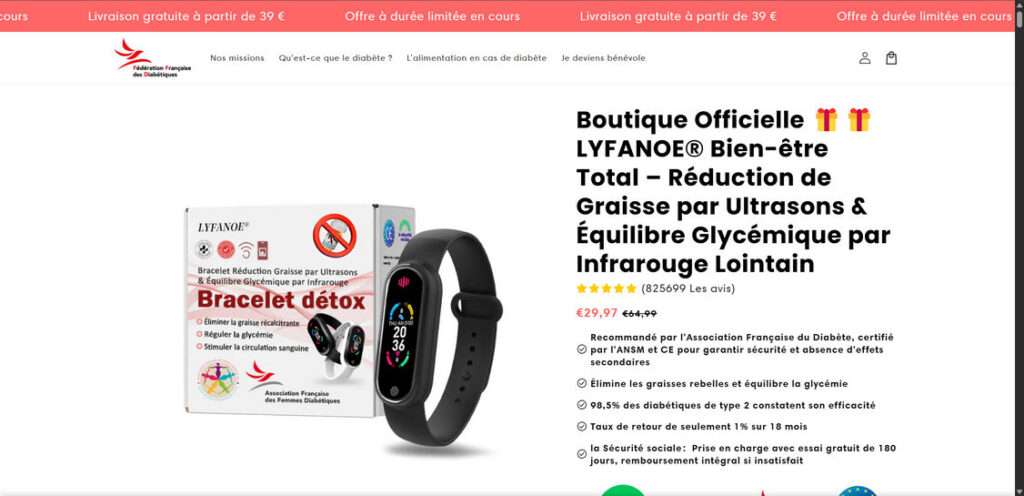
What Is the Lyfanoe Bracelet and Why It’s Raising Red Flags
The Lyfanoe bracelet is advertised as a miracle solution for a range of serious health issues. It claims to:
- Dissolve stubborn fat
- Balance blood sugar
- Boost energy levels
- Treat or manage type 2 diabetes
- Improve blood circulation and detoxify the body
This wearable device allegedly uses ultrasonic and far-infrared technology to achieve these effects — all without any exercise or medication.
Sounds like science fiction? That’s because it is.
Let’s dissect the key concerns surrounding this so-called “health breakthrough.”
1. Suspicious Certifications
The product’s website proudly displays endorsements from the French Diabetes Association (FFD), ANM, and CE, making it look like a trusted medical device. But a closer look reveals:
- Blurry, poorly edited images of the certificates
- No verifiable certificate numbers
- No way to independently verify these endorsements
If the product were truly certified, wouldn’t the makers provide high-resolution, verifiable documentation?
This is a classic tactic to build false credibility.
2. Unrealistic Health Claims
The claim that wearing a bracelet can melt fat, normalize blood sugar, and cure metabolic disorders lacks any grounding in modern medical science.
The manufacturers offer no peer-reviewed research, no real-world clinical trials, and no legitimate expert endorsements.
3. Fake Success Rates
The Lyfanoe website boldly declares a 98.5% success rate in treating type 2 diabetes.
Where did this number come from? Nowhere credible.
There are:
- No published studies
- No data
- No sample size information
Just vague references and manipulated images.
4. Misuse of Doctor Images
Several so-called “doctors” appear to endorse the bracelet. A quick reverse image search reveals the truth — these are stock photos reused across unrelated websites.
This deceptive strategy is meant to instill trust by faking professional endorsements. It’s not just dishonest — it’s dangerous.
5. Reused Before-and-After Photos
Before-and-after transformations are plastered all over their sales page. But reverse searches show these photos are recycled from other weight-loss products and websites.
If the product worked so well, why not show real users?
The answer is simple: the bracelet doesn’t work — so they fake the proof.
6. Fake Customer Reviews
While glowing five-star reviews flood the Lyfanoe website, something smells fishy.
- Reviews are duplicated
- No verified purchasers
- No trace of these reviewers on independent platforms
How the Scam Works
Understanding the mechanics of the Lyfanoe scam reveals just how calculated and manipulative it really is. Here’s a full breakdown of how they ensnare unsuspecting customers.
Step 1: Emotional Hook and Health Fear Targeting
The marketing targets people with serious health conditions — obesity, type 2 diabetes, chronic fatigue, and more. The site uses:
- Emotional testimonials
- Stories of “miraculous transformation”
- Tragic tales of illness and death
These stories are designed to exploit desperation and fear, especially among those who have struggled with traditional treatments.
Step 2: Pseudoscience and Technical Jargon
They pile on confusing science terms like:
- “Ultrasonic cavitation”
- “Far infrared therapy”
- “Lymphatic detoxification”
These terms are cherry-picked to sound advanced, but without legitimate clinical context, they’re just smoke and mirrors.
Step 3: Fake Endorsements and Certificates
To bolster credibility, they display:
- Logos from fake or misrepresented institutions
- Unverifiable medical endorsements
- Stock images of doctors in white coats
They claim the French Diabetes Association developed the product — but no such collaboration exists.
Step 4: Manipulated Imagery and Fake Results
Reused photos and doctored images make the bracelet appear effective. The photos:
- Show dramatic weight loss
- Display improved foot conditions or skin tone
- Always look too perfect to be real
These are frequently pulled from other unrelated sites or apps.
Step 5: Pressure Tactics and Fake Scarcity
“Only 12 units left in stock!” “80% discount ending in 4 minutes!”
These high-pressure tactics trigger impulsive decisions. They exploit urgency to stop people from thinking critically or researching.
Step 6: Delayed Shipping and Refund Denial
Once you place an order:
- Shipping takes weeks or never arrives
- Refunds are nearly impossible to obtain
- Emails go unanswered
- There is no customer support
If you do get a package, it usually contains cheap smartwatch worth a few dollars — nothing close to the advanced medical device they described.
What You Really Get: A $6 Smartwatch with No Medical Value
Despite all the bold claims, what victims actually receive is a cheap, generic smartwatch — identical to ones sold on Alibaba for $5–$6. It looks like a basic fitness tracker, but:
- There’s no ultrasonic tech
- No far infrared functionality
- No real health benefits
It’s just a plastic gadget with a screen that might count steps or show the time — nothing close to the fat-burning, blood sugar-regulating miracle they promised.
The box may be covered in fake logos and made-up certifications, but the device itself is worthless as a medical tool. It’s all clever marketing wrapped around a low-cost item designed to trick you out of your money.
What To Do If You’ve Fallen Victim to the Lyfanoe Bracelet Scam
If you’ve purchased the bracelet or submitted your personal info, take action immediately. Here’s what to do:
1. Contact Your Bank or Credit Card Provider
- Dispute the charge as a fraudulent or deceptive transaction
- Provide all emails, receipts, and screenshots as evidence
- Request a chargeback if possible
2. File a Complaint with Authorities
Report the scam to:
- Federal Trade Commission (FTC) – ReportFraud.ftc.gov
- Better Business Bureau (BBB)
- Internet Crime Complaint Center (IC3) – especially if you lost a large amount
- Your country’s consumer protection agency
These agencies can help shut down fraudulent sites and alert others.
3. Protect Your Identity
If you entered sensitive information (e.g. birth date, address, etc.):
- Monitor your credit report
- Watch for phishing emails or scams
- Consider using a credit monitoring service
4. Stop Others From Falling for It
- Leave honest reviews on scam reporting websites
- Share your story on social media or forums
- Warn family and friends who might be vulnerable
Scammers thrive on silence — speaking out disrupts their business model.
5. Educate Yourself for Next Time
Look for red flags in future online purchases:
- Lack of third-party reviews
- Over-the-top health claims
- Fake urgency (countdown timers)
- Blurry or fake certificates
- No way to contact real customer service
The best defense is awareness.
Frequently Asked Questions About the Lyfanoe Bracelet Scam
Is the Lyfanoe bracelet a legitimate product?
No. The Lyfanoe bracelet is not supported by any credible medical evidence. It makes unproven claims about weight loss, diabetes treatment, and blood sugar regulation. In reality, it is a basic, low-cost smartwatch with no therapeutic function.
What does the Lyfanoe bracelet actually do?
The product you receive is a simple fitness tracker-style watch with limited functionality. It does not emit ultrasonic waves or far infrared technology as advertised. It has no real impact on fat loss or blood sugar levels.
Is the Lyfanoe bracelet FDA-approved or medically certified?
No. There is no FDA approval or verifiable certification from any legitimate medical organization. Claims about endorsements from institutions like the French Diabetes Association are false or misleading.
Can a bracelet really treat type 2 diabetes or melt fat?
Absolutely not. There is no scientific evidence that wearing a bracelet can regulate insulin, melt fat, or cure metabolic disorders. These are complex medical conditions that require professional treatment and lifestyle changes.
Why are there so many positive reviews for the Lyfanoe bracelet?
The glowing reviews on the official website appear to be fake or manipulated. Many are duplicated, lack verified buyers, and use generic names and stock images. Independent reviews and forums show mostly negative experiences.
How much does the Lyfanoe bracelet cost and what is it actually worth?
The bracelet is usually sold for €29 to €60, but its real value is less than $10. Identical models are sold on Alibaba and other wholesale websites as generic smartwatches.
What should I do if I bought the Lyfanoe bracelet?
If you were scammed, contact your bank or credit card company to request a chargeback. Also report the fraud to agencies like the FTC, IC3, or your local consumer protection organization.
Can I get a refund from Lyfanoe?
In most cases, victims report that refund requests are ignored. The company often disappears after the sale, and there is no reliable customer support. Your best option is to dispute the charge with your payment provider.
Is Lyfanoe the only company selling fake health bracelets?
No. Many similar scams exist under different names, using the same tactics: fake science, false certifications, and emotional testimonials. Always research products before buying, especially those with medical claims.
How can I avoid scams like the Lyfanoe bracelet in the future?
Be skeptical of products that sound too good to be true. Look for independent reviews, check for scientific evidence, verify certifications, and avoid websites that use high-pressure sales tactics or countdown timers.
The Bottom Line: Stay Safe, Stay Informed
The Lyfanoe bracelet scam is a dangerous blend of pseudoscience, emotional manipulation, and deceitful marketing. It preys on vulnerable individuals hoping for better health, offering fake hope wrapped in false science.
From fake testimonials to doctored images and unverifiable success rates, there’s not a shred of reliable evidence backing the product’s outrageous claims. If it sounds too good to be true, it probably is.
Don’t let scammers profit off your pain. Stay skeptical, research thoroughly, and report suspicious products. Your health deserves better than a plastic bracelet masquerading as a miracle cure.

Join the discussion
0 commentsShare your experience or ask a question about this article.
Discussion
Start the conversation
Have a question or something useful to share? Add the first comment.