


The prices on Joiaery.com are built to stop you mid-scroll, with everything from clothing and shoes to jewelry listed for a fraction of what shops usually charge.
The product photos are gorgeous. The package that arrives often tells another story, and getting a refund can be far harder than checking out ever was.
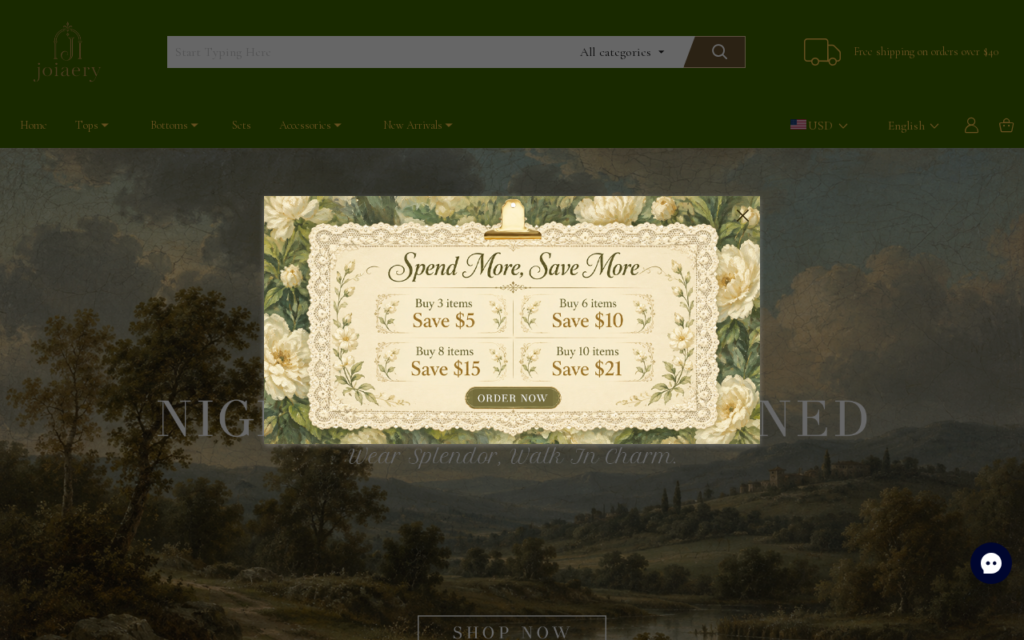
Overview
A dropshipper, not a real brand
Don’t expect Joiaery.com to make anything itself. Like thousands of similar stores, it lists items sourced from low-cost suppliers, which ship straight from warehouses in China.
The store never handles stock. It prices the items, runs the ads and takes your money, while a supplier you’ll never hear from packs the order and sends it off.
One template, one set of product photos, one return policy, many names. That’s the scam network Joiaery.com belongs to, a chain of near-identical stores that keeps reopening.
Low-quality goods that bear no resemblance to the ads
You won’t receive the product in the pictures. They’re usually borrowed from other sellers or brands, and the very low quality items that do arrive look nothing like the ads.
Returns that don’t pay off
The refund policy can sound like a safety net, but the details don’t back that up:
- Returns travel a long way. Usually the item must go back to China, and the shipping bill is yours.
- Postage can top the price. On a $25 item, the international shipping fee can be the bigger number.
- Partial refunds replace full ones. Request a return and you’ll usually get an offer of 15% to 30% back if you keep the item, not your full money back.
- Don’t expect quick help. Support usually runs through email only, and a single reply can take days.
The bottom line for this shop: Joiaery.com is a high-risk store. Do not buy from it. You’ll likely overpay badly, with no realistic route to a return.
What We Found on Joiaery.com
Here’s what we noticed when we looked at Joiaery.com:
- Joiaery.com was registered on August 17, 2026, only 97 days ago.
- The MalwareTips URL scanner gives Joiaery.com a Safety Score of 28/100, rated High Risk (full report).
- When VirusTotal last analysed Joiaery.com, on November 21, 2026, 3 of 93 security vendors flagged it as malicious or suspicious.
- Joiaery.com runs on ojtlnsa.com, the XShoppy-based storefront platform shared by a network of near-identical stores that MalwareTips tracks.
What Happens When You Order from Joiaery.com
The way most orders unfold is predictable. Knowing it up front can save you the money and weeks of emails back and forth.
Step 1: A too-low price catches your eye in an ad
Usually, the starting point is Facebook, Instagram or TikTok. There, a short video or a glossy photo shows the product at a steep markdown, often tagged “limited time.”
The video you saw often shows up in ads for dozens of other shops too. They all order from the same suppliers and borrow the same marketing material.
Step 2: An impressive front with little to back it up
Star ratings, tidy categories and a friendly About Us page make Joiaery.com look like a shop with history. Underneath, it’s often a template with a supplier list plugged in.
Many unrelated shops use the same About Us wording about a small family business or a passionate founder. That story is usually a template too.
Step 3: The long wait for your order
Because the parcel comes from China, the 5 to 7 days on offer can turn into three or four weeks. Tracking can also sit on one update for days.
Instead of one box, some orders arrive as several small packages, each tracked on its own. Lose one, and it can be hard to show what never came.
Step 4: The real item and the ad don’t line up
Open the box when it finally comes, and the item is smaller, thinner or simpler than in the ad. It’s the kind sold for pocket change elsewhere.
Most complaints sound alike. The item feels cheap, it breaks or wears out quickly, and it doesn’t match the size or description on the website.
Step 5: A refund the postage eats up
The refund path runs through China. After you send photos, you’re told to ship the item there, and the postage on its own can cost as much as the refund.
Most replies land on the same offer: keep the item, take back 15% to 30%. It looks fair, but you’ve still paid most of the price for an unwanted product.
Many buyers drop the matter here. The policy is worded this way for exactly that reason.
Red Flags at Joiaery.com
You don’t need to be an expert to see through Joiaery.com. Give each of these signs a minute before paying, and the bargain stops looking like one.
Prices that don’t square with the item
Prices like these on everything from clothing and shoes to jewelry are no lucky find. They pay for a much cheaper version than the item in the photos.
The “original” price with a line through it adds to the effect. It’s rarely a real price. Its purpose is to make an ordinary one look marked down.
Pictures that appear on other sites too
Drop a product photo into a reverse image search. It often surfaces on other stores, marketplaces or the website of the brand itself.
The brand in the picture won’t be the one sending your product. And if the image comes from a marketplace, buying the same item there is often cheaper.
No registered company details to verify
Stores in this network rarely tell you their registered name, tax number or local address. When an order goes wrong, you end up not knowing who you’re actually dealing with.
Help is limited to email
Need a quick answer? Support is usually limited to an email address or a contact form. With no phone number or live chat, problems can drag on for weeks.
That delay matters, because it also eats into your time to open a dispute with your bank or PayPal. Track those deadlines while you wait.
Pressure tactics: timers and low-stock warnings
If every product shows “only 2 left” and the timer restarts when you reload, you’re looking at a pressure tactic. Actual inventory doesn’t move like this.
Here’s an easy test: shut the tab and come back later. A deal that’s still live then was never a limited offer.
Checkout extras you didn’t ask for
Don’t trust the total at a glance. Shipping protection, priority handling or a second item can already be ticked in your cart, so read each line first.
The labels promise speed and security, but these add-ons rarely deliver either. They inflate the total for an order that may already be worth far less than you’ll pay.
The name changes when you go to pay
An unrelated name at checkout should end the order. Stop there, because the card details you enter go straight to a company you’ve never heard of.
Part of a bigger scam network of lookalike shops
Shops in this group swap names, not stock. One closes, another opens with the same catalog, and dozens of them carry the same About Us story, policies and product photos.
How to Check an Online Store Before You Buy
A few minutes of checking can tell you whether an online shop is worth your money. Start with these questions before you pay:
- Who is selling to you? Look for a company name, a registration or tax number and an address. A shop that names nobody is hard to hold to a promise.
- Where do returns go? Find the return address in the refund policy. If it’s overseas or missing, assume a return will cost more than it’s worth.
- How old is the website? Paste the address into the MalwareTips Website Scanner. It shows the domain’s age and any known warning signs in seconds.
- Are the photos original? Run a reverse image search on a product photo. If the same picture appears on many sites, the item is a generic product.
- What do buyers say elsewhere? Search the store on Trustpilot and in search results, not just the reviews on the shop itself.
- Is the ad real footage? Many shop ads now use AI-generated videos and photos. If the product only ever appears in slick renders, expect something plainer.
- Does the price make sense? Compare it with the same item on a major marketplace. A huge markdown on an unknown shop is a reason to slow down.
- Can you reach a person? A phone number or live chat is a good sign. An email address alone means problems will take a long time to solve.
If several answers come back wrong, close the tab. There’s almost always a seller with a clearer return policy and a company you can actually look up.
For extra protection while you browse, Malwarebytes Browser Guard warns you about many known scam and phishing sites before they load.
Where to Buy Instead
There are safer ways to get anything that caught your eye on Joiaery.com:
- Find the same product on a large marketplace. Buyer protection and honest reviews come standard there, and the price is often much lower.
- Choose a seller with a local return address. Cheap postage turns a return policy into one you’ll really use.
- Seek out customer photos. Pictures from people who bought it show the actual item, not the advertised version.
- See where it ships from. Marketplaces list the seller’s location, so take a look. Stock from a local warehouse arrives faster, and sending it back is actually doable.
- Pick protected payment at checkout. With a credit card or PayPal, you can open a dispute if needed.
Reputable sellers may charge a little more, but they send what you ordered and honor refund requests.
What to Do If You Already Ordered from Joiaery.com
Ordering from a shop like this doesn’t mean the money is gone. Acting early gives you the best chance of fixing the order or getting a refund.
- Save everything. Keep the order confirmation, the tracking number, every email from the store and screenshots of the product page as it looked when you bought.
- Photograph what arrives. Take clear photos of the item, the label and the packaging, especially anything that doesn’t match the listing.
- Ask the store in writing. Email support, describe the problem plainly and say what you want: a full refund or a replacement. Give them a short deadline.
- Don’t pay for an overseas return yet. If the store asks you to ship the item to China, check with your card issuer or PayPal first.
- Don’t accept a token refund. Offers of 15% to 30% back to keep the item are common. If the item isn’t as described, a dispute may get you more.
- Open a dispute if the store stalls. Use “item not received” or “not as described” with your card issuer or PayPal, and attach your evidence.
- Watch the deadlines. Card disputes often allow around 120 days, and PayPal generally accepts claims within 180 days of payment. Don’t let weeks of unanswered emails use them up.
- Ignore “customs fee” texts. Fake delivery messages asking you to pay a fee or update your address often follow online orders. Don’t pay or click.
- Leave an honest review. A short review on an independent site, with photos, helps the next shopper decide.
If you paid by bank transfer, contact your bank right away and ask whether the payment can be recalled. The sooner you call, the better the odds.
If the store won’t cooperate, file a complaint at econsumer.gov, which handles cross-border shopping complaints, or at ReportFraud.ftc.gov in the US.
Frequently Asked Questions
Is Joiaery.com a scam?
Do not buy from Joiaery.com. It’s a high-risk store in a scam network, and while orders may ship, the items are very low quality and returns cost too much.
Where does Joiaery.com ship from?
Most items go straight from suppliers in China to your door. Delivery can stretch to several weeks as a result, and tracking often updates slowly.
Why does the product look so different from the photos?
Those product shots usually come from other sellers or brands. The version you get is cheaper, made to sell at a low price.
Can I return an item to Joiaery.com?
Usually the only route is sending it to China on your own dime. With a low-priced item, you can end up paying more to ship it than you’d get back.
Before paying for postage, contact your card issuer or PayPal and ask if a “not as described” dispute would protect you instead.
My order never arrived or isn’t as described. What now?
Write to the store first. Should it refuse or keep stalling, your card issuer or PayPal is the next stop: open a dispute and include item photos plus listing screenshots.
Are the reviews on Joiaery.com real?
Be careful with them. Any store can load its own pages with glowing ratings, so look for buyer photos and comments on independent sites instead.
The Bottom Line
Joiaery.com is a high-risk store, part of a scam network built from lookalike shops. Expect very low-quality items that look nothing like the ads, plus returns that rarely make sense.
Liked something on Joiaery.com? Look for it on a marketplace with buyer protection, but do not buy from Joiaery.com.
Already ordered from the store? Save your order email and product screenshots, photograph what arrives, and dispute it with your card or PayPal if the store won’t fix things.

Reviews & discussion
0 commentsShare a firsthand experience, or ask a question.
Community reviews
joiaery.com
Moderated reader experiences, not an editorial verdict.
Start the conversation
Have a question or something useful to share? Add the first comment.