

A doctor appears to reveal a natural alternative to Ozempic. A television report says a pantry mixture involving honey and red pepper can clear “diabetic sludge” and restore normal blood sugar.
The recipe never arrives. Instead, the viewer is moved through a maze of official-looking pages where Glycotide Drops, Sugar Defender, and different company identities begin to overlap.
We checked the fake endorsement story, product sites, order links, company claims, refund policy, contact details, and scientific evidence behind the funnel.
Overview
What Glycotide Drops Claims to Do
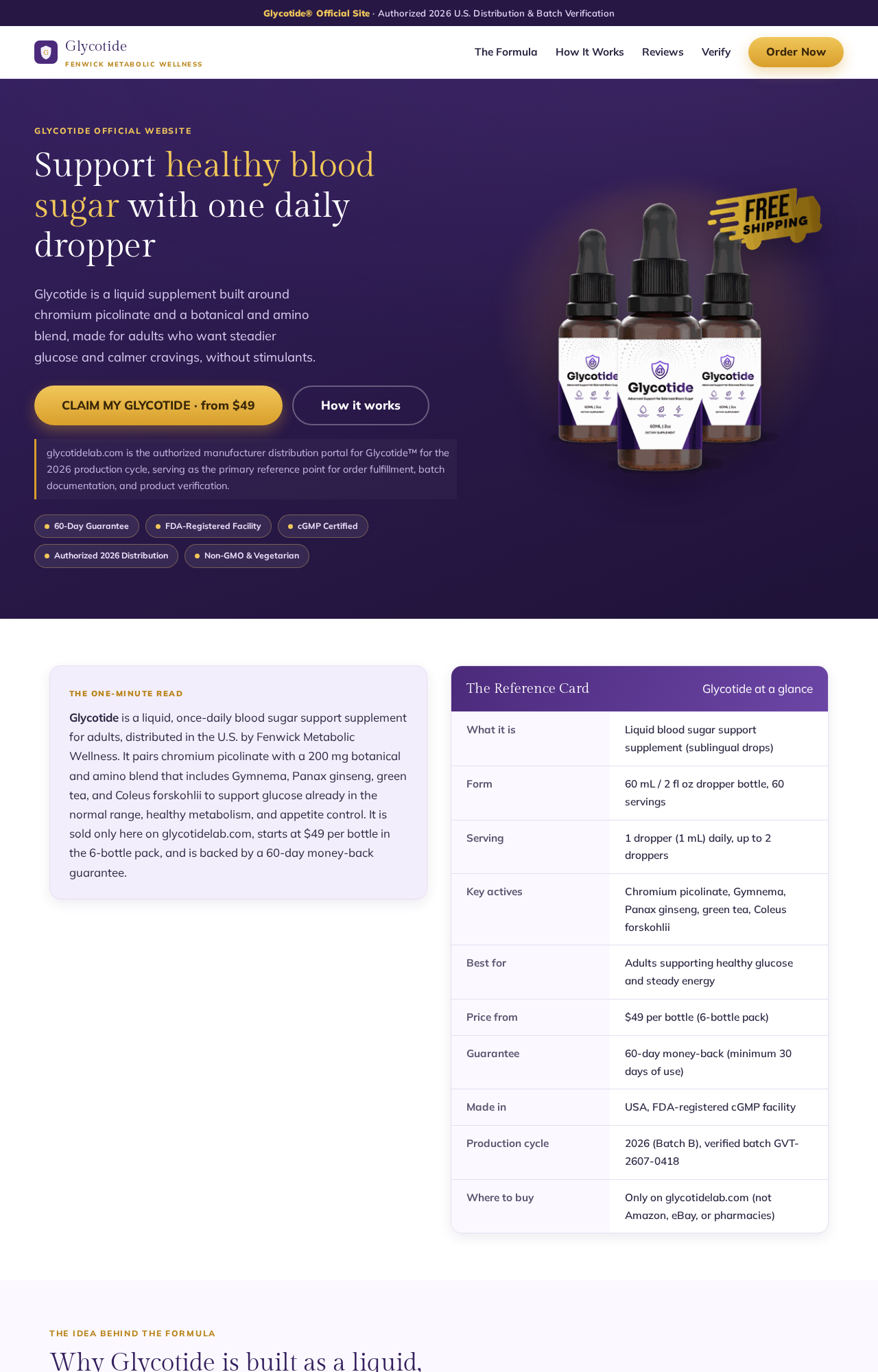
Glycotide is marketed as a liquid blood sugar support supplement. One polished website says the drops contain chromium picolinate and a 200 mg botanical and amino blend intended to support glucose already in the normal range, energy, cravings, and metabolism.
The site lists one bottle for $89, three for $177, and six for $294. It advertises a 60-day guarantee and says the product is distributed in the United States by Fenwick Metabolic Wellness, LLC.
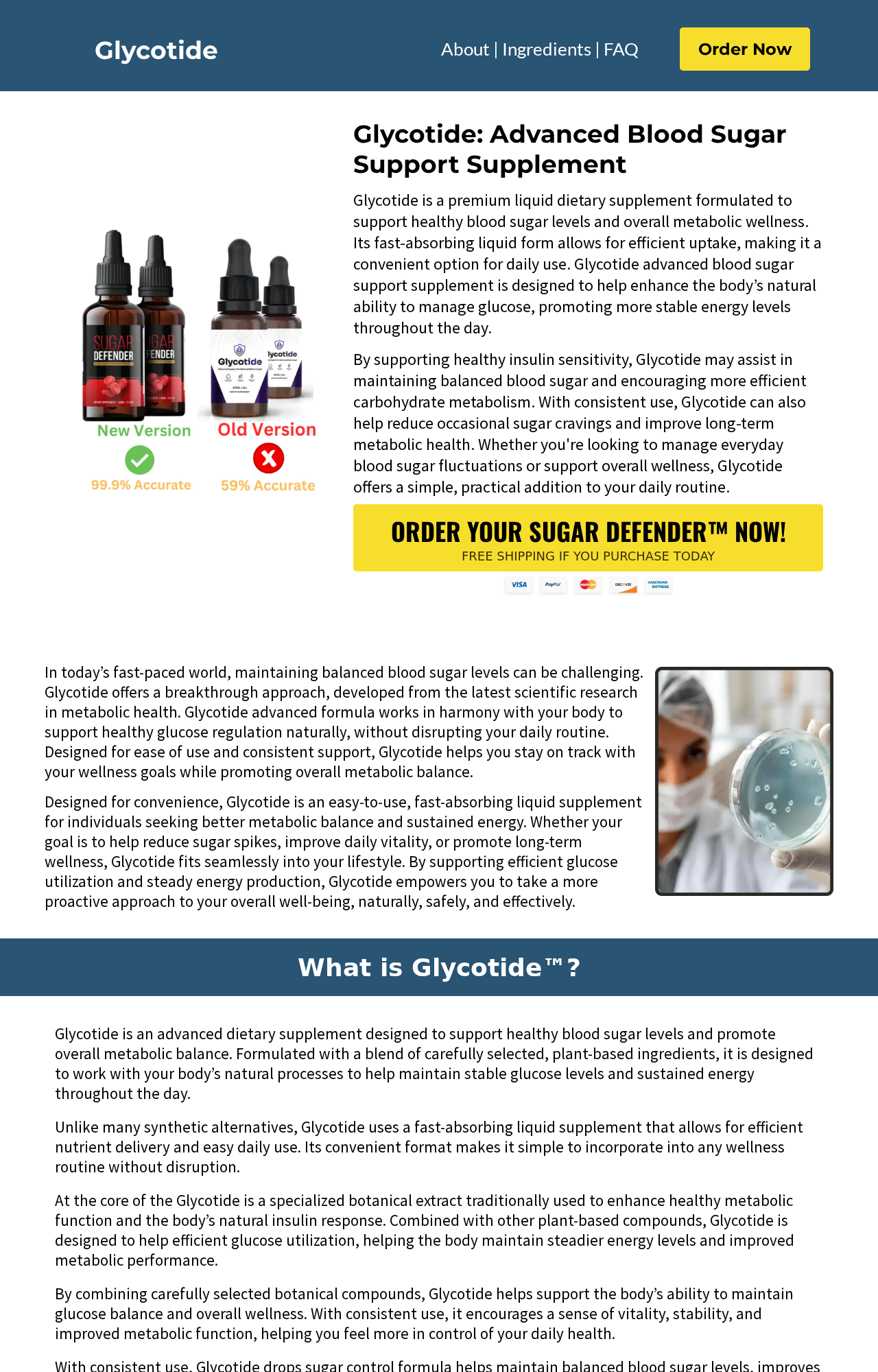
Another Glycotide-branded page uses different copy, different product comparison graphics, and order buttons that actually lead to a ClickBank offer for Sugar Defender. That disconnect is central to this investigation.
Why the Promotion Is Deceptive
Ads linked to Glycotide have falsely invoked Dr. William Li, Harvard, Fox News, and 60 Minutes. They describe a “natural Ozempic,” a hidden breakfast or pantry recipe, and a supposed substance called diabetic sludge.
We found no credible evidence that Dr. Li, Harvard, Fox News, or 60 Minutes endorses Glycotide. The medical-sounding narrative is used to bring viewers into a commercial funnel.
The story promises a recipe, but the destination sells bottles. On at least one page, the Glycotide label itself is treated as an “old version” while Sugar Defender is promoted as the “new version.”
Our Verdict on Glycotide Drops
We recommend avoiding Glycotide Drops and the natural Ozempic story used to sell it. The campaign combines fake authority, unsupported health claims, conflicting product identities, and an affiliate redirect that does not match the product named on the page.
The polished glycotidelab.com site publishes more company and formula detail than many supplement funnels. However, important laboratory, expert, review, and company claims appear to originate from that site itself, and we could not independently confirm the advertised finished-product evidence.
The main warning signs are:
- Fake doctor, university, television, and news references attract the click.
- A pantry recipe becomes a supplement order.
- “Natural Ozempic” implies drug-like weight and glucose effects.
- One Glycotide page redirects order buttons to Sugar Defender.
- The same page labels Sugar Defender the new version of Glycotide.
- Official-looking domains make inconsistent company and support claims.
- Large review and laboratory claims are not independently demonstrated on the sales page.
- No finished-product randomized clinical trial is provided.
The “Natural Ozempic” and Pantry Recipe Story
A Real Doctor’s Identity Creates False Trust
Dr. William Li is a recognizable physician and author. Using his likeness or voice makes an unknown supplement appear as though it has already passed expert review.
AI tools can recreate a face and voice, splice genuine footage into a false script, or place a person inside a fake interview. Viewers should verify any endorsement on the doctor’s official website or verified social account.
We found no such confirmation for Glycotide. A convincing video is not evidence that the featured person said the words.
“Diabetic Sludge” Is Marketing, Not a Diagnosis
The phrase gives a complex disease a vivid physical villain. It encourages the viewer to imagine that a substance is blocking normal function and can be washed away by a simple recipe.
Diabetes is diagnosed and monitored through validated medical tests. Its management depends on the type of diabetes, medication, nutrition, activity, other conditions, and individual response.
We found no recognized diagnosis called diabetic sludge and no finished-product evidence that Glycotide removes such a substance.
The Honey and Red Pepper Recipe Is Withheld
The ad mentions ordinary pantry ingredients because the promise sounds safe and inexpensive. The viewer expects instructions they can use without buying anything.
The long presentation delays the reveal, repeats the danger, attacks ordinary solutions, and eventually introduces a supplement. The recipe was an attention device, not the real offer.
This bait-and-switch remains deceptive even if a physical bottle is later delivered.
The Product Identity Breaks Apart at the Order Button
The Page Says Glycotide but the Button Says Sugar Defender
The glycotiide.com page is headed Glycotide and describes Glycotide throughout its copy. Its largest purchase button, however, says “Order Your Sugar Defender Now.”
The visible comparison graphic shows Sugar Defender bottles as the new version and Glycotide bottles as the old version, complete with unexplained accuracy percentages.
A consumer seeking Glycotide could therefore click an order button for a different product without understanding who changed the formula, label, or seller.
The Checkout Link Confirms an Affiliate Redirect
The order links use a ClickBank hop address containing an affiliate identifier and the vendor code for Sugar Defender. That shows the page is monetized as an affiliate promotion rather than operating as a straightforward Glycotide checkout.
Affiliate marketing is not inherently fraudulent. The problem is the mismatch between the product described before the click and the product offered after it.
A buyer should never assume that two bottles are identical because an affiliate calls one the new version. Compare the Supplement Facts, manufacturer, serving size, terms, and merchant.
The Site Admits It May Earn a Commission
The footer says clicking a merchant link and purchasing may result in compensation for the website. That disclosure helps explain why the page sends visitors elsewhere.
It also means claims on the affiliate page should not automatically be attributed to the merchant, manufacturer, or ClickBank. Each participant must be identified separately.
ClickBank processing can help locate an order, but it does not verify the fake doctor story or prove that the product works.
How the Glycotide Drops Scam Works
Step 1: A Fake Expert or News Clip Creates Urgency
The campaign uses a trusted doctor, Fox News, 60 Minutes, or Harvard-style authority to make a health claim feel independently confirmed.
The public figure or institution has no demonstrated role in the offer.
Step 2: The Ad Promises a Natural Ozempic Alternative
Ozempic is widely recognized for diabetes treatment and weight loss discussions. Calling a supplement “natural Ozempic” transfers expectations from a prescription drug to an unapproved commercial product.
The comparison is emotionally powerful but does not establish equivalent ingredients, dosing, effects, monitoring, or safety.
Step 3: A Pantry Recipe Keeps the Viewer Watching
Honey, red pepper, or a breakfast trick makes the solution sound accessible. The presentation delays the instructions while building fear around blood sugar and weight.
The longer someone watches, the more likely they are to feel committed to reaching the promised reveal.
Step 4: The Story Converts Into a Bottle Offer
The funnel reframes the supposed natural discovery as an ingredient story for Glycotide or another supplement. A household recipe becomes a reason to purchase several months of drops.
No doctor evaluates the buyer, medication, diagnosis, or risk.
Step 5: Official-Looking Pages Supply Badges and Reviews
Visitors see batch numbers, laboratory language, medical advisors, GMP claims, guarantee badges, and thousands of supposed verified customers.
These details look impressive, but buyers need independent documentation, not statements controlled by the seller’s own page.
Step 6: The Product Name Can Change at the Final Click
On the affiliate page we examined, Glycotide changes into Sugar Defender. Another campaign could make the same story point to a different bottle tomorrow.
This is why the false endorsement and recipe narrative should be investigated independently from the label currently attached to it.
Step 7: Refund Terms Depend on the Actual Merchant
A Glycotide-branded guarantee does not necessarily govern a Sugar Defender order placed through ClickBank. The receipt, merchant, vendor code, and final checkout determine where the refund request must go.
We did not find enough evidence to claim that the Glycotide order is automatically recurring. Buyers must inspect the exact checkout rather than importing assumptions from other supplement funnels.
Company, Address, and Fulfillment Checks
One Site Names Fenwick Metabolic Wellness
Glycotidelab.com says Fenwick Metabolic Wellness, LLC distributes the product and was founded in 2019. It publishes 1224 South Higgins Avenue, Suite 210, Missoula, MT 59801, care@glycotidelab.com, and +1 (406) 723-0148.
We could not independently confirm the advertised history, medical board, laboratory relationship, or finished-product test solely from records linked on the sales page. Treat them as seller claims until independently verified.
The Address Does Not Prove Manufacturing
A suite address can serve as an office or mailbox. It is not the manufacturing facility named by the site’s FDA-registered and cGMP statements.
The actual facility, responsible manufacturer, and lot-specific laboratory report should be identifiable before a consumer relies on purity or origin claims.
Other Campaign Materials Use Different Identities
Other promotional references around Glycotide have named GEX Corp, generic support addresses, different phone numbers, and a Largo, Florida return location. Those details do not match the Fenwick identity on glycotidelab.com.
A buyer should not combine all of them into one assumed company. Use the seller information on the exact receipt and ask the merchant to state the legal entity responsible for that order.
The Affiliate and Merchant Are Separate
The operator of glycotiide.com may earn a commission for sending a buyer to a ClickBank merchant. ClickBank processes marketplace transactions, while the vendor supplies the product and terms.
None of those roles makes the fake Fox News, Harvard, 60 Minutes, or doctor endorsement true. Accountability must follow each participant’s actual contribution.

The Guarantee Still Requires Verification
The Glycotide Page Advertises 60 Days
The guarantee page says customers should try Glycotide for at least 30 days and can request a refund within 60 days of purchase. It directs them to care@glycotidelab.com.
The page says the buyer will receive return instructions and that the purchase price is refunded after the return is received.
Save this page before ordering because policies can change and the current wording may not appear in a later dispute.
A Different Checkout Can Mean Different Terms
If the order button sends the customer to Sugar Defender or another ClickBank product, the Glycotide guarantee may not control that purchase.
Look at the product name, vendor, total, billing frequency, and refund policy on the final payment screen. The page before the checkout is not enough.
Blood Sugar Supplements Can Interact With Treatment
The National Center for Complementary and Integrative Health says evidence for most diabetes supplements is unclear, and some products can cause serious side effects or interact with medication.
Do not replace insulin or prescribed drugs with Glycotide, Sugar Defender, a pantry recipe, or any product described as natural Ozempic. Ask a clinician to review the complete label.
What to Do if You Have Fallen Victim to This Scam
- Save the false endorsement. Capture the doctor, news, Harvard, 60 Minutes, recipe, and natural Ozempic claims before the ad disappears.
- Confirm which product you actually bought. Compare the landing page, checkout, receipt, bottle, and card descriptor. Glycotide and Sugar Defender are not interchangeable names.
- Identify the merchant and billing frequency. Use the receipt to determine whether ClickBank or another retailer processed the order and whether it was one-time or recurring.
- Request a refund through the correct channel. For a glycotidelab.com order, use the support details in its confirmation. For ClickBank, use the official order support portal with the receipt information.
- Return only after receiving instructions. Ask which bottles are required, where to send them, and which deadline controls. Photograph the contents and use tracking.
- Cancel any recurring billing shown in the receipt. We did not prove automatic refills for Glycotide, but a ClickBank account can show whether the purchased product has future payments.
- Dispute unresolved or mismatched charges. Explain to the card issuer if you were shown Glycotide but billed for another product, charged more than authorized, or denied a valid refund.
- Protect your health. Do not alter diabetes medication because of the ad. Contact a clinician about the ingredients, side effects, or abnormal glucose readings.
- Report and secure. Report the fake endorsement to the platform and FTC. Run Malwarebytes for suspicious redirects or downloads, and use AdGuard to reduce deceptive ads and tracking.
Frequently Asked Questions
Does Dr. William Li endorse Glycotide?
We found no credible evidence that Dr. William Li endorses Glycotide. Verify medical endorsements on the expert’s own official channels.
Is Glycotide a natural Ozempic?
No supplement should be treated as equivalent to a prescription drug merely because an ad uses that phrase. The products have different evidence, regulation, dosing, and risks.
Is the honey and red pepper recipe real?
The recipe is used as a marketing hook. The funnel ultimately sells supplement bottles, and we found no reliable evidence that the pantry mixture treats diabetes.
Why does a Glycotide page sell Sugar Defender?
The page contains affiliate links for the Sugar Defender vendor and visually calls it the new version. No clear manufacturer documentation explains that supposed transition.
Is Glycotide a subscription?
We did not find sufficient evidence to say Glycotide automatically enrolls every buyer. Check the final checkout and receipt because affiliate destinations can use different billing models.
Is the 60-day guarantee reliable?
The Glycotide site publishes a 60-day process, but it applies only if that site and seller handled the order. A redirected Sugar Defender purchase may follow separate terms.
The Bottom Line
Glycotide Drops is promoted through a story that borrows doctors, broadcasters, Harvard, drug expectations, and a pantry recipe. The commercial path then becomes confused enough to send some visitors to a different supplement entirely.
That is not a trustworthy way to sell a health product. Avoid the campaign, verify every merchant and bottle name, and rely on qualified diabetes care rather than a fake natural Ozempic reveal.








