

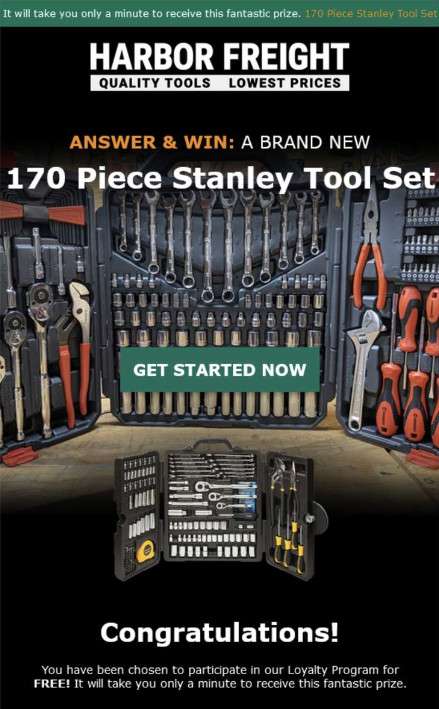
A prevalent scam is circulating online and in emails promoting Harbor Freight tool storage boxes at unbelievable clearance prices. However, this is a fraudulent scheme aimed at stealing victims’ money and information. This article will take an in-depth look at how this Harbor Freight scam works and provide tips on avoiding it.
Scam Overview
This scam operates by running flashy online ads and promo emails touting Harbor Freight’s high-end tool storage boxes being offered at deep clearance prices like 40-50% off. The ads showcase real Harbor Freight products like the heavy-duty 72-inch Beta tool box pictured being sold at absurdly low prices like $39.99.
Victims are lured to fake websites impersonating Harbor Freight’s online shop. These sites encourage entering personal and payment data to purchase the deeply discounted tool boxes, when in reality it is a scam to harvest users’ financial information.
After submitting details, victims never receive any tool storage products. The fake sites have no actual connection to Harbor Freight or any real supplier. At best credit card details are stolen and sold. At worst victims have their identities stolen.
This Harbor Freight scam exhibits typical red flags:
- Unbelievable low prices like $39.99 for a $700 Beta tool box.
- Fake limited-time deals with countdown timers and urgency tactics.
- No indication of Harbor Freight or a real business behind the sites.
- Amateur site designs with sloppy text and styling errors.
- Aggressively pushing users to enter personal info to “purchase.”
With vigilance and awareness, consumers hopefully can recognize these too-good-to-be-true offers for what they are – an attempt to rip off innocent shoppers.
How the Scam Works
The Harbor Freight tool box scam ensnares victims in a calculated sequence using social media ads, promo emails, and fake websites. Here’s an inside look at how it operates:
Bait: Flashy Promotional Ads/Emails
The scam starts with compelling ads run on platforms like Facebook or scam emails sent out en masse. For example:
“HARBOR FREIGHT TOOLS SITE-WIDE CLEARANCE 💥 72-in x 22-in Triple Bank Roller Cabinet ONLY $39.99! 💥Today ONLY – While Supplies Last! 👉 Grab the Best Deals before it’s too late! HARBORDEALS.COM”
The ads showcase Harbor Freight’s actual tool boxes for sale at jaw-dropping prices like $39.99. Terms like “Today Only” create urgency to purchase quickly before the deals expire.
While compelling, these too-good-to-be-true ads and emails are completely fabricated. Their aim is driving traffic to fake sites to execute the actual scam.
Hook: Elaborate Fake Websites
Clicking on these ads or emails leads users to sophisticated fake websites designed to fool victims. These sites closely mimic Harbor Freight’s real website with identical branding, images, logos and even web address with the domain harborfreightdeals.com.
The fake sites continue touting the same tool storage being cleared out at improbable prices up to 50% off. Countdown timers pressure visitors to purchase fast before the fake “deals” expire. Order forms, customer reviews, and other details make the sites appear authentic.
In reality, these websites are 100% scams with zero actual connection to Harbor Freight. But the polish and replica Harbor Freight designs fools most visitors.
Reel-In: Collecting Personal and Payment Data
To purchase the deeply discounted tool boxes, users must fill out forms with a range of sensitive personal and payment information including full name, address, credit card number, CVV code, etc.
The sites claim this is to process orders, calculate precise shipping costs, and finalize the incredible clearance deals. But in fact, it’s just a scheme to directly harvest users’ financial information.
The Catch: Stolen Money and Details
After submitting information, victims receive nothing but stress and damages. The fake websites vanish with users’ payment data, identities, and money in hand.
At best, credit card information gets sold on black markets. At worst, scammers open fraudulent accounts and drain bank accounts. Some victims eventually receive cheap, poor quality toolboxes, unrelated to Harbor Freight, so scammers can claim they delivered something.
But the reality is – the tool box deals promoted in the ads and emails are fictitious. The scams only exist to deceive shoppers into surrendering their personal information and money.
What to Do If You Are a Victim
Falling for online scams can have serious financial and identity theft impacts. Here are important actions to take if you suspect you got duped by the Harbor Freight scam:
Contact Your Credit Card Provider Immediately
If you entered your card information, call your provider right away to report fraudulent charges. Alert them your details were stolen via a fake website posing as Harbor Freight. Cancel your current card and request a new number.
Ask the provider to reverse any pending or recent charges from the scam. Act quickly, as early intervention can limit damages. Monitor statements closely moving forward.
Freeze Credit Reports
Contact Equifax, Experian, and TransUnion to place freezes on your credit reports. This blocks scammers who stole your info from opening fraudulent accounts. Temporarily lift freezes only when legitimately applying for credit.
Reset Account Passwords
Change the passwords on your online accounts in case the scam website also obtained account passwords or emails. Use unique complex passwords for each account and enable two-factor authentication.
Learn From This Experience
While being scammed is disheartening, try to use this as motivation to be even more vigilant against frauds in the future. Learn to recognize the warning signs and only shop on the verified real websites of retailers you know and trust.
Frequently Asked Questions about the Harbor Freight Scam
What is this Harbor Freight tool box scam I keep seeing online?
This scam promotes Harbor Freight’s high-end tool storage boxes at unbelievable clearance prices like 40-50% off. The ads link to fake websites that steal your personal and payment information.
How can you recognize these ads and emails are a scam?
Warning signs include the unrealistic low prices, fake limited-time deals, no indication of Harbor Freight behind the sites, and pressure to enter your information quickly.
What happens when you click on one of the scam ads/emails?
The ad or email sends you to a sophisticated fake website impersonating Harbor Freight’s real online shop. The site pressures you to enter personal/payment info to purchase the deeply discounted tool boxes.
Is it safe to enter my information on those sites?
Absolutely not. The sites are complete scams to harvest your financial details, not real Harbor Freight sites. No real tool boxes will ever ship out.
What should you do if you already entered your information?
Immediately contact your credit card company to report fraud, cancel your current card, and request a new one. Also place a credit freeze and reset passwords as precautions against identity theft.
How can I avoid this Harbor Freight scam?
Look for the red flags, verify it’s Harbor Freight’s real site, avoid deals that seem unrealistic, and never enter payment information on an unfamiliar website.
Where can I report these scammy ads and emails?
Report social media ads to the platform. Forward scam emails to the FTC at spam@uce.gov. This helps get scams removed and shut down.
The Bottom Line
The Harbor Freight tool box clearance scam attempts to take advantage of enthusiastic shoppers through deceptive ads, emails, and websites. But armed with the right awareness, consumers have the power to recognize and avoid these scams.
Any offer that seems wildly too good to be true should raise red flags. Take time to research unfamiliar sellers and watch for indicators of fraud before providing personal information. The real Harbor Freight website is harborfreight.com – any deals from other domains are fake.
With caution and vigilance, consumers can protect their sensitive information and hard-earned money. Report suspicious ads or activity to help prevent others from being victimized. And remember – unbelievable deals are almost always just a scam.

Join the discussion
0 commentsShare your experience or ask a question about this article.
Discussion
Start the conversation
Have a question or something useful to share? Add the first comment.