

A video promises that a familiar doctor uncovered a simple way to protect memory and reverse the decline families fear most. Honey, rosemary, or another kitchen ingredient provides the hook, and respected public figures seem to confirm the discovery.
The story eventually leads to Harm Brain capsules, also promoted through Harmo Brain spellings and a growing collection of official-looking domains. The product is real enough to appear in fulfillment records and marketplaces. The miracle surrounding it is not.
Our Harm Brain capsules reviews investigation examined the fake Alzheimer’s story, formula label, company names, checkout, package pricing, return rules, marketplace offers, reported product substitutions, and related supplement names.
Overview
Harm Brain is sold behind fabricated Alzheimer’s and memory-cure stories
The campaign has used unauthorized AI-style depictions of Dr. Dale Bredesen, Dr. Bruce Perry, Bill Gates, Steve Martin, Morgan Freeman, Michael Caine, Jane Pauley, and 60 Minutes correspondents. The exact cast changes as ads are copied.
We found no verified endorsement connecting those people to Harm Brain. The supposed honey shield, rosemary recipe, BDNF switch, or two-ingredient dementia cure is a retention device for a sales video, not a medical discovery.
The capsule appears to use a white-label model with incomplete dose transparency
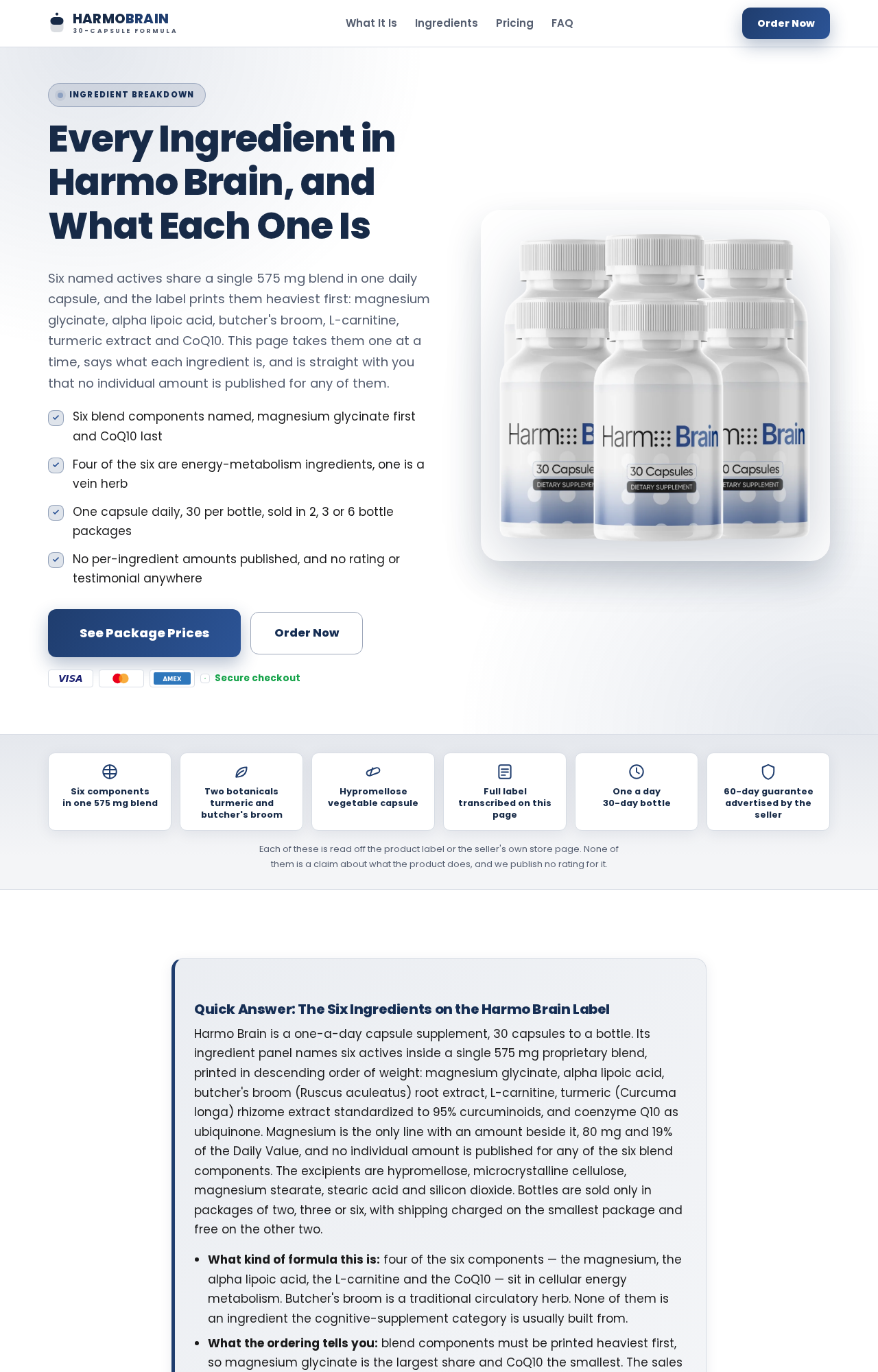
The label material describes one capsule daily and a 575 mg proprietary blend. It names magnesium glycinate, alpha lipoic acid, butcher’s broom root extract, L-carnitine, turmeric extract standardized to 95% curcuminoids, and coenzyme Q10.
Magnesium is separately shown at 80 mg, but the six components inside the blend do not have individual amounts. That prevents a buyer from comparing each ingredient with research doses and makes broad cognitive claims difficult to evaluate.
The seller trail connects Harm Brain, Harmo Brain, Hormovance, and fulfillment firms
The bottle reportedly names Gluco Elixir in Aurora, Colorado as distributor and uses support tied to mindshiftfocus.com. A sales-page footer names SHIPOFFERS at 19655 East 35th Drive in Aurora and uses a Harmo Brain support address.
A public complaint handled by BuyGoods describes a customer ordering six bottles of Hormovance for $294 but receiving Harm Brain. The company response confirmed the order and later issued a full refund. That is direct evidence of operational overlap, though it does not prove every order is substituted.
- The Alzheimer’s and dementia cure endorsements are fabricated.
- Harm Brain and Harmo Brain spellings circulate across multiple domains.
- The label uses a 575 mg proprietary blend with undisclosed individual doses.
- Official-looking package pricing ranges from $49 to $79 per bottle.
- A 60-day return promise requires the buyer to follow narrower policy terms.
- The current reviewed checkout does not show an automatic subscription.
- A documented complaint connects a Hormovance order to a Harm Brain shipment.
- Marketplace listings offer similar bottles for far less than funnel prices.
What Is Actually in Harm Brain?
The label says a serving is one capsule. It lists 80 mg of magnesium and a proprietary blend totaling 575 mg. The blend contains six named components, but magnesium glycinate appears again inside that list, creating ambiguity about how the declared magnesium relates to the total blend.
Alpha lipoic acid, L-carnitine, turmeric, and coenzyme Q10 are commonly used in supplements discussing energy metabolism or antioxidant support. Butcher’s broom is more often associated with venous circulation than with a proven memory treatment.
None of those facts demonstrate that Harm Brain prevents, cures, or reverses Alzheimer’s disease. A compound can participate in cellular energy or oxidative pathways without producing a meaningful dementia outcome when combined in an undisclosed dose.
Some Harmo Brain sites contradict one another. One page describes capsules and the six-ingredient formula, then later calls the product liquid drops and lists bacopa, lion’s mane, ginkgo, rhodiola, gotu kola, and phosphatidylserine. Another says one capsule daily, while a different page says two.
Those are not cosmetic copy errors. Form, dose, and ingredients are basic product identity. A shopper should use only the Supplement Facts panel on the sealed bottle actually received and should reject a shipment that does not match the order.
The Price Gap and the Product-Substitution Evidence
Affiliate-style Harmo Brain pages display two bottles at $79 each, three at $69 each, and six at $49 each. The largest bundle totals $294 and is presented as the best value with free shipping.
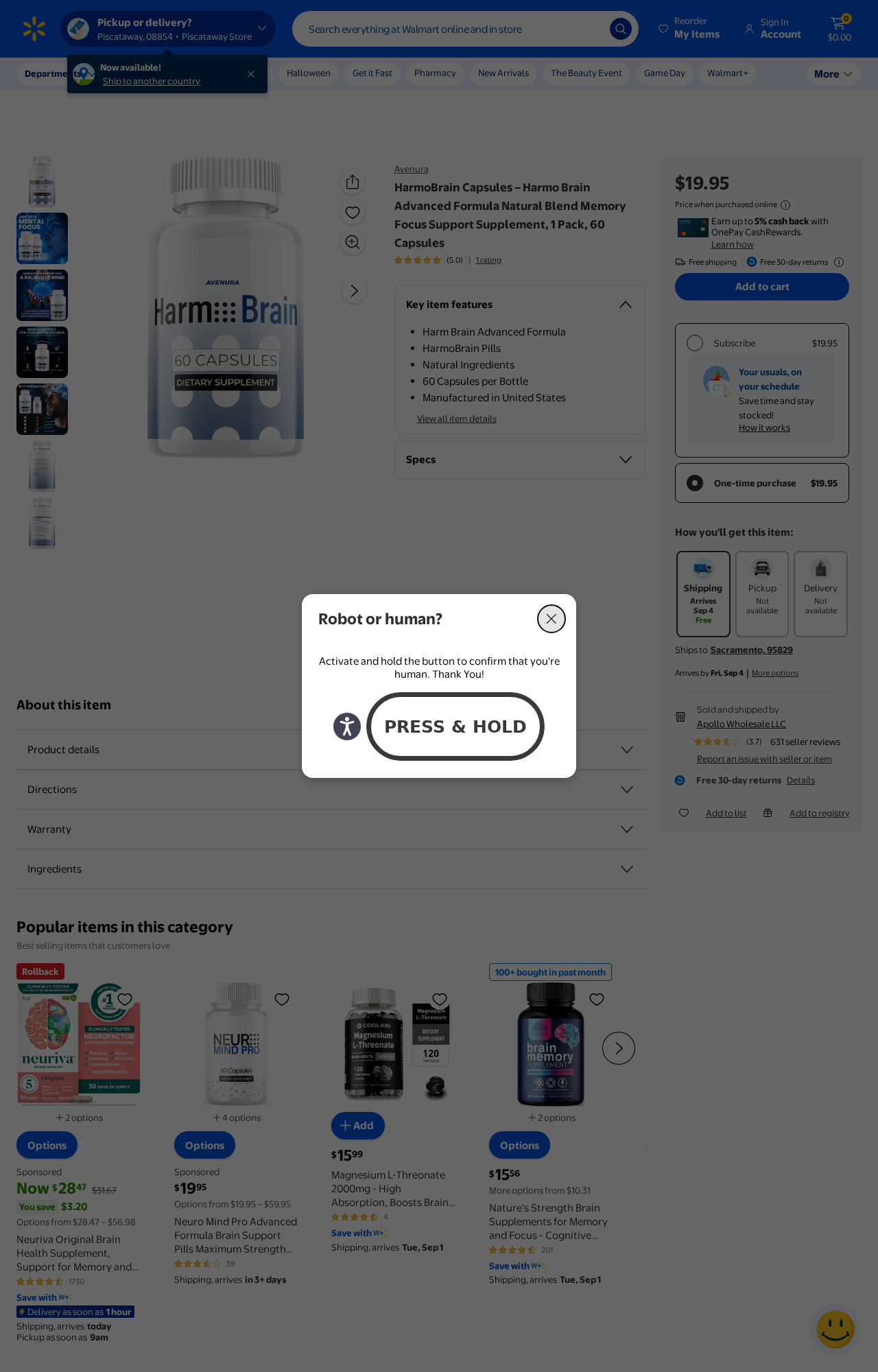
Marketplace listings show Harm Brain or HarmoBrain bottles at much lower prices. One Walmart listing displayed a single 60-capsule bottle at $19.95, sold and shipped by a third-party marketplace merchant.
A low marketplace price does not prove the item is genuine, identical, or authorized. It does show why a funnel’s “regular price” and calculated savings cannot be accepted without understanding the distribution chain.
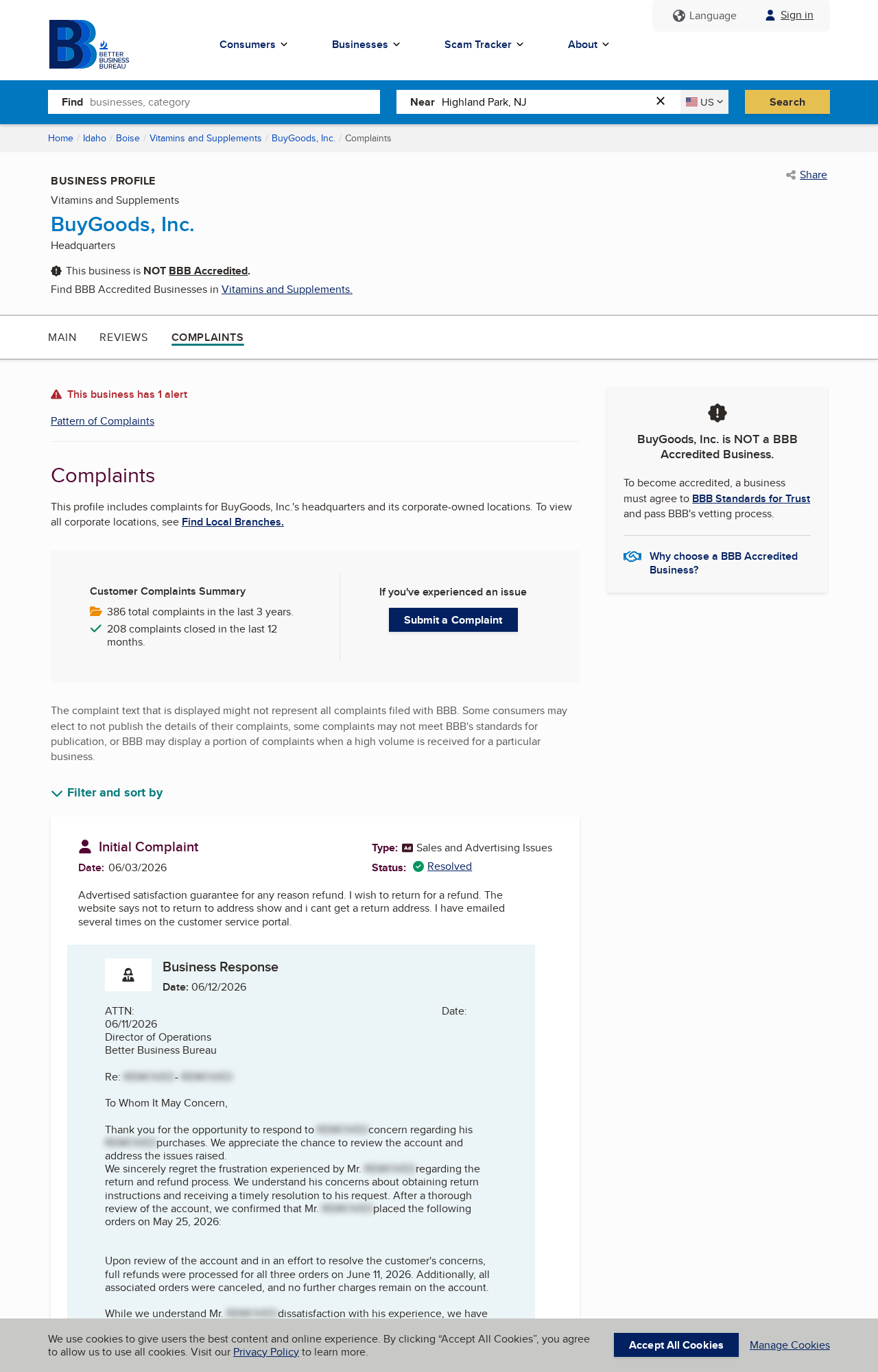
The most important record concerns a customer who said they ordered Hormovance and received Harm Brain. BuyGoods responded that its records showed a May 2026 order for six Hormovance bottles totaling $294 and acknowledged a shipping error.
The complaint also described an initial offer to keep the unwanted product for a 25% refund. The business later issued a full $294 refund and said no return was required.
That episode does not establish that all Harm Brain customers receive the wrong product. It does establish that Harm Brain and Hormovance passed through the same fulfillment or customer-service ecosystem in at least one documented order.
The current Harm Brain checkout reviewed by an independent label-analysis page showed no subscription option. We do not call that captured offer an automatic-refill plan. Phone upsells or another funnel may use separate terms, so every buyer should ask and record whether future charges are authorized.
How the Harm Brain Capsules Scam Works
Step 1: A frightening memory story targets older adults and families
The ad begins with forgetfulness, dementia, or the fear of losing independence. It may claim doctors ignored a natural discovery or that powerful interests tried to suppress an inexpensive cure.
This subject creates urgency because viewers are not shopping casually. They may be worried about themselves, a spouse, or a parent, which makes borrowed medical authority especially powerful.
Step 2: AI impersonation supplies famous proof
Altered footage makes doctors, journalists, actors, or technology leaders appear to discuss a rosemary recipe, honey protocol, BDNF activation, or secret Alzheimer’s medicine.
A recognizable face is not evidence. Check the person’s official website or verified account for an endorsement that exists independently of the advertisement. In this campaign, we found none.
Step 3: A long video promises a recipe but withholds it
The presentation says the viewer will soon learn a simple method using familiar ingredients. Each delay adds another emotional story, enemy, scientific explanation, or testimonial.
The promised home recipe is never the real destination. Harm Brain capsules are. By delaying the name, the funnel prevents early comparison and keeps reusable ad footage separate from a product label that can change.
Step 4: Biological terminology makes the bottle sound curative
BDNF, inflammation, blood flow, mitochondria, acetylcholine, amyloid, and oxidative stress appear in the pitch. These are real scientific terms, but their presence does not prove a proprietary blend reverses a complex disease.
The finished formula lacks published individual doses and product-specific clinical evidence. No diagram or reference to an ingredient can bridge that gap.
Step 5: The buyer is steered toward a $294 bundle
The smallest funnel package may contain two bottles. Higher per-bottle pricing on that tier makes six bottles at $49 each look like the rational choice.
A 60-day guarantee reassures the shopper, but six months of capsules exceed the guarantee period. The policy says the clock runs from purchase and the buyer must return all bottles, empty or not, at their own shipping expense.
Step 6: Phone sales and fulfillment can introduce another offer
The campaign investigator reported that buyers may receive follow-up sales calls seeking additional purchases. A phone agent may discuss other supplements, premium packages, or recurring arrangements separate from the online checkout.
Never approve an upsell because the caller knows the order number. Ask for the legal company, product, complete total, one-time or recurring status, and return terms in writing before agreeing.
Step 7: Related brand names complicate refunds
Harm Brain, Harmo Brain, Hormovance, Gluco Elixir, SHIPOFFERS, BuyGoods, and a marketplace seller can each appear at a different point. Some are product names, one is a label distributor, another handles fulfillment, and another processes or supports orders.
Keep them separate. The party that created an ad is not automatically the party that shipped a bottle, but the receipt and card descriptor must still identify who accepted the money and owes the refund.
Company, Address, and Fulfillment Checks
The label names Gluco Elixir, not Harm Brain, as distributor
The available label record says “Distributed by Gluco Elixir” in Aurora, Colorado and points support toward mindshiftfocus.com. A distributor can lawfully sell a contract-made formula, but it is not automatically the manufacturer.
Before using a bottle, confirm the distributor line, phone, email, lot, and Supplement Facts match the exact product. A missing or altered panel is a reason to stop.
The sales page names SHIPOFFERS at a fulfillment address
Another part of the commercial trail names SHIPOFFERS at 19655 East 35th Drive, Aurora, Colorado. That location is associated with fulfillment operations and does not by itself prove who formulated or owns Harm Brain.
A warehouse can store and ship products for many clients. It should not be described as the brand headquarters, factory, or medical research center without evidence.
BuyGoods appears in the documented complaint process
The public Hormovance complaint was answered under BuyGoods, and the response cited internal order records before issuing the refund. That makes BuyGoods relevant to that specific transaction.
It does not prove BuyGoods manufactured Harm Brain or created the fake celebrity ad. Use the exact receipt to identify its role in any new order instead of applying one complaint to every seller.
Marketplace stock may belong to a different supply channel
Walmart, Shop, and eBay listings show similar products sold by independent merchants at widely different prices. Some bottles list 30 capsules, while others advertise 60. Images and titles are not enough to establish authenticity.
We found no basis to claim all units are made in China. The evidence supports a white-label and fragmented distribution concern. Demand a manufacturer, country, batch test, lot, serving, and traceable return party before swallowing any unit.
What to Do if You Have Fallen Victim to This Scam
- Document the promised and delivered products. Save the ad, video, checkout, selected package, confirmation, card descriptor, call records, shipping label, bottle, lot, and ingredient panel. Photograph the unopened package from every side.
- Identify every company by role. Write down the advertised brand, legal seller, processor, distributor, fulfillment center, marketplace merchant, and return contact. Do not assume they are interchangeable.
- Reject unauthorized phone upsells. Tell the caller you do not authorize additional orders or recurring billing. Do not provide another card, remote computer access, or verification code.
- Contact the card issuer promptly. Explain a wrong product, misleading cure claim, unauthorized add-on, non-delivery, or refund refusal. Ask about blocking future charges and the dispute deadline.
- Request written return instructions. Keep bottles sealed until the seller confirms whether a return is required, where it goes, and who pays postage. Use tracking and preserve the delivery record.
- Consult a clinician before using the capsules. Do not replace dementia treatment or evaluation with Harm Brain. Bring the exact label to a pharmacist, especially if you take diabetes medication, anticoagulants, thyroid medicine, or have kidney or liver disease.
- Report the impersonation and commercial trail. File reports with the ad platform, FTC, IC3, marketplace, and the official representative of the person depicted. Include phone numbers and all domains.
- Protect the device and browser. Use Malwarebytes if the funnel produced downloads, fake warnings, or notification prompts. AdGuard can reduce future malicious advertising and tracking, but it cannot reverse a card charge.
Frequently Asked Questions
Is Harm Brain a real supplement?
Physical Harm Brain or Harmo Brain bottles are sold online. The existence of a capsule does not make the Alzheimer’s cure story, AI endorsements, or oversized cognitive promises legitimate.
Did Dr. Dale Bredesen or Dr. Bruce Perry endorse Harm Brain?
We found no verified endorsement from either doctor. Their identities are used in unauthorized AI-style campaigns attached to changing recipe stories.
Are Harm Brain and Harmo Brain the same?
The names and imagery overlap, but pages disagree on form, dose, and ingredients. Treat the exact bottle and seller as separate evidence and do not assume every listing is identical.
Why did a Hormovance buyer receive Harm Brain?
A documented complaint describes that substitution, and the business response confirmed the Hormovance order before issuing a full refund. It proves one fulfillment error, not that every order follows that pattern.
Is Harm Brain sold by subscription?
The current online checkout examined did not display recurring billing. A phone upsell, marketplace, or different funnel can use other terms, so confirm one-time status in writing.
Can Harm Brain reverse Alzheimer’s disease?
No reliable product-specific evidence shows it can. Do not stop medication, postpone evaluation, or rely on a honey, rosemary, BDNF, or supplement story promoted through an AI video.
The Bottom Line
Harm Brain is an ordinary proprietary-blend supplement wrapped in extraordinary fiction. Fake experts and celebrities, recipe bait, incomplete doses, bulk pricing, inconsistent identities, and a documented product substitution make the offer unsafe to trust.
The current checkout is not a confirmed subscription, but that does not repair the cure claims or the fragmented seller trail. Families worried about memory deserve real medical guidance, not an AI story that ends at a $294 cart.








