

A tenant offers a signing bonus to someone willing to take over a lease. Management appears to approve the transfer, the incoming tenant confirms the arrangement, and the difficult part seems finished.
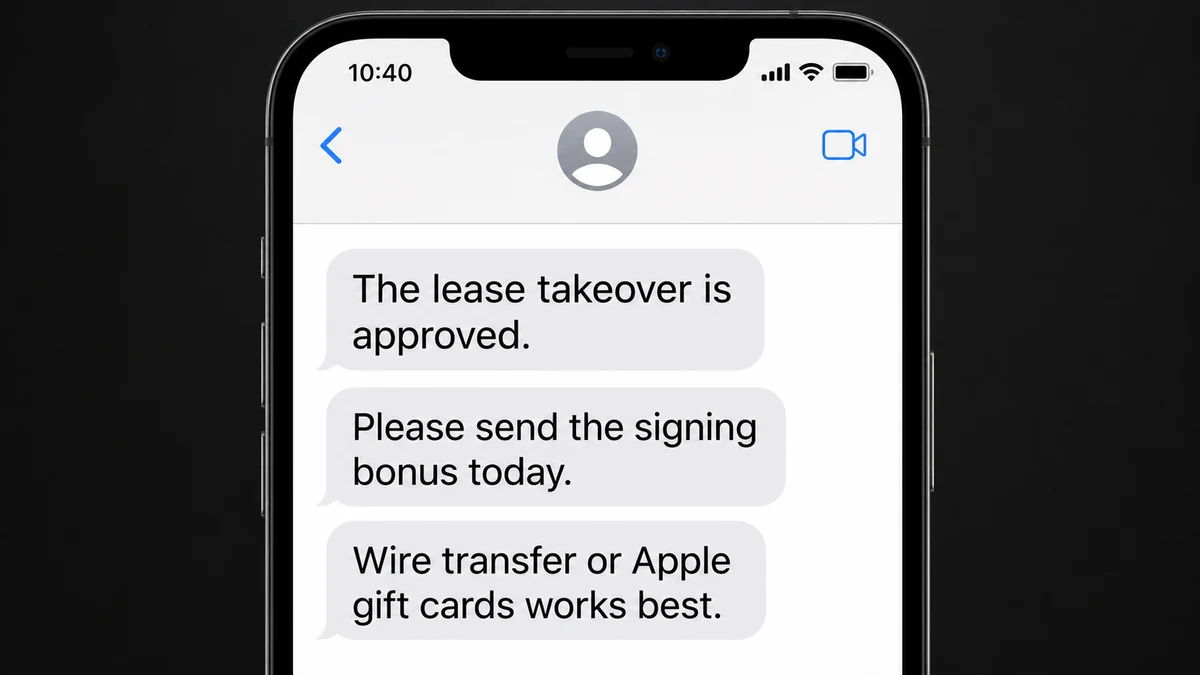
Then the new tenant chooses a payment method that no legitimate housing agreement needs.
Overview
The scam targets tenants desperate to exit a lease
A recent tenant report describes an offer to pay a signing bonus to someone who would assume the remaining lease. The property management process allegedly showed the takeover as successful.
The supposed incoming tenant then asked to receive the bonus by wire transfer or Apple gift card. The current tenant recognized the danger, blocked the person, sent no money, and planned to verify the situation with management.
The story exploits a genuine pressure point. A tenant facing months of remaining rent may be willing to subsidize a qualified replacement, especially when an application seems approved.
An approval message may not mean the lease is final
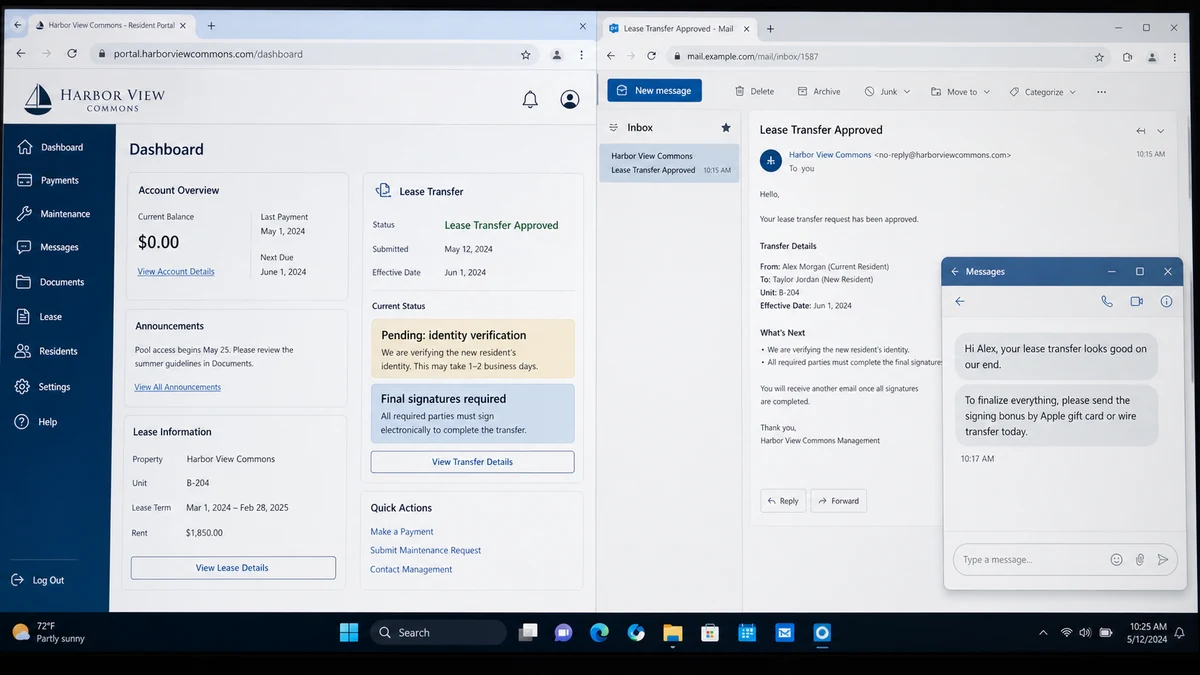
Property managers use different processes. An application can be approved while identity verification, deposit, signatures, keys, or an effective transfer agreement remain incomplete.
The Reddit report does not establish exactly how the status became “successful.” A criminal might use false documents, a stolen identity, a forged email, an altered screenshot, or a real application that will never be completed. Miscommunication is also possible.
Do not pay based on a status label alone. The decisive evidence is a fully executed agreement confirmed by property management through a known contact, with every condition satisfied.
The requested payment methods remove useful protection
The FTC’s rental scam guidance warns against people who demand payment by wire, gift card, or cryptocurrency. These methods are fast, difficult to reverse, and poorly matched to a documented lease transaction.
Apple gift cards are for purchases in Apple’s ecosystem, not a tenant incentive. A person who converts a housing payment into card codes is avoiding an ordinary financial trail.
Before any bonus changes hands, confirm:
- Did management speak with you through its known portal or number?
- Is the incoming tenant’s identity verified?
- Has management approved the person, not just the application?
- Are all parties named in a written transfer agreement?
- Has every required signature been completed?
- Is the effective transfer date explicit?
- Does the agreement release you from future rent and damage?
- Has the new tenant paid management directly where required?
- Is the bonus described in writing?
- Can payment use a traceable, reversible method after completion?
A real approval survives a phone call to the leasing office. A scam depends on the current tenant treating a message, screenshot, or dashboard label as the final contract.
The Word “Approved” Can Hide Several Unfinished Steps
Lease takeover is not one universal transaction. Depending on the jurisdiction and agreement, it may be an assignment, sublease, relet, roommate replacement, early termination, or entirely new lease.
Management can approve an applicant’s income or credit without releasing the original tenant. A portal may show that a screening stage passed while the transfer remains conditional.
The incoming tenant may still need to prove identity, pay a deposit, obtain insurance, sign disclosures, or take possession. Until those steps are complete, the current tenant can remain liable.
A scammer wants the bonus paid during that gap. They can disappear before final signing, leaving the original tenant with both the lease obligation and the lost incentive.
A forged email can also imitate the leasing office. Sender names and property logos are public, and an altered screenshot cannot be checked by replying to the alleged incoming tenant.
Call the number printed on the original lease or the management company’s independently found website. Ask for the staff member handling the transfer and have them describe the status without prompting.
Do not ask only, “Was this approved?” Ask whether the agreement is fully executed, whether the original tenant is released, what remains pending, and when possession changes.
How the Lease Takeover Scam Works
Step 1: The current tenant advertises urgency
A listing explains that the tenant must relocate, has overlapping housing, or cannot afford the remaining term. A signing bonus is offered to attract a replacement.
The scammer knows the advertiser has a reason to complete the transfer quickly.
Step 2: A cooperative applicant appears
The person responds promptly, accepts the unit and terms with few questions, and seems willing to complete management’s application. They may provide a convincing identity, employment story, or references.
Unlike an ordinary renter, the scammer’s main interest is the bonus rather than the home.
Step 3: The application appears approved
The current tenant receives a message, screenshot, portal update, or verbal claim that management accepted the takeover. Some evidence may be genuine but conditional; other evidence may be fabricated.
The scammer treats this intermediate event as the moment payment becomes due.
Step 4: The payment method suddenly changes
The incoming tenant requests a wire, Apple gift cards, cryptocurrency, cash-app transfer, or another difficult-to-reverse method. They may claim a bank problem, travel, urgency, or a need to buy moving supplies.
The request disconnects the payment from the property manager and formal agreement.
Step 5: Pressure replaces documentation
The person says the deal will be lost unless the bonus arrives today. They may threaten to withdraw the application or blame the current tenant for delaying.
Questions about final signatures, identity verification, and move-in receive impatient or vague answers.
Step 6: The value is collected and the takeover fails
Gift-card codes can be redeemed or resold quickly. Wires may move through a mule account. The incoming tenant stops responding, fails to sign, or never appears for possession.
The current tenant discovers that “approval” did not release them from the lease.
Step 7: A second payment may be demanded
The operator can claim the first transfer is pending, the cards were invalid, or a refund requires a fee. Each explanation tries to extract more before the victim speaks with management.
Never send replacement codes based on a screenshot of a failed redemption.
How to Structure a Legitimate Signing Bonus
First, ask property management whether tenant-paid incentives are permitted. Some leases, local rules, or application policies may restrict side payments or require disclosure.
Put the incentive in a written agreement that identifies the parties, property, amount, conditions, due date, and what happens if the transfer does not become effective.
Make payment conditional on objective milestones. Those can include completed identity checks, all signatures, management’s written release of the original tenant, deposit settlement, and transfer of possession.
Have management confirm the status directly. Do not rely on a PDF forwarded by the incoming tenant or a screenshot that cannot be opened inside the official portal.
Use a traceable method that records the real recipient and purpose. Ask a lawyer or licensed local professional how escrow can be used for a material incentive.
Never use gift cards. The FTC states that only scammers tell people to buy gift cards and provide the card number and PIN.
Do not wire an unknown applicant because the transfer is described as final. A wire can be difficult to reverse even when the underlying agreement collapses.
Keep communication inside the official management portal where possible. If a staff member emails, confirm the sender domain and call the office before acting on changed instructions.
Photograph the unit, document keys, and obtain a signed condition record. A valid transfer should resolve responsibility for property condition as well as rent.
Save the fully executed agreement permanently. A message saying “looks good on our end” is not a substitute for the document that releases liability.
Warning Signs in the Incoming Tenant’s Behaviour
The person is more interested in the bonus than the unit, lease rules, commute, utilities, move-in condition, or neighbourhood.
They accept without a viewing or meaningful questions and provide excuses for why they cannot meet management or show identification live.
They say management approved everything, but management describes pending steps or refuses to discuss the applicant without authorization.
They request payment to a name different from the person on the application. A relative, assistant, moving company, or “finance manager” is introduced at the last moment.
The method changes from an ordinary payment to Apple gift cards, wire, cryptocurrency, or friends-and-family transfer.
They want gift-card photographs rather than the physical cards. The code is the spendable value, so sending the image completes the loss.
They create a deadline unrelated to the written lease. A moving truck, airfare, sick relative, or expiring application supposedly makes same-day payment essential.
They object when you ask management to hold the incentive or confirm identity. A genuine tenant benefits from a clear record too.
They send screenshots instead of verifiable portal records. Images can omit pending conditions or combine material from different accounts.
They promise to refund the bonus if anything fails but resist written terms. A promise from an unverified identity offers little recovery.
If Management Really Did Approve the Applicant
An approval can be genuine while the bonus request is still fraudulent or unsafe. The applicant may have used stolen identity documents or may intend to abandon the process after receiving money.
Tell management about the gift-card or wire request. Ask it to pause the transfer until identity is reconfirmed and all parties understand the incentive.
Request confirmation that the person communicating with you matches the applicant. Do not send management sensitive screenshots publicly; use its official secure channel.
Ask whether the application can be withdrawn or whether another individual can substitute after approval. The answer clarifies what the status actually guarantees.
Confirm the effective date and release language. If the original tenant remains a guarantor or is liable after default, the takeover may not solve the original problem.
If the payment is substantial, obtain local legal advice. The cost of reviewing a short agreement may be far lower than losing the bonus and remaining rent.
Do not accuse a genuine applicant without evidence. State the objective concern: the requested method is incompatible with a safe documented transaction.
A legitimate person can accept a delayed, recorded payment after final execution. Refusal to do so is information.
A Safe Timeline for the Transfer and Bonus
Begin with written permission from management to seek a replacement and offer an incentive. This prevents a side arrangement from conflicting with the original lease.
Let the applicant submit identity, income, credit, and background information directly to management. The current tenant should not collect documents or act as the screening company.
Wait for management to confirm approval through the existing portal and a fresh telephone call. Ask which conditions remain instead of relying on the word approved.
Review the transfer or relet agreement before anyone pays the bonus. The document should identify the correct unit, parties, dates, rent, deposit, and release terms.
Require every signature and any management countersignature. A document signed only by the current and incoming tenants may not bind the property owner.
Confirm that required deposits, fees, insurance, and utility steps were completed directly with the proper organizations. Do not reimburse a screenshot of an unverified payment.
Set the incentive due after the agreement becomes effective or place it with a suitable independent escrow service. The exact mechanism should comply with local rules.
Pay only the person named in the agreement through a recorded method. Reject substitute recipients and last-minute stories about a frozen bank account.
Record key delivery and possession. Both parties should receive a signed condition report so later damage cannot be assigned through uncertainty.
Obtain management’s final written confirmation that the original tenant’s obligation ended. Keep it with the lease and payment record.
If any stage changes, pause the bonus. A legitimate transaction can be updated in writing; urgency does not override an incomplete legal transfer.
This sequence protects the incoming tenant too. It proves what was promised, when payment was earned, and which agreement governs the home.
A person who insists on skipping the sequence is asking the current tenant to bear all the risk. That is the opposite of a balanced takeover.
If management cannot discuss the applicant because of privacy rules, arrange a three-way call or ask for a status statement limited to the transfer. Do not accept the applicant’s interpretation of silence.
Check whether the original security deposit remains attached to the unit. A bonus, deposit reimbursement, and management fee are different obligations and should not be combined into one unexplained transfer.
Never let the applicant deduct the bonus from a payment they claim to have sent management. Confirm every management payment directly and keep the incentive separate.
Company, Address, and Fulfillment Checks
Verify the property manager independently
Use the number on the original lease, rent portal, or established management website. Ask for the named employee and confirm the transfer status in a fresh call.
Do not call a number forwarded by the applicant.
Match the applicant to the approved identity
Management should verify identity under its process. Confirm that the person requesting payment is the same named applicant and that no payee was substituted.
A payment account name mismatch must be resolved before payment.
Confirm the address and legal agreement
The unit, lease term, effective date, liability release, deposit, keys, and move-in condition should appear in the final signed documents.
Review the document stored in the official portal, not a forwarded copy alone.
Define what the signing bonus fulfills
The written incentive agreement should state exactly when the bonus is earned. Payment should follow completed conditions and use a recorded method.
Gift cards and private wires provide no housing-related fulfillment protection.
What to Do if You Have Fallen Victim to This Scam
- Stop all further payments. Do not send replacement cards or a second wire.
- Call property management. Confirm whether the applicant exists, what passed, what remains pending, and whether you are released.
- Preserve the records. Save the listing, application messages, portal status, email headers, phone numbers, payment instructions, and signed documents.
- Contact the gift-card issuer. Keep the cards and receipts and report the codes immediately. Apple’s gift-card scam guidance explains the reporting route.
- Contact the bank or wire service. Ask for a fraud recall and provide the recipient details and transaction reference.
- Warn management about identity misuse. Ask it to preserve application logs and pause any incomplete transfer.
- Secure exposed accounts. Change passwords if you used a link or portal supplied by the applicant.
- Check your lease liability. Obtain written confirmation of your current status and seek local legal advice if necessary.
- Report the profile and listing. Use the housing platform’s fraud tools and report the receiving payment account.
- Run Malwarebytes. Scan any device used to open unusual application files or install viewing software.
- Use AdGuard as a supporting layer. It may block known phishing pages, but it cannot verify an applicant or make a gift-card payment reversible.
- File official reports. Use ReportFraud.ftc.gov and local police where appropriate.
Frequently Asked Questions
Is it legal to offer a signing bonus for a lease takeover?
Rules vary by lease and location. Ask property management and, for a material payment, a local legal professional before promising or sending an incentive.
Does applicant approval release the current tenant?
Not necessarily. Approval can be conditional. Obtain a fully executed document that clearly states when and how your liability ends.
Why are Apple gift cards a decisive warning?
They are not a normal housing payment and are difficult to recover after codes are shared. A legitimate incoming tenant can accept a documented payment method.
Can a management email be forged?
Yes. Confirm the status in the official portal and through a telephone number you already know, not by replying to the suspicious message.
What if management says the transfer was approved?
Ask whether identity, signatures, deposits, possession, and your release are complete. Tell management about the unusual payment request before proceeding.
Can a wire transfer be recalled?
Sometimes a bank can attempt a recall if contacted quickly, but recovery is not guaranteed. Call the fraud department immediately and keep the transaction record.
The Bottom Line
The lease takeover scam hides inside a process that may contain real applications and real management messages. The operator wants the current tenant to confuse one approval stage with a completed transfer.
Do not pay a signing bonus by gift card or wire. Confirm the incoming tenant, final signatures, effective date, and release directly with management, then use a written agreement and traceable payment only after every condition is complete.








