

A trading group sends a signal, members follow it, and screenshots of profits begin appearing in the chat. Soon, sitting out feels harder than joining.
HelloBit and the associated TSQ Investment story show why the platform behind those screenshots deserves attention before another transfer leaves your account.
Overview
A Trading Platform Promoted Through a Signal Group
HelloBit has been promoted as the place to execute cryptocurrency trading signals associated with TSQ Investment and a supposed expert called Henry Jones.
The pitch places confidence in a leader and a group routine. Members are encouraged to believe that following instructions is the route to dependable returns.
That arrangement requires scrutiny of two separate parties: the people giving advice and the platform receiving the money.
Official Warnings Cover More Than One Domain
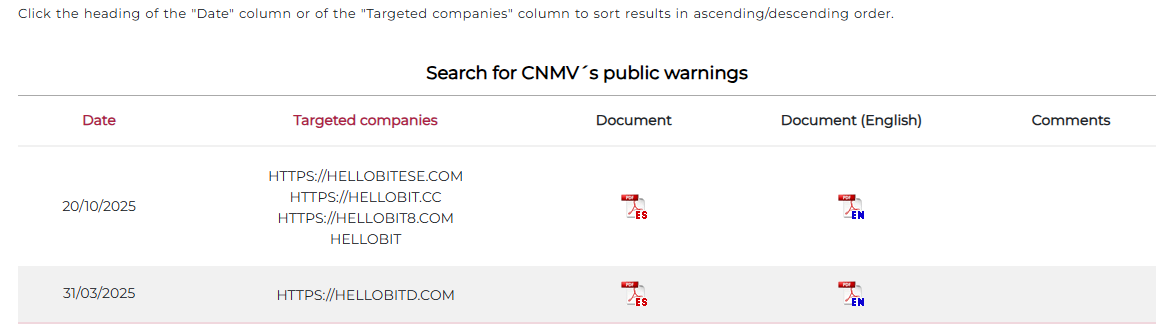
Spain’s CNMV issued a warning about HelloBit at hellobitd.com on March 31, 2025. It said the entity lacked the specified investment and crypto-service authorization.
A later warning, dated October 20, 2025, names hellobitese.com, hellobit.cc, hellobit8.com, and HelloBit.
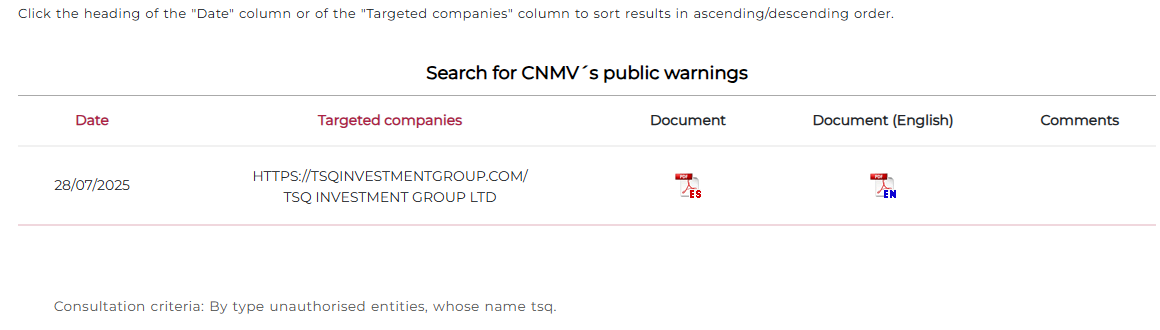
The regulator also warned about TSQ Investment Group Ltd and tsqinvestmentgroup.com on July 28, 2025.
- The regulatory concern is documented, not merely a reviewer’s opinion.
- Several HelloBit addresses appear in the warning record.
- TSQ has its own separate warning.
- Website balances do not prove that trades occurred.
- Another payment should not be treated as the solution to a blocked withdrawal.
Withdrawal Complaints Add a Serious Second Concern
Reporting by Cinco Días in November 2025 described withdrawal blocks following an earlier investigation into the operation.
Participant accounts also describe recruitment incentives and trust built through apparent trading success. These reports are not an independently audited ledger of every account.
Together with the official warnings, they provide strong grounds to avoid the scheme. Do not send money to a purported revival or replacement domain.
What the Warning Proves, and What It Does Not
A regulator’s unauthorized-firm warning is substantial evidence about regulatory status in its jurisdiction. It is not a criminal judgment about every participant.
The distinction does not make the offer safe. An investor should not have to wait for a final prosecution before taking a documented warning seriously.
Likewise, incorporation papers are different from permission to provide regulated services. A company certificate cannot substitute for checking the relevant financial register.
Match the exact legal name, website, and contact details. Scammers sometimes borrow genuine registration numbers from unrelated firms.
When a promoter supplies a screenshot of a license, verify it independently with the issuing authority. A picture in a chat is not a registry check.
For HelloBit, the multiple named domains also matter. A changed address does not erase the earlier warnings or demonstrate that a new operator holds customer assets.
How the HelloBit Scam Pattern Works
Step 1: A Group Makes the Opportunity Feel Familiar
The introduction may come through a trading community, a personal referral, or a messaging group. Social familiarity can lower the caution applied to an unfamiliar website.
Someone you know may genuinely believe the pitch. Their enthusiasm does not establish where deposits go or whether the platform’s reported results are real.
Group conversation can create the impression that many independent people have verified the same opportunity, even when everyone relies on the same administrator.
Ask what evidence exists outside that circle. Independent custody, authorization, and verifiable execution matter more than the number of congratulatory messages.
Step 2: The Expert Story Makes Questions Feel Unnecessary
The associated promotion centers on a supposed signal provider whose methods are presented as unusually accurate.
Technical language about sophisticated systems can make a basic question seem naive: how is this result verified by someone outside the platform?
It is not naive. A claimed track record needs dates, complete results, costs, losses, and a way to confirm that trades were actually executed.
A nearly perfect-looking sequence in a private group can omit losing trades or show numbers that the promoter controls.
Step 3: Deposits Move Into a System the Customer Cannot Audit
Once cryptocurrency leaves a wallet you control, you rely on the recipient’s honesty and ability to return it.
An account balance shown by that recipient is not the same as cryptocurrency held at an address under your own control.
Many legitimate exchanges use internal ledgers too. The concern is the combination of opaque custody, unverified claims, and the specific regulatory warnings.
Do not let familiar price charts distract from the custody question. Ask which legal entity owes you the funds and what independent safeguards apply.
Step 4: Apparent Wins Encourage a Larger Commitment
Displayed gains can make a small first deposit feel like a successful test. A person may then transfer savings or persuade relatives to join.
Even an early withdrawal does not prove that an investment operation is solvent. Fraudulent platforms can release limited funds to build confidence.
That general tactic explains why a friend’s successful payout is insufficient assurance. It does not mean we verified the source of any particular HelloBit payout.
Judge the business before increasing exposure. A system that demands faith after delivering a small payment has not answered the underlying evidence questions.
Step 5: Recruitment Becomes Part of the Opportunity
Accounts of the TSQ and HelloBit arrangement describe incentives associated with bringing in additional participants.
Referral compensation creates a conflict: the person recommending the platform may benefit from your participation whether or not the investment is sound.
A growing group can also conceal a fragile business. New deposits may make activity appear healthy without demonstrating profitable external trading.
A Ponzi structure cannot be established by referral rewards alone. It requires evidence about money flows, which our review cannot independently reconstruct.
Step 6: Withdrawal Trouble Reframes the Problem
When access to money becomes uncertain, the focus often shifts from returns to explanations: processing delays, security reviews, migration, or a technical problem.
Some delays at financial services are genuine. The response should still be checkable, tied to clear terms, and free of pressure to recruit or deposit more.
For this case, reported withdrawal blocks must be read alongside the existing warnings. The risk is not simply ordinary market volatility.
Save any explanation as evidence. Do not treat an administrator’s reassurance as confirmation that funds exist or will become available on the promised date.
Step 7: A New Domain or Recovery Offer Extends the Loss
A message may direct affected users toward another address, a replacement account, or a person promising to restore access.
We have not verified a legitimate successor or recovery program. A familiar logo, group name, or account balance does not establish one.
If someone demands a fresh transfer for tax, activation, verification, or recovery before releasing funds, stop and obtain independent guidance.
Never disclose a wallet seed phrase. Anyone who receives it may gain control of the wallet, regardless of the story used to request it.
Company, Address, and Fulfillment Checks
A Platform Name Does Not Identify the Custodian
HelloBit branding does not answer who legally controls deposits. TSQ promotion and platform custody should be investigated separately rather than assumed to be one registered business.
Request the exact legal entity, jurisdiction, and applicable authorization. Verify each with the regulator rather than using a link supplied by a group administrator.
The CNMV warnings provide a concrete negative finding. A promoter should not dismiss them as irrelevant simply because the website still accepts registrations.
An Office Claim Needs Independent Confirmation
We did not verify a staffed headquarters holding customer funds or resolving HelloBit withdrawals. Do not substitute an address from a similarly named company.
Even a real office or rented meeting room would not establish that the platform possesses the assets shown in users’ accounts.
For a financial service, the important connection is between the legal operator, regulator, custody arrangements, and enforceable customer agreement.
Messaging Administrators Are Not Independent Support
A person who recruited you has an interest in preserving confidence. Their explanation of a withdrawal problem should not be your only source of information.
Preserve usernames, account links, phone numbers, email addresses, and messages. Do not publish private personal information or harass people while trying to establish responsibility.
We have not authenticated the individuals behind the advertised expert identities. Report what was represented to you without assuming a profile photograph identifies its operator.
Transaction Records Replace Shipping Records
There is no physical product to trace through a warehouse. Preserve the transaction hash, network, destination address, asset, amount, and timestamp for each transfer.
A blockchain entry may prove that funds moved to an address. It does not automatically identify the human recipient or establish that a trade occurred.
Keep the platform’s internal history too. Investigators may need to compare it with independent transfer records and the messages that prompted each payment.
Why a Trading Screen Is Weak Evidence
A website can display a profitable trade without executing one. Charts, transaction tables, and account totals are outputs controlled by whoever operates the application.
The question is not whether the screen looks professional. It is whether an independent record establishes the assets, execution, and ability to withdraw.
A copied market feed may show genuine prices while the account ledger remains fictional. Those two parts of a platform can operate independently.
Likewise, a registration badge can describe a limited administrative status while saying nothing about investment authorization or customer protection.
For illustration, a dashboard showing $8,000 after a $2,000 deposit is not proof of a $6,000 gain. The difference exists only as a displayed claim.
Do not borrow money or pay an additional fee based on that display. Verify what is recoverable before making another financial decision.
What to Do if You Have Fallen Victim to the HelloBit Scam
- Stop sending funds and stop recruiting.
Do not pay another deposit to unlock withdrawals or preserve account status. Pause recommendations to friends until the risk has been explained.
If you already referred someone, share the official warning and your factual experience. They need time to protect their own remaining funds.
- Preserve a complete transfer history.
Export receipts from the exchange or wallet used to send funds. Save transaction hashes, destination addresses, networks, amounts, and dates.
Keep screenshots of the platform balance and withdrawal errors separately. Label them as platform displays, not confirmed holdings.
- Save messages before access disappears.
Retain the invitation, promised returns, expert claims, payment instructions, support conversations, and any new demand for money.
Record every relevant domain and account identifier. Do not erase chats immediately after blocking the sender if that would remove useful evidence.
- Contact the service used to send the payment.
Report the suspected fraud to your bank, payment service, or cryptocurrency exchange promptly. Ask whether any available action can preserve or flag funds.
Cryptocurrency transfers are generally not reversible like ordinary card disputes. Reporting quickly still gives the relevant institutions the best available information.
- File reports through official channels.
Contact local law enforcement and the appropriate financial regulator. U.S. victims can also report to the FBI’s IC3 and the FTC.
Provide the amount actually transferred, subtract any genuine withdrawals, and distinguish that loss from the larger balance the platform displayed.
- Protect accounts and devices.
Change passwords reused on the platform and enable multifactor authentication for email and exchange accounts. Revoke suspicious sessions or connected applications.
If you installed an unknown trading app or remote-access software, remove the suspicious software and run Malwarebytes to check for related threats.
AdGuard can help reduce exposure to intrusive ads and some known malicious sites. It cannot validate a trading platform or retrieve cryptocurrency.
- Treat recovery approaches as a separate risk.
Do not trust unsolicited investigators, hackers, or supposed lawyers promising guaranteed recovery. Verify professional credentials and contact details independently.
A request for your seed phrase or another crypto payment to release recovered funds is a major warning. Keep that communication for your existing report.
- Make room for practical support.
Tell someone you trust if pressure or embarrassment is keeping you engaged with the group. You do not have to manage the situation alone.
Focus on preventing further loss and documenting events. No honest adviser can promise a recovery outcome before the facts and available assets are established.
Frequently Asked Questions
Is there an official warning about HelloBit?
Yes. Spain’s CNMV lists HelloBit-related domains in warnings dated March 31 and October 20, 2025.
Does the warning also name TSQ?
There is a separate CNMV warning about TSQ Investment Group Ltd and tsqinvestmentgroup.com, dated July 28, 2025.
Does an early successful withdrawal prove HelloBit is safe?
No. A limited payout does not establish authorization, solvency, or genuine trading. It cannot override the documented warnings.
Should I pay a fee to unlock my balance?
Do not send more money in response to an unverified release demand. Preserve the request and seek independent help through official channels.
Is a new HelloBit domain a fresh start?
Not by itself. Multiple domains already appear in the warning record. A renamed or relocated website does not establish a legitimate successor.
Can someone guarantee recovery of my cryptocurrency?
No credible recovery outcome can be guaranteed. Report promptly, preserve transaction records, and avoid anyone seeking wallet secrets or advance crypto payments.
The Bottom Line
HelloBit is a serious investment-scam warning case supported by official regulatory notices and reported withdrawal problems. Avoid deposits and recruitment into the associated arrangement.
If you already paid, preserve the trail and report it promptly. The priority is protecting what remains, not chasing a dashboard balance with another transfer.








