

Can a pill really “melt fat while you sleep” just by targeting your liver? That’s the bold promise behind HepatoBurn, a supplement marketed as a revolutionary solution for belly fat, low energy, and sluggish metabolism. It claims to work by “detoxifying” your liver and kickstarting rapid fat loss—even in your sleep. But is HepatoBurn really the fat-burning miracle it claims to be, or is it just another overhyped supplement designed to prey on your frustration? Let’s break down the facts.
HepatoBurn Overview
HepatoBurn is marketed as a dual-action supplement that “purifies the liver” and “activates fat-burning.” According to the product page, it contains a mix of Mediterranean plant extracts and so-called “super nutrients” that work together to optimize liver function and speed up metabolism. However, once you peel back the flashy language and buzzwords, the claims begin to look shaky at best.
1. Unrealistic Claims
One of the most immediate red flags is the bold promise that HepatoBurn helps your body burn fat while you sleep. Fat loss simply doesn’t work like that. While your liver is a critical organ for metabolism, it doesn’t decide on its own whether food becomes fat or energy. That’s a far more complex biological process involving hormones, calorie intake, energy expenditure, and insulin response.
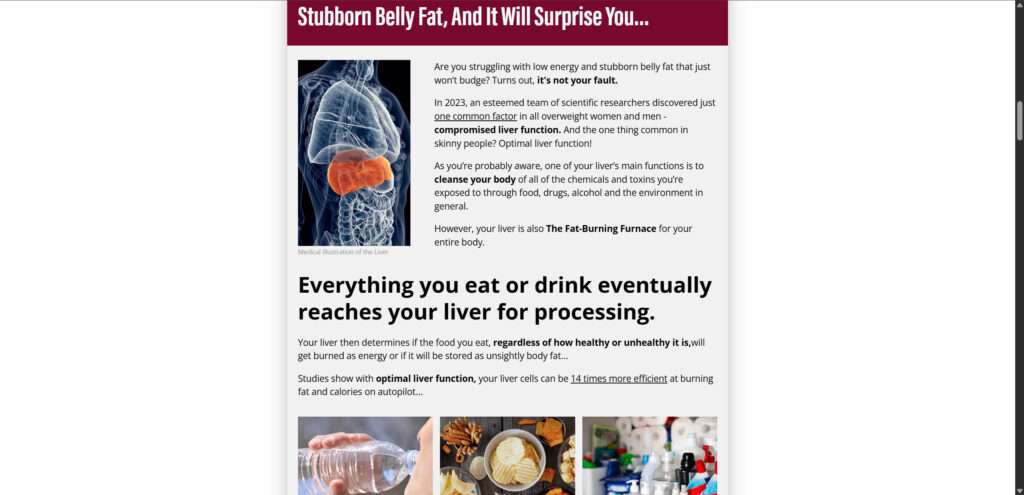
Marketing language such as “14x more efficient at burning fat” lacks scientific backing. It sounds impressive but is not grounded in peer-reviewed studies. The product page does not link to or cite any legitimate human clinical trials supporting this figure.
2. Detoxification Gimmicks
The idea of “detoxifying the liver” is a hallmark of marketing, not medicine. Your liver is your body’s natural detoxifier. It doesn’t store toxins that need to be flushed out with a pill. Most medical professionals agree: if your liver needs detoxing, you’re in liver failure—and that requires a hospital, not a supplement.
Promoting a supplement as a liver cleanser is not just misleading—it’s medically inaccurate. There’s no known supplement that can clean or regenerate your liver in the way these ads claim.
3. Pseudo-Science and Misleading Discoveries
HepatoBurn references a “2023 scientific discovery” that supposedly found a link between belly fat and compromised liver function. However, there are no peer-reviewed studies or published research papers that confirm this breakthrough. It’s likely a fabricated or heavily distorted claim used purely for marketing purposes.
The oversimplified idea that your liver alone determines whether you gain or lose fat is misleading. Fat metabolism is governed by a host of factors—diet, exercise, insulin levels, thyroid function, sleep quality, and even stress.
4. Misuse of FDA and GMP Language
Another red flag is the claim that HepatoBurn is made in an “FDA registered and GMP certified facility.” This is a common tactic used to mislead customers into thinking the product is approved or regulated. The truth? The FDA does not approve dietary supplements before they hit the market, and many companies use “FDA registered” or “GMP certified” in vague ways that don’t mean much in practice.
We also couldn’t find third-party verification of the GMP certification they claim. This absence of independent proof raises questions about the actual manufacturing standards behind HepatoBurn.
5. No Verified Reviews or User Testimonials
Despite claiming transformative effects, there are no verified user reviews linked on the site or on major platforms like Amazon or Trustpilot. All testimonials appear to be anonymous and may be fabricated.
When a product with such bold promises has no real feedback from actual customers, it’s hard to trust anything it claims. Genuine reviews are a cornerstone of product credibility—without them, all you’re left with is marketing hype.
6. Aggressive Sales Funnel and Fake Urgency
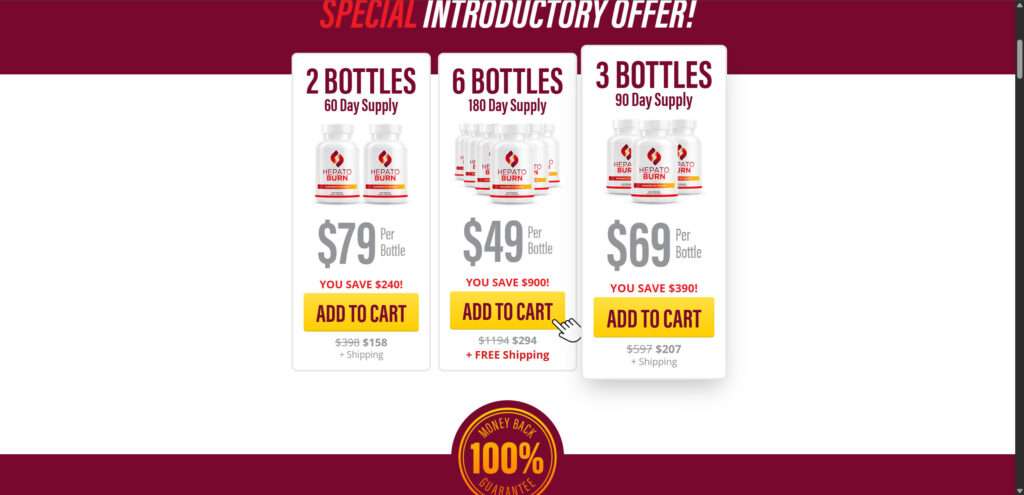
The website uses pressure tactics like countdown timers, claims of limited stock, and massive discounts on bulk purchases to rush users into buying. These methods are classic high-pressure sales techniques designed to drive impulse decisions, not informed ones.
You’re also nudged to buy in large quantities, with language like “best value” and “limited-time special pricing.” This is a common strategy to extract the most money from skeptical buyers before they realize what they’ve bought.
7. Overreliance on Proprietary Blends
While the ingredient list includes names like Resveratrol, Genistein, and Chlorogenic Acid, the dosages are concealed within proprietary blends. This makes it impossible for consumers—or even healthcare providers—to determine whether the product includes clinically effective amounts.
Without transparent labeling, there’s no way to assess safety or efficacy. And that’s a major issue when you’re dealing with supplements that claim to affect core metabolic functions.
8. Dubious Company Details
There’s no clearly listed corporate entity behind HepatoBurn. No physical address, phone number, or verified business registration. In an era where transparency is key—especially in health-related products—this lack of accountability is a huge red flag.
How The HepatoBurn Operation Works
HepatoBurn follows a well-worn blueprint used by many supplement marketers to separate consumers from their money. Here’s how the operation typically unfolds:
Step 1: Clickbait or Influencer Ads
It usually begins with a catchy video or article headline such as “This One Liver Trick Melts Belly Fat While You Sleep.” Once clicked, you’re shown a long-form video presentation or page loaded with medical-sounding claims and emotionally persuasive language.
Step 2: Emotional Triggers
The presentation focuses on pain points like low energy, poor sleep, belly fat, and the struggle to lose weight despite dieting. It blames all these issues on “a sluggish liver” to establish a convenient villain—and to pave the way for the supposed cure: HepatoBurn.
Step 3: Trust Signals and Fake Authority
The video and site use visuals like medical illustrations, graphs, and references to scientific-sounding breakthroughs. It may also include an endorsement from a “doctor” or “nutritionist,” although there’s no way to verify their credentials or existence.
Step 4: Artificial Scarcity
You’ll see phrases like “Only 13 bottles left in stock!” or timers counting down a “special price.” These tactics are designed to pressure users into making impulsive purchases.
Step 5: Upselling
Once you click “Buy Now,” you’re presented with tiered pricing that encourages bulk purchases. You’re told that the 6-bottle package is the “best value,” and that it’s risky to try only one bottle since results take time. These are upsell techniques to maximize profit.
Step 6: Auto-Enrollments or Subscription Traps (Potential Risk)
Some supplement companies bury recurring billing clauses in their terms and conditions. Without careful reading, you could unknowingly subscribe to automatic refills and future charges. While HepatoBurn’s site doesn’t explicitly confirm this, it’s worth checking closely.
Step 7: Difficult Refund Process
Despite offering a “100% money-back guarantee,” the process to claim a refund is often filled with delays, restrictive conditions, or complete non-responsiveness. Customers may be asked to return unused bottles or meet strict time windows that are hard to track.
Step 8: Vanishing Support
Once the sale is made, support options may dwindle. Emails go unanswered, phone numbers lead to dead ends, and any initial customer care disappears.
What To Do If You’ve Fallen Victim to This Scheme
If you’ve already purchased HepatoBurn and feel misled, take action immediately. Here’s what you should do:
- Contact Customer Service
- Request a refund in writing and document all communication. Take screenshots of order confirmations and marketing claims.
- Dispute the Charge With Your Bank
- File a chargeback if you paid by credit card. Explain that the product was misrepresented.
- Read the Fine Print
- Check if you unknowingly enrolled in a subscription or auto-ship program. Cancel immediately.
- Report to Authorities
- File a complaint with the Federal Trade Commission at reportfraud.ftc.gov
- Alert the Better Business Bureau (BBB)
- Submit an adverse report to the FDA’s MedWatch if you experienced side effects
- Warn Others
- Leave a factual review on forums like Trustpilot, Reddit, or Amazon.
- Share your experience on social media to raise awareness.
- Monitor Your Credit and Bank Accounts
- Watch for unusual charges or signs of identity theft.
- Consult a Doctor
- If you experienced negative health effects, speak with a licensed medical professional immediately.
The Bottom Line
HepatoBurn is marketed as a groundbreaking fat-burning supplement that targets the liver. But the truth behind the hype tells a different story. With exaggerated claims, zero clinical evidence, hidden ingredient dosages, and questionable sales tactics, this product raises more questions than it answers.
If something sounds too good to be true—especially in the world of supplements—it usually is. Your liver doesn’t need detox pills. Fat doesn’t melt away while you sleep. And real health solutions are never found at the bottom of a marketing funnel.
Before spending your money on bold promises, consult your doctor, read the research, and stay skeptical of miracle cures wrapped in glossy packaging.

Join the discussion
0 commentsShare your experience or ask a question about this article.
Discussion
Start the conversation
Have a question or something useful to share? Add the first comment.