

Joules is a popular British clothing and accessories brand known for its colorful designs and prints. Unfortunately, scammers are taking advantage of Joules’ reputation by building fake Joules websites to deceive customers.
Overview of the Joules Scam
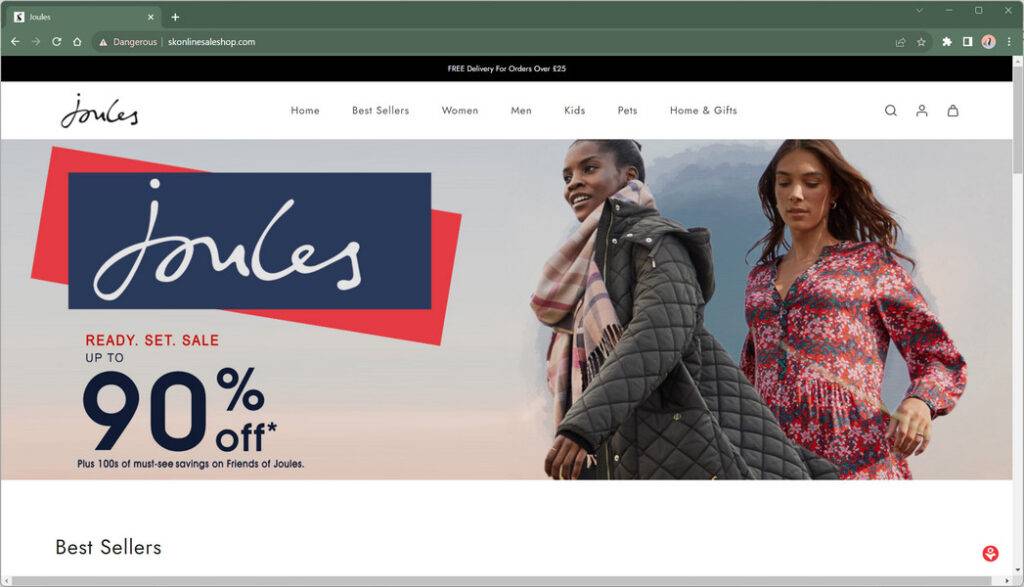
Scammers are creating copycat Joules websites and running slick social media ads to direct shoppers to their fraudulent stores. These fake sites often appear nearly identical to the real Joules.com site, featuring the same product images, branding, web design, and more.
However, the items sold on these scam Joules websites range from overpriced counterfeits to nothing at all. In many cases, customers receive no products after checkout and payment to the scammers.
This scam also enables serious data privacy issues. The sham sites harvest users’ personal and financial details during checkout, which can then facilitate identity theft and other cybercrimes.
How the Joules Scam Works
The criminals behind this scam use sophisticated techniques to deceive customers, including:
Building Highly Realistic Website Copies
The fake Joules websites are often nearly impossible to distinguish from the real company site. The scammers steal product photos, branding, web copy, the overall template, and other elements to seamlessly mimic the authentic shopping experience.
Without carefully checking the URL, customers can easily be fooled into believing they are on the legitimate Joules.com domain.
Promoting Sites on Social Media
Scammers run paid ads for their fraudulent websites on platforms like Facebook, Instagram, and TikTok. The slick ads showcase Joules products and link directly to the scam sites.
These social media ads lend an air of legitimacy to the fake sites, further deceiving potential victims.
Offering Suspicious Discounts
To entice bargain hunters, the sham websites promote unrealistic sale prices and discounts on Joules items. These “too good to be true” deals convince shoppers they are getting great savings.
In reality, customers end up overpaying for low-quality knockoffs or getting nothing after payment. The unrealistic discounts are simply bait.
Rushing Customers at Checkout
Scam sites create false urgency during checkout, displaying messages about limited-time sales or low stock to get customers to hurry.
This causes shoppers to speed through checkout without properly vetting the site. Victims hand over their data quickly before recognizing the scam.
Charging Cards and Providing Fake Tracking Info
To delay suspicion of fraud, the fake websites immediately charge cards after checkout and provide fake shipping tracking numbers.
Victims may think their orders are being handled normally. By the time customers realize shipments aren’t coming, the scammers have already stolen their money and details.
What You May Receive From Joules Scam Sites
There are a few common outcomes when ordering from the fraudulent Joules websites:
You Get Nothing
This is the most frequent result. Victims receive no products at all after checkout on the scam sites. Their money is taken and orders disappear, going straight into the scammers’ pockets.
You Get a Knockoff Product
Some customers eventually receive low-quality knockoff items made with inferior materials. The products are often completely different from the original order.
These cheap counterfeits are still drastically overpriced compared to their poor construction. Criminals make big profits on the fake goods.
You Get a Used or Damaged Item
In other cases, people receive products that are clearly used, broken, or otherwise tampered with. Scammers try to pass off secondhand or defective goods as new.
Since no legitimate retailer ships damaged items to shoppers, this is a clear indicator of scam activity.
You Get a Totally Wrong Product
Some scam victims report receiving shipments containing random products unrelated to their order. The items are swapped out with other cheap goods.
Again, getting completely incorrect products demonstrates the scammers have no intent of fulfilling real orders. This switcharoo points to blatant fraud.
In all scenarios, victims lose money while scammers pocket the payments. Shoppers get nothing close to the quality, comfort, and style offered by the real Joules brand.
Dangers of Providing Your Personal and Financial Data
Beyond just losing money on fake orders, customers also have their information stolen when ordering from Joules scam websites.
When you place an order through one of these sham sites, your data is harvested by the criminals running the operation. They collect:
- Full name
- Home address
- Phone number
- Email address
- Credit card number
- Card expiration date
- CVV code
Armed with this data, scammers can then carry out various forms of identity fraud:
- Open fake credit cards or bank accounts in your name
- Take out loans or lines of credit under your identity
- File fraudulent tax returns to steal your refund
- Gain access to your other online accounts
- Make unauthorized purchases with your payment details
- Commit medical or insurance fraud with your information
- Sell your information on the dark web to other criminals
Once your data is compromised, it can be extremely difficult and time-consuming to undo the damage. Victims are often left struggling to reclaim their identity and restore their credit.
Who is Behind the Joules Scam?
These fake websites are run by sophisticated cybercriminal networks who specialize in ecommerce scams. They go to great lengths to conceal their true identities:
- Use VPNs to hide locations
- Set up shell companies to register scam sites
- Falsify company details and documents
- Register domains with fake names or stolen identities
- Use disposable email addresses and burner phones
- Funnel illicit payments through money mules and cryptocurrency
This makes it very challenging for authorities to track down the masterminds behind these scams. The people building the fake sites are often just low-level players in larger international cybercrime rings.
While the exact origins vary, many Joules scam groups appear to operate out of countries like China, Nigeria, and Russia. However victims worldwide are targeted.
How to Avoid Falling Victim to the Scam
Here are some tips for spotting and avoiding these fraudulent Joules websites:
- Carefully check the URL – Fake sites often use slightly altered URLs. Look for misspellings or added words. Verify you are on the real Joules.com.
- Search for reviews – Do an online search for reviews of any unfamiliar Joules site before ordering. Scam sites generally have no reviews.
- Look for contact details – Check for a working phone number, physical address, and customer service options. Scams tend to list none.
- Compare prices – If the prices look unrealistically low, it is likely a scam. Cross-reference deals against the real site.
- Beware of popups and social media ads – Fake sites heavily advertise on platforms like Facebook and Instagram. Be cautious of links from ads.
- Check security indicators – Legitimate sites use HTTPS and display the padlock icon. Scam sites typically have just HTTP with no certifications.
- Use common sense – If any red flags appear, avoid the site. Only order from well-known authorized retailers.
Staying vigilant is the best way to avoid this scam.
What to Do If You Are a Victim of the Scam
If you placed an order through a fake Joules website and had your payment stolen, take these steps:
- Contact your bank – Notify your bank/credit card provider there was fraudulent activity on your account. They can freeze your card and refund unauthorized charges.
- Call Joules – Inform the real Joules company (0844 875 5000) about the scam site. They may help get it shut down.
- Report the site – File a scam report with ActionFraud.police.uk. Also report the site to the web host, domain registar, and social media companies hosting the scam ads.
- Monitor accounts – Watch for any suspicious activity across your accounts and report identity theft to Cifas if found. Consider identity theft monitoring services.
- Change passwords – If you reused the same password on the scam site and other accounts, change it everywhere. Use unique, complex passwords for each website.
- Avoid “recovery” offers – Scammers may reach out pretending to recover your lost money for an upfront fee. Any such contact is likely just another scam attempt.
Frequently Asked Questions
Here are answers to some common questions about the fake Joules websites:
Are the scam sites connected to the real Joules company?
No. Scammers simply steal the Joules name and brand illegally. Joules is not affiliated with these sham sites at all.
Can I get my money back if I ordered from a scam site?
Maybe. Contact your bank or credit card provider immediately. If you paid by debit card, recovering funds is difficult. Act fast, as time limits on refunds apply.
Where are these fake websites located?
They are usually hosted overseas, often on servers in countries like Russia or China, which makes takedowns more difficult.
How can I confirm a site is a scam?
Check for red flags like no contact information, unrealistic pricing, grammatical errors, insecure HTTP protocol, and lack of online reviews. When in doubt, verify directly with the real company.
Is it safe to buy from the real Joules site?
Yes. Joules.com is a legitimate retailer in business since 1989. Only order from links on Joules’ official website and emails.
Can I get scammed on mainstream sites like Amazon?
Possibly, if scammers hijack seller accounts. Carefully vet seller profiles and ratings. Avoid sellers shipping from overseas. Purchase directly from trusted retailers when possible.
How can I avoid this scam moving forward?
Only shop with trusted retailers. Research unfamiliar sites before buying. Don’t click links in random emails, texts or social media ads. Use caution when deal hunting online.
The Bottom Line
The Joules brand is being actively hijacked by scammers to rip off customers. Always verify sites are legitimate before providing payment or personal data. Check for scam red flags, and only order directly from Joules.com or authorized retailers. Report any potential fake sites to protect other shoppers.

Join the discussion
0 commentsShare your experience or ask a question about this article.
Discussion
Start the conversation
Have a question or something useful to share? Add the first comment.