

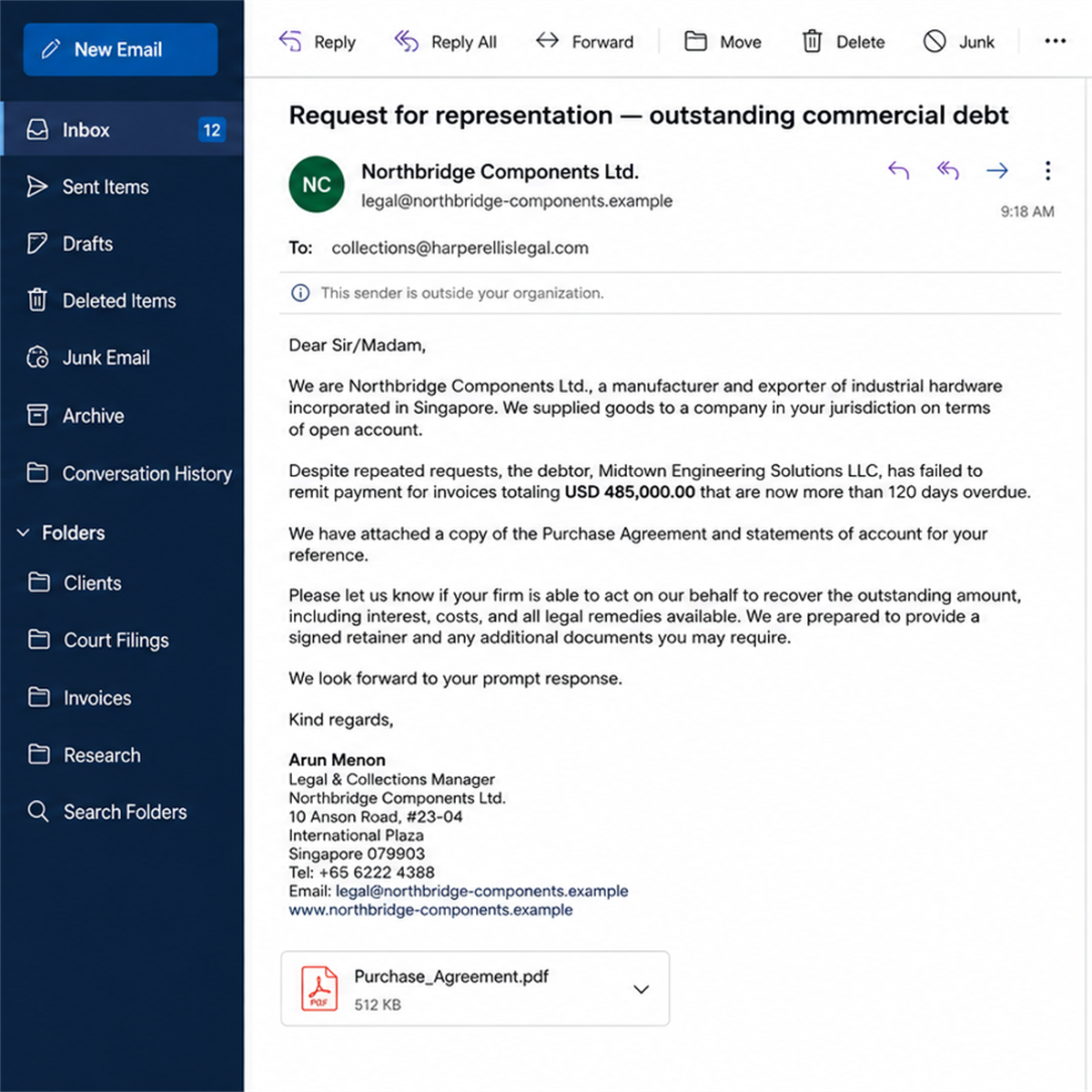
A company says it is owed a large commercial debt and needs local counsel. The documents look organized, the debtor responds immediately, and the legal fee could be substantial.
The fake debt collection check scam turns that smooth new matter into a transfer from the law firm’s trust account.
Everything seems to resolve unusually fast because the creditor, debtor, dispute, and payment are parts of the same trap.
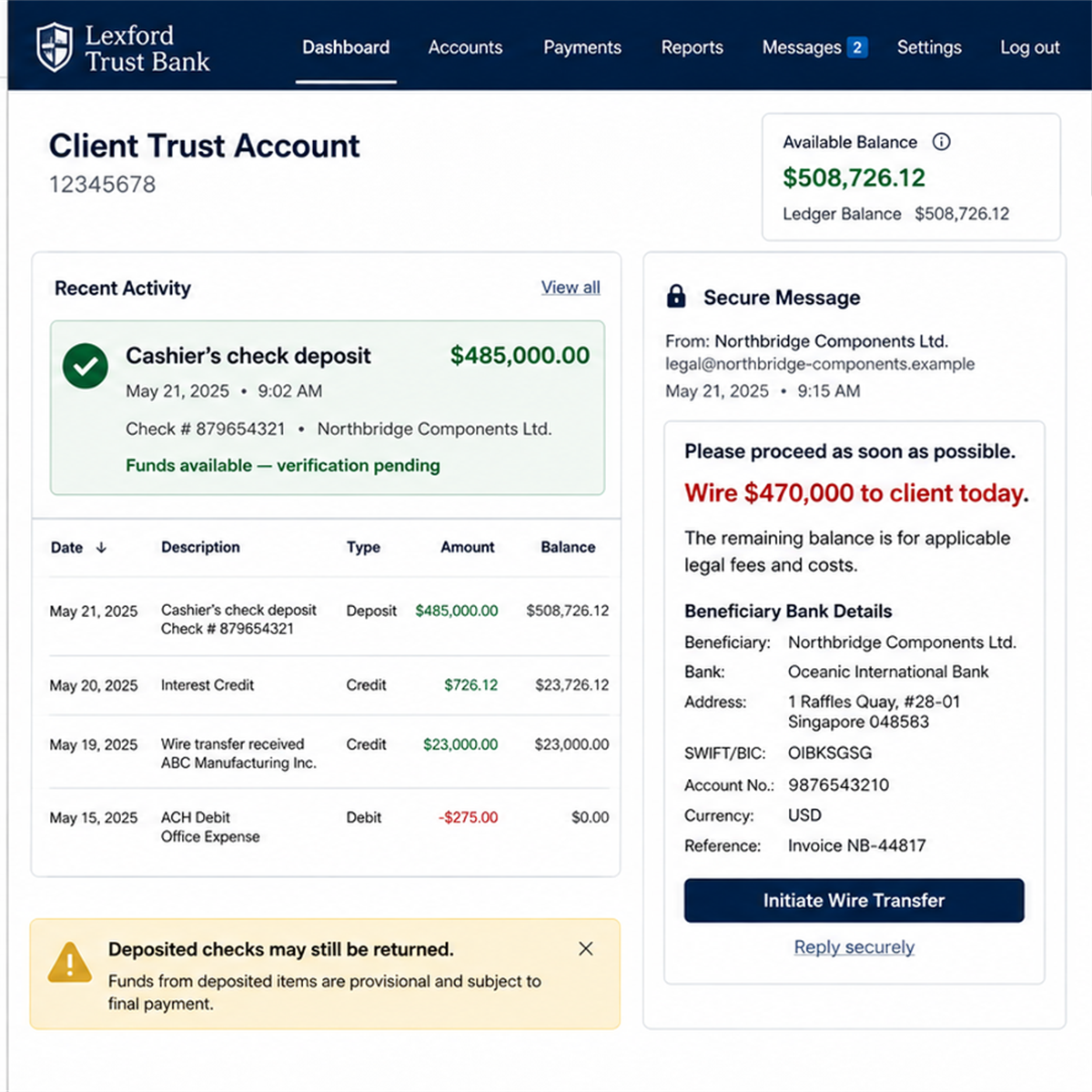
The supposed debtor sends a cashier’s check after receiving a demand. The bank may show funds as available before the check completes final verification.
The fake client then instructs the firm to wire the settlement overseas, minus legal fees. Professional rules and client pressure make prompt disbursement feel like good service.
When the check is identified as counterfeit or unauthorized, the deposit is reversed. The outgoing wire was real and the trust account absorbs the loss.
The FBI says this sophisticated scheme continues to target collection lawyers and can appear in real estate, family matters, and other representations involving money transfers.
Overview
A convincing legal matter is built around the payment
The criminal approaches a firm as a prospective creditor with a legitimate-sounding contract dispute. Names, invoices, purchase agreements, email domains, and corporate details may be copied or fabricated.
The legal story exists to explain why a large check and international wire should pass through the firm’s account.
The check appears to solve the dispute
After the firm contacts the supposed debtor, payment arrives with very little resistance. That quick success creates confidence that the client and claim were genuine.
The bank can make money available while the item remains subject to return. Available is not the same as finally collected.
The wire makes the loss permanent
The firm remits the client’s share before the check is rejected. Since the creditor and debtor are cooperating impostors, the receiving account is ready to move the wire again.
- An overseas creditor requests collection representation.
- Professional documents support a large debt.
- The alleged debtor agrees to pay unusually quickly.
- A cashier’s check reaches the law firm.
- The deposit appears in the trust account.
- The client demands an immediate wire.
- The check is later returned as fraudulent.
- The firm remains responsible for the missing funds.
The FBI Confirmed This Law Firm Fraud
In October 2024, the FBI warned that counterfeit check scams were targeting law firms through debt collection matters.
The bureau described a prospective creditor hiring a firm to collect a supposed debt. After the firm sends a demand, the alleged debtor promptly agrees to pay and supplies a cashier’s check.
The firm deposits the check and wires the settlement to the creditor, keeping the agreed fee. The bank later discovers the check is fraudulent and charges the trust account for its value.
Because the outgoing wire has already reached the supposed creditor, the firm suffers the loss. The scammer has used the lawyer’s own procedures to convert a fake instrument into real money.
The FBI says the scenario is sophisticated, evolving, and not limited to one type of matter. Real estate transactions, collections, and collaborative family-law agreements can all provide a pretext.
Some counterfeit cashier’s checks appear to come from genuine Canadian banks, which may delay detection. International clients also provide excuses for written-only communication and overseas transfers.
This confirmed pattern does not mean every remote client or fast settlement is fraudulent. It means the identity, claim, payment instrument, and final collection status must be verified separately.
Why Experienced Professionals Can Be Caught
The approach resembles ordinary business development. A company has a legal problem, selects a firm in the debtor’s jurisdiction, provides documents, and agrees to a fee arrangement.
Scammers can research practice areas, lawyer biographies, jurisdictions, and recent matters. A message tailored to collections counsel attracts less suspicion than a generic lottery email.
The case may initially require real legal work. Conflict checks, engagement documents, demand letters, and client communications make the file feel established before money arrives.
The alleged debtor’s cooperation is another psychological lever. A quick payment appears to validate the demand, reward the firm’s work, and reduce the need for expensive litigation.
The check may bear a real bank’s name and a genuine company’s account details. Good printing and valid routing information can survive a casual review.
Banking interfaces create dangerous confidence when a deposit changes the available balance. The display reflects funds-availability rules, not a permanent promise that the check cannot be returned.
Client-service pressure then narrows the decision window. The creditor wants its settlement, and holding the money can sound unreasonable after the account appears funded.
The criminal has designed every participant except the law firm. The fast debtor, urgent client, issuing bank image, and receiving account all support one coordinated transfer.
Available Funds Are Not Finally Collected Funds
A check deposit begins a collection process between financial institutions. A bank may make some or all funds available before the paying institution completes every fraud and authorization check.
A counterfeit item can use account and routing details that initially appear valid. The true account owner may discover the unauthorized payment only after reconciliation.
A cashier’s check is not immune. Criminals can fabricate the entire instrument or alter a genuine one, while copied security features make the document appear official.
Availability is also different from final settlement under the firm’s banking agreement. A returned item can produce a chargeback even after staff saw the amount in the account.
The outgoing wire does not wait for that process. It uses real money and may pass through several accounts quickly, including institutions in another country.
Calling a phone number printed on the check is not independent verification. That number may lead to another scammer posing as the issuing bank.
The safest approach is to involve the firm’s bank through a known contact, explain the entire matter, and require confirmed final collection before disbursement.
How the Fake Debt Collection Check Scam Works
Step 1: A prospective client finds the right practice area
The message targets lawyers who handle commercial collections, real estate, settlements, or family matters. It names a debtor within the firm’s jurisdiction and describes a substantial amount due.
The sender may use a genuine overseas company’s identity or a professional-looking fictional business.
Step 2: Documents make the claim appear complete
Purchase orders, invoices, contracts, correspondence, and company records support the story. The files can contain copied signatures and addresses from innocent organizations.
A well-prepared package reduces questions and encourages the firm to open a matter quickly.
Step 3: The firm performs normal legal work
After conflicts and engagement steps, counsel sends a demand to the alleged debtor. This work invests time and professional judgment in the matter.
The scam becomes harder to abandon because the firm has followed genuine procedures and appears to have produced a result.
Step 4: The debtor settles with little resistance
The supposed debtor apologizes, cites a business issue, and promises immediate payment. A cashier’s check arrives before any meaningful dispute or negotiation develops.
That speed is not a lucky break. It is the point where the two criminal roles converge.
Step 5: The check is deposited into trust
The amount appears pending and later available. The client may watch the timing closely and ask for confirmation or a screenshot.
Neither the status nor the apparent bank branding guarantees final payment.
Step 6: The client orders an urgent disbursement
The creditor supplies wire instructions, often for an international or third-party account. The firm is allowed to retain fees and must send the balance promptly.
Changes to beneficiary details may arrive at the last moment, creating another opportunity for misdirection.
Step 7: The check is returned after the wire leaves
The bank identifies the check as counterfeit, altered, duplicated, or unauthorized. It reverses the credit and may freeze the account during investigation.
The receiving account has already moved the wire, leaving the firm with a trust-account shortage and reporting obligations.
Identity, Address, Support, and Traceability Checks
The client identity must be verified outside the email
Call the company through a number obtained from reliable corporate records, not the signature block. Confirm the employee, dispute, authority, and reason the firm was selected.
A video meeting helps, but independent corporate verification remains necessary.
The debtor and debt need separate confirmation
Verify the debtor’s legal identity, registered address, representatives, and underlying transaction. Contact information supplied by the creditor should not be the only route.
Look for inconsistencies in dates, jurisdictions, signatures, goods, and invoice history.
The check must be verified through known bank channels
Use the firm’s established banking contact and provide the full context. Do not rely on a printed phone number, an emailed verification letter, or an available-balance screen.
Ask what confirmed final collection means under the account agreement and matter type.
The wire beneficiary must match the verified client
Call a previously verified client contact before any disbursement, especially after changed instructions. Treat third-party companies, secrecy requests, and unrelated countries as serious exceptions.
Dual authorization and a documented waiting period can prevent one urgent email from releasing funds.
Red Flags in the Matter
- An overseas company contacts the firm without a credible referral.
- The matter fits the practice area almost too neatly.
- Documents arrive complete before meaningful conversation.
- The client prefers email and avoids live verification.
- The debtor accepts the demand immediately.
- A large cashier’s check arrives without negotiation.
- The payer name does not match the alleged debtor.
- The client monitors deposit availability closely.
- Wire instructions point to a third party or new country.
- Disbursement is demanded before final collection is confirmed.
No single international detail proves fraud. The combined sequence of instant engagement, instant settlement, provisional funds, and urgent remittance is the danger.
Controls That Can Break the Scam
Create an intake checklist for remote matters involving incoming checks and outgoing transfers. Verification should not depend on the enthusiasm of one lawyer or staff member.
Require independent contact with the client and debtor. Record where each phone number, address, domain, and corporate record came from.
Do not accept altered wire instructions solely by email. Use a known number and call-back procedure with a second employee present or documented.
Set a written hold rule that exceeds ordinary funds availability where fraud risk exists. Coordinate the exact standard with the bank and professional-responsibility counsel.
Use dual approval for trust disbursements, especially new international beneficiaries. Separate the person handling client email from the person verifying banking instructions.
Train staff that a successful deposit does not authenticate the client. The matter, check, and wire are three different risks requiring three separate checks.
Scan attachments in a protected environment. The fraud can also include malicious PDFs, archives, links, or credential-harvesting portals.
What to Do if You Have Fallen Victim to This Scam
- Call the bank’s fraud and wire teams immediately. Request a recall, freeze, and contact with the receiving institution. Speed can determine whether funds remain reachable.
- Stop every related disbursement. Freeze the matter, reject changed instructions, and do not send an additional payment to correct the supposed banking problem.
- Notify firm leadership and ethics counsel. Assess trust-account obligations, client notifications, insurer requirements, and reporting duties under the firm’s jurisdiction.
- Preserve the complete file. Keep original emails with headers, attachments, intake records, call logs, checks, deposit receipts, wire instructions, and bank communications.
- Secure accounts. Reset exposed credentials, review email forwarding rules, revoke sessions, enable multifactor authentication, and verify no mailbox compromise changed payment instructions.
- Check affected devices. If staff opened unusual files or installed software, isolate the system and run Malwarebytes or the firm’s managed security tools.
- Block repeat infrastructure. AdGuard can reduce access to some known phishing and malicious advertising domains, but enterprise mail and endpoint controls remain necessary.
- Contact impersonated organizations carefully. Use independently verified numbers. The named creditor, debtor, or bank may be an innocent victim whose identity was copied.
- Report the incident. File promptly with the FBI IC3, local law enforcement, the bank, insurer, and other authorities required by professional rules.
- Watch for a second approach. Do not trust recovery firms or investigators demanding upfront cryptocurrency, gift cards, remote access, or another wire.
Frequently Asked Questions
Can a cashier’s check be counterfeit?
Yes. A convincing document can copy a real bank’s design and account information. Verify it through established bank contacts and wait for final collection.
Does an available balance mean the check cleared?
No. Funds can become available before final verification. The item may still be returned and the credit reversed.
Why does the fake debtor agree to pay so quickly?
The debtor is part of the staged matter. Fast cooperation validates the claim and moves the firm toward depositing the check and wiring funds.
Are international collection clients always suspicious?
No. Many are legitimate. International distance simply gives scammers plausible excuses for remote communication and overseas disbursement.
Should the firm call the number printed on the check?
No. Obtain the bank’s contact information independently and involve the firm’s own banking representative with the complete transaction context.
Can security software detect this legal scam?
It may block malicious files or sites, but it cannot decide whether a client, debt, check, or wire instruction is genuine. Process controls are essential.
The Bottom Line
The fake debt collection check scam makes a counterfeit payment look like the successful conclusion of legitimate legal work. The check creates temporary confidence, and the wire converts that confidence into a real loss.
Verify every party independently, distinguish available funds from final collection, and require dual confirmation before trust money moves. A client who cannot tolerate those safeguards is not worth risking the account.

Join the discussion
0 commentsShare your experience or ask a question about this article.
Discussion
Start the conversation
Have a question or something useful to share? Add the first comment.