

Imagine receiving a sudden, unexpected text message claiming that you owe outstanding toll charges, seemingly from Maryland Toll Services. The message creates immediate urgency, pressuring you to click on a provided link and pay to prevent severe late fees. Unfortunately, thousands of Maryland residents are being targeted by this very scenario—a sophisticated scam known as the “Maryland Toll Services Scam.”
In this comprehensive article, we’ll explore into every aspect of the Maryland Toll Services scam texts, from a detailed overview and step-by-step operation to actionable steps on what to do if victimized. By understanding exactly how these scammers operate, you can confidently safeguard yourself and your loved ones from becoming victims.
Scam Overview
The Maryland Toll Services scam is a form of phishing scam designed to trick unsuspecting Maryland residents into revealing personal and financial information. Fraudulent messages claim recipients owe outstanding toll fees and threaten penalties if immediate payment isn’t made.
These texts appear legitimate, using convincing language and realistic-looking links. The scammers often spoof genuine Maryland transportation authorities, making it difficult for the average recipient to discern authenticity.
How Scammers Make Their Messages Believable:
- Using official-sounding names like “Maryland Toll Services.”
- Claiming small and believable outstanding balances.
- Threatening large late fees to prompt immediate action.
- Utilizing authentic-sounding language and formatting, mimicking official Maryland toll messages.
The goal of these scam messages is straightforward—create panic, urgency, and fear to spur quick, unthinking action. Victims are pressured into clicking attached links, ultimately revealing sensitive financial information to scammers.
Common Characteristics of Scam Text Messages:
- Unsolicited Messages:
These texts come without warning, claiming unpaid tolls out of nowhere. Legitimate Maryland toll authorities typically send official notices via mail first. - Urgent Language:
Scam messages pressure recipients to act immediately, warning of penalties for delayed payments, often suggesting escalated fees or legal actions. - Suspicious Web Links:
Links included in these messages lead to fake websites, expertly crafted to closely resemble legitimate Maryland toll services portals. - Requests for Personal Information:
Upon clicking the link, victims are asked to provide sensitive personal information, including financial details, credit card numbers, and login credentials. - Poor Grammar and Spelling Errors:
Many scam texts contain subtle grammatical mistakes or awkward phrasing that legitimate organizations typically avoid.
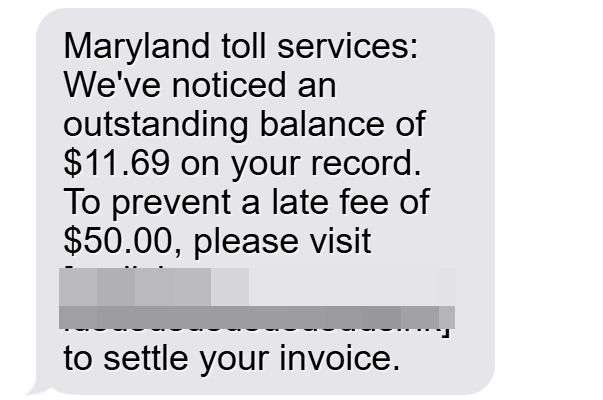
Real-Life Example of Scam Text:
Maryland toll services: We’ve noticed an outstanding balance of $11.69 on your record. To prevent a late fee of $50.00, please visit [malicious link] to settle your invoice.
Why This Scam is Particularly Dangerous:
This specific scam targets an everyday activity—driving. Many Maryland residents regularly use toll roads, tunnels, and bridges managed by Maryland’s transportation authorities. Slight confusion and panic can easily cause recipients to believe the message, overlook red flags, and act impulsively.
Moreover, this scam doesn’t discriminate. It targets residents across all demographics, ages, and income levels. The ubiquitous nature of toll payments means nearly everyone is vulnerable, amplifying the potential victim pool.
Impact on Victims:
Victims of the Maryland Toll Services Scam often experience severe financial and emotional turmoil. Scammers use stolen information to:
- Drain bank accounts.
- Max out credit cards.
- Open new accounts under victim identities.
- Commit further financial fraud and identity theft.
The financial consequences can take months or even years to resolve fully, leaving victims frustrated, anxious, and emotionally distressed.
How The Scam Works
Understanding precisely how the Maryland Toll Services scam operates can help you recognize and prevent potential fraud attempts. Below is a detailed, step-by-step analysis:
Step 1: Receipt of the Fraudulent Text Message
The scam begins with a targeted recipient receiving a convincing text message claiming to be from Maryland Toll Services. The message alleges an outstanding toll payment and warns of imminent penalties.
Step 2: Urgency and Threats
Scammers create intense urgency by warning of impending late fees or legal repercussions. This fear-based tactic pressures recipients into acting swiftly without thoroughly evaluating the message’s authenticity.
Step 3: Clicking on the Malicious Link
Victims clicking the provided link are led to a fraudulent website closely resembling the official Maryland Department of Transportation portals. The carefully crafted site often includes logos, color schemes, and language identical to the official website.
Step 4: Entering Personal Information
The fake website prompts victims to log in using Maryland toll accounts or directly enter personal and financial information. Victims unknowingly provide scammers with sensitive data, including:
- Username and passwords.
- Credit/debit card numbers.
- Bank account details.
- Personal identification information (Social Security number, address, etc.).
Step 5: Theft and Exploitation of Information
Scammers utilize the stolen data to perpetrate financial theft. This can involve draining bank accounts, making fraudulent purchases, or even selling the information online.
Step 6: Identity Theft and Long-Term Damage
Beyond immediate financial loss, scammers may use the obtained personal information to open new lines of credit, apply for loans, or commit additional fraud under the victim’s identity. This extended exploitation can severely damage credit scores and take years to rectify.
What to Do if You Have Fallen Victim to This Scam
If you’ve mistakenly fallen victim to the Maryland Toll Services Scam, follow these crucial steps immediately:
- Contact Your Bank and Credit Card Companies:
Inform your financial institutions immediately. Request your accounts be frozen or monitored for suspicious activity. - File a Report with the Maryland Transportation Authority:
Call Maryland’s official transportation authority hotline at 1-888-321-6824 to report the fraudulent activity and confirm your legitimate toll account status. - Change All Passwords Immediately:
Change passwords for your email, banking, and online accounts to prevent further unauthorized access. - File a Police Report:
Contact your local law enforcement agency to file an official report for identity theft and fraud. - Report the Scam to the FTC:
File a complaint with the Federal Trade Commission (FTC) at ftc.gov/complaint or call 1-877-FTC-HELP (1-877-382-4357). - Place Fraud Alerts on Your Credit Reports:
Contact one of the three major credit bureaus (Equifax, Experian, or TransUnion) to place a fraud alert on your credit reports. - Monitor Your Credit Reports Closely:
Regularly monitor your credit reports to identify any unauthorized activities promptly. - Notify Friends and Family:
Inform your close contacts about your experience to prevent them from becoming scam victims themselves.
FAQs About the Maryland Toll Services Scam Texts
Q1: What exactly is the Maryland Toll Services Scam Text?
A: This scam involves fraudulent text messages claiming to be from Maryland Toll Services. These messages falsely inform recipients they owe unpaid toll charges, urging them to click malicious links to resolve the supposed debt. In reality, these links lead to fake websites designed to steal personal and financial information.
Q2: How can I recognize a fake Maryland Toll Services text message?
A: Common red flags include:
- Unsolicited messages about unpaid toll fees.
- Urgent language threatening immediate penalties or legal action.
- Suspicious web links directing you to unofficial websites.
- Poor grammar, misspellings, or awkward phrasing.
- Requests for sensitive personal or payment information via text.
Q3: Does Maryland Toll Services send text messages about unpaid tolls?
A: Legitimate Maryland transportation authorities do not typically request immediate payment via unsolicited text messages. Official notices are generally first sent through the postal service, clearly outlining any outstanding charges and payment options.
Q4: What happens if I click on the link provided in the scam text?
A: Clicking the link directs you to a fraudulent website designed to mimic Maryland’s official toll payment portal. Once there, scammers attempt to capture your personal data, including usernames, passwords, credit card numbers, and banking details, which they use for identity theft and financial fraud.
Q5: What should I do if I’ve responded to one of these scam texts?
A: Act quickly by:
- Contacting your bank and credit card providers to freeze or monitor accounts.
- Changing all your online passwords immediately.
- Reporting the incident to Maryland Transportation Authority at 1-888-321-6824.
- Filing a police report and reporting to the FTC at ftc.gov/complaint or by calling 1-877-382-4357.
- Placing fraud alerts on your credit reports.
Q6: Can scammers access my bank account if I provided my details?
A: If you provided your bank or financial details on the scam website, scammers could access your accounts. Immediately inform your bank to freeze suspicious activities, monitor your accounts closely, and change your passwords as soon as possible.
Q7: Who can I contact to report these scam texts officially?
A: You can report scam texts to:
- Maryland Transportation Authority: 1-888-321-6824
- Federal Trade Commission (FTC): ftc.gov/complaint or 1-877-382-4357
- Your local law enforcement agency
- Your mobile phone carrier (to block the scammer’s number)
Q8: How can I protect myself from future scam texts?
A: To protect yourself from future scam attempts:
- Never click on links from unsolicited text messages or emails.
- Verify any outstanding charges directly through official Maryland toll service websites or customer service numbers.
- Regularly monitor your financial statements and credit reports.
- Keep your devices secure with updated antivirus and security software.
Q9: Will I receive legitimate toll payment notifications via text from Maryland authorities?
A: Generally, official Maryland toll payment notices are sent via postal mail or through secure online account notifications. If you are ever unsure about a message’s authenticity, contact Maryland Transportation Authority directly through their official channels.
Q10: Can I get my money back if I fell victim to this scam?
A: While there’s no guarantee, immediately reporting the fraud to your bank or credit card company significantly improves your chances of successfully disputing fraudulent charges and recovering your funds.
The Bottom Line – Staying Safe from Maryland Toll Services Scam
The Maryland Toll Services scam highlights the growing sophistication of cybercriminals. Recognizing the signs of fraudulent activity, understanding the scam’s mechanics, and responding proactively is crucial to safeguarding your financial security.
Maryland residents should always verify toll charges directly through official Maryland transportation channels. Remember, legitimate Maryland authorities will not threaten immediate action via text messages or demand quick payments through unsecured links.
Stay vigilant, report suspected scams promptly, and share awareness with your community. Together, we can minimize the impact of these scam texts, ensuring safe navigation through Maryland’s toll roads without falling victim to fraud.

Join the discussion
0 commentsShare your experience or ask a question about this article.
Discussion
Start the conversation
Have a question or something useful to share? Add the first comment.