

A Migros text says your Cumulus points are about to expire. It offers a quick way to turn them into rewards before they’re lost.
Perhaps you haven’t checked your balance recently. Before choosing a gadget or following the link, look at how the message wants you to redeem those points.
Overview
Expiring loyalty points provide the hook
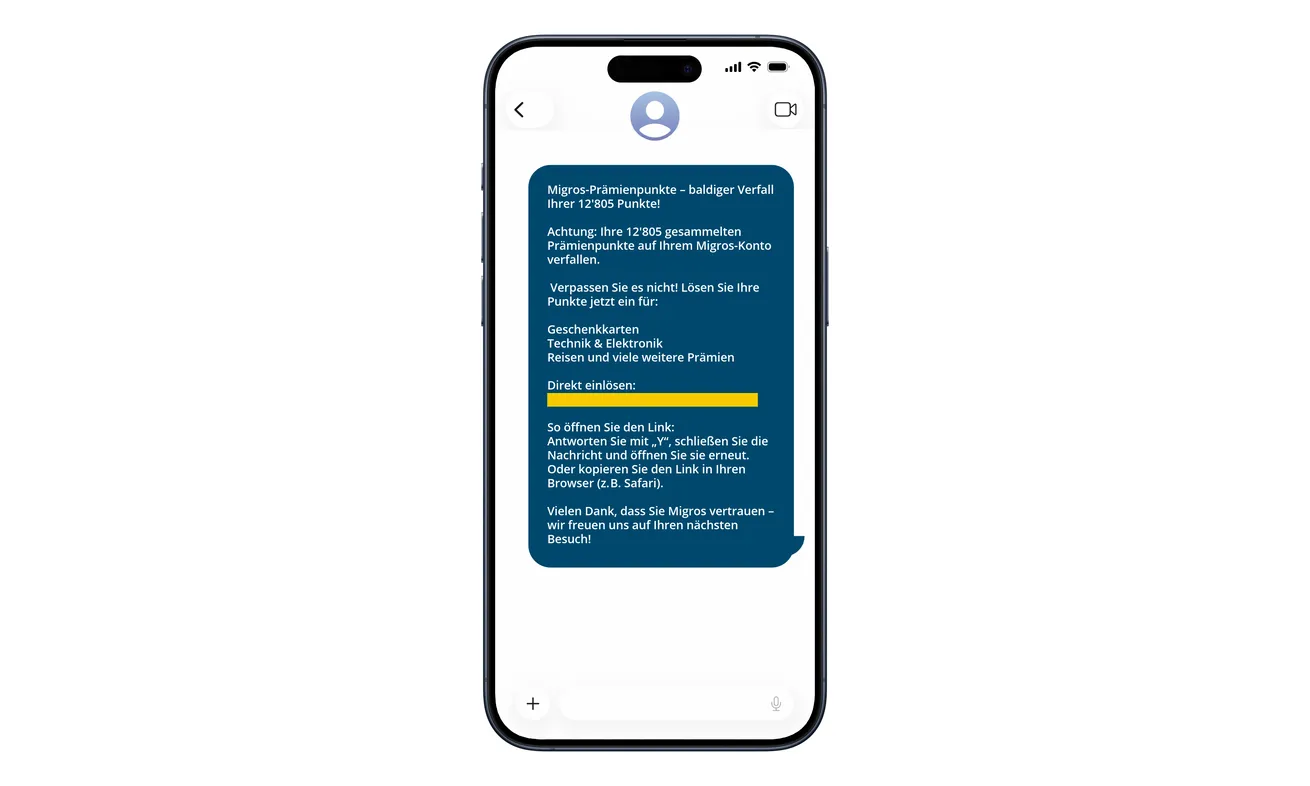
The Migros Cumulus SMS scam impersonates the retailer’s loyalty program. Its message suggests you’ve accumulated valuable benefits that need immediate attention.
The original example claims a balance of 12,805 points. That is a number printed by the sender, not an independently verified balance in your real account.
Migros and its Cumulus program are legitimate. The accusation concerns the false text and reward website, not ordinary loyalty benefits.
The reward catalog leads to personal and card details
Police document the Cumulus phishing journey: an email-entry screen, an attractive gadget selection, then delivery information and payment details for supposed shipping.
The warning also describes attempts to charge more than the advertised amount. The small delivery story isn’t a reliable ceiling on the exposure.
This isn’t evidence of a subscription in every version. Nor does entering an email address alone mean the recipient disclosed their mailbox password.
Check the real rewards account, not the SMS catalog
Open your usual Migros app or independently reached account to inspect your benefits. Don’t let the message’s number or deadline define what you actually hold.
- Don’t redeem points through the unsolicited link.
- Don’t reply just to make the link clickable.
- Keep a loyalty balance separate from permission to charge a bank card.
- Contact the issuer if you entered payment information.
- Use genuine account help if a password was also exposed.
The Threat Is Losing Something You Think You Already Earned
A surprise prize asks you to believe you’ve won. A points-expiry message asks you to protect something that supposedly already belongs to you.
You may worry you’re wasting rewards earned through ordinary shopping. That worry can arrive before you’ve checked whether the SMS balance is yours at all.
A specific number adds credibility without needing to be accurate. The sender can print thousands of points and let the recipient imagine how they accumulated them.
If you shop at Migros, the story has an obvious place in your life. If you rarely check the program, the invented balance may be hard to challenge.
The message then offers a pleasant solution: pick something useful. Headphones or a smartwatch can feel like a better outcome than losing the points entirely.
By the time a delivery charge appears, you’ve mentally chosen the reward. A small payment can seem like the last practical hurdle rather than a new warning.
Don’t judge that payment by how much you want the item. First establish whether the offer exists inside the genuine service.
A legitimate loyalty account gives you a place to check. You don’t need to resolve the question inside the stranger’s reward catalog.
How the Migros Cumulus SMS Scam Works
Step 1: A text announces a balance and an approaching expiry
The message adopts Migros’s identity and says accumulated points will disappear. It encourages immediate redemption through a supplied destination.
Police warn that sender numbers can vary and may be spoofed. A familiar-looking sender field isn’t an independent check of the company behind the text.
The screenshot even provides instructions for opening the link if it isn’t active. Don’t interpret that extra guidance as helpful customer service.
You can simply leave the message and open your established app. There’s no reason to reply, copy the destination or overcome a phone’s link restriction.
Step 2: A convincing imitation asks for an email address
The link leads to a counterfeit Migros-style website. The first information request can look modest compared with the value supposedly waiting.
Police describe an email-address entry before the reward pages. Don’t assume that means every recipient also gave away a password.
If you supplied only your address, record that accurately. It can enable further contact, but it isn’t the same exposure as a banking or mailbox login.
If your particular page requested a password too, treat that as an additional credential disclosure. Use the real service to replace it.
Step 3: A gadget catalog makes the points seem spendable
The fake offer displays items such as headphones, smartwatches and speakers, presented as rewards covered by the points.
A broad selection can make the page look established. Familiar product names help the recipient imagine receiving something real rather than examining who operates the catalog.
Product pictures don’t prove that the sender holds inventory or that the manufacturer participates. They’re part of the offer’s presentation.
Don’t use the catalog’s displayed points total as confirmation of your actual account. It belongs to the same unverified process as the SMS.
Choosing an item also doesn’t oblige you to continue. Stop before providing delivery or payment information, even if the page says your reward is reserved.
Step 4: Shipping turns a points offer into card exposure
The final request collects delivery details and a credit card for supposed postage. The recipient is no longer merely spending loyalty points.
A bank card is a separate payment instrument. Its details aren’t limited to the cost of sending the item pictured on the screen.
Police describe attempts at larger charges. If a banking prompt appears, inspect its actual amount, merchant and purpose instead of trusting the reward page.
Don’t authorize an unfamiliar transaction because the site calls it a temporary check. Don’t try a second card if the first submission appears to fail.
Contact the issuer after exposure, even without a useful confirmation. The absence of a shipping receipt doesn’t establish that the form collected nothing.
Why You Shouldn’t Reply to Activate the Link
The reproduced SMS tells recipients to answer with a letter, close the message and reopen it, or copy the address into a browser.
Those instructions are part of the suspicious message. They aren’t steps recommended by Migros or by this article.
An inactive link can interrupt an impulsive click. The sender wants you to remove that interruption and continue toward its chosen website.
Don’t do extra work to reach a destination you haven’t authenticated. A different browser won’t make the same fraudulent offer genuine.
Replying can also tell a sender that someone is engaging with the message. There’s no benefit in confirming interest just to ask whether the offer is real.
Ask the actual retailer through an established route instead. Keep the original SMS if you need to report what it instructed you to do.
If you’ve already replied, stop there. A reply by itself isn’t the same thing as entering card details or approving a transaction.
Review the next actions separately so your response fits the exposure. You don’t need to assume the worst merely because you sent one character.
Real Cumulus Benefits and the Fake Gadget Shop Are Different Things
A real program doesn’t validate an outside redemption page
Migrol’s official Cumulus information describes the genuine loyalty program. Check your own benefits through your established Migros account.
This article doesn’t determine your personal balance or whether a particular genuine voucher expires. Those questions need your actual account records.
The false SMS can’t answer them reliably. Even a balance matching your expectations wouldn’t establish that the linked shop is authorized.
Keep any genuine promotion you find separate from the message. Two offers mentioning the same loyalty program aren’t automatically connected.
A loyalty number isn’t a payment authorization
A customer card identifies participation in a rewards program. The bank card requested for shipping serves a different purpose.
You might use a card from any issuer to pay the supposed fee. Don’t assume only a Cumulus-branded credit card would be exposed.
When reporting the incident, tell the issuer which payment card you actually entered. The name on the loyalty message isn’t enough to identify the affected account.
A delivered-looking order screen isn’t proof of dispatch
A confirmation can repeat your chosen product and address without establishing a real shipment. Don’t wait for a promised delivery date before protecting the card.
If a subsequent message claims the parcel needs another fee, verify independently. The first selection doesn’t make later delivery instructions trustworthy.
Keep order numbers privately as evidence, but don’t assume they are retailer-issued references. Ask the genuine service whether it recognizes the offer.
What to Watch for After Sharing Your Details
A delivery form can reveal more than a card. Your name, address, email and phone number can make later messages more personal.
Someone mentioning the chosen headphones or your delivery address may simply be repeating information collected through the fake reward process.
That doesn’t make them a retailer, courier or bank representative. Verify any new request outside the channel that contacted you.
Don’t provide a code, identity document or remote access to cancel the reward. Cancellation language can become another excuse to collect information.
This is a precaution against follow-up approaches, not a claim that every recipient receives one. Respond to actual new contact rather than expecting a fixed script.
If a shared household card was used, tell its owner promptly. Don’t let embarrassment or uncertainty about the points delay payment protection.
Warn family members with a short explanation or redacted screenshot. Forwarding the original active link can put the same trap in front of someone else.
If someone else normally manages the household’s loyalty account, ask them through your usual conversation. Don’t give the sender their email address to locate the supposed points.
Keep separate notes for the real account and the fake reward selection. A product chosen on the imitation page isn’t evidence of a genuine redemption.
That distinction helps when asking for support. Explain that you received a points-expiry text, not that the retailer definitely removed the balance advertised in it.
If another person entered their card to cover your supposed postage, they need to contact their own issuer. Your loyalty inquiry can’t protect their payment account.
What to Do if You Have Fallen Victim to This Scam
-
Leave the fake redemption process. Don’t select another reward, finish delivery details or respond to messages about completing the order.
If you only received the SMS, report and delete it. Your genuine loyalty balance hasn’t been established as affected by its arrival.
-
Contact the issuer of the card you supplied. Use the banking app or contact printed on your own card.
Explain that you entered it into a false Migros reward page. Ask about blocking or replacing it and checking attempted or pending payments.
Describe any code or banking approval separately. State the amount shown by the bank, which may differ from the website’s shipping figure.
-
Check actual transactions promptly. Save unfamiliar merchant descriptions, currencies, amounts and dates, then follow the issuer’s dispute process.
Ask about deadlines rather than waiting to see whether a gadget arrives. A promised reward doesn’t establish a legitimate reason for a charge.
-
Secure a password if one was entered. Change it through the genuine account and address reuse on other services.
If you supplied only an email address, say that. Don’t report a stolen mailbox password unless it was actually disclosed or independent access signs exist.
-
Check genuine benefits independently. Open your usual Migros account to review the real balance and any legitimate offers or notices.
Ask genuine customer support about unexpected changes. Don’t ask the fake shop to transfer the points back or correct your account.
-
Preserve the message and report the phishing. Keep the sender field, original wording, destination and approximate interaction time.
Give police the details of any loss or misuse, and save your case number. Remove private identifiers from screenshots used to warn others.
-
Reject further fees and recovery pitches. A later caller knowing your delivery details isn’t proof of a legitimate connection.
Contact the bank or retailer yourself. Don’t approve another payment to cancel a reward, release a parcel or recover the first charge.
Frequently Asked Questions
Are the 12,805 Cumulus points in the SMS real?
That number appears in a fraudulent example. Check your own genuine Migros account; the text doesn’t establish your balance or an approaching expiry.
Is Migros responsible for this gadget checkout?
The documented campaign impersonates Migros. Its counterfeit reward page must be distinguished from the retailer and the legitimate Cumulus program.
Should I reply with Y to open the link?
No. Those instructions come from the suspicious SMS. Leave it and use your established app or independently opened account instead.
Does entering an email address reveal my email password?
Not by itself. Record exactly what you supplied. A password entered on another screen creates a separate exposure requiring account protection.
Can I be charged more than the shipping fee?
Police warn about attempts at higher charges. Exposing a card isn’t limited by the small fee advertised on the fake reward page.
Should I wait for the reward before calling my bank?
No. Contact the card issuer after disclosure. Waiting for delivery doesn’t improve payment security and may delay reporting unfamiliar activity.
The Bottom Line
Don’t redeem through the Migros Cumulus SMS scam. Its expiry warning leads to a counterfeit gadget offer and a request for sensitive information.
Check real benefits independently. If you entered a card or password, protect the relevant account now instead of waiting for the promised reward.

Join the discussion
0 commentsShare your experience or ask a question about this article.
Discussion
Start the conversation
Have a question or something useful to share? Add the first comment.