

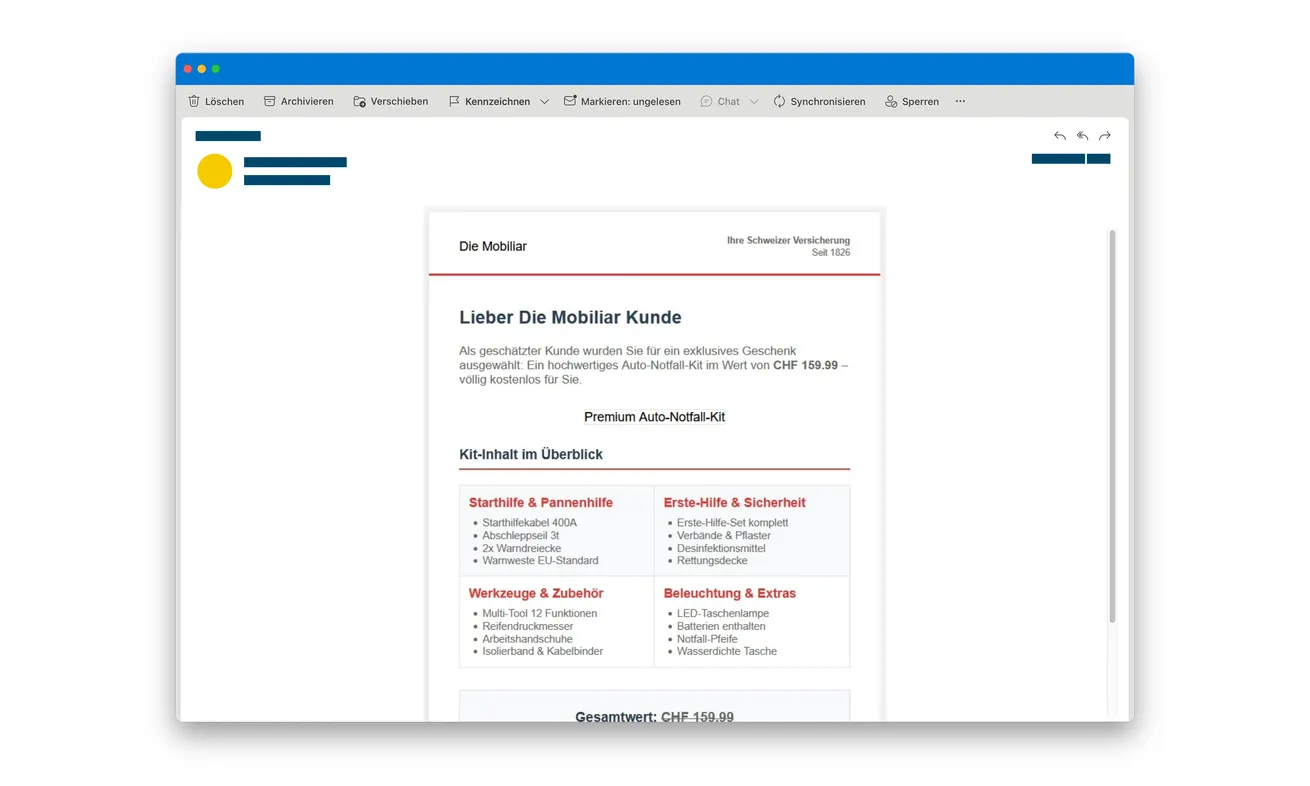
An email carrying the Mobiliar name says you’ve been selected for a free car emergency kit. It reads like a thank-you for being a loyal customer.
The list of useful roadside supplies makes the offer easy to picture. Before claiming the gift, take a closer look at the process attached to it.
Overview
A useful gift gives the insurance branding a believable purpose
The Mobiliar gift email scam borrows the Swiss insurer’s name to offer an emergency kit. The message presents the recipient as a specially selected, valued customer.
The pictured example claims a value of CHF159.99. That’s the advertised value of the supposed gift, not a verified retail price or the amount necessarily charged.
Mobiliar is a real insurer being impersonated. This warning doesn’t accuse its genuine insurance business of operating the fraudulent offer.
The reward process leads to payment and possible unwanted billing
Police document the false Mobiliar gift campaign, including a short survey and requests for personal and card information under a shipping pretext.
Their warning describes higher charges and, often, an unwanted subscription with an online shop. It also says the promised gift isn’t supplied in this scam.
That doesn’t establish one subscription price, interval or merchant for everyone. Your issuer needs the actual transaction and any subsequent billing in your case.
The right next step depends on whether you entered a card
Decline the gift route and check any genuine insurer promotion independently. If you supplied payment details, protect the card rather than waiting for a parcel.
- Don’t claim the kit through this email.
- Don’t treat a small shipping charge as the limit of your exposure.
- Ask the issuer about unfamiliar and potentially recurring transactions.
- Keep the original offer and payment records privately.
- Verify insurance questions through your established Mobiliar contact.
Why a Roadside Kit Fits the Story So Well
The gift isn’t random. Emergency supplies seem compatible with a safety-minded insurer, making the offer easier to accept than an unrelated luxury prize.
The email describes practical items rather than merely announcing a mystery reward. You can imagine keeping the kit in the car and being pleased you claimed it.
That creates a sense of usefulness before the payment request arrives. The sender has already made the item feel worth a little effort.
Loyalty language supplies another explanation. You don’t have to remember entering a competition if the email says the gift recognizes an existing customer relationship.
A little postage can sound reasonable beside a CHF159.99 gift. But the sender supplied both sides of that bargain, including what the kit is supposedly worth.
Don’t let the kit’s usefulness settle who is offering it. A legitimate need for roadside equipment doesn’t authenticate a stranger’s checkout.
If you want such a kit, choose it through a seller you can identify independently. You don’t have to use the surprise gift message to obtain one.
A genuine relationship with Mobiliar should make independent checking easier. It shouldn’t make an unexpected card request exempt from checking.
How the Mobiliar Gift Email Scam Works
Step 1: A customer thank-you promises a free emergency kit
The email uses the insurer’s identity and says the recipient has been selected. A product list and claimed value make the reward feel concrete.
Neither selection language nor a customer greeting proves the sender checked your policy. A broad email can reach real customers without knowing their insurance details.
Don’t reply with policy information to establish eligibility. An unknown sender doesn’t need more private information to make its story convincing.
Step 2: A copied website turns the offer into a task
The linked pages imitate Mobiliar’s visual identity. Police describe a brief survey before the personal and payment requests.
Answering easy questions can make the reward feel earned. The recipient moves from wondering about the email to finishing a process already underway.
A product page can also show reassuring service links and familiar branding. Those elements don’t establish that the insurer controls the form.
Don’t treat completing the survey as a commitment to continue. You can stop even if the next page says the kit is reserved.
Step 3: Delivery information leads toward card collection
The campaign asks for personal details and payment information under the explanation of shipping. That introduces financial exposure into an apparently free reward.
One police-published delivery screen even advertises free delivery. An early reassurance about postage isn’t a reliable description of the entire payment journey.
The page you see first may not disclose everything requested later. Evaluate the actual card request, not just the free-gift heading you remember.
A small advertised fee doesn’t authorize larger amounts. If your bank displays an unfamiliar merchant or transaction, stop rather than assuming it’s part of claiming.
Don’t use another card to get around a failed-looking payment. An error doesn’t show that the first card’s details stayed private.
Step 4: The promised parcel gives way to a billing problem
Police report charges beyond the stated amount and unwanted shop subscriptions in many cases. The person waiting for a kit may instead need to address recurring billing.
That risk needs a specific response. Blocking further contact with the email sender doesn’t necessarily resolve a transaction or continuing payment arrangement.
Keep any merchant descriptor, receipt or subscription notice. Ask the issuer what it means and which protections or dispute options fit your situation.
Don’t assume all recipients enrolled in the same plan. The source doesn’t establish a universal recurring amount or schedule.
Nor should a shipping-delay excuse postpone action. The supposed gift isn’t a reason to leave an exposed payment card unchecked.
Who Is Taking the Supposed Shipping Payment?
The insurer’s identity isn’t the checkout operator
Mobiliar’s name provides the lure. It doesn’t identify the person controlling the counterfeit website or the shop associated with an unwanted charge.
The police warning doesn’t establish one verified legal operator for every version. Don’t invent a company identity from the branding or a payment label.
Your own bank record may identify a merchant descriptor needing investigation. Preserve it exactly rather than replacing it with the insurer’s name in your report.
A copied contact address isn’t a return destination
A genuine insurer’s address copied into a footer wouldn’t make it responsible for the kit. Don’t mail a complaint or return parcel to an assumed fulfillment address.
No verified return depot is established by this campaign warning. Resolve any actual billing issue with the issuer and a verified merchant contact where available.
Keep the distinctions straight: insurer, website operator, payment recipient and possible fulfillment contact are different roles. One familiar name doesn’t connect them.
Cancellation needs a real billing contact
If a receipt identifies a subscription, save its terms and cancellation information. Verify the destination before supplying more information to stop billing.
Ask the issuer about preventing further recurring charges and disputing inappropriate payments. Don’t assume replacing a card alone resolves every continuing payment arrangement.
A cancellation page requesting another fee or a full set of card details deserves scrutiny. You shouldn’t need to repeat the original exposure to seek help.
The kit picture doesn’t establish fulfillment
A product image and list of equipment don’t identify a manufacturer, stock location or dispatch partner. This campaign isn’t evidence of a genuine order awaiting packing.
Police say the promised gift isn’t sent in the documented scam. Don’t substitute an assumption about shipping origin for that concrete warning.
You don’t need to prove where a kit was made before refusing this offer. The counterfeit identity and payment deception already justify declining it.
Checking With the Real Insurer
Mobiliar’s genuine phishing guidance explains how trusted branding and unexpected requests can be abused. It recommends independently checking doubtful messages.
Use your existing policy documents, established adviser or the insurer’s real website to find the contact. Don’t use a help desk introduced by the gift page.
Ask whether the specific promotion is authentic. You don’t need to reveal card information to ask that question.
If your account or policy is shared, tell the other person that the offer is being checked. Otherwise they may claim it separately while you investigate.
A genuine insurer response can clarify the promotion. It doesn’t replace issuer contact when payment details were already disclosed.
Don’t assume a real insurance policy covers every online loss. Coverage questions need the actual policy and the insurer’s assessment, not promises from the false email.
If You’re Already Waiting for the Emergency Kit
Stop treating delivery as the test of whether you should act. You can investigate a card exposure without waiting for an advertised dispatch window to end.
Open your banking account independently and compare actual activity with the amount you thought you were authorizing.
Keep first and later charges separate. A small initial payment and a larger subsequent one may need different explanations in your incident record.
Record what the page represented as free, what it said about delivery and what any receipt says about a subscription.
If you don’t have a receipt, don’t revisit the suspect checkout to generate one. Tell the issuer what you have and ask how to proceed.
Watch for emails saying another payment will release the parcel or cancel the membership. Treat them as fresh requests requiring verification.
A sender’s knowledge of your address or selected kit can come from the original form. It isn’t proof of a real courier or insurer relationship.
Keep the focus on your actual payment records and verified contacts. The gift story shouldn’t control the next decision once its identity is false.
If you arranged the kit for someone else, tell them not to pay a delivery message on your behalf. A household shouldn’t independently complete the same false request.
Keep any genuine roadside-equipment purchase separate from this incident. A real shop’s receipt doesn’t authenticate the insurance-branded gift email or its unknown billing destination.
When asking for help, distinguish the gift’s claimed value, the advertised shipping amount and the charge that actually appeared. Those three figures answer different questions.
What to Do if You Have Fallen Victim to This Scam
-
Stop claiming or paying for the gift. Close the site and decline additional shipping, verification or cancellation charges.
If you only read the email, report and delete it. Receipt alone doesn’t establish a card charge or subscription.
-
Contact the card issuer through your own banking route. Explain that a false Mobiliar gift page collected payment details under a shipping pretext.
Ask about protecting the card, reviewing pending activity and handling transactions you don’t recognize. Describe any authentication approvals you completed.
-
Ask specifically about recurring billing. Police warn of unwanted subscriptions in this campaign, so don’t limit the discussion to the first payment.
Give the issuer any merchant name, receipt or recurring notice. Ask what action is needed to prevent further charges, rather than assuming one remedy fits everything.
-
Preserve cancellation and dispute evidence. If a verified billing provider supplies a cancellation route, keep the request, confirmation and relevant dates.
Don’t send a password or complete card details to an unverified contact. Discuss suspicious cancellation instructions with the issuer.
Ask about dispute deadlines and explain accurately what you believed you were approving. No article can guarantee reimbursement.
-
Protect any additional account credentials. If the process also requested a password, replace it through the genuine service and address reuse elsewhere.
Name, address and phone exposure calls for vigilance about tailored contact. It doesn’t by itself prove your insurance account was accessed.
-
Report the impersonation and financial loss. Notify the genuine insurer and police as appropriate, preserving the original message and payment records.
Make clear that Mobiliar was impersonated. Don’t describe the counterfeit shop’s charge as an insurance premium unless your real records establish that.
-
Reject paid recovery offers. Don’t pay another person to unlock the kit, erase the membership or guarantee a refund.
Tell other affected cardholders or household members promptly. A clear explanation can prevent further payments without spreading the email’s live link.
Frequently Asked Questions
Is Mobiliar giving away this emergency kit?
The documented email is a fraudulent impersonation. Don’t claim its kit or treat the copied insurance branding as confirmation of a real promotion.
Does CHF159.99 mean that’s what my card was charged?
No. It’s the message’s claimed gift value. Check actual banking records for the transaction amount, currency and merchant description.
Why ask for a card if the gift is free?
The campaign uses supposed shipping as the excuse. That card request creates financial exposure regardless of the free-gift heading.
Will everyone be enrolled in a subscription?
Police report unwanted subscriptions in many cases, not one verified plan for every recipient. Check your receipts and ask the issuer about recurring activity.
Should I wait for delivery before disputing a charge?
Contact the issuer promptly after exposure or unfamiliar billing. Waiting for the promised parcel doesn’t protect the card or resolve recurring payments.
Can the real insurer cancel the counterfeit shop’s membership?
Don’t assume so. The insurer can address impersonation; payment protection and any verified merchant cancellation need their own appropriate routes.
The Bottom Line
Don’t claim the kit through the Mobiliar gift email scam. The insurer’s borrowed identity leads to payment exposure and police-reported unwanted billing.
If you entered a card, contact its issuer and ask about both unfamiliar and recurring charges. Check genuine insurer promotions independently, without reopening the gift page.

Join the discussion
0 commentsShare your experience or ask a question about this article.
Discussion
Start the conversation
Have a question or something useful to share? Add the first comment.