

A linen shirt, a relaxed blazer, a wardrobe that finally works. Miller & Hill sells a polished version of everyday dressing that is easy to like.
The photographs are only the beginning. Before filling a basket, look at the details that matter when the clothes arrive and the fit feels different.
Overview
The Store Promises an Easy Fit and an Easy Return
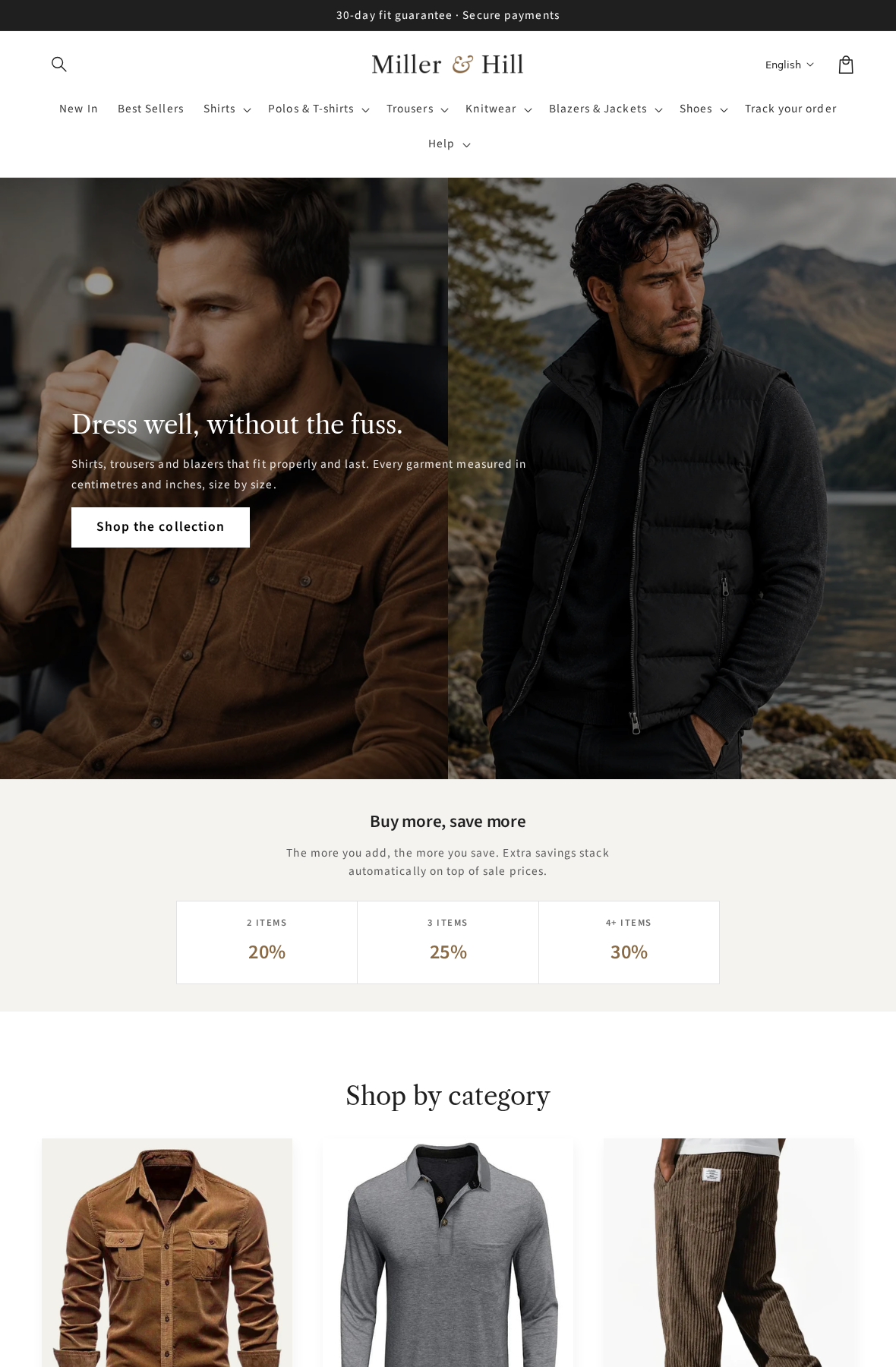
Miller & Hill offers shirts, knitwear, trousers, jackets, and shoes. Its storefront pairs discounted prices with free tracked delivery and a 30-day fit guarantee.
The buying message is reassuring: choose several pieces, save more, and return anything unsuitable. That sounds particularly useful when ordering unfamiliar clothing sizes.
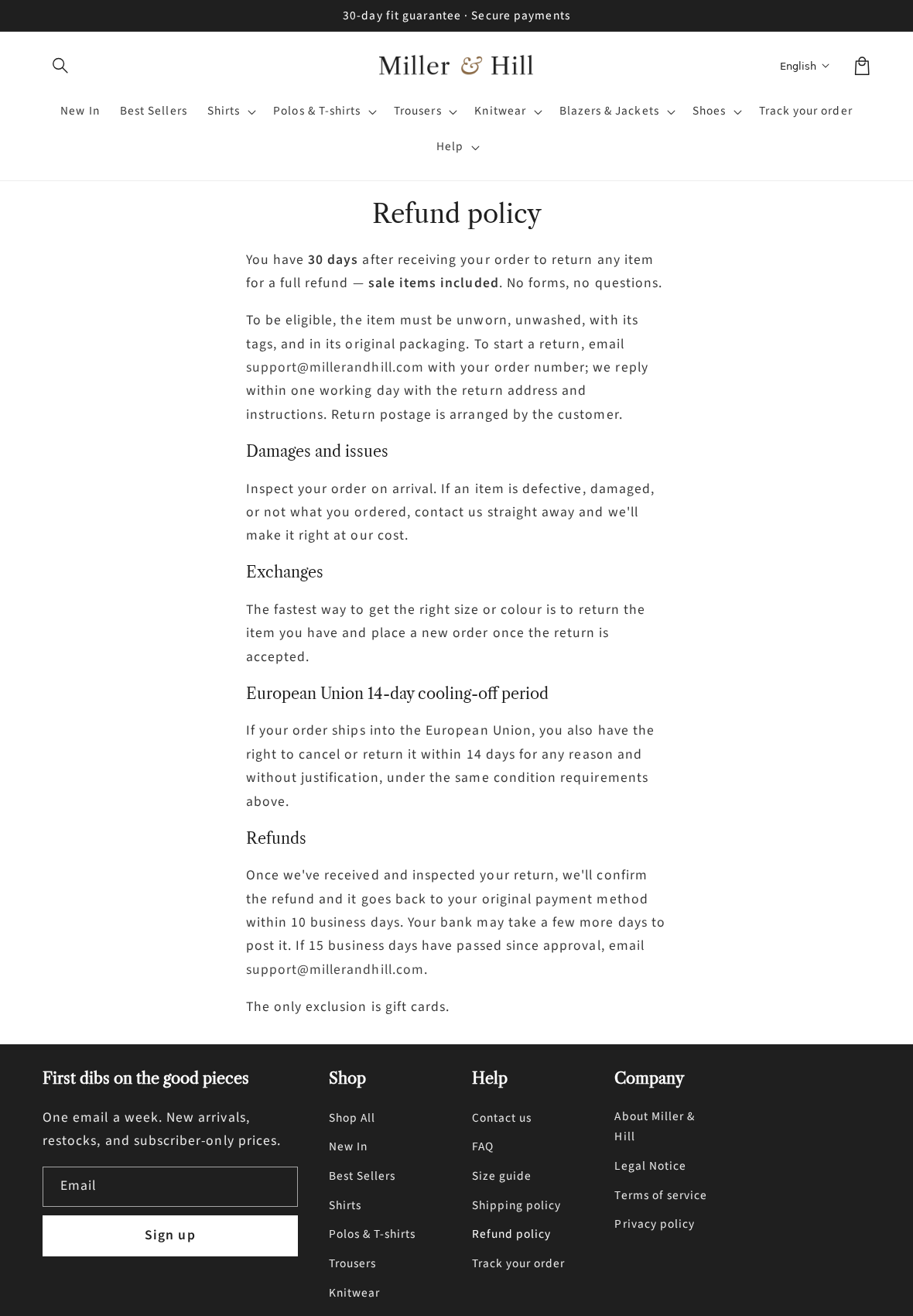
However, its refund policy requires unworn, unwashed garments, attached tags, and original packaging. Customers arrange return postage, while support supplies the address.
The Material Description Needs More Than a Product Name
The Whitfield Unlined Linen Blazer has a materials panel describing a linen blend. That is different from a promise of pure linen.
The panel does not state the fiber percentages. Those proportions matter if you are paying for linen’s feel, breathability, or a specific fabric composition.
A customer review on BBB alleges receiving a wrong-color, synthetic garment without a textile label. That is a buyer’s account, not an independently tested sample.
The Main Risk Is What the Promise Covers in Practice
The website names AKF Operations LLC and a Wyoming address. BBB identifies Miller & Hill as an alternate name and describes that address as a registered-agent location.
These findings do not establish a fake company or prove every order fails. They do mean a U.S. address cannot settle manufacturing quality or return logistics.
Before treating the offer as a low-risk wardrobe trial, resolve these points:
- The exact fiber composition of the garment you want.
- What you may do during a fit check without losing return eligibility.
- The authorized return country and likely postage cost.
- How a partial return affects a multi-item discount.
- The remedy for wrong goods, missing labels, or defective construction.
The Linen Question: A Blend Is Not Automatically a Bad Garment
Linen blends are common. Combining fibers can change wrinkle resistance, softness, stretch, weight, and price. The important issue is knowing which combination you are buying.
A blazer described as a linen blend should not be treated as 100% linen merely because its title highlights that fabric.
Ask for percentages, not another adjective. A description such as breathable or premium tells you less than a composition label showing the actual fibers.
The product page’s materials panel is a useful disclosure, but it leaves that question unanswered. A clear photograph of the garment label would help.
The care instructions also deserve attention. The Whitfield panel recommends dry cleaning or gentle hand washing, which may not suit a low-maintenance everyday wardrobe.
Consider the ongoing care expense alongside the purchase price. A cheaper blazer becomes less attractive if its cleaning routine is more demanding than you expected.
Why a Missing or Different Label Changes the Complaint
If the delivered label shows a composition that differs from a specific listing, preserve both. That is a more concrete problem than simply disliking the texture.
Photograph the inside seams, any care tag, and the packaging. If no label is present, show the places where one would normally be attached.
Do not identify fibers by touch alone. A scratchy feel can support a quality complaint, but it cannot reliably establish a laboratory-level composition finding.
You also should not wash the garment to prove it performs badly. Washing could complicate an ordinary return under the seller’s stated eligibility rules.
For a wrong color, record the ordered variant and photograph the delivered item in ordinary light. Include the package or item code where available.
What the BBB Review Does and Does Not Tell You
A BBB customer review dated September 24, 2026 describes an allegedly disappointing $59 linen-shirt purchase.
The reviewer describes a wrong color, synthetic-feeling fabric, and absent labeling. The account also criticizes the cost and practical difficulty of arranging a return.
That account matters if you are buying for a particular fabric or color. It does not establish the composition of garments the reviewer did not receive.
Some details in the published review are redacted. It would be wrong to fill those gaps with assumptions about the supplier or shipping destination.
The BBB page showed one customer review when checked. A single account cannot establish the frequency of problems across the store’s orders.
Equally, the storefront’s positive testimonials do not settle the complaint. Seller-hosted praise and a dissatisfied customer’s account both need to be considered in context.
No garment was purchased for this article, and support was not contacted. The recommendation rests on published terms, incomplete material detail, and that attributed customer report.
How the Miller & Hill Buying and Return Process Works
Step 1: The Styling Creates a Premium First Impression
The homepage shows coordinated outfits rather than a bare catalog. Coffee, outdoor settings, and familiar wardrobe staples make the clothes feel considered and wearable.
That presentation can help you imagine an outfit. It does not tell you the fabric percentages, seam quality, or condition of the garment you would receive.
Move from the photograph to the specific product panel. Read its construction, care information, measurements, and available variants before deciding the image answers everything.
The Whitfield example illustrates the distinction. Its linen-focused name attracts attention, while the expanded materials section identifies a blend.
Ask about missing details before ordering. A precise answer about composition is more useful than an assurance that the garment is comfortable or high quality.
Step 2: Stacked Discounts Encourage a Bigger Basket
The storefront advertises additional savings of 20% for two items, 25% for three, and 30% for four or more, on top of sale pricing.
That can make one tentative purchase turn into several. You may add another shirt because the basket suddenly seems better value.
But the additional spend is real, even when the discount is larger. Compare what you would actually pay with what you originally intended to buy.
Check the final order summary for the selected sizes, quantities, currency, and shipping option. Prices can be localized, so do not confuse one region’s display with another.
Treat the reduced price as the asking price. Compare it with clothing offering the same composition and return arrangements, rather than relying on the crossed-out amount.
If you might return one piece, ask how the remaining order will be recalculated. The published basket promotion does not explain that scenario in detail.
Step 3: Measurements Matter Before You Rely on the Guarantee
The store emphasizes measurements in centimeters and inches. On the blazer page, a size tool appears beside the size choices.
Use the information for that exact garment. A familiar letter size can correspond to different measurements across brands and cuts.
Ask whether the chart describes body measurements or the garment itself. That distinction affects how much room you need around the chest, shoulders, and sleeves.
Compare the chart with a garment that already fits you. For a jacket, shoulder width and sleeve length can be as important as chest size.
Keep a copy of the chart you used. If the delivered garment differs materially, you can explain the mismatch with measurements rather than a general dissatisfaction claim.
A return guarantee is a fallback, not a substitute for fit information. It becomes expensive to rely on when postage and return destination remain unknown.
Step 4: Free Delivery Does Not Mean Free Return Shipping
The shipping policy describes free tracked worldwide delivery without a minimum spend. It gives weekday processing within 24 hours and a usual 4–9-business-day delivery estimate.
It also offers express shipping at checkout and says applicable customs duties or import taxes are the customer’s responsibility.
Those are delivery terms. The refund policy separately says customers arrange return postage.
Do not read a free-delivery badge as a prepaid return label. They concern different parcels and different costs.
The return address is provided after emailing support. Until you have it, you cannot estimate whether the return is domestic or international.
For a time-sensitive event, leave room beyond the estimate. Order processing, transit, customs, and a possible exchange all take time.
Step 5: The Garment Must Stay Eligible for an Ordinary Return
The policy allows requests within 30 days after receipt and explicitly includes sale items. Gift cards are the stated exclusion.
The clothing must remain unworn and unwashed, with tags and original packaging. A 30-day window is not permission to wear a piece repeatedly before deciding.
Clarify what a reasonable fit check allows. Keep the tags attached and avoid alterations, cleaning, or wearing the item outside while the issue is unresolved.
Wrong goods and defects have a separate promise: the store says it will put those problems right at its own cost.
Make that distinction in your request. A wrong-color delivery should not be presented as simply changing your mind about a correctly supplied garment.
Once a return is received and inspected, the policy describes a refund to the original payment method within 10 business days, plus possible bank processing time.
Step 6: The Practical Remedy Depends on the Written Instructions
Support is supposed to reply within one working day with the return address and instructions. That is a published service promise, not a measured response time.
Obtain the recipient, complete address, authorization, shipping responsibility, and expected refund amount together. An incomplete answer can leave you unable to send the parcel correctly.
For an exchange, the policy describes returning the first item and placing a new order after acceptance. That may involve another payment and another delivery period.
Do not return goods to the Wyoming business address merely because it appears in the legal notice. It has not been identified as the returns facility.
If the seller offers a different remedy, compare it with the published policy. You do not have to accept an unclear credit or reduced amount without explanation.
Miller & Hill, AKF Operations, and Return Accountability
The Storefront and the Named Company Are Different Names
The legal notice says the website is operated by AKF Operations LLC, described as a Wyoming limited liability company.
BBB’s business profile lists Miller & Hill as an alternate name. Match that disclosure against your invoice and payment descriptor.
A different descriptor needs clarification, not an automatic accusation. Payment processors can display names differently, but you need to know who handles the transaction.
The Wyoming Address Is Not Evidence of a U.S. Clothing Factory
The disclosed address is 4008 Laramie Street, Suite D, Cheyenne, Wyoming. BBB describes it as apparently belonging to a commercial registered-agent service.
Registered agents receive legal paperwork and forward correspondence. That role does not establish where garments are designed, manufactured, stored, or returned.
Such an address is not automatically fake. It simply cannot carry the meaning of a showroom, production facility, or customer returns desk without further evidence.
A Support Email Must Produce an Order-Specific Remedy
The published contact is support@millerandhill.com. Use a written request so the garment issue, requested resolution, and response can be preserved.
Ask directly about return postage for defective or wrong items. The policy’s own cost promise is more specific than its ordinary fit-return arrangement.
If the stated reply period passes, follow up with the original correspondence attached. Keep the delivery date and return deadline visible in the request.
The Delivered Clothing Must Match Its Own Description
Check the fiber label, care instructions, size, color, and construction against the listing. Photograph differences before using or washing the garment.
A polished name and U.S. legal address do not certify premium fabric. The individual item still needs accurate, traceable information.
What to Do If You Ordered From Miller & Hill
-
Preserve the garment listing. Save the exact variant, material description, size chart, discount, and guarantee before the page changes.
Add your receipt and delivery date. A general homepage screenshot will not explain which color or fabric was promised for your item.
-
Inspect without changing the garment. Keep packaging and tags, and photograph the supplied size, color, labels, and any construction problem.
For a measurement mismatch, show the garment beside a tape measure. Do not wash it merely to investigate a concern.
-
Request a specific resolution in writing. Email support@millerandhill.com with the order number and explain whether the issue is fit, a defect, or wrong goods.
For defects or an incorrect item, reference the store’s promise to resolve the problem at its own cost.
-
Get authorization before sending anything. Confirm the destination, return deadline, postage responsibility, and amount expected back.
Use tracked postage for an authorized return and retain the receipt. A parcel delivered to an unconfirmed address can complicate recovery.
-
Track the refund, not just the parcel. Record when the return arrives and when support approves repayment.
The policy gives 10 business days after approval for the refund process. Follow up if it has not appeared within the stated timetable.
-
Take unresolved problems to your payment provider. Present the listing, photographs, receipt, and correspondence, and ask about its dispute procedure and deadline.
Describe the actual issue accurately. Wrong merchandise, non-delivery, and a rejected fit return are different problems, and a refund is not guaranteed.
Frequently Asked Questions
Is Miller & Hill a Confirmed Scam?
No confirmed fraud finding is established here. There is an operating storefront, published company information, and a concerning attributed customer review that buyers should not ignore.
Are All Miller & Hill Linen Items Pure Linen?
No. The Whitfield blazer’s materials panel says linen blend without percentages. Obtain the exact composition for your chosen item rather than assuming the title means pure linen.
Can I Return Discounted Clothing?
The current policy explicitly includes sale items within its 30-day period, subject to condition, tags, and packaging requirements. Gift cards are excluded.
Does Free Shipping Include the Return Parcel?
No such promise appears in the ordinary return policy. Customers arrange return postage; defective or wrong items have a separate seller-cost remedy.
Should I Mail My Return to the Wyoming Address?
Not without explicit authorization. That address is disclosed for the company, while the returns address is supplied by support for your order.
What Is the Strongest Evidence of a Purchase Problem?
A saved item description compared with clear delivery photographs, measurements, and labels. Add the seller’s response so the requested remedy and any refusal are documented.
The Bottom Line
Do not order a large Miller & Hill basket assuming premium linen and a cost-free clothing trial. The composition and return destination need clear answers first.
If you already ordered, keep the garment unchanged and request a precise remedy promptly. Wrong goods deserve a different response from an ordinary sizing preference.








