

The text lands at a bad time. Coverage ending. A claim you never filed. A number that already looks like Molina Healthcare on the screen. You pick up because a health plan is not a coupon code. It is doctors, medicine, a child, a parent, a surgery date you cannot afford to lose.
That fear is the product. The voice does not need to shout. It only needs you to stay on the line, or to dial the number in the message, before you turn the card over and call the line that was printed for you.
Hang up. Do not press a key. Do not call the number they gave you. Molina Healthcare is a real U.S. insurer. The official public site is molinahealthcare.com. The costume is the call. The costume is the cancel text. The company is not the scam.
Overview
The trap is an unexpected call or text that wears the Molina Healthcare name so you will call back, stay on the line, or hand over identity and money. One version says your coverage is about to cancel and you must act today. Another says someone overseas filed medical claims in your name, often in Chinese, then offers to “transfer you to the police.” A third puts a person in a uniform on Zoom or Teams and asks you to hold up a passport.
Molina Healthcare is not a ghost brand. It is a real health plan with real member cards, real state pages, and a real fraud-reporting line. Scammers borrow that reputation the same way they borrow a bank name or a government seal. The Better Business Bureau’s own Scam Tracker warning says legitimate business names and phone numbers are often used by people trying to take advantage of you. A Molina logo on a screen is not a credential.
This is not a storefront story. It is not a shop with Molina in the domain. It is the health plan name on a phone. If you already have a Molina card in your wallet, that card is still the safest number you have. If you do not have a Molina plan at all, the call can still find you. Impostor campaigns spray names. They do not wait for you to be a member.
The real name on a fake call
Molina prints Member Services on the back of the member ID card. Official member pages say the same thing. The card is supposed to carry your name, your ID number, and the toll-free line for your plan. That is the door. Not a number that arrived inside a threat. Not a transfer that happened after you already started talking.
There is no single Molina phone number that fits every state and every product. Texas is a useful example because Molina’s own member page there lists different Member Services lines for STAR and CHIP, for Marketplace, for Medicare, and for dual options. A stranger who recites one 800 number and calls it “the Molina line” is not proving anything. Plans do not share one switchboard. Your card does.
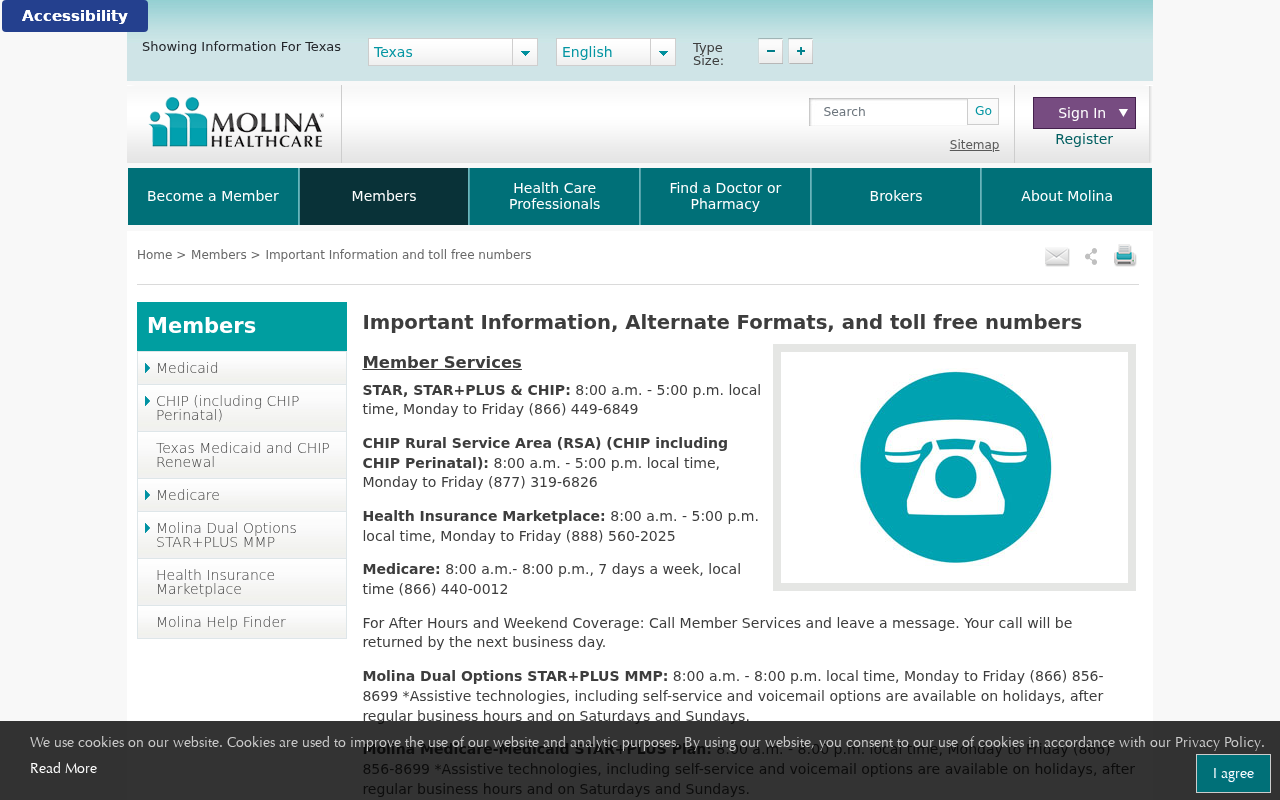
If you do not have the card in your hand, open Molina’s site yourself. Type the address. Pick your state and your plan. Use the Member Services number printed on that page. Confirm it is still current before you dial. Do not tap a link in the text. Do not ask the caller to “connect you.”
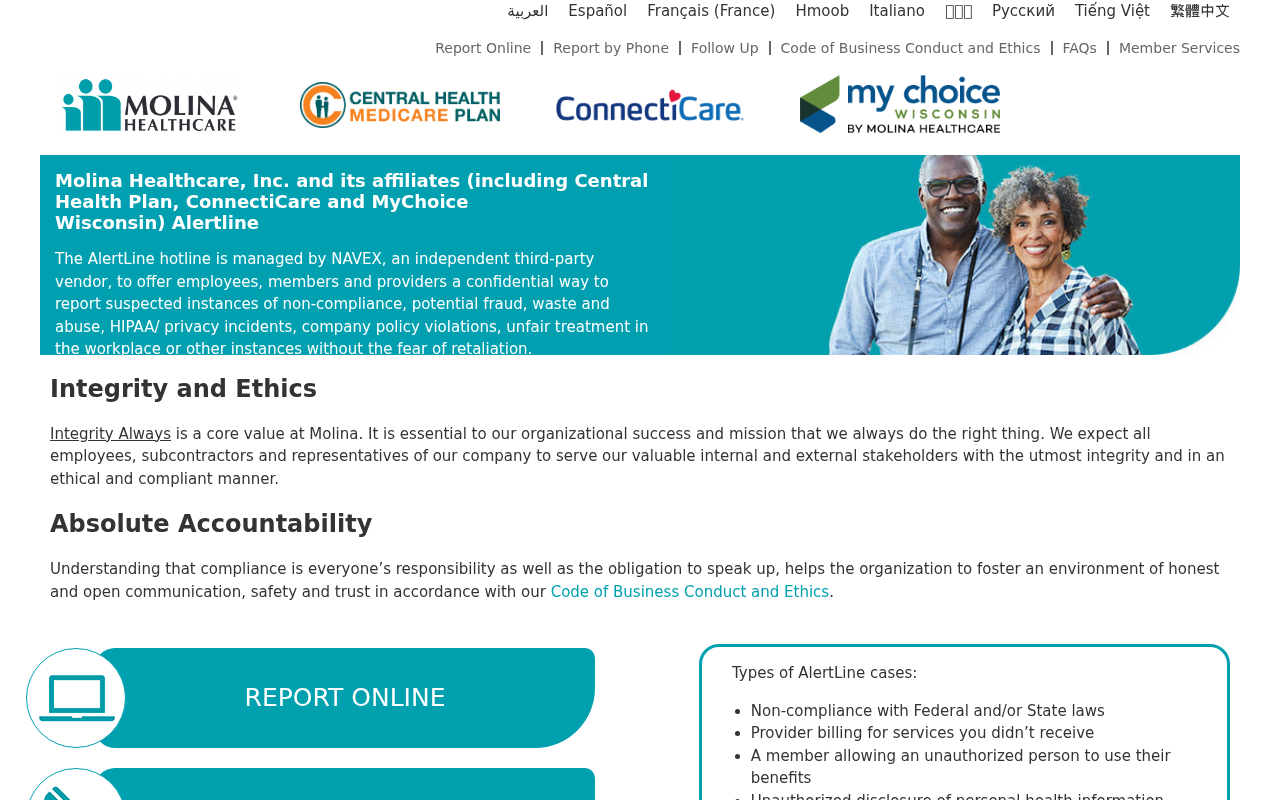
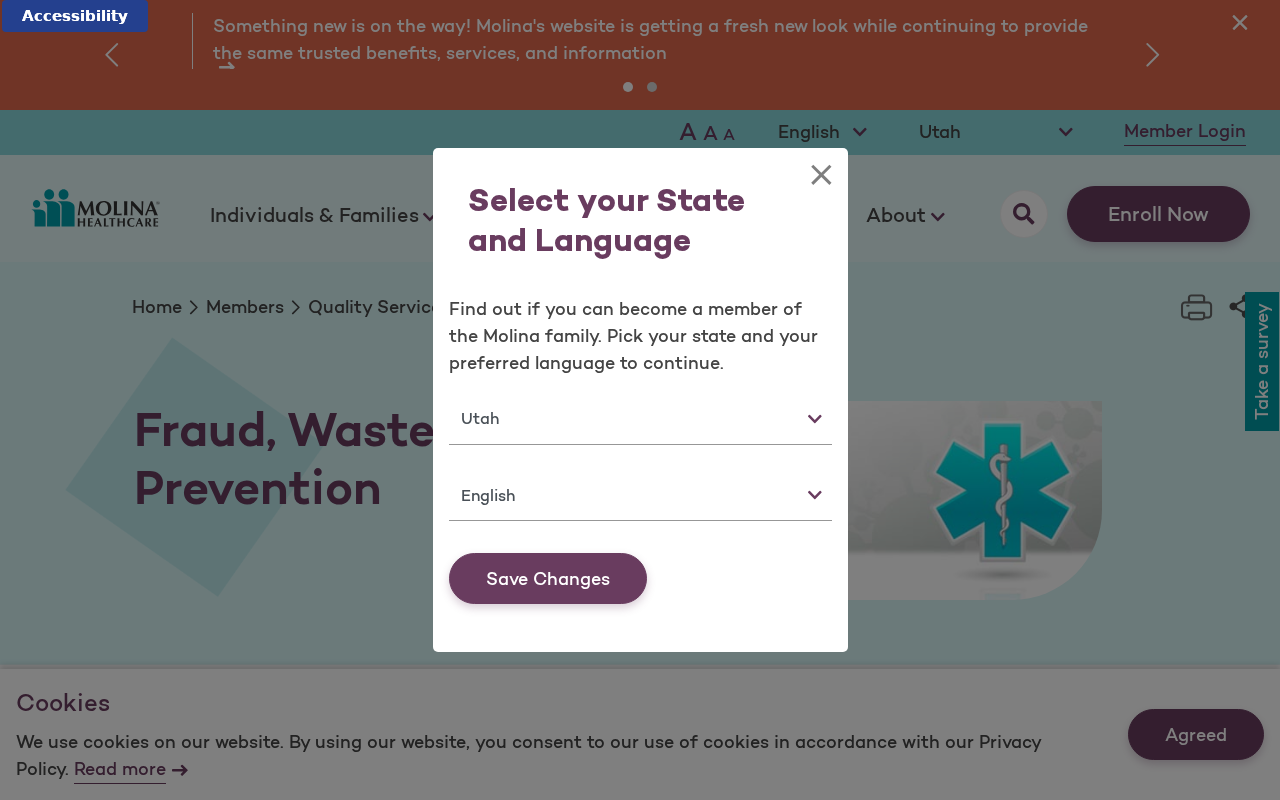
Molina also publishes a separate AlertLine for suspected fraud, waste, and abuse. Across official state fraud pages, that line is listed as (866) 606-3889, available 24 hours a day, with TTY at 711. The same pages point people to a confidential online report at MolinaHealthcare.AlertLine.com. Confirm those details on Molina’s own fraud page for your state before you use them. AlertLine is a place to report a problem. It is not a hotline that calls you first about a surgery in another country.
The cancel text
The quieter costume is a text. It may say your coverage will end today. It may say a premium bounced, a subsidy changed, or a Medicaid or Marketplace file will close if you do not call. It may include a short deadline, a case number, and a phone number that already looks official. The point of the message is not to inform you. The point is to make you dial while you are still scared.
A real plan can send mail, a portal message, or a notice you can also find after you sign in the way you always do. A real plan does not need you to call a number that arrived inside a panic text in order to keep seeing your doctor tomorrow. If something is actually wrong with a premium or a renewal, the card and the official member page will still be there after you sit down.
Do not reply YES. Do not tap the link. Do not read a one-time code back to anyone who texted you first. A code that just landed on your phone is a key. The person who wants it is trying to open a door as you.
The overseas claim
The louder costume is a live voice. In a November 2025 BBB Scam Tracker report from Minnesota, the caller ID already looked like Molina Healthcare. The person said they were from a “Molina Healthcare Asian Department.” They spoke Chinese. They claimed several denied insurance claims had been filed by someone posing as the member in China. When the recipient pushed back, the voice stayed calm, answered the questions, and then offered a transfer to “Chinese police.”
That report is a consumer account, not a court finding. Treat it as a pattern, not as a docket. The pattern matters because it matches a wider warning. In November 2025 the FBI’s Internet Crime Complaint Center published a public service announcement about criminals who impersonate U.S. health insurance providers and then impersonate Chinese law enforcement. The Bureau said the work often targets Chinese-speaking people living in the United States. The first call can look like a claims department. The second voice can look like police.
The FBI’s description is blunt. The first caller asks about recent insurance claims for alleged surgical procedures. They may put fake invoices on a screen through video software and demand payment. If you say you never had that surgery, they transfer you to someone posing as Chinese law enforcement. That person asks for personal information, threatens extradition or foreign prosecution, and demands a large payment they call bail. They may tell you to keep a video session open for “surveillance.”
The FBI did not need Molina to be the only name in that file for the costume to fit. Any trusted U.S. plan name will do. Molina is one of the names people already keep on a card. That is enough.
The police on Zoom
Once the word police enters the call, the health plan story is already doing its job. You are no longer arguing about a claim. You are arguing about arrest. The Minnesota report said the second voice asked for a Zoom call, texted a badge image, then unsent the picture later, and asked the person to show a photo ID and a passport on camera.
A badge photo that disappears is not a credential. A uniform on a laptop is not a precinct. Real local police do not collect bail by walking you through a wire, a crypto ATM, or a “safe account” after an insurance claim you never filed. The Federal Trade Commission’s imposter-scam guidance says criminals pretend to be a business you know, or a government agency, or both. They fake caller ID. They give badge numbers. They want money or access. The FTC’s rule is the same as Molina’s card: hang up and use a number you look up yourself.
What they want
The first prize is the callback. A callback turns a ignored robocall into a room they control. The second prize is identity: a member ID, a Social Security number, a date of birth, a passport page, a driver’s license held up to a webcam. The third prize is money. The story may be a premium, a claim repayment, a fine, or bail. The payment method is usually something that is hard to reverse. A wire. A transfer app. Crypto. Gift cards. Cash moved to a “safe” place.
If they also want the one-time code from your phone, or a remote-access app, or a video session that never ends, they are not verifying you. They are staying in the room until the money moves.
How The Impersonation Works
1. Fear finds you first
Health coverage fear does not need a long introduction. If you have a specialist appointment next week, if a child is on the plan, if a parent just started a new medicine, a single sentence about cancelation is enough to empty the room of every other thought. An overseas claim adds a second fear. Someone used your name. Someone is in trouble in another country. Someone in uniform wants you on camera before the situation gets worse.
The contact often arrives when you cannot think. Early. Late. During work. In a parking lot. The point is to keep you from walking to a drawer and finding the card. Urgency is not customer service. It is a tool.
2. Caller ID does the selling
People still trust the name on the screen. That is understandable. It is also the oldest trick in this file. The FTC says not to trust caller ID because it can be faked. The Minnesota report said the Molina name already looked right before anyone spoke. A later Scam Tracker report, from April 2026, described three calls in one day that showed Molina Healthcare on the screen even for a person who was not on a Molina plan at the time.
A spoofed 800 number is not a member-services desk. An 888 that matches the mood of a real insurer is not a claims department. Hearing your own name does not mean a claims file opened this morning. Names leak. Cards get copied. Old forms sit in other companies’ databases. Recognition is not proof that Molina placed the call.
3. The cancel text wants a callback
The text version is built for people who will not pick up an unknown voice. It gives you a job. Call this number. Confirm this payment. Stop this cancelation. The number in the message is the product. Once you dial it, they control the story. They can keep you on the line while a second person talks to your bank. They can walk you to a payment app. They can ask you to read a member ID “for verification” and write it down.
A cancelation that can only be stopped by the number in the text is not a cancelation. It is a hook. Official member pages tell you to carry the card and to call the Member Services line printed on it. That advice does not change because a text used capital letters.
4. The overseas claim story
The live version often starts softer than people expect. The Minnesota account said the first caller was calm and answered cross-examination. That is part of the script. A shout makes you hang up. A careful voice makes you stay. They may already know a name, a city, or a language. They may show documents on a shared screen. The FBI said those invoices can be fake and still look specific enough to freeze you.
You do not have to win an argument about a surgery you never had. You do not have to prove a negative to a stranger. A real claims question can wait for the number on the card. A real fraud report can wait for Molina’s own AlertLine page. The person who needs you to stay on this call, right now, is not doing claims work.
5. They transfer you to “police”
The handoff is the door switch. The first voice was insurance. The second voice is law. You are now supposed to feel that hanging up is a crime. The FBI said the second impersonator may threaten extradition or foreign prosecution and demand a large payment described as bail. Local police departments that have seen the wider health-insurance-plus-police costume have said the same thing in public: law enforcement will not ask you to wire money to avoid arrest.
The FTC has been writing the government half of this for years. Nobody from a real agency is going to tell you to move money to “protect it,” buy gift cards, or pay through a crypto ATM. A transfer from a claims clerk to an officer, on the same unexpected call, is not how a U.S. health plan works with a U.S. police department. It is how a script keeps you from looking anything up.
6. Zoom, a badge photo, and your passport
Video is there to make the costume heavier. A badge image. A uniform. A request to hold your passport to the camera. A request to keep the session open so they can “watch” you. The FBI said the impersonator may tell you to download video software and stay connected for 24-hour surveillance. That is not protection. That is a room they do not want you to leave.
A passport page on Zoom is a gift they can use long after the call. A driver’s license held up “for the file” is the same gift. If they also want you to install remote software so they can “secure the computer,” stop. A health plan does not need remote control of your laptop to talk about a claim. A police department that is real will not ask you to keep a consumer video app running overnight so you can avoid jail.
7. How to check without their number
Close the text. End the call. Use a different phone if you can. Turn the Molina card over and call the Member Services number printed there. If the card is not with you, type molinahealthcare.com yourself, choose your state and plan, and use the member line on that page. Confirm it before you dial. Tell them you got an unexpected contact. Ask whether anything is actually outstanding. Do not read a password. Do not make a payment because a stranger set a deadline.
If you use the member portal, type the official address or use the app you already installed. Do not tap a login link in the message. Do not sign in while the caller is still talking. A person who wants to watch you log in is not helping you read a claim.
If what you actually want is to report a suspicious call that used Molina’s name, use Molina’s own fraud pages and the AlertLine details printed there. Confirm (866) 606-3889 and the AlertLine site on that page first. You can also report the contact to the FTC at ReportFraud.ftc.gov. If money moved, or if a passport went on camera, file with the FBI’s Internet Crime Complaint Center as well. The Bureau asked for phone numbers, names, and transaction details even when the money has not left yet.
You can be polite to a real plan by using its real door. You do not owe a performance to a costume. If the caller becomes angry when you say you will hang up and call the number on the card, that anger is information. A member-services desk does not lose your coverage because you took four minutes to check.
What To Do If You Already Called Back
If you already dialed the number, you are not the first person to do it and you are not foolish. The costume is built so that a careful person still calls. What you do in the next hour matters more than the fact that you picked up.
1. Stop the next step
If you only talked, stop. Do not call that number again. Do not join the Zoom they just scheduled. Do not send the follow-up photo they asked for. Write down what you remember: the name they used, the time, the number on your screen, the language, and what they wanted. Then use the card or the official member page and ask Molina whether anything is actually open on your file. If the official file is quiet, the story was the call.
2. If money moved, call the bank first
If you sent money, start with the bank, the card issuer, or the transfer service. Tell them the payment was a scam. Ask them to stop anything that can still be stopped. Speed matters more than a perfectly written report. Wires, crypto, and gift cards are hard. That is why those methods were chosen. Still make the call. Still ask. Then tell the FTC at ReportFraud.ftc.gov and file with IC3.
3. If a passport or ID went on camera, treat it as stolen
If you held a passport, a license, or a member card up to Zoom, treat those images as stolen. Go to IdentityTheft.gov and make a recovery plan. If a Social Security number went out, follow that site’s steps and watch tax and credit activity. If a passport page was shown or sent, use the official U.S. passport guidance for a lost or compromised document, not a number from the caller. A second voice that offers to “secure the passport” is often the same operation with a softer tone.
4. If you shared a login or a code, lock the account
If you read out a member portal password, a one-time code, or a banking code, sign in from a device you trust and change the password. Turn on or review multi-factor authentication. If you cannot get in, use the official recovery path on Molina’s site or the number on the card, not a reset link from the caller. Watch the account for a changed phone number, a changed email, or new messages you did not send. A stranger who can open the portal can change how the plan reaches you.
5. If you installed software or stayed on video, close that room
If you downloaded a remote-access app, or left Zoom or Teams running because the voice said it was surveillance, disconnect it. Uninstall the remote tool if you can. Change passwords from a different device. Get the computer checked if someone else had control. Real Molina staff do not need remote control of your laptop to discuss a claim. Real police do not need a consumer video session that lasts all night.
6. Tell Molina, then tell the public desks
Call Member Services on the card and say you were contacted by someone using the plan’s name. Ask them to note it. If you want to report the attempt as fraud, use the AlertLine details on Molina’s own fraud page after you confirm them. Then report the contact to the FTC. If the call included a police costume, a wire, a passport, or a video session, add IC3 and, if you need to, local police. You can do these things in any order that protects the money and the login first.
Tell a person you trust what happened. Shame is part of the design. These calls are aimed at people who have something to lose if a coverage story is true, and at people who have family ties a foreign-police story can touch. Talking to one other adult makes the next payment request harder to sell. If a family member is still on the phone with the same voice, get them off that line before anyone else pays.
Do not let the same costume sell you a recovery. A second caller who claims they can retrieve the wire, unlock your coverage, or speak to Molina or the police on your behalf is often the same operation. Recovery is a sequel. Official help is the number on the card, the bank, IdentityTheft.gov, the FTC, and IC3.
The Bottom Line
A call or text that uses the Molina Healthcare name to cancel your coverage, collect an overseas claim, or put “police” on Zoom is wearing a costume. Molina Healthcare is a real U.S. insurer. The official site is molinahealthcare.com. There is no need to argue with the voice. Hang up. Do not press a key. Do not dial the number they gave you.
Turn the card over. Call the Member Services line printed there. If the card is not with you, look up your state’s member page on Molina’s own site and confirm the number before you dial. If you want to report the contact as fraud, confirm the AlertLine number and the AlertLine site on Molina’s fraud page first. Across those official pages the AlertLine is listed as (866) 606-3889. Still check. Numbers can move. The card and the live page do not.
The FBI has already described the wider pattern: a spoofed U.S. health-plan claims call, then a fake law-enforcement voice, then identity and money. The FTC has already said not to trust caller ID and not to send money because an unexpected caller told you to. BBB Scam Tracker has already logged people who were walked from a Molina-looking caller ID to a Zoom badge and a passport request. Those records are the defense. The plan on your card is real. The stranger who needs you to stay on the line is not that plan.
If you already called back, stop the next step. Call the bank if money moved. Change the portal password if you shared it. Treat a passport on camera as stolen. Report the contact. Check the real file yourself. Your coverage lives on the card and on Molina’s site, not on a number that rang you during dinner.

Reviews & discussion
0 commentsShare a firsthand experience, or ask a question.
Community reviews
Molina Healthcare
Moderated reader experiences, not an editorial verdict.
Start the conversation
Have a question or something useful to share? Add the first comment.