

Job hunting can be an exhausting journey. Like many job seekers, you may have applied to hundreds of roles, tailored your resume countless times, networked tirelessly, and even attended information sessions, all in the hope of securing that perfect opportunity. But then, one day, something unusual happens. Out of the blue, you receive a message on LinkedIn or via email from someone claiming to be an Executive Director at Morgan Stanley, one of the most prestigious investment banks in the world. The message highlights a fantastic job opening—a Customer Support Analyst or Client Service and Operations Associate role—tailored perfectly to your qualifications. The sender even attaches a “legit” job description and urges you to apply quickly before the opportunity slips away.
It feels like a miracle. But as the saying goes: if it seems too good to be true, it probably is.
This is the story of a sophisticated recruitment scam that preys on job seekers’ hopes, targeting them through LinkedIn, email, and social networks. The fraudsters impersonate Morgan Stanley executives and recruiters, promising dream jobs and dangling career advancement—only to lead victims into traps designed to steal money, personal information, or both.
In this comprehensive article, we will uncover the truth about the Customer Support Analyst at Morgan Stanley Recruitment Scam. We’ll examine how the scam works, the red flags to watch out for, real-world examples, and—most importantly—what you should do if you have already fallen victim.

Scam Overview
A Too-Good-to-Be-True Job Offer
The Morgan Stanley recruitment scam begins with a message that looks incredibly professional. Typically, the scammer poses as an Executive Director, Vice President, or Recruiter at Morgan Stanley. The message is often sent through LinkedIn, where job seekers are most vulnerable, or via email using addresses that mimic real recruiters but rely on free domains such as Outlook.com or Gmail.com.
The content of the message is carefully crafted:
- It highlights a role such as Customer Support Analyst or Client Service and Operations Associate—positions that sound legitimate and align with typical Morgan Stanley job postings.
- It flatters the target, emphasizing how their qualifications make them an excellent fit for the role.
- It creates urgency, warning that the position is highly competitive and will fill quickly.
- It includes instructions to contact a “colleague recruiter” directly, providing a personal email address (which, upon closer inspection, is not associated with Morgan Stanley at all).
To a job seeker, this is both flattering and exciting. It feels like years of struggle and rejection are finally paying off. That emotional reaction is precisely what the scammers rely on.
A Sophisticated Social Engineering Approach
What makes this scam especially dangerous is that it mirrors real corporate communication. The scammers:
- Use professional titles such as Executive Director, Compensation & Analytics.
- Mention well-known companies like Morgan Stanley, J.P. Morgan, or Goldman Sachs to gain credibility.
- Provide “job descriptions” that are often plagiarized from real Morgan Stanley postings.
- Reference Applicant Tracking Systems (ATS), resume formatting, and other HR jargon to appear authentic.
By blending these tactics, scammers create a convincing illusion of legitimacy. For many victims, the moment of realization only comes after being asked to pay for “resume optimization,” “application portal fees,” or “document verification.”
The Role of Email Red Flags
One of the clearest warning signs in this scam is the email address provided. Real recruiters at Morgan Stanley always use corporate domains such as @morganstanley.com. In contrast, the scammers rely on:
- @outlook.com
- @gmail.com
- @consultant.com
- Or slight misspellings of corporate domains
This small but significant detail is often overlooked by eager job seekers.
How The Scam Works
To truly protect yourself, it’s essential to understand the mechanics of the Morgan Stanley recruitment scam. Here’s how it typically unfolds:
1. Initial Contact via LinkedIn or Email
- Scammers create fake LinkedIn profiles, often using stolen photos and fabricated job titles like Executive Director at Morgan Stanley.
- They connect with job seekers, often targeting those who have public posts about job hunting.
- Alternatively, scammers send cold emails that appear professional but come from non-corporate domains.
2. Flattery and the “Perfect Match”
- Once contact is established, the scammer praises the victim’s qualifications.
- They claim the victim is an “excellent fit” for a Customer Support Analyst role.
- The job description attached or linked is often stolen from Morgan Stanley’s official career site to appear legitimate.
3. The Urgency Tactic
- Scammers stress that positions at Morgan Stanley “fill quickly” due to high demand.
- This creates a fear of missing out (FOMO), pushing victims to act without verifying details.
4. The Resume “Problem”
- After receiving the victim’s resume, scammers claim it is not formatted correctly for the company’s ATS system.
- They warn that the resume has been rejected and cannot proceed unless reformatted.
- This sets the stage for the next phase of the scam.
5. Referral to a “Trusted Partner”
- The scammer then refers the victim to a so-called resume optimization specialist or ATS consultant.
- This third party is either controlled by the scammer or working in collusion.
- Victims are asked to pay fees ranging from $50 to $500 for resume reformatting.
6. Extraction of Personal Data
- Some scammers go further, asking for sensitive details like:
- Full date of birth
- Address
- Social Security Number (SSN)
- Banking details (for “salary processing”)
- This leads to identity theft, not just financial loss.
7. Ghosting or Continued Manipulation
- Once payment is made, scammers may disappear.
- In some cases, they continue stringing victims along, promising interviews or assessments to extract even more money.
What to Do If You Have Fallen Victim
If you’ve already shared your resume or paid money to a fake recruiter, don’t panic. Here’s what you should do immediately:
1. Stop All Communication
Cease contact with the scammer. Do not reply to further emails, messages, or phone calls.
2. Report the Scam
- Report the LinkedIn profile to LinkedIn Safety Team.
- Report phishing emails to phish@office365.microsoft.com or Google Safe Browsing.
- File a complaint with the FTC (Federal Trade Commission) at reportfraud.ftc.gov.
- If outside the U.S., report to your local cybercrime agency.
3. Monitor Your Identity
If you shared sensitive data (SSN, banking info, etc.):
- Contact your bank immediately.
- Place a fraud alert with credit bureaus like Equifax, Experian, and TransUnion.
- Monitor credit reports for unusual activity.
4. Recover Financial Losses
- If you paid via credit card, request a chargeback from your bank.
- If paid via PayPal or Venmo, open a dispute.
- For wire transfers, contact the sending bank immediately.
5. Strengthen Cybersecurity
- Change passwords associated with your job search accounts.
- Enable two-factor authentication (2FA).
- Scan your devices for malware using a trusted antivirus.
6. Learn and Share
- Share your story online to warn others.
- Join forums like MalwareTips.com or r/scams on Reddit to learn from others’ experiences.
Is Your Device Infected? Run a Free Malware Scan
Slow performance, constant pop-ups, or strange behavior? These are classic signs of a malware infection. The fastest way to find out is to scan your device with Malwarebytes Free — one of the most trusted malware removal tools available.
The free version detects and removes the most common threats, including:
- Adware — the cause of those annoying pop-ups
- Browser hijackers — unwanted redirects and changed homepages
- Trojans and spyware — hidden programs stealing your data
- Potentially unwanted programs (PUPs) — software you never asked for
👉 Select your device below — Windows, Mac, or Android — then follow the simple steps to download Malwarebytes, scan your system, and remove any threats it finds. The scan usually takes 5 to 20 minutes.
Run a Malware Scan with Malwarebytes for Windows
Malwarebytes is one of the most popular and trusted anti-malware tools for Windows — and it’s completely free for removing infections. It catches threats that many antivirus programs miss, including adware, browser hijackers, and trojans. Follow the steps below to scan and clean your PC in just a few minutes.
Download Malwarebytes
Click the button below to download the latest version of Malwarebytes for Windows from the official source. The free version is all you need — it will scan your computer and remove adware, browser hijackers, and other malicious software at no cost.
Download MalwarebytesOfficial installer for Windows 11 and 10. Your download starts right away.Want real-time protection? See Malwarebytes Premium Malwarebytes Free for WindowsScans and removes malware at no cost
-
Install Malwarebytes
When the download finishes, open your Downloads folder and double-click the MBSetup file. If Windows shows a User Account Control pop-up, click “Yes” to allow the installation.
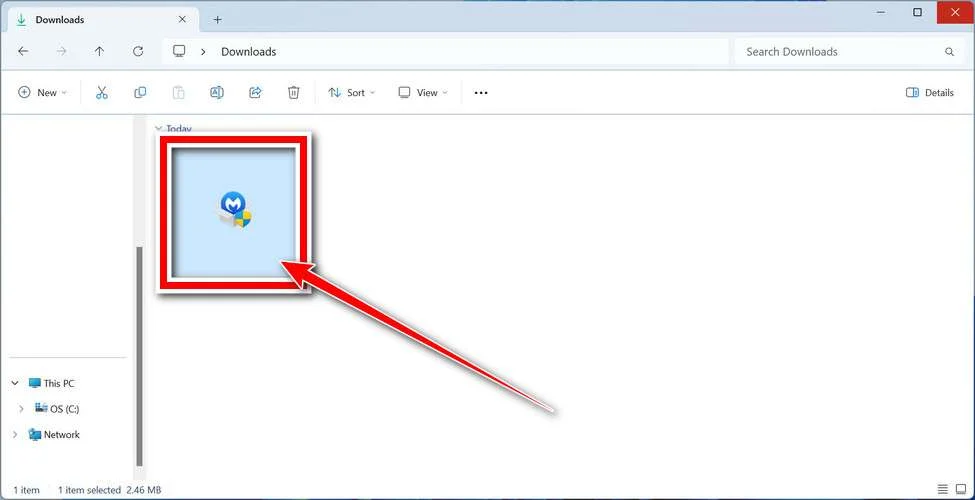
Follow the On-Screen Prompts to Install Malwarebytes
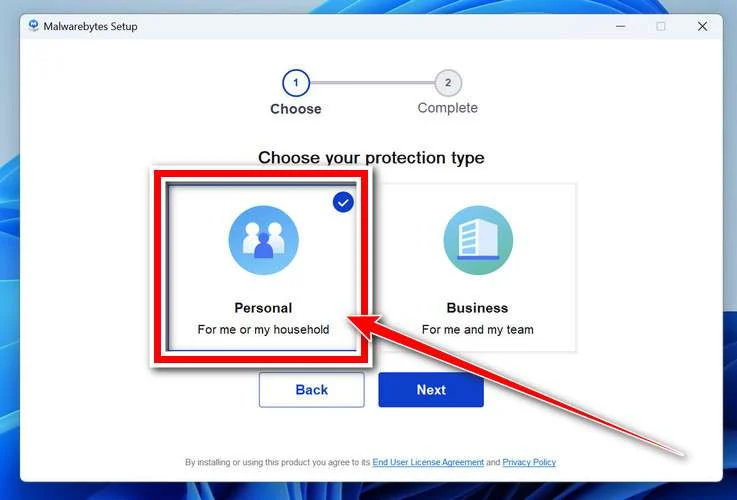
The setup wizard will walk you through a few quick screens:
-
Choose where you’re installing the program — “Personal Computer” or “Work Computer” — then click Next.
-
Malwarebytes will now install on your device. This usually takes under a minute.

-
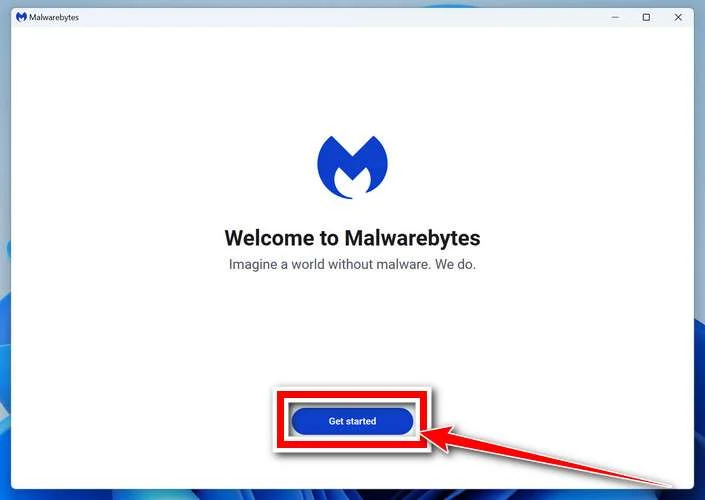
When installation is complete, the “Welcome to Malwarebytes” screen will open automatically.
-
On the final screen, click Open Malwarebytes to launch the program.

-
Enable “Scan for Rootkits”
Before scanning, turn on rootkit detection so Malwarebytes can find even the most hidden threats. Click the Settings gear icon on the left side of the screen.
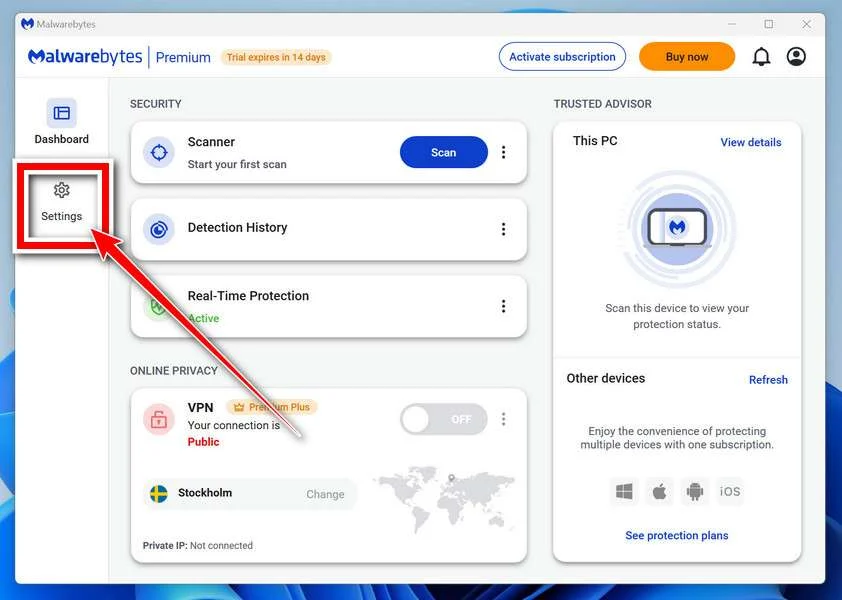
In the settings menu, find “Scan for rootkits” and click the toggle so it turns blue.

Done? Click “Dashboard” in the left pane to return to the main screen.
Start the Scan
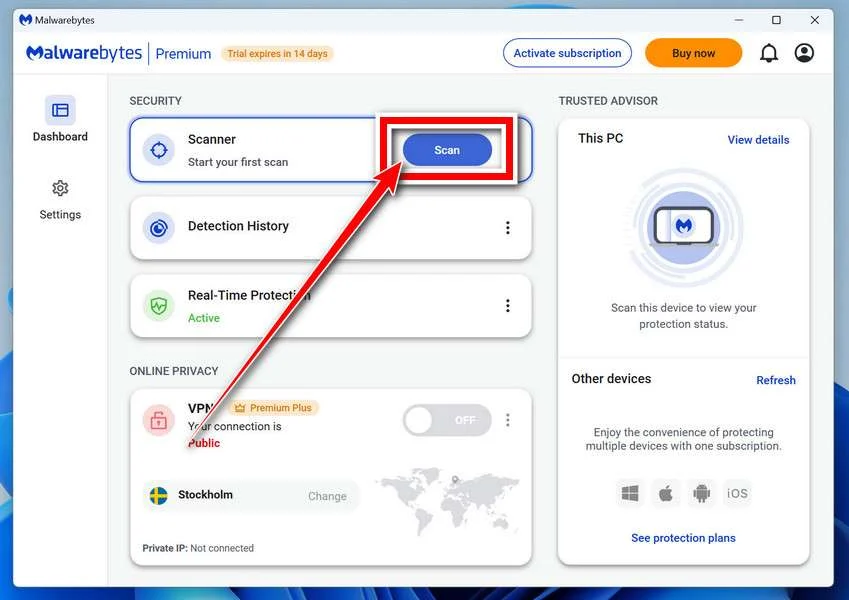
Click the blue Scan button. Malwarebytes will automatically update its virus database and start checking your computer for malware.
-
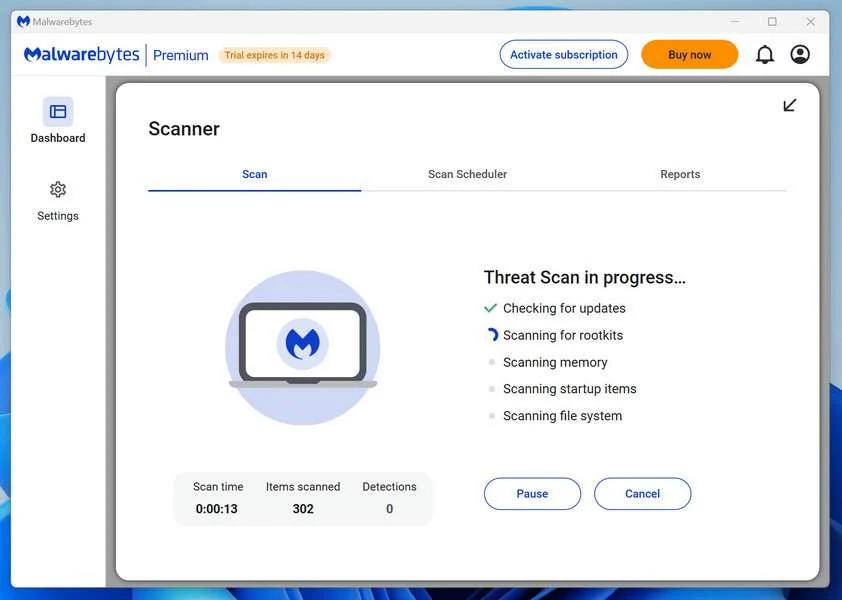
Wait for the Scan to Finish
The scan checks your entire system for browser hijackers and other malicious programs, so it can take 5 to 20 minutes depending on your computer. Feel free to do something else — just check back occasionally to see the progress.
-
Quarantine the Detected Threats
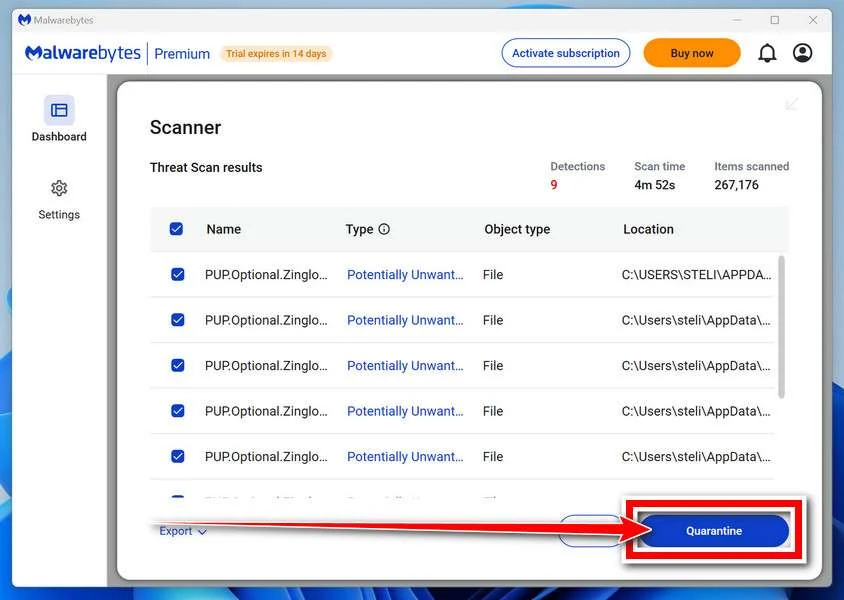
When the scan is done, you’ll see a list of everything Malwarebytes found — malware, adware, and potentially unwanted programs. Click the “Quarantine” button to remove all of them at once.
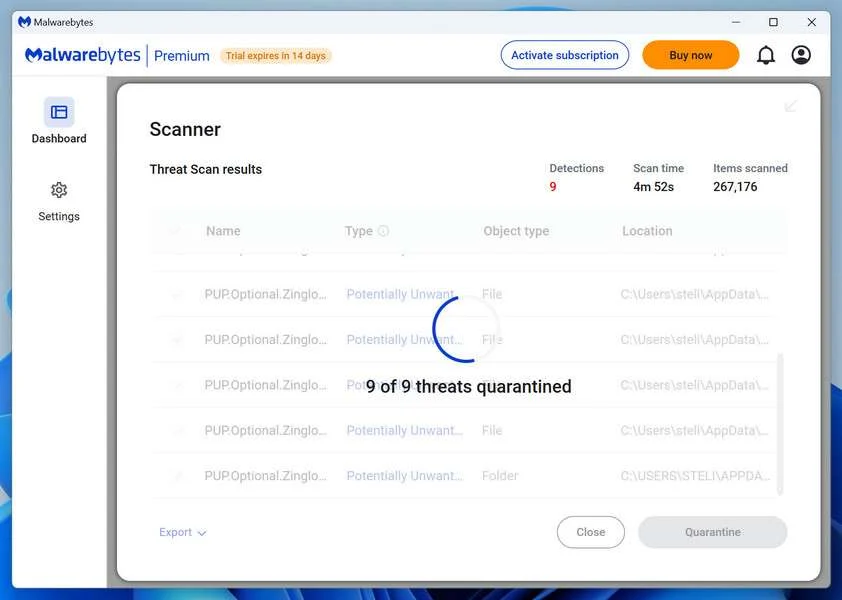
Malwarebytes will now remove the malicious files and registry entries and move them safely into quarantine.
-
Restart Your Computer
Some threats can only be fully removed after a reboot. If Malwarebytes asks you to restart, click Yes. Once you’re logged back in, Malwarebytes has finished removing the threats it found.
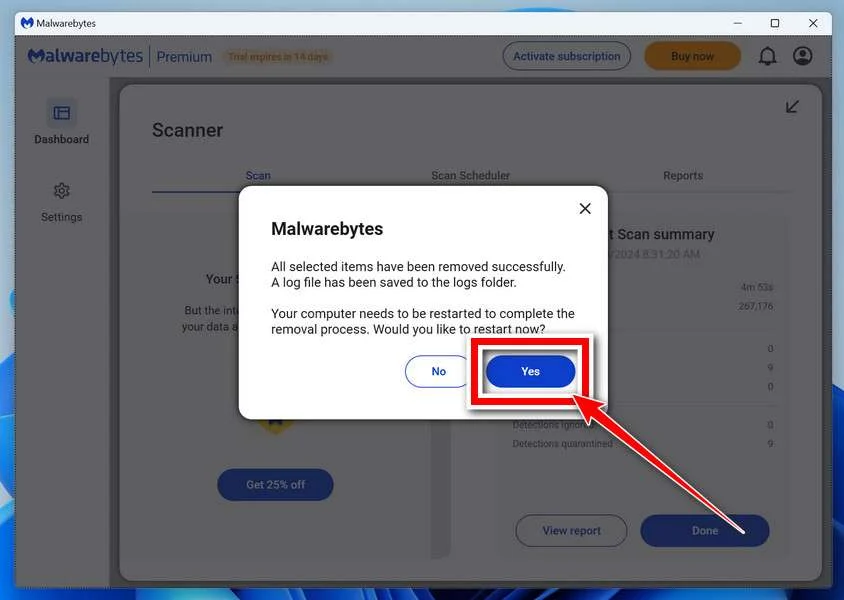
That’s it — your Windows PC is now clean of trojans, adware, and other malware, and should be back to running smoothly.
If you are still having problems with your computer after completing these instructions, then please follow one of the steps:
- Run a computer scan with ESET Online Scanner
- Ask for help in our Windows Malware Removal Help & Support forum.
Run a Malware Scan with Malwarebytes for Mac
Malwarebytes for Mac is a free on-demand scanner that removes the malware other security software tends to miss — adware, browser hijackers, and unwanted programs included. Cleaning an infected Mac with Malwarebytes has always been completely free, and it’s our go-to recommendation. Follow the steps below to scan and clean your Mac in just a few minutes.
-
Download Malwarebytes for Mac
Click the button below to download the latest version of Malwarebytes for Mac.
Download MalwarebytesOfficial installer for macOS. Your download starts right away.Want real-time protection? See Malwarebytes PremiumMalwarebytes Free for MacScans and removes malware at no cost -
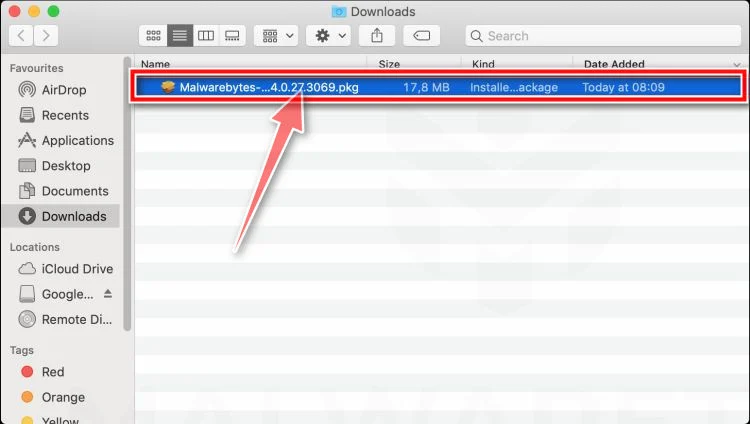
Open the Malwarebytes setup file
When the download finishes, open your Downloads folder and double-click the setup file to begin the installation.
-
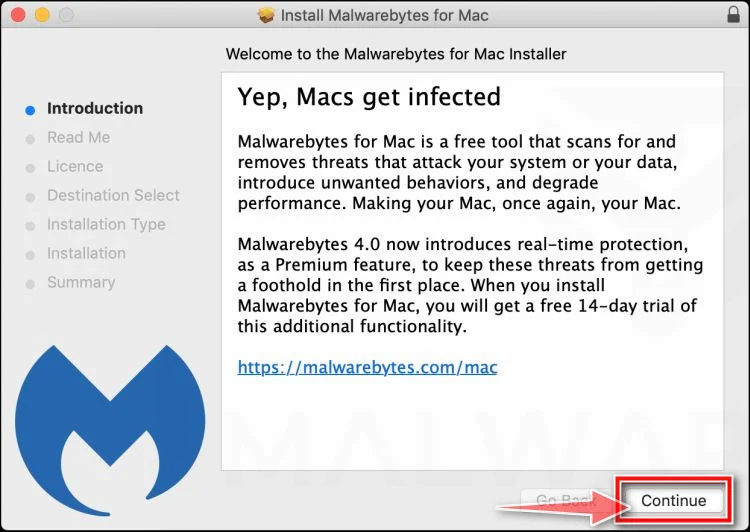
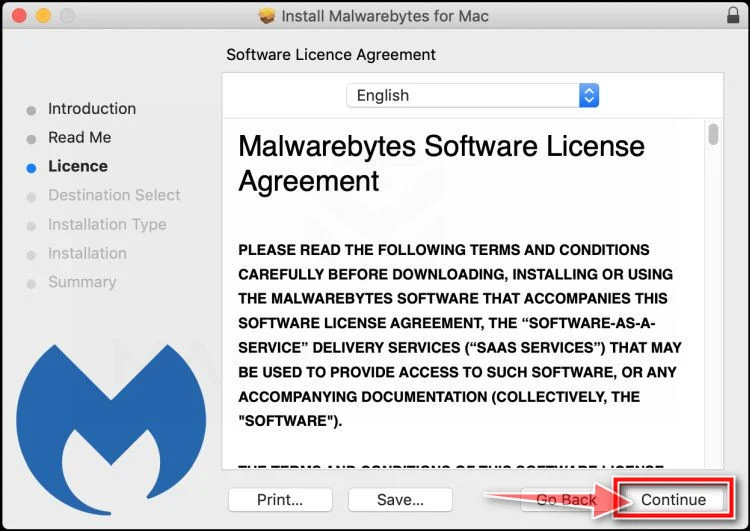
Follow the On-Screen Prompts to Install Malwarebytes
The Malwarebytes for Mac Installer will guide you through a few quick screens. Click “Continue” and keep following the prompts until the installation completes.
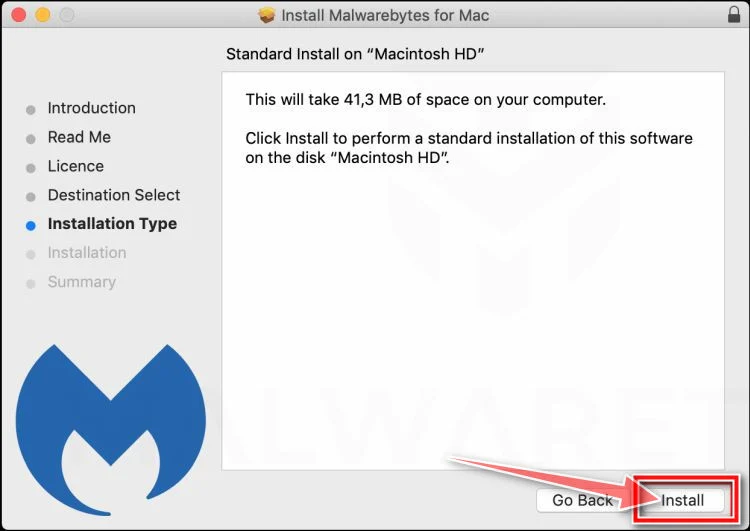
When the installation is complete, Malwarebytes opens to the Welcome to Malwarebytes screen. Click “Get started“.
-
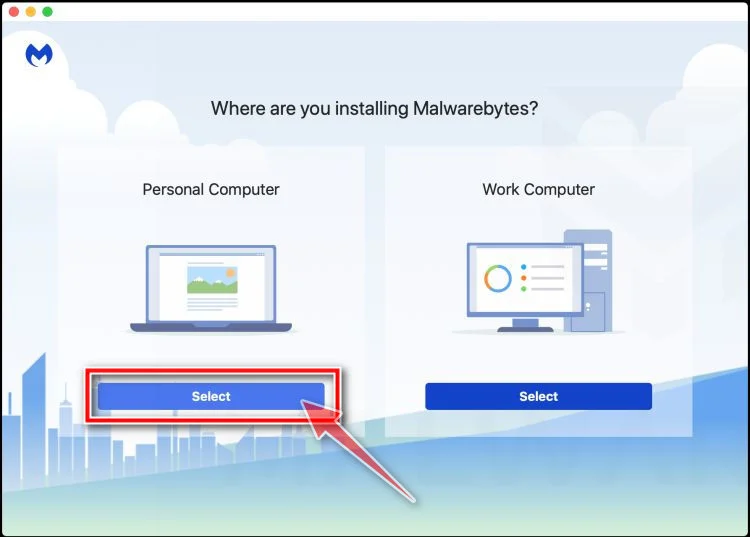
Select “Personal Computer” or “Work Computer”
Malwarebytes will ask what type of computer you’re installing it on. Click either Personal Computer or Work Computer, whichever applies.
-
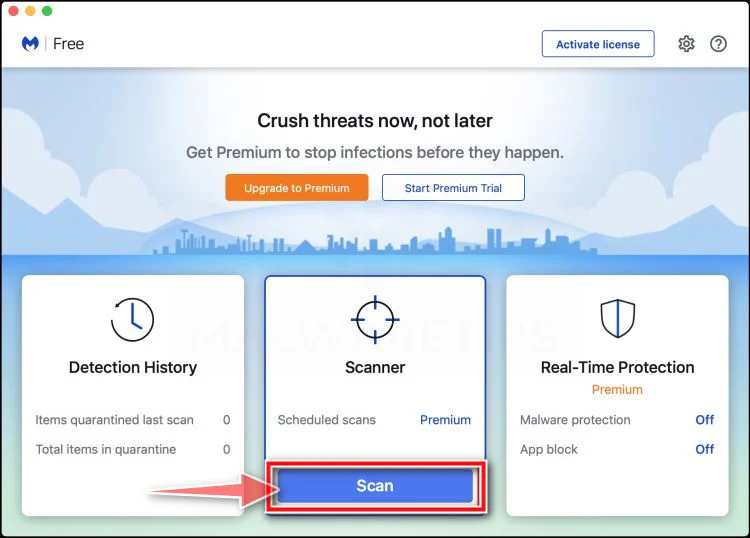
Start the Scan
Click the “Scan” button. Malwarebytes will automatically update its detection database and begin checking your Mac for malware.
-
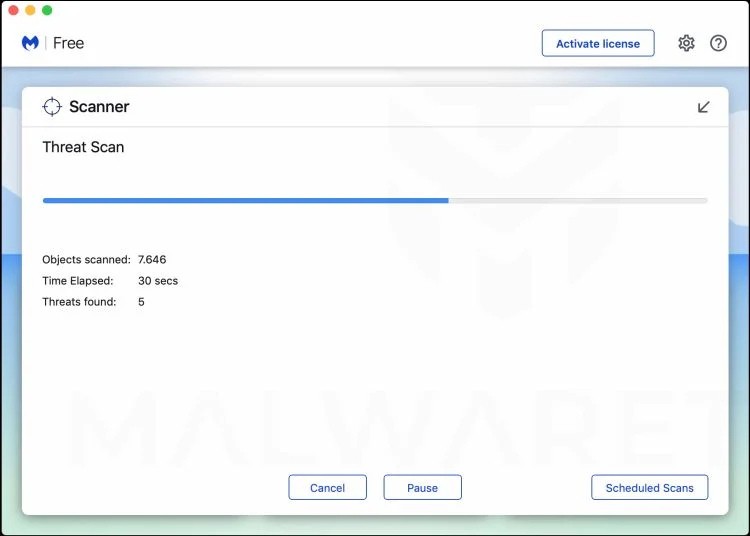
Wait for the Scan to Finish
Malwarebytes will scan your Mac for adware, browser hijackers, and other malicious programs. This can take a few minutes, so feel free to do something else — just check back occasionally to see the progress.
-
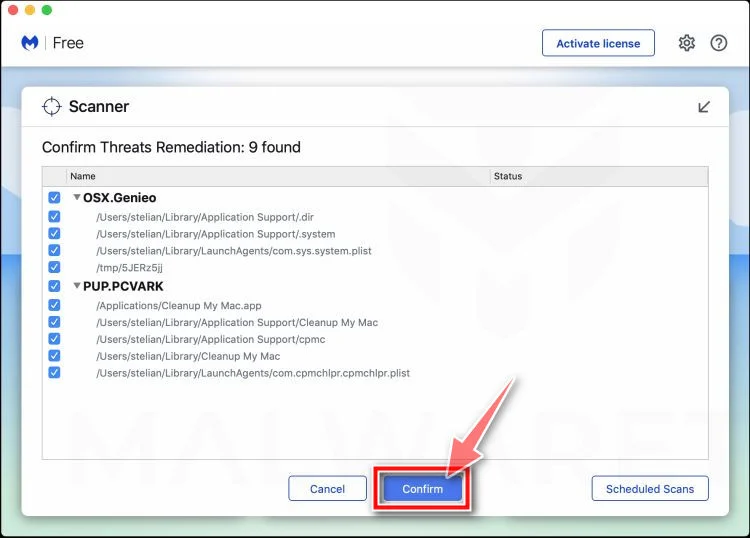
Quarantine the Detected Threats
When the scan is done, you’ll see a list of everything Malwarebytes found. Click the “Quarantine” button to remove all the threats at once.
-
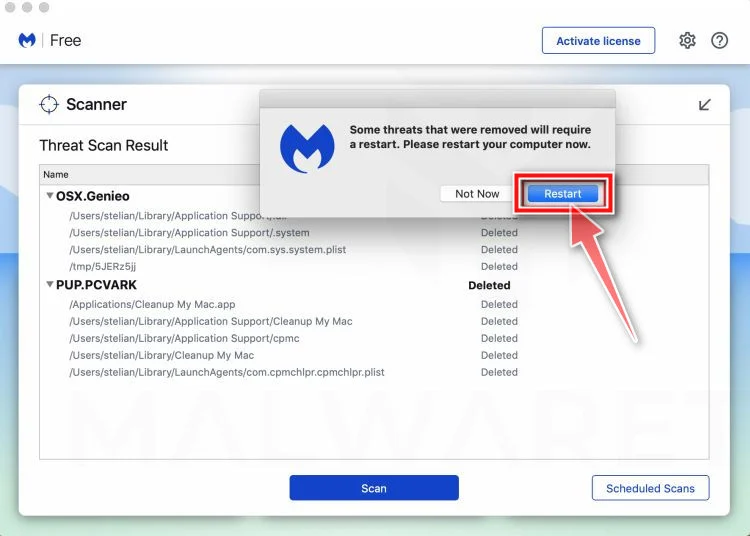
Restart Your Mac
Malwarebytes will now remove all the malicious files it found. Some threats can only be fully removed after a reboot — if Malwarebytes asks you to restart, allow it. Once you’re logged back in, your Mac is clean.
That’s it — your Mac is now free of adware, rogue browser extensions, and other potentially harmful software.
If you are still experiencing problems while trying to remove a malicious program from your computer, please ask for help in our Mac Malware Removal Help & Support forum.
Run a Malware Scan with Malwarebytes for Android
Malwarebytes for Android automatically detects and removes dangerous threats like malware and ransomware so you don’t have to worry about your most-used device being compromised. Aggressive detection of adware and potentially unwanted programs keeps your Android phone or tablet running smooth.
-
Download Malwarebytes for Android.
You can download Malwarebytes for Android by clicking the link below.
Get Malwarebytes for AndroidOpens Google Play in a new tab.Want real-time protection? See Malwarebytes Premium for AndroidMalwarebytes for AndroidScans your phone and removes malware at no cost -
Install Malwarebytes for Android on your phone.
In the Google Play Store, tap “Install” to install Malwarebytes for Android on your device.

When the installation process has finished, tap “Open” to begin using Malwarebytes for Android. You can also open Malwarebytes by tapping on its icon in your phone menu or home screen.

-
Follow the on-screen prompts to complete the setup process
When Malwarebytes will open, you will see the Malwarebytes Setup Wizard which will guide you through a series of permissions and other setup options.
This is the first of two screens that explain the difference between the Premium and Free versions. Swipe this screen to continue.
Tap on “Got it” to proceed to the next step.
Malwarebytes for Android will now ask for a set of permissions that are required to scan your device and protect it from malware. Tap on “Give permission” to continue.
Tap on “Allow” to permit Malwarebytes to access the files on your phone.
-
Update database and run a scan with Malwarebytes for Android
You will now be prompted to update the Malwarebytes database and run a full system scan.

Click on “Update database” to update the Malwarebytes for Android definitions to the latest version, then click on “Run full scan” to perform a system scan.

-
Wait for the Malwarebytes scan to complete.
Malwarebytes will now start scanning your phone for adware and other malicious apps. This process can take a few minutes, so we suggest you do something else and periodically check on the status of the scan to see when it is finished.

-
Click on “Remove Selected”.
When the scan has been completed, you will be presented with a screen showing the malware infections that Malwarebytes for Android has detected. To remove the malicious apps that Malwarebytes has found, tap on the “Remove Selected” button.

-
Restart your phone.
Malwarebytes for Android will now remove all the malicious apps that it has found. To complete the malware removal process, Malwarebytes may ask you to restart your device.
That’s it — your Android phone is now clean — no more malicious apps, adware, or browser redirects.
If you are still having problems with your phone after completing these instructions, then please follow one of the steps:
- Restore your phone to factory settings by going to Settings > General management > Reset > Factory data reset.
- Ask for help in our Mobile Malware Removal Help & Support forum.
Stay Protected: Block Ads and Malicious Sites
Now that your device is clean, keep it that way. Most infections start with a malicious ad or a fake download button — so blocking them at the source is your best defense.
We recommend AdGuard, which blocks malicious ads, phishing pages, and dangerous redirects before they can reach you.
👉 Download AdGuard and browse safely
Frequently Asked Questions (FAQ) About the Customer Support Analyst at Morgan Stanley Recruitment Scam
1. Is the “Customer Support Analyst” job at Morgan Stanley real?
No. While Morgan Stanley does hire for customer support and analyst roles, the messages circulating on LinkedIn and email that promote this specific Customer Support Analyst recruitment opportunity are part of a scam. Scammers impersonate Morgan Stanley executives or recruiters, offering roles that seem like a perfect fit for your resume. They often use free email domains such as Gmail or Outlook instead of the official @morganstanley.com domain. If you are approached with such a job, it is almost certainly fraudulent.
2. How can I tell if a Morgan Stanley recruiter is legitimate?
Legitimate Morgan Stanley recruiters:
- Always use corporate email addresses ending in @morganstanley.com.
- Never ask you to pay for resume optimization, job application fees, or training materials.
- Direct you to apply through the official Morgan Stanley careers website.
Red flags include:
- Recruiters using free email domains like Outlook, Gmail, or Yahoo.
- Messages that flatter you excessively and promise a “perfect fit.”
- Being referred to a third-party resume service or asked to pay fees.
3. How does the Morgan Stanley recruitment scam usually work?
The scam follows a typical pattern:
- A fake recruiter contacts you via LinkedIn or email.
- They claim you are a strong candidate for a Customer Support Analyst role.
- They provide a job description that looks real, often stolen from Morgan Stanley’s official site.
- They ask you to submit your resume.
- They claim your resume has “failed the ATS system” and refer you to a paid third-party service.
- They either disappear after payment or continue requesting more money under false pretenses.
4. Why do scammers target Morgan Stanley for fake job scams?
Morgan Stanley is a prestigious global financial firm with strong brand recognition. Scammers exploit the company’s reputation because:
- Job seekers are eager to work for a respected employer.
- The company has many legitimate job postings, making scams harder to spot.
- Victims are less likely to question a role at such a high-profile institution.
5. What should I do if I already sent my resume to a scammer?
If you only sent your resume, the risk is lower but still concerning. Scammers may use your information for identity theft or to target you in future fraud. To protect yourself:
- Stop communication with the scammer immediately.
- Report the scam to LinkedIn, Morgan Stanley’s HR department, and your local cybercrime authority.
- Monitor your email and online accounts for unusual activity.
- Consider removing sensitive personal information (like your home address or full date of birth) from future resumes.
6. What should I do if I paid money to a fake Morgan Stanley recruiter?
If you transferred money to scammers:
- Contact your bank or payment provider immediately and request a chargeback or dispute.
- If you paid via wire transfer, alert your bank to try and recall the transaction.
- If you used PayPal, Venmo, or another platform, open a fraud dispute ticket.
- Report the fraud to the Federal Trade Commission (FTC) at reportfraud.ftc.gov or your country’s equivalent authority.
- Save all communications, receipts, and screenshots for investigation.
7. Does Morgan Stanley ever charge candidates for resume services or job applications?
No. Morgan Stanley does not charge candidates to apply for jobs, use resume services, or access training materials during recruitment. If you are asked to pay any kind of fee, it is a scam. Always apply through the official Morgan Stanley careers page.
8. How can I verify if a job at Morgan Stanley is legitimate?
To verify a Morgan Stanley job posting:
- Visit the official Morgan Stanley Careers website at careers.morganstanley.com.
- Cross-check the job title, location, and description.
- Contact Morgan Stanley HR directly through their verified corporate channels.
- Do not rely solely on LinkedIn job ads or emails from unknown individuals.
9. What types of personal information are scammers after?
Scammers often ask for:
- Your resume (containing name, address, phone number, email).
- Date of birth.
- Social Security Number (SSN) or equivalent.
- Bank account details (for “salary setup”).
- Copies of IDs or passports.
This information can be used for identity theft, fraudulent loans, or further scams. Never provide sensitive details to an unverified recruiter.
10. How do I report a fake Morgan Stanley recruiter on LinkedIn?
To report a scammer profile on LinkedIn:
- Go to the profile of the suspected scammer.
- Click the More (…) button.
- Select Report/Block.
- Choose Suspicious, fake, or fraudulent activity.
- Provide details about the recruitment scam.
You should also report the incident directly to Morgan Stanley’s official HR team and to your local consumer protection authority.
The Bottom Line
The Customer Support Analyst at Morgan Stanley Recruitment Scam is a heartbreaking example of how fraudsters exploit the hopes of job seekers. By posing as executives and recruiters, scammers lure victims with flattery, urgency, and fake job descriptions. Their end goal is always the same: to extract money, data, or both.
The key takeaways are:
- Verify the email domain: Real Morgan Stanley recruiters use @morganstanley.com, never Gmail or Outlook.
- Be wary of urgency: Genuine jobs do not require instant decisions.
- Never pay for resume services referred by a recruiter.
- Trust your instincts: If something feels off, it probably is.
Your career journey may be tough, but do not let scammers take advantage of your ambition. Always research, verify, and proceed cautiously.

Join the discussion
0 commentsShare your experience or ask a question about this article.
Discussion
Start the conversation
Have a question or something useful to share? Add the first comment.